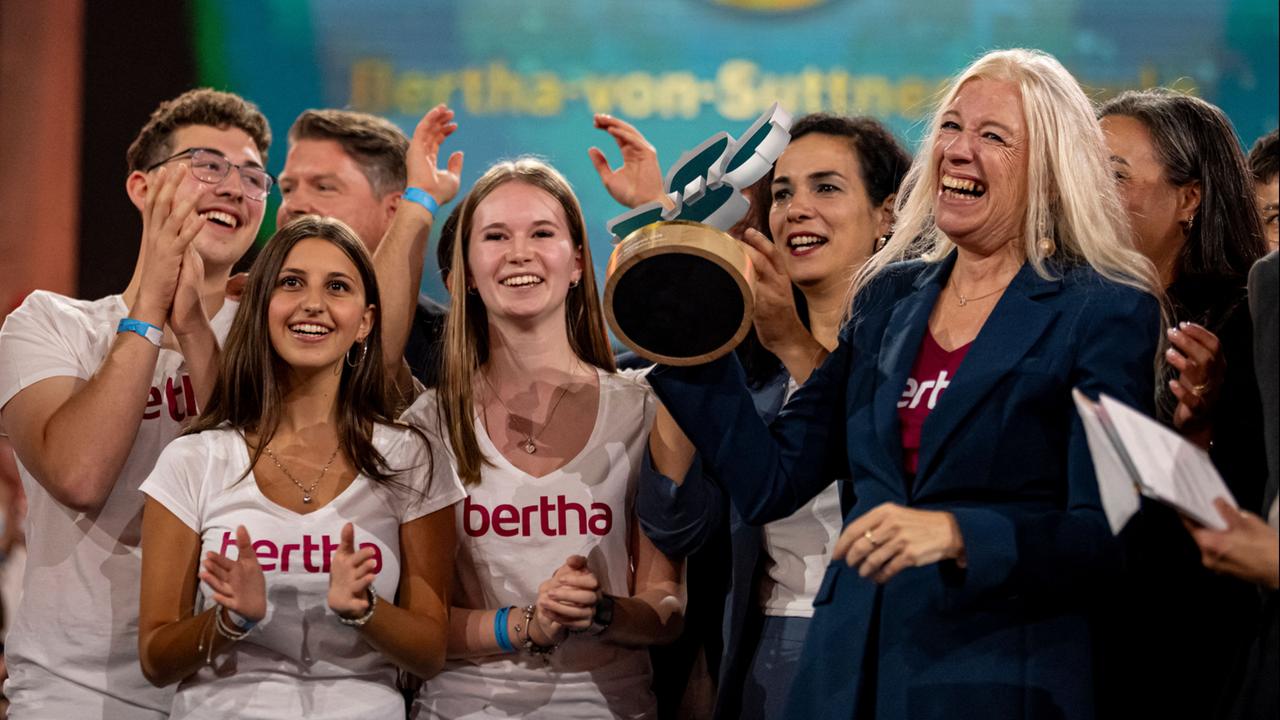
In a landmark moment for the German educational landscape, the Bertha-von-Suttner-Schule in Mörfelden-Walldorf has been crowned the winner of the prestigious German School Prize. Announced in Berlin on September 29, 2026, the award recognizes the institution’s exemplary commitment to inclusive pedagogy and large-scale organizational success. As the nation grapples with sobering educational data, the celebration of these innovative schools offers a blueprint for systemic reform and academic resilience.
A Triumph for Collaborative Learning
The Bertha-von-Suttner-Schule, located southwest of Frankfurt, secured the top spot and the accompanying €100,000 prize by demonstrating that size is no barrier to excellence. With a student body exceeding 2,000 and a faculty of 250, the school has mastered the art of maintaining a cohesive pedagogical vision despite its sheer scale.
The jury’s decision was rooted in the school’s unwavering dedication to "multiprofessional cooperation." Unlike traditional models where silos often develop between subject departments, the Bertha-von-Suttner-Schule has integrated inclusivity into its institutional DNA. Every staff member and student is encouraged to participate in a shared educational mission, ensuring that the diverse needs of the student population are met with consistent, high-quality support.
Chronology: Two Decades of Recognizing Excellence
The German School Prize, now in its 20th year, has become the benchmark for educational quality in Germany. Established in 2006 by the Robert Bosch Stiftung and the Heidehof Stiftung, in partnership with the ARD and the ZEIT Verlagsgruppe, the award has spent two decades identifying, highlighting, and rewarding schools that move beyond rote memorization to foster holistic student development.
Over the years, the competition has evolved to reflect changing societal needs. From the early focus on traditional academic performance, the criteria have expanded to include digital literacy, social cohesion, and the ability of schools to act as community hubs. The 2026 ceremony, held at the Studio Berlin Adlershof, served as both a celebration of these achievements and a moment of reflection on the state of the national education system.
The Winners’ Circle: Diverse Approaches to Pedagogy
While the Bertha-von-Suttner-Schule took home the top honor, six other institutions were recognized for their groundbreaking contributions to specific areas of education, each receiving €30,000:
- Ferdinand-von-Steinbeis-Schule (Tuttlingen, Baden-Württemberg): Celebrated for its technical vocational integration.
- Hans-Leipelt-Schule (Donauwörth, Bavaria): Renowned for its "flexible learning" model.
- Georg-Christoph-Lichtenberg-Oberstufengymnasium (Bruchköbel, Hessen): Recognized for academic excellence and student agency.
- Oberschule Berenbostel (Garbsen, Lower Saxony): A leader in modern pedagogical techniques.
- Staatliche Grundschule Tannroda (Thuringia): Honored for its excellence at the primary level.
- Stadtteilschule Wilhelmsburg (Hamburg): Awarded the Jury Prize for Social Cohesion.
The Hans-Leipelt-Schule in Donauwörth serves as a particularly compelling case study. By abandoning rigid, traditional hourly schedules, the school has shifted toward a "coaching" model. Students receive thematic introductions to complex problems and are then empowered to work self-organized. Teachers act as mentors rather than lecturers, allowing students to seek guidance from across the faculty, regardless of which class they are assigned to.
Similarly, the Stadtteilschule Wilhelmsburg in Hamburg was lauded for its ability to transform diversity into an asset. With over 80% of its 1,200 students growing up bilingual, the school has created an environment where cultural and linguistic variety is treated as a "foundational pillar of school life."
Official Responses and the PISA Context
The ceremony was attended by Federal Chancellor Friedrich Merz, who underscored the urgency of the moment. "Education is one of the most important, if not the most important, tasks of our society," Merz stated during his address.
His remarks were inextricably linked to the PISA study results released earlier in September 2026. The findings indicated that German students reached historic lows in mathematics and reading comprehension. The Chancellor did not mince words regarding these results, calling them a "documentation of the great deficits in our education system."
Merz used the platform to issue a call to action: "This is a reason to do even more to ensure that our education becomes better in Germany." The ceremony, while celebratory, took on a tone of sober responsibility as stakeholders acknowledged that the success stories being honored—while brilliant—represent the minority of the current system.
Implications for the Future of Education
The criteria used by the jury to select these winners provide a roadmap for the future of German schooling. Experts evaluate institutions across six key domains:
- Instructional Quality: How effectively students are taught.
- Performance: Academic outcomes and skill acquisition.
- Handling Diversity: Ensuring equity for all student backgrounds.
- Responsibility: The school’s role in developing civic engagement.
- School Life and Networking: Collaboration with parents and external partners.
- The "Learning School": The institution’s ability to self-reflect and adapt.
These categories highlight a paradigm shift away from "teaching to the test." Instead, the focus has moved toward creating environments where schools function as living, breathing ecosystems.
The Shift Toward Autonomy
The success of schools like the Maria-Leo-Grundschule (last year’s winner) and the Hans-Leipelt-Schule demonstrates that student-centered learning—where children learn independently in "learning ateliers"—is not just an experimental concept but a viable, superior alternative to the traditional lecture-based classroom.
The implication for policy makers is clear: the most successful schools are those that are granted the autonomy to break away from rigid structures. By providing teachers with the freedom to act as coaches and students with the space to manage their own learning paths, these schools are producing outcomes that exceed national averages, even in challenging demographic environments.
Conclusion: A Blueprint for Reform
The 2026 German School Prize highlights a vital truth: systemic change in education is possible, but it requires courage, leadership, and a willingness to abandon outdated models.
As the Bertha-von-Suttner-Schule celebrates its victory, the rest of the country looks on with a mixture of admiration and pressure. The challenge ahead lies in scaling these successes. If the models proven effective in Mörfelden-Walldorf, Donauwörth, and Hamburg can be replicated in schools across the country, Germany may yet find a path out of the current educational stagnation.
For now, these seven winning schools stand as beacons of hope—proof that with the right approach, the German education system can evolve to meet the complexities of the 21st century. The prize is not merely a reward for past efforts; it is a mandate to continue pushing the boundaries of what is possible in the classroom.