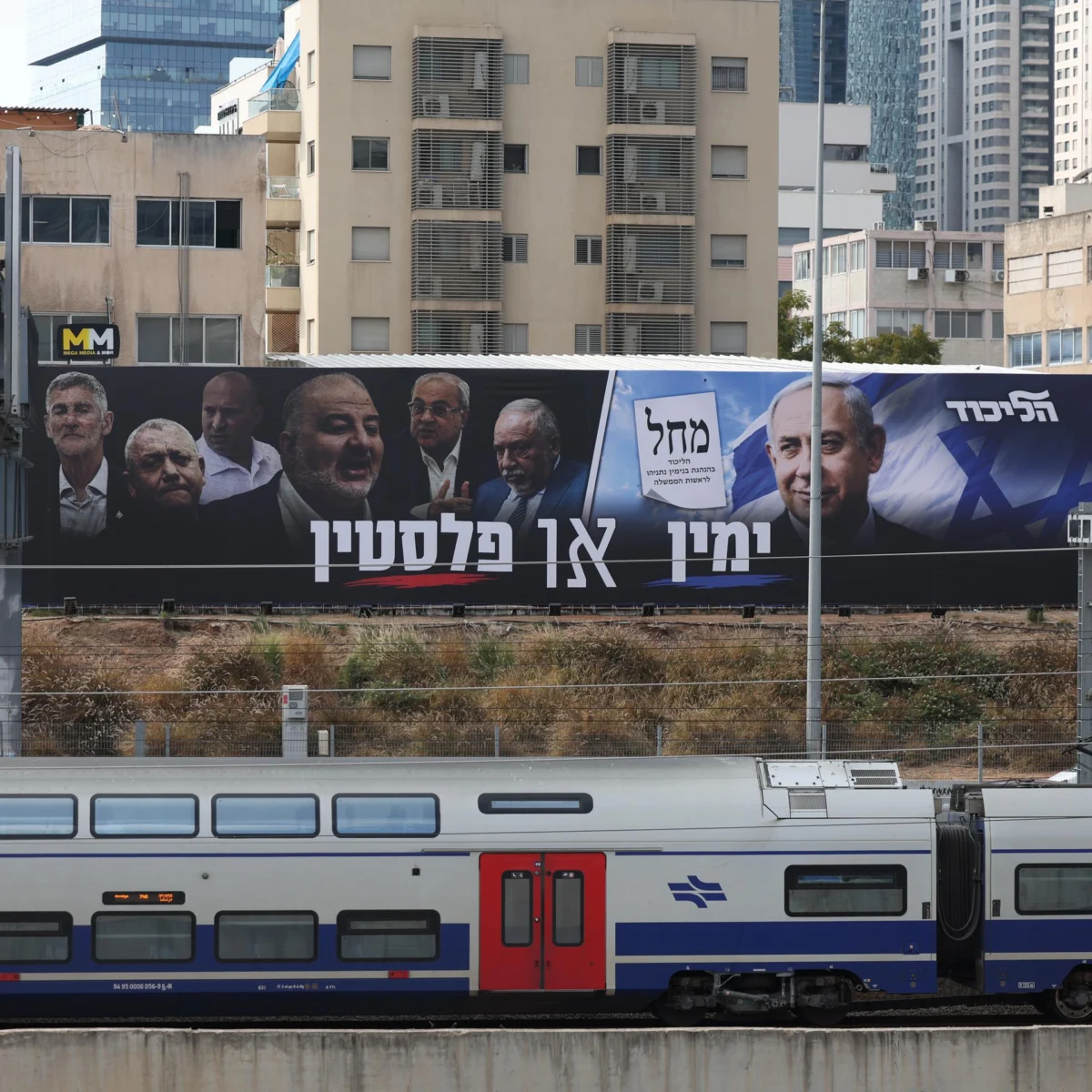
JERUSALEM – October 25, 2026 – Israel stands at a pivotal juncture as its citizens prepare to head to the polls this Tuesday, October 27, 2026, to elect a new parliament, the Knesset. This election is far more than a routine democratic exercise; it is widely viewed as a profound public referendum on the leadership and policies of Prime Minister Benjamin Netanyahu, particularly in the aftermath of the devastating Hamas attack on October 7, 2023. The nation, still grappling with the trauma and ongoing conflict, is witnessing an unprecedented surge in support for an opposition party, signaling a potential seismic shift in its political landscape.
The upcoming vote, necessitated by a deeply fractured political environment, is set to determine the country’s direction at a time of immense domestic and regional instability. With polls predicting a tight race and a likely deadlock, the outcome remains highly uncertain, raising questions about Israel’s ability to form a stable government and address the myriad challenges it faces. The electorate’s decision will not only shape its internal policies but also have significant repercussions for its security, its relations with the Palestinian territories, and its standing on the global stage.
Main Facts: A Nation Divided, A Leadership Challenged
Israel’s 27th Knesset elections arrive three years after the Hamas onslaught that plunged the nation into its deadliest conflict in decades. The vote is unequivocally a verdict on Prime Minister Benjamin Netanyahu’s protracted tenure and his government’s handling of national security, economic stability, and societal cohesion. Having served over 18 years in office, albeit with interruptions, the 77-year-old leader is facing perhaps his most formidable challenge yet.
The political discourse has been dominated by themes of accountability, national unity, and the future strategic direction of the country. A significant development in the pre-election period has been the remarkable rise of a centrist opposition, spearheaded by former Chief of Staff Gadi Eisenkot. His party, "Yashar" (meaning "straight" or "integrity"), has surged in recent polls, now standing neck-and-neck with Netanyahu’s Likud-led bloc. This unexpected momentum injects an element of unpredictability into an already volatile political climate.
Eisenkot, a decorated military veteran, positions himself as a pragmatic alternative, seeking to distance his faction from Netanyahu’s controversial alliances with ultra-right and ultra-Orthodox parties. However, his own past statements and attributed doctrines have drawn scrutiny, highlighting the complex and often hawkish nature of Israeli security politics across the spectrum.
The core issues driving voter sentiment include the ongoing war in Gaza, the perceived intelligence failures that preceded the October 7 attack, the economic strain imposed by prolonged conflict, and deep-seated societal divisions, particularly concerning the role of ultra-Orthodox Jews in military service. The outcome promises to usher in either a continuation of Netanyahu’s right-wing governance or a new era led by a disparate coalition seeking fundamental change.
Chronology of Crisis and Political Reshuffling
The path to these snap elections has been paved by a series of escalating crises and political maneuvers, all set against the backdrop of the October 7, 2023, Hamas attack and its devastating aftermath.
October 7, 2023: The Day of Infamy
The unprecedented cross-border assault by Hamas from Gaza shattered Israel’s sense of security. Thousands of terrorists breached the border, launching a brutal rampage that resulted in the deaths of approximately 1,200 Israelis, mostly civilians, and the abduction of over 240 hostages. The attack exposed profound intelligence and security failures, triggering widespread public outrage and a demand for accountability. Prime Minister Netanyahu’s government, which had long touted its ability to manage the Gaza threat, faced immediate and intense criticism.
Post-Attack Response and Public Scrutiny
In the immediate aftermath, a unity government was formed, bringing together Netanyahu’s Likud with figures like Benny Gantz and Gadi Eisenkot, both former military chiefs and political rivals. This fragile alliance was an attempt to present a united front during wartime. However, public trust in Netanyahu’s leadership plummeted, with polls consistently showing a significant drop in his approval ratings. Calls for an independent investigation into the October 7 failures grew louder, becoming a central theme in the political discourse. Reports emerged in late September 2026, widely circulated by several media outlets, alleging that the Israeli government had received warnings about an impending attack prior to October 7, an assertion vehemently denied by the government. This denial, however, did little to quell public suspicion and fueled the demand for transparency.
Escalating Domestic Tensions
Even as the war in Gaza continued, Israel’s internal political divisions intensified. Netanyahu’s long-standing coalition with ultra-right and ultra-Orthodox parties, already strained by controversies such as judicial reform attempts in 2023, faced new pressures. A particularly contentious issue resurfaced: mandatory military service for ultra-Orthodox Jews. Netanyahu had previously attempted to pass legislation that would permanently exempt ultra-Orthodox men from conscription, a move that failed due to public outcry and legal challenges. This issue deeply divides Israeli society, with secular and religious Zionist segments arguing for equal burden-sharing, especially during wartime. The debate became so acrimonious that two parties from Netanyahu’s original five-party coalition ultimately withdrew, further weakening his government and contributing to its eventual collapse, paving the way for the current elections.
The Rise of the Opposition
Against this backdrop of governmental instability and public discontent, the opposition gained traction. Gadi Eisenkot, a former Chief of Staff who had been part of the unity government, emerged as a leading figure for change. His centrist "Yashar" party capitalized on public frustration, presenting itself as a responsible and experienced alternative. Concurrently, the largest opposition party, Yesh Atid, led by Yair Lapid, formed a significant alliance with Naftali Bennett’s faction, uniting under the banner of "Beyachad" (meaning "together"). This strategic consolidation of centrist and right-leaning opposition forces aimed to maximize their electoral power against Netanyahu’s bloc, recognizing that a fragmented opposition would struggle to overcome the incumbent’s entrenched position. The alliance underscores a strategic effort to create a broad front capable of challenging the long-dominant Likud.
This sequence of events – from the national trauma of October 7 to the ongoing military campaigns and the internal political strife – has culminated in an election that is less about incremental policy changes and more about a fundamental re-evaluation of Israel’s leadership and future direction.
Supporting Data: Deep Dive into the Political Landscape
The upcoming elections are unfolding amidst a complex tapestry of demographic shifts, ideological divides, and pressing national security concerns. Understanding these underlying factors is crucial to grasping the stakes involved.
Gadi Eisenkot: The Contender’s Profile
Gadi Eisenkot, 66, brings a formidable military background to the political arena, having served as the 21st Chief of General Staff of the Israel Defense Forces (IDF) from 2015 to 2019. His military career was marked by significant operational experience and strategic thinking. He is widely respected for his command during various operations, including the Second Lebanon War and numerous operations in Gaza. His political ascent is rooted in his perceived competence and his ability to appeal to a broad segment of the Israeli public weary of career politicians.
However, Eisenkot’s profile is not without its controversial elements. He has publicly rejected the notion of an independent Palestinian state, aligning with a significant portion of the Israeli right on this contentious issue. More controversially, he is widely credited with the development and implementation of the "Dahiya Doctrine." This military doctrine, named after a Beirut suburb heavily bombed by Israel during the 2006 Lebanon War, advocates for the use of disproportionate force and massive retaliation against civilian infrastructure in enemy territories during conflicts, aiming to deter future attacks by inflicting severe damage and societal disruption. While proponents argue it is a necessary deterrent against asymmetric threats, human rights organizations and international bodies have criticized it as potentially violating international humanitarian law by targeting civilian populations and infrastructure. His association with this doctrine underscores a robust, even aggressive, approach to national security, which resonates with some voters but alienates others.
Eisenkot’s "Yashar" party has presented a detailed Ten-Point Program aimed at national renewal:
- Independent Investigation into October 7 Failures: A cornerstone of his platform, demanding an impartial commission to uncover the intelligence and operational lapses that allowed the Hamas attack to succeed. This directly contrasts with Netanyahu’s proposal for a politically appointed committee.
- Strengthening Press Freedom: A commitment to safeguarding democratic institutions and the independent media, often perceived as under threat during Netanyahu’s tenure.
- Reinforcing the Army: Focus on enhancing the IDF’s capabilities, readiness, and strategic planning, addressing concerns about the military’s preparedness post-October 7.
- Securing Israel’s Borders: A robust defense strategy to protect all of Israel’s frontiers against both conventional and unconventional threats.
- Mandatory Military Service for All: Perhaps the most radical and socially divisive proposal, advocating for the extension of mandatory military service to ultra-Orthodox Jews and Arab citizens. This aims to foster greater social equality and distribute the national security burden more equitably.
The Conscription Conundrum: A Deep Societal Rift
The issue of military conscription for ultra-Orthodox Jews (Haredim) is a long-standing and deeply emotional fault line in Israeli society. Traditionally, Haredi men have received widespread exemptions to pursue religious studies, a policy justified by their political representatives as preserving Jewish scholarship and tradition, and by some, as a spiritual contribution to national security. However, secular and religious Zionist segments of the population, who disproportionately bear the burden of military service, view these exemptions as deeply unfair and a drain on the national budget.
Netanyahu’s previous attempts to legislate permanent exemptions for the Haredim were met with fierce opposition, legal challenges, and ultimately failed. Eisenkot’s proposal to extend mandatory service to all eligible citizens, including Haredim and Arab Israelis (who are currently exempt but can volunteer), represents a direct challenge to the status quo and promises to ignite intense debate. While supported by those advocating for greater equality and national burden-sharing, it is vehemently opposed by ultra-Orthodox parties, who view it as an existential threat to their way of life and religious institutions. This issue alone has the potential to make or break any future coalition.
Netanyahu’s Enduring Legacy and Coalition Challenges
Benjamin Netanyahu, 77, is Israel’s longest-serving Prime Minister, a political titan who has navigated countless crises and maintained power through a blend of shrewd political maneuvering and appeals to national security. His Likud party remains a dominant force, though it has increasingly relied on alliances with far-right and ultra-Orthodox factions to form governments.
His current coalition, prior to the recent defections, comprised Likud, Religious Zionism, Otzma Yehudit, Noam, and the ultra-Orthodox parties Shas and United Torah Judaism. These alliances have often pushed government policy further to the right, particularly on issues concerning West Bank settlements, judicial reform, and religious legislation. The departure of two parties over the conscription debate underscores the fragility of these coalitions and the inherent tensions within them.
Netanyahu’s campaign strategy often emphasizes his vast experience, his strong stance on security, and his ability to navigate complex international relations. However, he faces persistent accusations of corruption (he is currently on trial for bribery, fraud, and breach of trust), and criticism over his perceived divisiveness and his government’s handling of the October 7 intelligence failures. His desperate plea to smaller right-wing parties to withdraw from the election to prevent wasted votes (under Israel’s proportional representation system, parties failing to meet the 3.25% threshold have their votes discarded, potentially benefiting larger blocs) highlights the precariousness of his position and his concern about electoral fragmentation undermining his chances.
The Opposition Bloc: A United Front?
The formation of "Beyachad" – an alliance between Yesh Atid (led by Yair Lapid, a former Prime Minister) and Naftali Bennett’s faction (Bennett also served as PM) – is a significant development. Yesh Atid generally occupies the center-left of the Israeli political spectrum, advocating for secular values, economic liberalism, and a more moderate approach to the Israeli-Palestinian conflict, though not necessarily endorsing a two-state solution unconditionally. Bennett, while on the right, represents a more nationalist-religious but pragmatic wing, having previously led a diverse coalition that included Arab parties. This alliance, alongside Eisenkot’s Yashar, forms a formidable, albeit ideologically diverse, opposition bloc. Their primary common ground is the desire to unseat Netanyahu and usher in an era of greater national unity and reform.
The Electoral System and Predicted Deadlock
Israel’s proportional representation system, where seats in the 120-member Knesset are allocated based on the percentage of votes received (provided a party crosses the 3.25% electoral threshold), often leads to coalition governments. A party or coalition needs at least 61 seats to form a stable government.
Current polls paint a stark picture of a political deadlock. Both Netanyahu’s right-religious bloc and the opposition bloc are predicted to secure approximately 50 to 52 seats each. This means neither side is likely to achieve a decisive majority on its own, setting the stage for potentially prolonged coalition negotiations, a minority government, or even another round of elections if a stable government cannot be formed. The smaller parties that cross the threshold, such as Arab parties (e.g., Hadash-Ta’al, Ra’am) or other smaller religious/centrist factions, could become kingmakers, holding the balance of power. Their willingness to join either bloc will be critical, though Arab parties have historically been excluded from mainstream coalition talks.
Early Voting and Diaspora Engagement
The logistics of the election underscore the ongoing national emergency. Approximately 850 polling stations have been opened for soldiers serving in Israel, the Gaza Strip, Lebanon, and Syria, allowing those on active duty to cast their ballots. This measure ensures that those on the front lines can participate in the democratic process shaping their nation’s future. Furthermore, an estimated 50,000 Israelis living abroad are reportedly planning to travel back to the country to vote, as absentee ballots are strictly limited to diplomatic envoys and their families. This reflects the deep personal connection and sense of national duty felt by many Israelis in the diaspora, emphasizing the perceived gravity of this particular election.
Official Responses: Narratives and Counter-Narratives
The election campaign has been characterized by sharp exchanges and contrasting narratives from the primary political actors.
Netanyahu’s Government and the Likud:
Netanyahu and his allies have consistently presented themselves as the indispensable guardians of Israel’s security. Their campaign messaging centers on "experience" and "stability" in a time of war, arguing that only Netanyahu possesses the leadership qualities to navigate the ongoing conflicts and maintain Israel’s deterrence. Regarding the October 7 failures, the government has adopted a strategy of deflection, denying any prior warnings and insisting that any investigation into intelligence lapses should be conducted internally by politically appointed members, rather than an independent body. They have steadfastly refused to accept responsibility for potential misjudgments leading up to the attack, often attributing blame to lower-level officials or unforeseen circumstances. On the ultra-Orthodox conscription issue, the government’s stance reflects its reliance on Haredi parties for coalition support; they advocate for continued exemptions, framing it as safeguarding religious tradition and essential to maintaining the delicate balance of their governing alliance.
Eisenkot and the Opposition Bloc:
The opposition, led by Eisenkot and the "Beyachad" alliance, has hammered home a message of "change" and "accountability." They argue that Netanyahu’s long tenure has led to complacency, divisiveness, and a decline in national resilience. Eisenkot’s demand for an independent investigation into the October 7 failures is a direct challenge to the government’s narrative, promising transparency and reform. His proposals for universal conscription are presented as a matter of national equality and unity, essential for rebuilding a stronger, more cohesive society post-October 7. The opposition also criticizes Netanyahu’s alliances with ultra-right parties, portraying them as detrimental to Israel’s democratic values and international standing. Their narrative emphasizes the need for a leadership that prioritizes national consensus over political survival and that can heal the deep rifts within Israeli society.
Implications: A Nation at a Crossroads
The outcome of this election carries profound implications, both domestically and internationally, shaping Israel’s future trajectory in a volatile region.
Domestic Stability and Governance:
The most immediate implication of a predicted deadlock is the specter of political instability. If neither bloc can secure a clear majority of 61 seats, Israel could face prolonged and arduous coalition negotiations, potentially leading to a weak minority government or even a fifth election in a short span. Such instability would hinder the government’s ability to address critical issues like the ongoing war, economic recovery, and deep societal divisions. A government unable to command a stable majority would struggle to pass budgets, enact crucial legislation, or implement long-term strategic plans, further eroding public trust in its political system. The debate over ultra-Orthodox conscription, if pushed forward by an Eisenkot-led government, could ignite widespread protests and deepen the chasm between secular and religious communities, potentially escalating into a constitutional crisis.
The Future of the Israeli-Palestinian Conflict:
The election’s outcome will significantly impact the prospects for any future resolution to the Israeli-Palestinian conflict. A continuation of Netanyahu’s right-wing government, particularly with its reliance on ultra-right parties, would likely see a continued expansion of settlements in the West Bank and a hardening of positions against Palestinian statehood. Eisenkot’s own rejection of an independent Palestinian state, despite his centrist positioning, suggests that even an opposition-led government might not radically alter Israel’s stance on this core issue. However, a government without the ultra-right’s influence might be more open to diplomatic overtures or de-escalation efforts, though a comprehensive peace process seems distant regardless of the election’s outcome. The Dahiya Doctrine, associated with Eisenkot, also raises concerns about the potential for severe military responses in future conflicts, which could further inflame regional tensions and complicate international peacemaking efforts.
Regional Security and International Standing:
The election will reverberate across the Middle East. Israel’s ongoing war in Gaza, its confrontations with Hezbollah in Lebanon, and its shadow war with Iran are critical regional dynamics. A government perceived as strong and stable by its adversaries could bolster deterrence, while a weak or fractured government might be seen as an opportunity for increased aggression.
Internationally, Israel’s standing, particularly with key allies like the United States and European nations, is also at stake. A Netanyahu government, especially if it continues to be perceived as undermining democratic norms or disregarding international concerns regarding the treatment of Palestinians, could face increased diplomatic pressure. An Eisenkot-led government, potentially seen as more moderate, might be able to mend some strained diplomatic ties, though his hardline security stances and the Dahiya Doctrine could still draw international scrutiny, particularly concerning international law and humanitarian principles. The reference to the "Waffenlieferungen" (arms deliveries) and international law in the Deutschlandfunk program hints at the ongoing global debate about Israel’s actions and its adherence to international norms, a debate that will undoubtedly continue regardless of who wins the election.
Ultimately, Israel’s upcoming election is more than a contest for political power; it is a profound national reckoning. The choices made by its citizens on October 27 will determine not only who governs but also the very character of the nation as it navigates a future fraught with internal divisions and external threats.