Dinslaken, Germany – In an era defined by complex global challenges and an increasingly fragmented electorate, Germany’s political landscape is witnessing a peculiar phenomenon: a profound yearning for the past. While contemporary political parties grapple with declining membership, voter apathy, and the arduous task of coalition governance, a different kind of political gathering is drawing crowds. Across the country, "tribute events" celebrating the titans of post-war German democracy—figures like Helmut Schmidt, Willy Brandt, and Helmut Kohl—are filling auditoriums, offering attendees a nostalgic escape into a perceived golden age of political clarity and charismatic leadership. This burgeoning trend highlights a deep-seated disillusionment with present-day politics and raises critical questions about the future of traditional "Volksparteien" (catch-all parties) in the Federal Republic.
The phenomenon, initially observed in niche cultural events, has now permeated the political sphere, creating a stark contrast between the fervent enthusiasm for historical figures and the palpable indifference towards current political discourse. As mainstream parties struggle to articulate compelling visions for the future, the past, embodied by these meticulously crafted impersonations, offers a comforting, if illusory, sense of stability and decisive action. This article delves into the "nostalgia-politic-events" phenomenon, examining its roots, its implications for Germany’s democratic health, and the challenging path ahead for parties striving to reclaim their relevance.
The Allure of the Past: Main Facts Unveiled
The core of this political nostalgia trend lies in the stark divergence between public engagement with historical political figures and contemporary politicians. While current leaders often face skepticism and low approval ratings, their predecessors, even in replicated form, command attention and devotion.
At the heart of this observation are "tribute events" that painstakingly recreate the speeches, mannerisms, and political rhetoric of Germany’s iconic post-war chancellors and party leaders. These events, far from being mere academic lectures, are designed as immersive experiences, drawing an overwhelmingly older demographic eager to relive moments of perceived political greatness. The meticulous attention to detail, from the signature menthol cigarette in an ashtray to the exact cadence of a speech, underscores a desire for authenticity that many feel is lacking in today’s political arena.
This fascination with political echoes of the past stands in stark contrast to the challenges faced by active politicians. Across Germany, mainstream parties find it increasingly difficult to attract large, engaged audiences for their policy debates and campaign rallies. The energy and enthusiasm generated by the "tribute acts" serve as a potent symbol of the vacuum that contemporary politics has yet to fill, raising concerns about the declining vitality of direct political engagement and the erosion of the "Volkspartei" model that once characterized German democracy.
A Chronology of Disillusionment: The Rise of Political Nostalgia
The emergence of "nostalgia-politic-events" is not an overnight phenomenon but rather the culmination of decades of evolving political culture and growing voter disillusionment.
Early 2000s: Seeds of Discontent
While the current trend is more pronounced, the seeds of political nostalgia were sown earlier. Post-reunification Germany saw a shift from the clear ideological divides of the Cold War era to a more centrist, consensus-oriented politics. This, coupled with the increasing complexity of issues like globalization, European integration, and later, climate change, began to dilute the distinct profiles of traditional parties. Voters, accustomed to strong, often larger-than-life figures, started to feel a disconnect. Public trust in institutions, including political parties, began a gradual decline, creating fertile ground for a longing for simpler, more decisive times.
2010s: The Tribute Era Begins
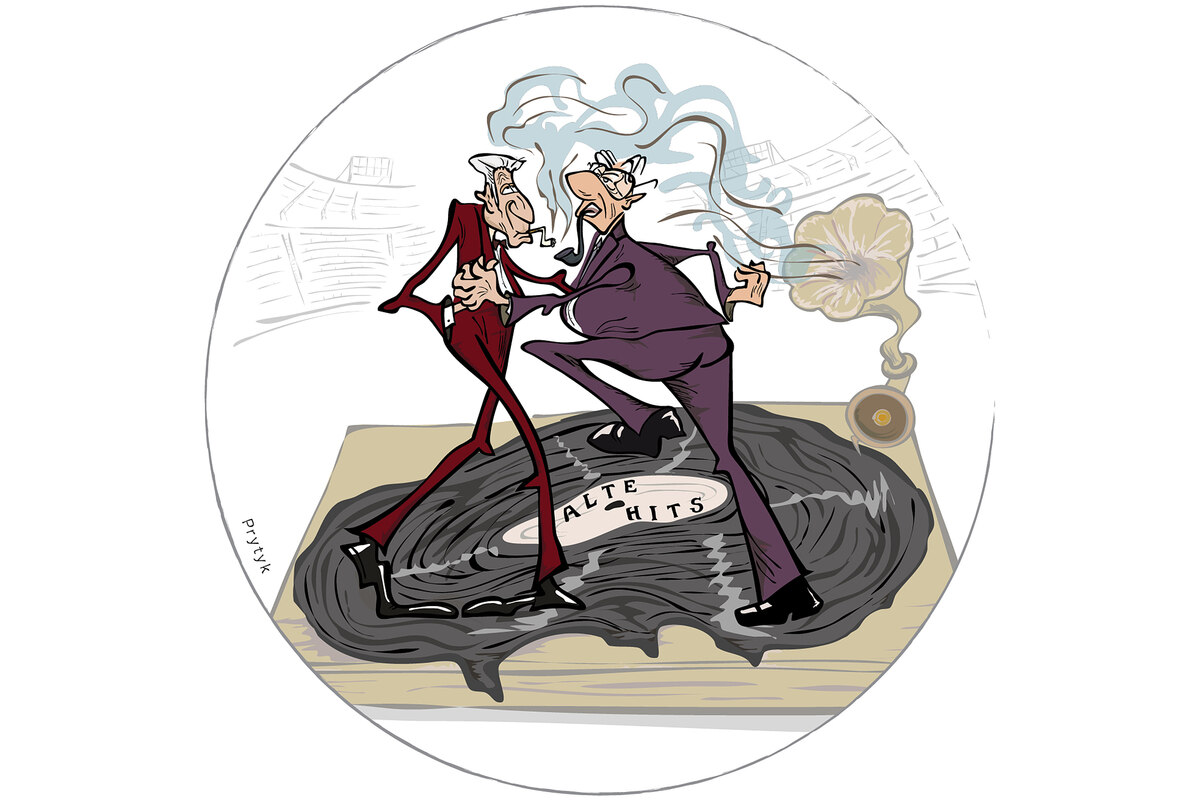
The past decade witnessed the commercialization of nostalgia across various cultural sectors, from music to fashion. This trend slowly but surely began to manifest in the political realm. Initially, it might have been academic panels or documentary screenings celebrating historical figures. However, as the demand for "feel-good" content grew, the concept of "tribute acts" gained traction. Political impersonators, much like their musical counterparts, started offering meticulously recreated performances, tapping into a market hungry for recognizable political "hits" rather than new material.
A prime example is the reported "The Very Best of Deutsche Sozialdemokratie" event in Dinslaken. Here, an impersonator of the late Chancellor Helmut Schmidt captivated an audience, perfectly mimicking his Hanseatic gruffness, razor-sharp intellect, and characteristic chain-smoking. The crowd, largely older, knew Schmidt’s speeches by heart, joining in on familiar refrains like the 1976 campaign slogan "Zieh mit: Wähl Schmidt" (Join in: Vote Schmidt). This event was not an isolated incident; it was reported as part of a larger phenomenon featuring other SPD luminaries like Herbert Wehner and Johannes Rau, performing "election hits" ranging from "Peace, Freedom, Socialism" to "Education for All."
The contrast was stark: in the same convention center, the current SPD party chairman, Lars Klingbeil, reportedly addressed a mere dozen lukewarm attendees in a smaller hall, discussing the intricacies of coalition work. This juxtaposition powerfully illustrates the chasm between the public’s engagement with the past and their disinterest in the present.
Mid-2010s to Present: Broadening the Spectrum
The trend quickly spread beyond the SPD. Both major "Volksparteien," the CDU/CSU and the SPD, found their contemporary efforts overshadowed by these nostalgic offerings. Fictional "tribute parties" like "AC/DC/DU" (a play on the rock band AC/DC and the CDU) and "The Björn Engholm Experience" (referencing a former SPD Minister-President of Schleswig-Holstein) began to fill municipal halls, particularly in the older Federal Republic states. Even the Green Party, traditionally seen as forward-looking, saw the emergence of "tribute acts" like the a-cappella group "Being Green" or the duo "Trampert & Ebermann," evoking the grassroots democratic sentiments of the 1980s.
A poignant illustration of this dynamic came from Gordon Schnieder, the (fictional) CDU Minister-President of Rhineland-Palatinate, who reportedly lamented his inability to secure bookings, with all venues in his state monopolized by "The Great Oggersheimer"—a tribute act to the long-serving Chancellor Helmut Kohl. This impersonator promised an "authentically conservative experience without a rude awakening," a clear dig at the complexities and perceived compromises of contemporary conservative politics.
This chronological progression demonstrates a clear shift in voter preference: from active engagement with evolving political narratives to a passive consumption of idealized historical moments, reflecting a broader societal fatigue with complexity and a yearning for perceived simplicity and strength.
Supporting Data: The Fading Echo of "Volksparteien"
The "nostalgia-politic-events" phenomenon is not merely anecdotal; it reflects deeper structural challenges faced by Germany’s traditional political parties, often referred to as "Volksparteien." Once broad-based organizations representing diverse segments of society, their foundations have been eroding for decades.

Declining Membership and Voter Loyalty:
Both the SPD and CDU/CSU have experienced significant declines in membership over the past 30 years. The SPD, for instance, saw its membership plummet from over a million in the early 1990s to around 400,000 today. The CDU has faced similar struggles. This erosion reflects a broader trend of decreasing party identification and loyalty among the electorate. Voters are less likely to inherit party affiliations from their parents and are more prone to floating between parties or abstaining altogether. This makes it harder for parties to mobilize a consistent base, leaving them vulnerable to the pull of nostalgic appeals.
The Music Industry Parallel:
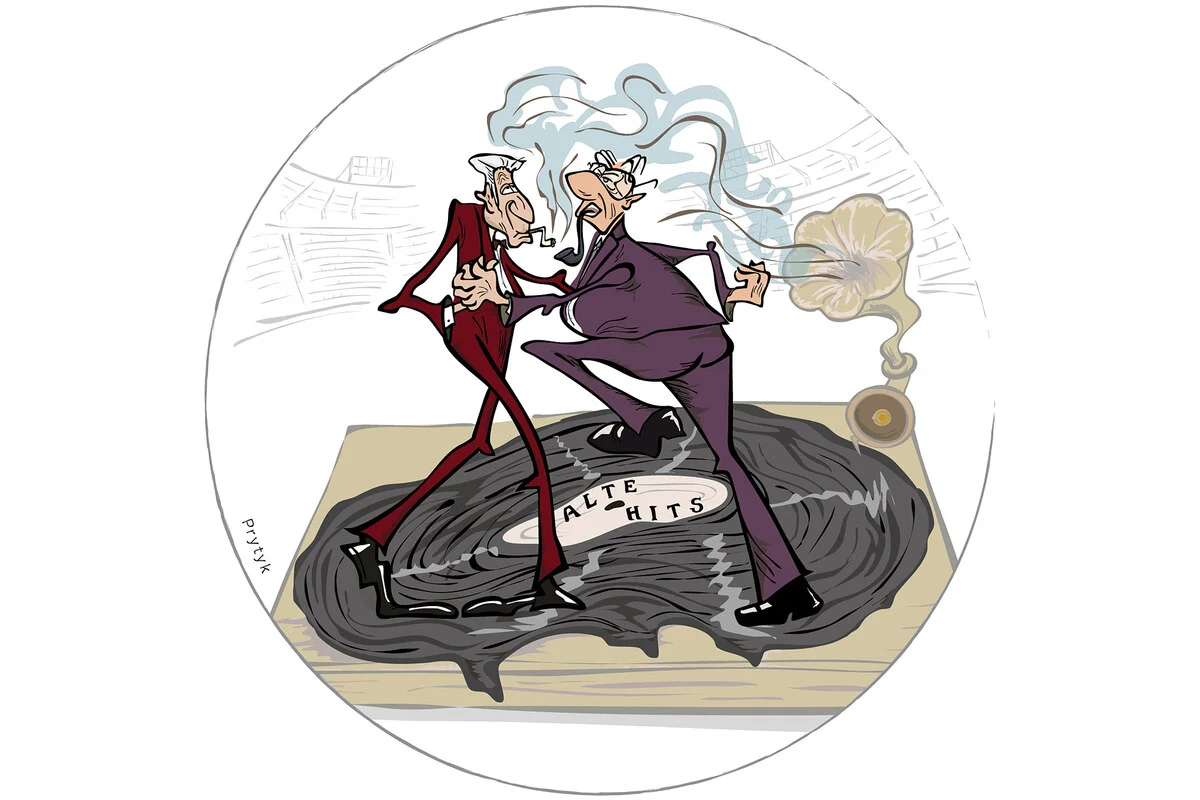
The article draws a compelling parallel to the music business, where an aging audience increasingly favors established hits performed by tribute bands over original new material. New artists struggle to find an audience, and artistic innovation is often met with indifference or even rejection. Even legendary bands sometimes resort to "impersonations of themselves" to maintain relevance or financial viability, as satirically depicted by the fictional "Fink Ployd" or "Müllermarius Hesternwagen." The notion that even ABBA’s "hologram" concerts are, in fact, the actual band members trying to supplement their retirement after squandering royalties on "over-the-top concept albums" further underscores this point.
This analogy suggests that the political market, much like the music market, is becoming risk-averse. Voters, weary of complex problems and uncertain outcomes, prefer the "proven content" of past leaders and ideologies, which offer a predictable and emotionally satisfying experience.
Commercialization of Political Brands:
The satirical piece also touches on the commercialization of political figures, hinting at a future where political "brands" are detached from the actual individuals. The example of Friedrich Merz, leader of the CDU, allegedly having sold all rights to his person and work to the investment firm Blackrock, leaving an "idiot" impersonator to tour the country, is a biting critique. While hyperbolic, it speaks to a concern about the increasing professionalization and commodification of political personas, where image and marketability might overshadow genuine policy and leadership. The article suggests that Merz’s "neoliberal hits from the nineties and today" fail to attract audiences precisely because true nostalgia requires the "smell of decay" to have dissipated; in other words, the past must be distant enough to be romanticized, not still actively debated or associated with current struggles.
This commercialization, whether literal or metaphorical, contributes to the feeling that politics is an engineered spectacle rather than an authentic engagement with societal needs. When voters perceive politicians as "brands" managed by corporate interests, it further alienates them from the political process, pushing them towards idealized, unblemished memories of the past.
The Search for "Authenticity":
The fictional couple, Doro and Dieter from Wesel, attending the Dinslaken event, perfectly encapsulate this longing. They express a desire for "handmade, honest politics and credible personalities," even as they buy cheap merchandise featuring past figures like Heidemarie Wieczorek-Zeul or a fictional "Kurt Cobain Schumacher." This paradox reveals a profound disconnect: voters want authenticity, but they find it more readily in the idealized past, even if that authenticity is commodified and mass-produced in the present. The appeal of Willy Brandt’s double, invoking "Mehr Demokratie wagen" (Dare More Democracy) and inspiring "a glimmer of optimism, perhaps even hope," illustrates the powerful emotional resonance of these historical figures.
The supporting data, therefore, paints a picture of traditional parties struggling to adapt to a changing media landscape, an atomized electorate, and a widespread hunger for political narratives that offer comfort and certainty, often found only in the curated memories of bygone eras.

Official Responses: Between Silence and Frustration
The official response from mainstream political parties to this phenomenon of political nostalgia and the success of "tribute acts" has been largely muted, oscillating between dismissive silence and thinly veiled frustration.
The "No Comment" Stance:
When directly confronted with the success of "nostalgia-politic-events" in comparison to their own struggling gatherings, local party branches, like the organizing district association mentioned in the article, tend to be "tight-lipped" and offer "no comment." This reaction suggests several things:
- Embarrassment: Acknowledging the superior draw of historical impersonators over current leaders would be an implicit admission of their own perceived irrelevance.
- Uncertainty: Parties may genuinely not know how to address this trend. It’s a difficult problem to tackle, as directly criticizing voters for engaging with their own history could backfire.
- Dismissal: Some party strategists might view these events as harmless entertainment for an aging demographic, not a serious threat to their political viability. However, the evidence suggests otherwise.
Frustration from Active Politicians:
Beneath the surface, there is undoubtedly frustration among active politicians. The fictional Gordon Schnieder, the CDU Minister-President, complaining about not being booked because all venues are taken by the Helmut Kohl tribute act, while satirical, reflects a real sentiment. Contemporary politicians invest significant time and effort in their campaigns and policy work, only to find public interest gravitating towards idealized versions of the past. This can be demoralizing and lead to a sense of being perpetually misunderstood or undervalued by the electorate.
Attempts at Modernization vs. Historical Gravitas:
Mainstream parties are caught in a dilemma. On one hand, they recognize the need to modernize, to address contemporary issues like climate change or digitalization, and to appeal to younger voters. This often means breaking with old traditions and developing new communication strategies. On the other hand, they risk alienating older, more traditional voters who might feel that the party has strayed too far from its historical roots. The "tribute acts" capitalize precisely on this historical gravitas that modern parties often struggle to project while simultaneously trying to be innovative.
There have been attempts by parties to leverage their own history, but usually in a more conventional, commemorative way (e.g., anniversaries, biographies). They rarely embrace the "tribute act" model, which carries a risk of trivializing their own legacy or appearing inauthentic. The implicit message from party officials, though often unspoken, is that contemporary politics demands engagement with current realities, not escapism into a romanticized past. However, this message seems to fall on deaf ears for a significant portion of the electorate yearning for something else.
The lack of a coherent "official response" underscores the unprecedented nature of this challenge. Parties are confronting a phenomenon that defies traditional political analysis and requires a deeper understanding of societal shifts and emotional needs that political rhetoric alone cannot address.
Implications: A Fragile Future for German Democracy
The rise of political nostalgia, manifested through these "tribute events," carries profound implications for the health and future of German democracy. It points to a growing fragility in the relationship between citizens and their political institutions, with several worrying consequences.

Erosion of Democratic Engagement:
When voters primarily seek solace in the past rather than engaging with present political challenges, it signals a significant erosion of active democratic participation. Democracy thrives on informed debate, critical thinking, and the willingness of citizens to grapple with complex issues and hold their current representatives accountable. A retreat into nostalgia, however comforting, can foster political passivity and a disinterest in the hard work of governance. If the perceived "authenticity" lies only in the past, it undermines the credibility and legitimacy of contemporary political leadership.
Challenges for Mainstream Parties:
For Germany’s traditional "Volksparteien," the phenomenon is an existential threat. Their ability to adapt, innovate, and attract new generations of voters is severely hampered when the allure of their own history, presented in an idealized form, overshadows their current offerings. This makes it difficult to address pressing issues that often lack the clear-cut heroes and villains of historical narratives. Parties face the impossible task of competing with an idealized past that is immune to real-world failures and compromises. They must find a way to articulate a compelling vision for the future that resonates emotionally, without simply mimicking past successes.
The Danger of Superficiality and Anti-Intellectualism:
The preference for "hits" and "feel-good vibes" over "cumbersome content" like the climate crisis or the "looming fascism" (as the article satirically notes) highlights a dangerous trend towards superficiality in political discourse. If voters are unwilling to engage with complex, uncomfortable truths, it creates an environment where simplistic, often populist, narratives can thrive. This anti-intellectual bent, where emotional resonance trumps factual engagement, is corrosive to a robust democratic process.
The Dark Undercurrent: Extremism and the Misuse of Nostalgia:
Perhaps the most alarming implication is the way extremist groups can exploit this longing for a romanticized past. The article’s chilling conclusion—that after the mainstream political nostalgia events, the "stormtrooper group ‘Alice & The Boys (from Brazil)’" plays to a sold-out house, offering a "damned authentic tribute to National Socialism" from the AfD—is a stark warning. While satirical, it underscores a serious concern: the exploitation of historical grievances and selective memory to legitimize dangerous ideologies.
The AfD (Alternative for Germany) has indeed been criticized for downplaying Nazi atrocities, evoking a sense of national pride tied to a problematic past, and appealing to a desire for strong, authoritarian leadership. This form of "nostalgia" is not harmless entertainment; it is a deliberate attempt to sanitize and reintroduce elements of Germany’s darkest chapter. If the mainstream political sphere cannot offer compelling, hopeful narratives for the future, the void may be filled by those who offer a dangerous, revisionist vision of the past. This makes the competition for the narrative of "the good old days" not just a cultural phenomenon, but a critical battle for the soul of democracy.
The Future of German Democracy:
Ultimately, the "nostalgia-politic-events" phenomenon is a symptom of a deeper malaise. It reflects a society grappling with rapid change, economic uncertainty, and a perceived loss of political direction. For German democracy to thrive, its political actors must find new ways to connect with citizens, to articulate visions for the future that are both realistic and inspiring, and to foster a renewed sense of collective purpose. Relying on the echoes of past glories, however comforting, will not solve the challenges of today or tomorrow. The imperative for Germany’s political class is clear: to move beyond the shadow of its titans and forge a new, engaging narrative for the 21st century, lest the stage be entirely taken over by dangerous tributes to a past best left unrepeated.