Munich, Germany – In a pivotal address at the Christian Social Union (CSU) party conference in Munich, Friedrich Merz, leader of Germany’s Christian Democratic Union (CDU) and the current Chancellor, emphatically underscored the critical need for cohesion between the CDU and its Bavarian sister party. His rallying cry aimed to solidify their position as the leading political force in Germany, yet his speech was conspicuously silent on a burning question: the CSU’s explicit desire to nominate Bavarian State Parliament President Ilse Aigner for the federal presidency.
The dynamic interplay between a robust call for unity and a strategic silence on a key personnel question dominated the narrative, setting a complex tone for the future of the Union parties. Merz, addressing approximately 700 delegates, declared, "We will have to fight," a clear signal of the challenges ahead and the imperative for a united front.
Main Facts
Friedrich Merz, at the helm of the CDU and serving as Chancellor, journeyed to Munich to deliver a keynote address at the CSU’s party conference. His primary message was a powerful appeal for the enduring solidarity between the CDU and CSU, emphasizing that their collective strength is paramount to retaining their status as Germany’s dominant political entity. The address, delivered to a large and attentive audience of party delegates, aimed to project an image of a unified and determined conservative bloc ready to confront the nation’s challenges.
However, a significant undercurrent of political intrigue permeated the proceedings. The CSU had openly advocated for Ilse Aigner, a prominent figure and the current President of the Bavarian State Parliament, to be the next candidate for the largely ceremonial but highly symbolic role of Federal President. This proposal represented a clear aspiration from the Bavarian party to elevate one of its own to a national office of considerable prestige.
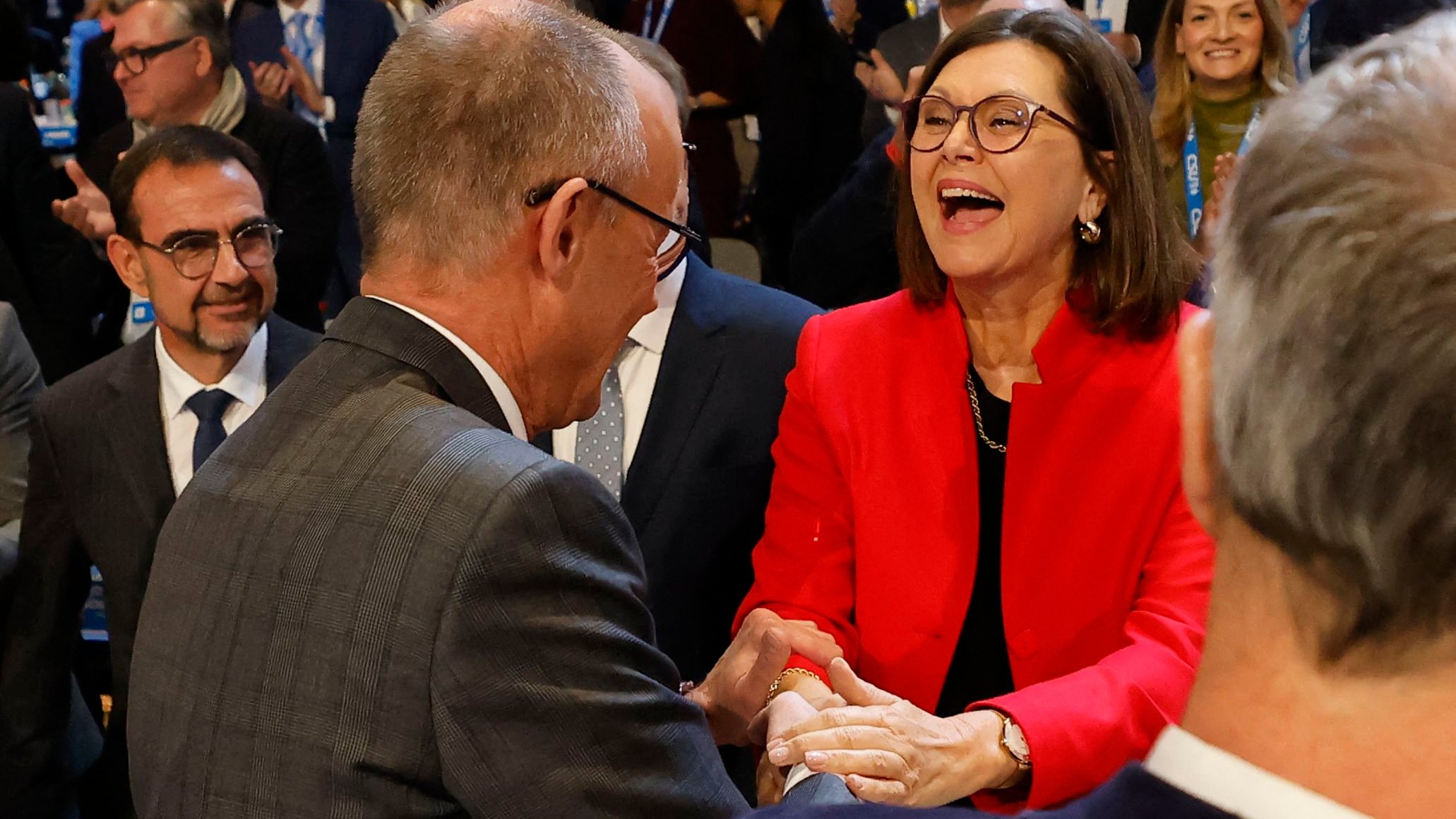
Despite the highly public nature of the CSU’s endorsement and the prevailing expectation that Merz might address such a crucial intra-Union matter, the Chancellor maintained a calculated silence on Aigner’s potential candidacy throughout his nearly hour-long speech. This deliberate omission, coming from the leader of the larger sister party, created a palpable tension and left the "P-question" (Presidential question) unanswered, fueling speculation about the true depth of inter-party alignment on future leadership roles.
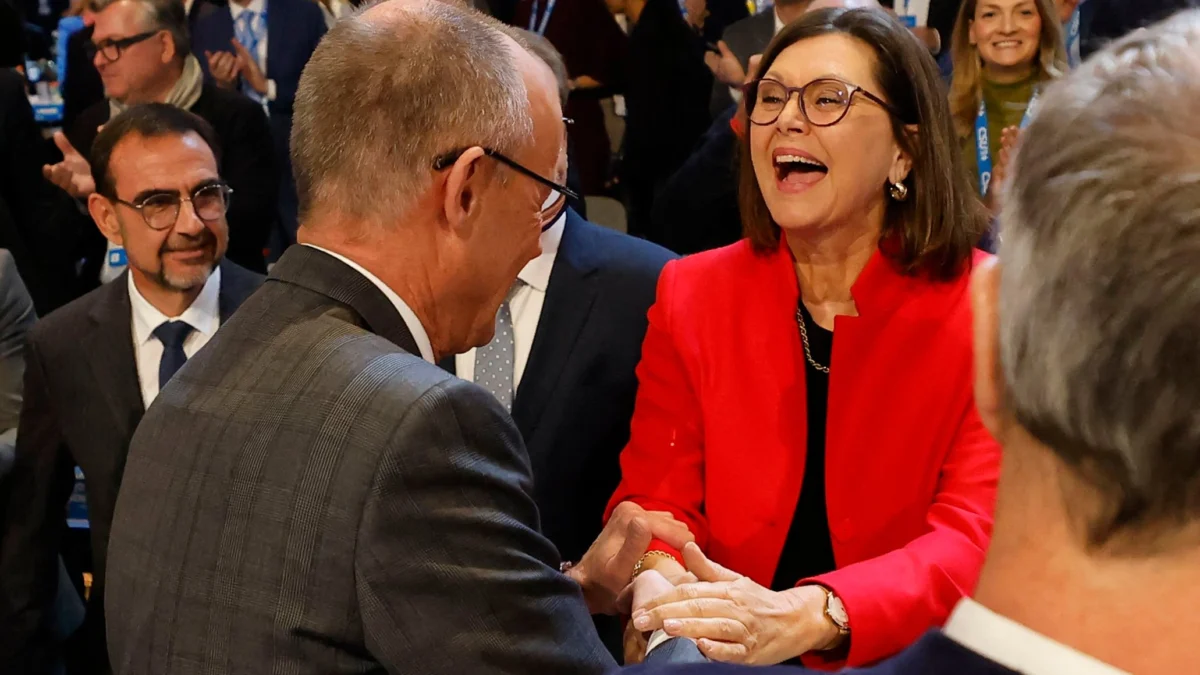
The event was not without its moments of political theater. Merz’s personal greetings upon entering the hall, particularly to Ilse Aigner, were notably warm and demonstrative, including traditional "kisses on both cheeks." This gesture, coupled with his verbal acknowledgment of Aigner immediately following CSU chief Markus Söder and before European People’s Party leader Manfred Weber, was met with enthusiastic applause and a standing ovation from the delegates. Aigner, in turn, acknowledged the acclamation with waves, signaling her readiness and the strong support she enjoys within her party. This public display of camaraderie, however, only sharpened the contrast with Merz’s later silence on her presidential ambitions, highlighting the nuanced and often unspoken dynamics within the Union alliance.
Chronology of Events
The CSU party conference in Munich served as a significant political arena, not just for Bavarian politics but for the broader conservative landscape in Germany.
The Setting: A Crucial Gathering in Munich
The atmosphere in the Munich exhibition hall was charged with anticipation as delegates gathered for the CSU party conference. These conferences are vital for the CSU, offering a platform to define their agenda, elect leadership, and showcase their strength within the Free State of Bavaria and nationally. For the CDU, it’s an opportunity to engage with its indispensable sister party, whose electoral success in Bavaria is crucial for the Union’s overall national performance. The historical relationship between the CDU and CSU, while largely harmonious, has always been marked by a healthy, and at times tense, rivalry, particularly concerning federal elections and top political positions. The shared goal, however, remains to form a strong conservative bloc in Germany.

Merz’s Grand Entrance and Strategic Greetings
The arrival of Chancellor Friedrich Merz was a moment of high ceremony. Accompanied by prominent CSU figures, Merz made his way through the cheering delegates. His interactions were closely observed for signs of political allegiance and personal rapport. Notably, upon his entry, Merz extended warm greetings to several key figures, including what the report described as "kisses on both cheeks" for both Ilse Aigner and Federal Research Minister Dorothee Bär. These gestures, particularly in the context of political gatherings, are often interpreted as signs of personal respect and political acknowledgment.
More significant was the sequence of his verbal acknowledgments at the beginning of his speech. Following the mandatory greeting to CSU leader Markus Söder, Merz pointedly named Ilse Aigner, eliciting a wave of enthusiastic applause and a standing ovation from the assembled delegates. This was a clear demonstration of Aigner’s popularity and the strong desire within the CSU for her to assume a higher national profile. The fact that Merz mentioned Aigner before even acknowledging Manfred Weber, a significant figure as the head of the European People’s Party, underscored the internal German political priorities and the implicit pressure surrounding Aigner’s proposed candidacy. Aigner’s dignified response – rising and waving to the hall – served as an affirmation of her readiness to embrace the spotlight.
The Core Speech: A Resounding Call for Unity
Merz’s speech itself spanned nearly an hour, a significant allocation of time for a guest speaker at a sister party’s conference. His central theme was an unequivocal plea for the unity of the CDU and CSU. He stressed that only through joint effort and a cohesive strategy could the Union parties maintain and strengthen their position as the leading political force in Germany. His declaration, "We will have to fight," was a direct and unvarnished assessment of the current political landscape. It resonated with the delegates, acknowledging the competitive nature of German politics and the need for a robust conservative alternative to the current governing coalition. This call for unity is particularly potent given the historical periods of tension between the CDU and CSU, where internal disagreements have sometimes hampered their electoral success. Merz aimed to project an image of a harmonious and formidable alliance.
The "P-Question": A Deliberate Silence
Despite the charged atmosphere and the preceding ovation for Aigner, Merz maintained a carefully orchestrated silence on the CSU’s proposal to nominate her for the federal presidency. The "P-question," as it is colloquially known in German political discourse when discussing presidential candidates, hung heavy in the air. The expectation that Merz, as the CDU leader, would at least acknowledge, if not explicitly endorse or reject, the CSU’s preferred candidate was high. His decision not to address it was a masterclass in political ambiguity. It avoided an immediate confrontation or commitment, allowing for future negotiations and strategic maneuvering. This silence could be interpreted in multiple ways: as a diplomatic avoidance of pre-empting internal Union discussions, a tacit acknowledgment without full endorsement, or a signal that the CDU has its own considerations and timeline for the presidential nomination. Regardless of the interpretation, Merz’s omission was a significant political statement in itself, highlighting the complex internal dynamics that continue to shape the Union’s strategy.
Supporting Data
To fully appreciate the significance of Merz’s address and his strategic silence, it is essential to delve into the context of the German political landscape and the individuals involved.
The German Federal Presidency: A Role of Unity and Representation
The Federal President (Bundespräsident) in Germany is the head of state, a largely ceremonial office designed to represent the nation both domestically and internationally. Unlike presidential systems, the German President holds limited executive power, which rests with the Chancellor. However, the President plays a crucial role as a moral authority, a unifying figure, and a guardian of the constitution. They sign laws, appoint and dismiss the Chancellor and federal ministers, and dissolve parliament under specific circumstances. The election of the Federal President is conducted by the Federal Convention (Bundesversammlung), a body composed of all members of the Bundestag (federal parliament) and an equal number of delegates elected by the state parliaments. This unique electoral college underscores the need for broad political consensus for any successful candidate. Past presidents have often been figures who transcend partisan politics, embodying national unity.
Ilse Aigner: A Profile in Bavarian Politics
Ilse Aigner is a highly respected and experienced politician within the CSU. Born in 1964, she has a long and distinguished career, serving as a Member of the Bundestag from 1998 to 2013, and notably as Federal Minister of Food, Agriculture and Consumer Protection from 2008 to 2013 under Chancellor Angela Merkel. Since 2013, she has been a prominent figure in Bavarian state politics, serving as a Bavarian State Minister in various capacities before being elected President of the Bavarian State Parliament (Landtag) in 2018. In this role, she presides over the legislative body of Bavaria, a position requiring impartiality, strong leadership, and an ability to mediate across political divides. Her extensive experience at both federal and state levels, her reputation for pragmatism, and her deep roots in the CSU make her an attractive candidate for the federal presidency in the eyes of her party. She is seen as a unifying figure who could appeal to a broad spectrum of voters and command respect across party lines, embodying the traditional values and stability often associated with the office.
CDU/CSU Relationship Dynamics: A Symbiotic but Complex Alliance
The CDU and CSU form a unique parliamentary group in the Bundestag, often referred to simply as "the Union." While the CDU operates in 15 of Germany’s 16 states, the CSU is exclusively active in Bavaria. This arrangement means they do not compete against each other in elections, forming a singular conservative bloc at the federal level. Historically, this alliance has been a cornerstone of German politics, providing stable leadership for much of the post-war era. However, their relationship is also characterized by a delicate balance of power and occasional internal friction. The CSU, representing a more conservative, Bavarian-centric viewpoint, often seeks to assert its distinct identity and influence federal policy. Disagreements, particularly over leadership questions (e.g., who should be the Chancellor candidate) or major policy shifts, can sometimes spill into public view. Merz’s call for unity, therefore, is not merely rhetorical; it’s a recognition of the inherent complexities and the constant need to manage and reinforce this vital political partnership. The strength of the Union in Germany relies heavily on the harmonious functioning of these two sister parties.

Current Political Landscape: Challenges for the Opposition
Germany’s current political climate presents significant challenges for the Union parties, who are currently in opposition after the 2021 federal election. The "traffic light coalition" (SPD, Greens, FDP) holds power, and while it has faced its share of internal debates and external pressures (e.g., energy crisis, inflation, geopolitical shifts), it continues to govern. For the CDU/CSU, this period in opposition is an opportunity to redefine their platform, rebuild public trust, and position themselves as a credible alternative. Merz’s call to "fight" is directly linked to this objective – to present a strong, unified front that can capitalize on potential government missteps and offer a clear vision for Germany’s future. The nomination of a Federal President, even a largely ceremonial role, becomes a battleground for projecting influence and testing the waters for broader political alliances.
Markus Söder’s Leadership and Strategy
Markus Söder, the Minister-President of Bavaria and leader of the CSU, is a highly ambitious and influential politician. His leadership has been characterized by a blend of pragmatic policy and a keen sense of political strategy. His public endorsement of Ilse Aigner for the federal presidency is a strategic move. It elevates a prominent CSU figure, showcases the party’s ambition, and potentially positions the CSU to play a significant role in national appointments. By putting Aigner’s name forward, Söder asserts the CSU’s importance within the Union and signals his party’s readiness to contribute key personnel to national leadership, even if the role is non-executive. This move also tests the waters with the CDU, probing the extent of their willingness to support a CSU candidate for such a high office.
Official Responses and Interpretations
The events at the CSU party conference, particularly Merz’s speech and his strategic omissions, elicited a range of reactions and interpretations from within the Union and beyond.
Merz’s Implicit Stance: A Calculated Ambiguity
Merz’s silence on Aigner’s presidential candidacy was widely interpreted as a calculated move rather than an oversight. There are several potential reasons for this political tightrope walk:

- Maintaining Neutrality: As Chancellor and leader of the CDU, Merz might want to appear above the immediate partisan jostling for the presidential nomination, which requires broad consensus across parties. An early endorsement or rejection of a specific candidate could complicate future negotiations.
- Strategic Delay: The election of the Federal President is still some time away. Merz might be buying time for internal CDU discussions, to assess the broader political landscape, or to wait for other potential candidates to emerge. Rushing into a commitment could limit his options later.
- Bargaining Chip: The presidential nomination could be part of a larger package of political appointments or policy agreements between the CDU and CSU. Merz’s silence keeps this option open for future negotiations.
- Avoiding Internal Discord: Endorsing Aigner too early might alienate potential CDU candidates or factions within his own party who might have different preferences. Conversely, openly rejecting her would risk a direct confrontation with the CSU, undermining his call for unity. His warmth towards Aigner might be interpreted as a personal acknowledgment of her qualifications, separate from a formal political endorsement.
CSU’s Stance: Unwavering Support and Strategic Patience
The CSU’s position on Ilse Aigner’s candidacy is clear and unequivocal. They view her as a highly suitable and deserving candidate for the federal presidency. They likely interpreted Merz’s silence not as a rejection, but as a tactical pause. CSU leaders, including Markus Söder, are adept at political maneuvering and understand the complexities of inter-party negotiations. They will continue to champion Aigner, using her strong support within Bavaria and her public profile to build momentum. The enthusiastic reception Aigner received from the delegates, even after Merz’s speech, indicates the depth of support she commands within her party, strengthening the CSU’s hand in future discussions.
Aigner’s Reaction: Gracious Acceptance and Subtle Assertion
Ilse Aigner’s reaction to the delegates’ ovation – standing and waving with both hands – was a picture of graciousness and quiet confidence. It was an acceptance of the honor and the trust placed in her by her party. Her demeanor suggested a readiness for the role, projecting an image of calm competence. While not an explicit declaration, her response served as a subtle assertion of her willingness to serve and her acknowledgment of the strong mandate from her CSU colleagues.
Broader Political Reactions: Observing the Union’s Dynamics
Other political parties in Germany would have closely observed these developments. For the ruling coalition parties (SPD, Greens, FDP), the internal dynamics of the Union offer insights into their potential future opposition. Merz’s call for unity, coupled with his ambiguity on the presidential question, might be seen as both a sign of conservative strength and a revelation of underlying tensions that could be exploited. The search for a consensus candidate for the federal presidency often involves discussions across party lines, and the Union’s internal positioning will inevitably influence these broader negotiations.
Implications
The events at the CSU party conference carry significant implications for the future of the Union parties, the upcoming federal presidential election, and the broader German political landscape.

Future of the Union: A Test of Cohesion
Merz’s strong emphasis on unity highlights the perennial challenge and necessity of maintaining a strong, cohesive front between the CDU and CSU. While his speech was designed to project solidarity, his deliberate silence on Aigner’s candidacy subtly revealed that complete alignment on all issues, particularly high-profile personnel decisions, is not a given. This dynamic will continue to test the strength of their alliance. The success of the Union in future elections will depend heavily on their ability to present a unified message and strategy, overcoming any internal disagreements through negotiation rather than public friction. The call to "fight" collectively underscores that the stakes are high, and internal divisions could prove costly.
Presidential Election Outlook: A Complex Road Ahead
The next federal presidential election, though not imminent, is already casting its shadow. The CSU’s strong push for Ilse Aigner signals their clear preference and ambition. Merz’s non-committal stance means that Aigner’s path to candidacy is far from assured, despite her party’s fervent support. The CDU will likely engage in its own internal deliberations and potentially put forward its own preferred candidates or seek a broader consensus figure. The process of selecting a Federal President usually involves extensive cross-party discussions to find a candidate who can garner support from a wide range of political factions, not just the Union. This situation sets the stage for potentially intricate negotiations and political horse-trading, where Aigner’s candidacy will be one of several options on the table. The outcome will depend on the ability of the Union parties to agree internally and then build bridges with other political groups.
Merz’s Leadership: Balancing Power and Diplomacy
Merz’s performance at the CSU conference reflects his ongoing effort to consolidate his leadership within the CDU and across the broader Union. His robust call for unity reinforces his image as a strong leader committed to the conservative cause. However, his strategic silence on Aigner also demonstrates a pragmatic and cautious approach, avoiding premature commitments that could limit his flexibility or spark internal dissent. This balancing act is crucial for his political standing, especially as a potential Chancellor candidate in future federal elections. His ability to manage the sometimes-competing interests and ambitions of the CDU and CSU will be a key measure of his leadership effectiveness.
German Political Stability: The Role of Consensus
The Federal President’s role as a unifying figure is vital for Germany’s political stability. A contentious selection process could, therefore, have broader implications for national cohesion. The ideal presidential candidate is one who can command respect across political divides and embody the nation’s shared values. The initial jockeying for position, as seen with Aigner’s proposed candidacy and Merz’s nuanced response, is a natural part of this democratic process. However, ultimately, the political parties will need to work towards a broad consensus to ensure that the next head of state can effectively fulfill their constitutional duties and represent all Germans.

Public Perception: Unity vs. Internal Politics
The public will observe these internal Union dynamics with interest. Merz’s strong message of unity is likely to be well-received by conservative voters looking for a strong opposition. However, his deliberate ambiguity regarding Aigner’s presidential ambitions might also be perceived as a sign of internal political maneuvering rather than transparent leadership. The challenge for the Union will be to convey a consistent message of shared purpose while navigating their internal political complexities, ensuring that their collective vision for Germany remains clear and compelling to the electorate. The photo of Merz and Aigner, showing a cordial greeting, will likely symbolize this complex blend of personal warmth and political calculation for many observers.