The ongoing conflict in Ukraine continues to present a complex tapestry of intense military engagements, desperate humanitarian crises, and tentative diplomatic overtures. The past week has been marked by a significant, albeit localized, ceasefire agreement in the embattled frontline city of Oleshky, alongside persistent reports of drone attacks, infrastructure damage, and a crucial prisoner exchange. These developments unfold against a backdrop of renewed, yet often contradictory, discussions regarding the vital Starlink satellite communication system and the broader prospects for peace negotiations, highlighting the deep divisions and nuanced political dynamics at play among international actors.
Main Facts: A Glimpse into the Latest Developments
A notable development saw the US government announce a humanitarian ceasefire in Oleshky, a strategically important city in southern Ukraine that has been under Russian occupation. The announcement was notably amplified by claims from the office of former First Lady Melania Trump, suggesting her personal mediation in securing the truce. This initiative, which received confirmation from both Moscow and Kyiv, aims to facilitate aid delivery and civilian evacuation from the beleaguered city.
Concurrently, the critical Starlink satellite communication system, essential for Ukrainian military operations, reportedly returned to stable functionality after a period of restrictions, although Kyiv later contradicted claims of full restoration. This issue has become entangled in US political discourse, particularly through statements from former President Donald Trump.
The battlefield itself saw a surge in drone activity, with both sides reporting extensive aerial assaults. Russia claimed significant casualties and damage from Ukrainian strikes in its Oryol and Samara regions, targeting military-industrial facilities. In return, Ukraine reported widespread Russian drone attacks, including on its capital Kyiv and the Black Sea port of Chornomorsk. These exchanges underscored the brutal reality of the conflict’s modern face.
Amidst the fighting and diplomatic maneuvering, a rare but significant act of cooperation occurred: a large-scale prisoner exchange, with 270 captives returned by each side. This humanitarian gesture stands as one of the few functional channels of communication between the warring nations. Furthermore, the week concluded with hints of renewed trilateral peace talks involving Russia, the US, and Ukraine, signalling a potential, albeit distant, path toward de-escalation.
A Fragile Truce: The Oleshky Ceasefire and Humanitarian Hopes
The announcement of a localized ceasefire in Oleshky, a city that has borne the brunt of relentless fighting, offered a rare moment of hope amidst the protracted conflict. The initiative, primarily framed as a humanitarian operation, emerged from the shuttle diplomacy of US negotiator Steve Witkoff and garnered the unexpected, and somewhat controversial, involvement of former US First Lady Melania Trump.
Diplomacy Behind the Scenes
US negotiator Steve Witkoff has been engaged in intensive "pendulum diplomacy," working to bridge the chasm between Kyiv and Moscow. His efforts culminated in the agreement for a temporary cessation of hostilities around Oleshky. The Russian General Staff Chief, Valery Gerasimov, affirmed that Russian forces would halt fire in the Kherson direction as part of a humanitarian operation for Oleshky, with Kyiv promptly agreeing. The ceasefire was slated to begin on Tuesday at 2:00 AM CET, though its exact duration remained undisclosed, leaving many to wonder about its long-term viability.
Adding a surprising layer to these diplomatic efforts, the office of Melania Trump issued a statement asserting her "successful mediation" of a ceasefire between Russia and Ukraine, specifically for Oleshky. Her office claimed the truce would commence on Thursday, a slight discrepancy from the Tuesday start date mentioned by official channels. Mrs. Trump reportedly described Oleshky as a city "on the brink of catastrophe," emphasizing that her personal engagement with Russian and Ukrainian leadership was crucial to providing assistance to its inhabitants. Former President Donald Trump publicly lauded his wife’s initiative, stating, "She wants to save children," a narrative that resonated with his political base but raised questions among diplomatic observers about the unconventional nature of her involvement and its coordination with official US foreign policy.
The Plight of Oleshky
Oleshky, a small town situated on Russian-occupied territory in southern Ukraine along the Dnipro River, has been effectively cut off from supplies for months. Its proximity – just nine kilometres from the Ukrainian-held regional capital of Kherson, with the front line running in between – has made it a focal point of intense military pressure and a humanitarian disaster zone. Ukrainian authorities estimate that Russia has been holding approximately 2,000 civilians captive in the town, exacerbating an already dire situation. International aid organizations have long sounded the alarm about the precarious humanitarian conditions, reporting severe shortages of food, water, medicine, and basic utilities.
Following the ceasefire agreement, the Kyiv General Staff declared via social media that Ukrainian forces would dedicate all efforts to assist Oleshky’s residents, ensuring their safety and rescue. Dmytro Lubinets, Ukraine’s human rights commissioner, confirmed that the agreement would ensure a truce for humanitarian aid delivery. Kremlin spokesman Dmitri Peskov indicated that the evacuation process would span several days, allowing anyone wishing to leave Oleshky to do so. David Arakhamia, the parliamentary leader of Ukrainian President Volodymyr Zelenskyy’s party, announced on Telegram that an operation to "unblock" Oleshky would soon commence, with the goal of establishing a permanent humanitarian corridor for safe civilian evacuation and aid distribution. These statements underscore a shared, albeit fragile, commitment to alleviating the suffering in Oleshky, even as the broader conflict rages on.
The Information Battlefield: Starlink’s Crucial Role and Political Tensions
The Starlink satellite communication system, a lifeline for Ukraine’s military and civilian infrastructure, has been a recurring point of contention and confusion. Its operational status, particularly after reported throttling, became entwined with US political narratives and international diplomatic efforts.
Restoration Amidst Confusion
After a week of reported restrictions and performance degradation, the Starlink satellite communication system, alongside its military counterpart Starshield, was declared to be operating at normal speeds in Ukraine. Yevhenij Chmara, the Ukrainian Defence Minister, informed reporters in Kyiv on Saturday that the Defence Ministry’s monitoring systems registered a return to normal speeds for both systems, citing measurements of "over 400 kilometres per hour" and a "stable connection." This restoration is critical for Ukraine, which relies heavily on Elon Musk’s SpaceX network for battlefield communications, particularly for coordinating drone operations and maintaining connectivity in areas where traditional infrastructure has been destroyed. The previous throttling had significantly hampered drone flights, especially for high-speed reconnaissance and attack drones, making it difficult to counter fast Russian jet drones and execute their own offensive missions.
Trump’s Contradictory Statements
The issue of Starlink’s performance was thrust into the spotlight by former US President Donald Trump. On Thursday, Trump had claimed in Washington that SpaceX founder Elon Musk had lifted the throttling of Starlink in Ukraine. However, he contradicted himself the following day, telling journalists that he had not, in fact, spoken with Musk directly. "I heard the problem was fixed, but if not, I will talk to him," Trump stated, creating further ambiguity. Ukrainian President Volodymyr Zelenskyy directly refuted Trump’s claims, stating in a video conference with the Hudson Institute think tank that Starlink and Starshield were still operating under speed restrictions. He specifically mentioned the issue of aircraft losing connection at speeds exceeding 160 kilometres per hour. The lack of clarity from Musk and the US government regarding the reasons for the initial throttling and its resolution fueled speculation. Analysts suggested that the US government might be exerting pressure on Ukraine to be more amenable to compromises with Russia, turning Starlink’s operational status into a geopolitical bargaining chip.
UK’s Intervention
In response to the ongoing Starlink uncertainties, the British Prime Minister (referring to the incumbent, Rishi Sunak, despite the original German text’s error of naming "Andy Burnham") engaged directly with Donald Trump. In a phone call on Friday, the Prime Minister emphasized the critical importance of "full access" to the Starlink system for Ukraine, highlighting its necessity for the country’s continued defence against Russian aggression. The Prime Minister’s office in Downing Street further noted that he acknowledged Trump’s efforts to bring Russian President Vladimir Putin to the negotiating table, signaling a nuanced approach that combined support for Ukraine’s operational needs with an appreciation for diplomatic initiatives. This intervention underscored the international community’s concern over the reliability of vital communication infrastructure and its impact on the war’s trajectory.
Intensifying Conflict: Drone Warfare and Infrastructure Strikes
The conflict in Ukraine continues to be characterized by intense and widespread drone warfare, with both sides leveraging unmanned aerial vehicles for reconnaissance, surveillance, and strikes against military and critical infrastructure targets deep within enemy territory.
Reciprocal Attacks Across the Frontlines
Russia reported significant Ukrainian drone and missile attacks on its territory, leading to casualties and damage. In the Oryol region, at least three people were killed and eight injured after a Ukrainian missile strike hit a factory building. Governor Andrey Klychkov confirmed the recovery of bodies from the rubble. While the specific target was not officially disclosed by Russian authorities, the Ukrainian General Staff asserted that a defence enterprise manufacturing electronic components for missiles and aircraft had been hit. Separately, the General Staff in Kyiv also reported a strike on a rocket fuel production facility in Tolyatti, in the Samara region, which resulted in an explosion and a fire. These claims, like many during the conflict, remain difficult to independently verify.
On the Crimean Peninsula, annexed by Russia in 2014, Ukrainian attacks reportedly caused power and water outages. Sergei Aksyonov, the Moscow-installed head of the peninsula, announced restrictions on electricity and water supply via Telegram, though he did not provide exact figures for the affected households among the more than 2.5 million residents. These attacks underscore Ukraine’s ongoing efforts to degrade Russian logistical and military capabilities in occupied territories. Further reports from Moscow-installed authorities detailed a Ukrainian drone attack in the occupied part of the Kharkiv region, which killed at least three people and severely injured one woman when a car was targeted in the village of Pisky. Another Ukrainian drone attack, according to Russian sources, damaged industrial infrastructure in Tolyatti on the Volga River in southeastern Russia, corroborating the earlier Ukrainian claims of hitting a production facility.
The Scale of Air Assaults
The sheer volume of drone attacks reported by both sides highlights the pervasive nature of this modern warfare component. The Russian Ministry of Defence claimed to have shot down a staggering 616 Ukrainian drones overnight across more than 20 regions of the country. Falling debris from these intercepted drones reportedly caused fires and led to several injuries, according to local authorities. Conversely, the Ukrainian Air Force stated that Russia had launched at least 126 drones at Ukraine overnight, with 101 of them successfully shot down. In the capital Kyiv, emergency services reported two people injured as a result of these attacks.
Beyond territorial strikes, Russian forces also reported ongoing attacks on Ukrainian port infrastructure. The Russian Ministry of Defence claimed that drones continued to target "Ukrainian port infrastructure in the night," specifically naming the Black Sea port of Chornomorsk and a cargo ship en route to Odesa as targets. These attacks on maritime targets and port facilities are aimed at disrupting Ukraine’s vital grain exports and military supply lines, further exacerbating economic and logistical challenges for Kyiv. The continuous, large-scale drone exchanges underscore the significant role these unmanned systems play in shaping the conflict, allowing both sides to project power and inflict damage far beyond the immediate front lines.
Paths to Dialogue: Prisoner Exchanges and Trilateral Negotiations
Amidst the relentless violence and diplomatic posturing, rare moments of cooperation emerge, offering a faint glimmer of hope for future de-escalation. The past week saw one such significant humanitarian gesture and renewed discussions about potential peace talks.
A Rare Glimmer of Cooperation: The Prisoner Swap
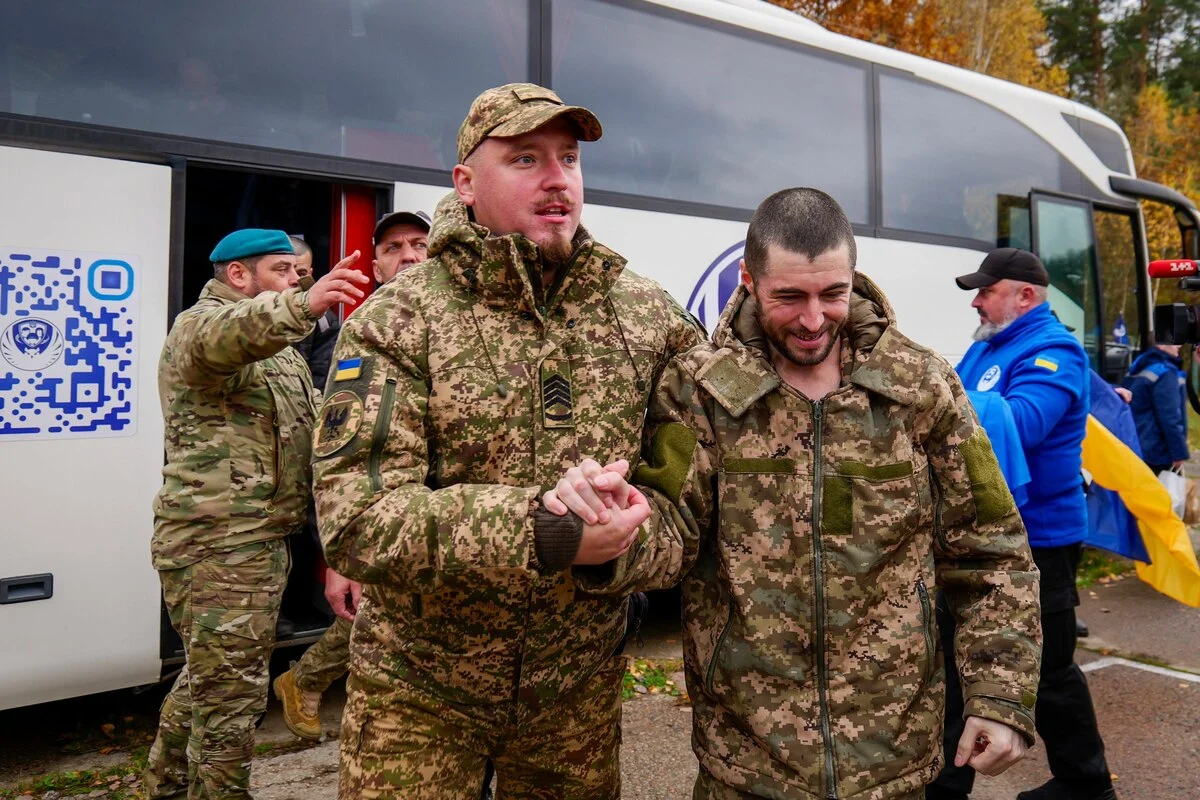
In a demonstration of limited but vital humanitarian cooperation, Ukraine and Russia conducted a large-scale prisoner exchange, with each side returning 270 captives. Ukrainian President Volodymyr Zelenskyy announced on platform X (formerly Twitter) that "270 of our people are home." The freed individuals included soldiers from the Armed Forces, the National Guard, and other military units, as well as nine civilians, many of whom had been held in Russian captivity since 2022. The exchange, consistent with recent precedents, took place at a border crossing between Belarus and Ukraine, a seemingly neutral ground for such sensitive operations. The Russian Ministry of Defence confirmed receiving 270 Russian soldiers, stating that they would receive medical and psychological support upon their return. Prisoner exchanges and the repatriation of fallen soldiers’ remains represent one of the few functional lines of communication and negotiation between the warring parties, offering a critical humanitarian channel in an otherwise intractable conflict. These exchanges, while not directly leading to peace, provide immense emotional relief to families and demonstrate that some degree of pragmatic interaction is still possible.
Diplomatic Overtures and Obstacles
Following discussions with US negotiator Steve Witkoff, Russian President Vladimir Putin reportedly expressed a willingness to resume contacts with representatives from the United States and Ukraine. Kremlin spokesman Dmitry Peskov confirmed that preparations were underway for a trilateral meeting in the United Arab Emirates in mid-November, with a potential date around November 10. Witkoff had previously met with Zelenskyy and European officials before his encounter with Putin in St. Petersburg, indicating a concerted effort to explore diplomatic avenues.
However, the path to broader peace talks remains fraught with challenges. Russia, according to Peskov, views a role for European Union representatives in negotiations over ending the Ukraine war only in a later phase. Initially, talks would revert to the trilateral format involving Russia, the US, and Ukraine. This stance suggests Moscow’s preference for direct engagement with Washington, potentially aiming to sideline European influence and exploit perceived divisions within the Western alliance. The exclusion of the EU in the initial stages of these critical discussions raises concerns among European leaders about their role in shaping the future security architecture of the continent. While the prospect of trilateral talks offers a cautious glimmer of hope for de-escalation, the maximalist demands from both sides, coupled with the ongoing military realities, make any significant breakthrough challenging.
Geopolitical Ramifications and Western Disunity
The various developments of the past week, from Starlink controversies to the Oleshky ceasefire and renewed diplomatic hints, are deeply intertwined with broader geopolitical dynamics and expose potential fissures within the Western alliance, particularly concerning the role of former US President Donald Trump.
Trump’s Stance and Allied Concerns
Former US President Donald Trump’s statements and actions regarding the Ukraine conflict have drawn sharp criticism and raised concerns among European allies. Norbert Röttgen, a prominent CDU foreign policy expert and Vice-Chairman of the CDU/CSU parliamentary group in the German Bundestag, explicitly stated that Trump has positioned himself "on the side of Russian President Vladimir Putin." Röttgen argued that Trump aims to "end the conflict with a deal for which he is willing to make far-reaching concessions."
According to Röttgen, Trump is prepared to "exert pressure on Ukraine, which he has identified as the weaker side more dependent on him." The CDU politician concluded, "As a consequence, he acts against the interests of Ukraine and the Europeans and is therefore currently on the side of Russia – one unfortunately has to say so." This sentiment reflects a growing anxiety in Europe that a potential return of Trump to the White House could undermine Western unity, reduce support for Ukraine, and empower Russia. His "America First" approach is perceived by some as a transactional foreign policy that prioritizes perceived US interests over the collective security of allies.
Energy and Influence: Trump’s Other Agendas
Beyond the immediate conflict, Trump’s diplomatic engagements touched upon other strategic interests. He claimed to have discussed the development of North Sea oil fields with the British Prime Minister (again, incorrectly identified as "Andy Burnham" in the original article, but understood to refer to the sitting PM). Trump stated, "They are developing North Sea oil… I have been pushing them for two years… [The Prime Minister] is getting it done." The Prime Minister’s office reportedly confirmed that the two leaders agreed on the "significant benefits" of approving the Jackdaw gas field in the North Sea for Great Britain. Trump had praised this approval earlier in the week.
These discussions highlight Trump’s consistent focus on energy independence and fossil fuel development, potentially influencing global energy markets and climate policies. The British Prime Minister’s office also noted that he raised the exploitation of oil off the Falkland Islands, the importance of the Starlink satellite network for Ukraine, and the UK’s support for Saudi Arabia during the call. This multi-faceted discussion underscores how various international issues, from energy security to military aid and regional alliances, are interwoven and subject to the influence of key global players. The interplay of these diverse diplomatic threads reveals a complex landscape where economic interests and strategic alliances frequently intersect with the immediate demands of the ongoing conflict in Ukraine.
Conclusion: An Uneasy Balance Between Conflict and Conciliation
The past week in the Ukraine war exemplifies the uneasy balance between relentless conflict and tentative attempts at conciliation. From the battlefields scorched by drone attacks and missile strikes to the quiet rooms where prisoner exchanges are brokered and peace talks are contemplated, the human cost of the war remains tragically high. The localized ceasefire in Oleshky offers a sliver of humanitarian relief, yet its fragility underscores the immense challenges in achieving a broader, lasting peace.
The controversies surrounding Starlink’s functionality and the conflicting statements from prominent US figures highlight not only the critical role of technology in modern warfare but also the potential for political discord to impact crucial support for Ukraine. The willingness of both Moscow and Kyiv to engage in prisoner swaps and discuss future trilateral negotiations, despite the ongoing hostilities, suggests that neither side is entirely closed off to dialogue. However, the path to a comprehensive resolution is fraught with deeply entrenched positions, geopolitical rivalries, and a persistent lack of trust. As the war continues to evolve, the international community watches, grappling with the complexities of supporting Ukraine’s sovereignty while navigating the delicate dance of diplomacy and the shifting sands of global power dynamics. The future of Ukraine, and indeed European security, hangs precariously in this delicate and often contradictory balance.