Brasília, Brazil – October 25, 2022 – As Brazil hurtles towards its presidential runoff election, the nation finds itself gripped by an unprecedented political polarization. The contest between former President Luiz Inácio Lula da Silva and incumbent President Jair Bolsonaro is too close to call, with both candidates locked in a statistical dead heat according to the latest polls. The outcome hinges on a deeply fractured electorate, where the crucial swing factor may well be the millions of undecided voters weary of the bitter ideological struggle.
The stakes could not be higher for Latin America’s largest democracy and economy. Brazil stands at a pivotal crossroads, with the election poised to determine its trajectory on everything from social policy and economic management to environmental protection and its standing on the global stage. The rancorous campaign has exacerbated existing societal fault lines, leaving a sense of trepidation among many citizens who fear for the nation’s democratic stability regardless of who emerges victorious.
A Nation at the Crossroads: Brazil’s High-Stakes Runoff
The political landscape leading up to the runoff is starkly divided. On one side stands Luiz Inácio Lula da Silva, the charismatic leader of the Workers’ Party (PT), who previously governed Brazil from 2003 to 2010. His platform champions robust social programs aimed at poverty reduction, aggressive protection of the Amazon rainforest, and a return to multilateral diplomacy, seeking to rebuild Brazil’s relationships with global partners. Lula’s narrative is one of redemption and a return to a golden era of social inclusion and economic growth, despite the shadow of past corruption allegations that led to his imprisonment (later annulled).
Opposing him is Jair Bolsonaro, the right-wing populist incumbent, whose presidency has been marked by controversial policies and rhetoric. Bolsonaro advocates for a smaller state, reduced taxes, and a tough-on-crime stance. He has often sought closer ties with figures like former US President Donald Trump, signaling a preference for bilateral relationships and a more nationalistic foreign policy. His supporters often credit him with combating corruption and promoting conservative values, while critics decry his perceived authoritarian tendencies and environmental policies.
The latest surveys, conducted just days before the vote, consistently show an extremely narrow margin separating the two candidates. This statistical tie underscores the profound division within the Brazilian populace, where fervent support for one candidate often coexists with intense opposition to the other. The sentiment among many voters is not one of enthusiasm for their chosen leader, but rather a strategic vote against the alternative, a dynamic that further highlights the depth of the nation’s political chasm.
The Campaign Trail: A Chronicle of Confrontation
From First Round to Fierce Runoff
The first round of the presidential election, held on October 2, 2022, saw Lula da Silva secure 48.4% of the vote, just shy of the 50% needed to win outright. Bolsonaro followed with 43.2%. While Lula’s lead was significant, it was narrower than many pre-election polls had predicted, injecting a surge of confidence into Bolsonaro’s campaign and intensifying the battle for the second round. The discrepancy between pollsters’ projections and the actual results raised questions about the accuracy of surveys in such a polarized environment, particularly concerning the so-called "hidden vote" for Bolsonaro.
The weeks following the first round transformed into a relentless, often vitriolic, campaign. Both camps mobilized their bases with renewed vigor, understanding that every single vote could be decisive. Bolsonaro, buoyed by exceeding expectations, pressed his advantage, while Lula sought to consolidate support from other defeated candidates and rally his traditional base.
Debates Defined by Personal Attacks
The televised debates became key battlegrounds, yet they often devolved into sharp personal attacks rather than substantive policy discussions. In one heated exchange, Bolsonaro accused Lula: "Lula, under you, crime exploded in Brazil. Can you explain why 73 percent of prisoners voted for you?" Lula, ever the seasoned politician, retorted with characteristic defiance: "I want 100 percent to vote for me. Even your father!" (referring to Bolsonaro’s son, Flávio, who was present, and playing on the family’s public image). "He knows I am better," Lula added, emphasizing his perceived superiority.
This exchange exemplifies the tenor of the campaign. As political scientist Jairo Nicolau of the Getulio Vargas Foundation observed, "It’s a campaign that has focused on the personal weaknesses of the opponent, because neither candidate truly inspires the voters. People are voting against, not for." The second debate, though slightly less aggressive, continued this trend, offering little in the way of concrete solutions to Brazil’s pressing problems.
The personal nature of the attacks reflected the desperation of a tight race. Lula, at nearly 77 years old, was often portrayed as too old and out of touch for the demands of the presidency. A significant portion of Brazil, including some who once supported him, expressed fatigue with Lula and his Workers’ Party. Conversely, Bolsonaro was frequently characterized as unqualified and inexperienced, with critics arguing that his political career was almost entirely predicated on his father’s controversial persona. This perception fueled arguments that he lacked the gravitas and diplomatic skill required for the nation’s highest office.
Beneath the Surface: Unpacking Brazil’s Divisions
Economic Realities and Social Discontent
Brazil’s direction is a choice between fundamentally different approaches. Lula’s vision centers on social programs, such as Bolsa Família (a conditional cash transfer program), which lifted millions out of poverty during his previous tenure. He promises a renewed focus on public services and wealth redistribution, aiming to tackle the severe inequality that plagues the nation. However, his past administrations were also marred by corruption scandals, which Bolsonaro’s campaign relentlessly highlighted, casting doubt on the PT’s integrity.
Bolsonaro, on the other hand, advocates for a more market-oriented economy, promising less government intervention, lower taxes, and deregulation to stimulate private sector growth. His supporters believe this approach is essential for economic recovery and job creation. He also maintains a strong focus on law and order, promising a "hard hand" against drug gangs and criminal elements, resonating with a segment of the population deeply concerned about urban violence.
The Amazon and Environmental Stakes
Beyond economics, the election carries immense environmental implications, particularly for the Amazon rainforest. Lula has pledged a dramatic reversal of Bolsonaro’s environmental policies, which saw a significant increase in deforestation rates during his term. Lula envisions a Brazil that leads global efforts in climate protection and sustainable development, aligning with international calls for Amazon preservation.
Bolsonaro, conversely, has often prioritized economic development over environmental protection, advocating for expanded mining and agricultural activities in the Amazon. His critics argue that his policies have emboldened illegal loggers and miners, contributing to irreversible ecological damage. The global community watches this aspect of the election with particular concern, recognizing the Amazon’s critical role in regulating global climate.
The Shifting Allegiances of the Working Class
Historically, Lula, a former metalworker and union leader, has drawn his strongest support from Brazil’s working class. However, the current election reveals a fascinating shift. Cauã Santos Souza, a 21-year-old bicycle courier, exemplifies this change. He feels that Lula and the Workers’ Party have lost credibility among the "modern" working class. "There are the corruption allegations – and the schools and healthcare system, they’re just not good, endless waiting times," he explains. More fundamentally, he criticizes Lula’s social programs as pure populism: "Because there are many people who say: ‘Why should I go to work if I can collect a state social benefit?’"
This sentiment is echoed by Lizzie Morera on Rio’s Copacabana beach, who says the Workers’ Party’s promises are "exposed" by Bolsonaro’s criticisms. "They’ve been promising things for ages but never deliver. That’s pure populism!" she asserts. She believes Bolsonaro has good ideas, adding, "And if he doesn’t implement them, then we’ll just vote him out again." This pragmatism, or disillusionment, among traditionally left-leaning demographics highlights the complex layers of voter sentiment that both candidates must navigate.
The Elusive Undecided Voter
Perhaps the most critical demographic in this razor-thin race is the undecided. A staggering 40 million out of Brazil’s 158 million eligible voters either abstained or cast invalid ballots in the first round. These are individuals like Cleber Ventura, who are deeply frustrated by the country’s polarization and yearn for fresh ideas. "I don’t really want to vote for either of them, but I probably will have to," he laments. "I find it all very bad, there are so many accusations, corruption allegations on both sides." He also points to the deluge of fake news in social media. "I hardly have any trust left."
These voters, disillusioned by the political establishment and bombarded by conflicting narratives, represent a volatile bloc that could swing the election. Their eventual choice, or lack thereof, will be a testament to the depth of disaffection within Brazilian society.
The Battle for Narrative: Accusations and Counter-Accusations
Allegations of Misinformation and Digital Warfare
The campaign has been plagued by widespread allegations of misinformation and the weaponization of social media. Both candidates have faced accusations of deliberately disseminating false information, leading to numerous complaints filed with electoral authorities. Lula’s team, in particular, accused US tech giant Meta (parent company of Facebook, Instagram, and WhatsApp) of unequal treatment, claiming their efforts to combat fake news were insufficient compared to the scale of disinformation favoring Bolsonaro.
The digital realm has become a crucial battleground, with both sides investing heavily in online mobilization. While Bolsonaro’s campaign has historically demonstrated a formidable presence on social media, Lula’s team launched an aggressive digital mobilization strategy in the runoff phase, working to close the gap.
Judicial Interventions and Campaign Tactics
The intensity of the accusations has frequently spilled over into the judiciary. Both campaigns sought the exclusion of the opposing candidate from certain public appearances or debates, citing violations of electoral rules or campaign ethics. These legal battles underscore the high stakes and the desperate measures taken to gain an advantage.
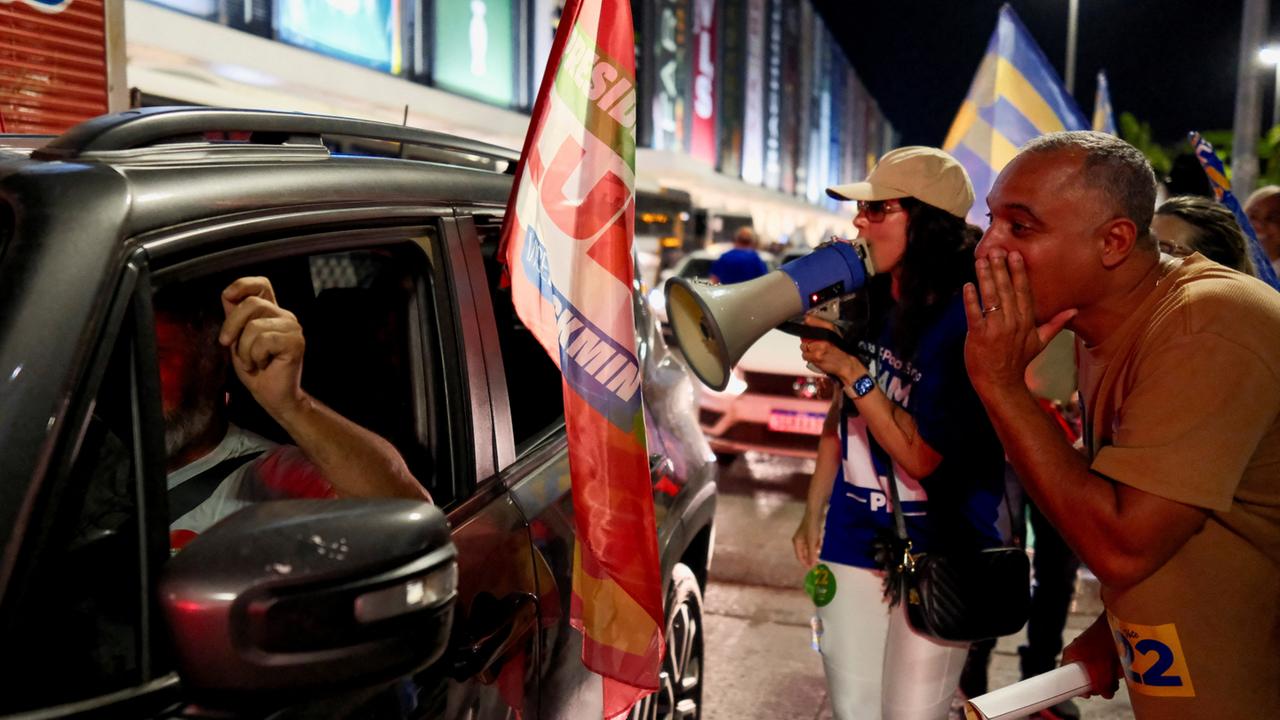
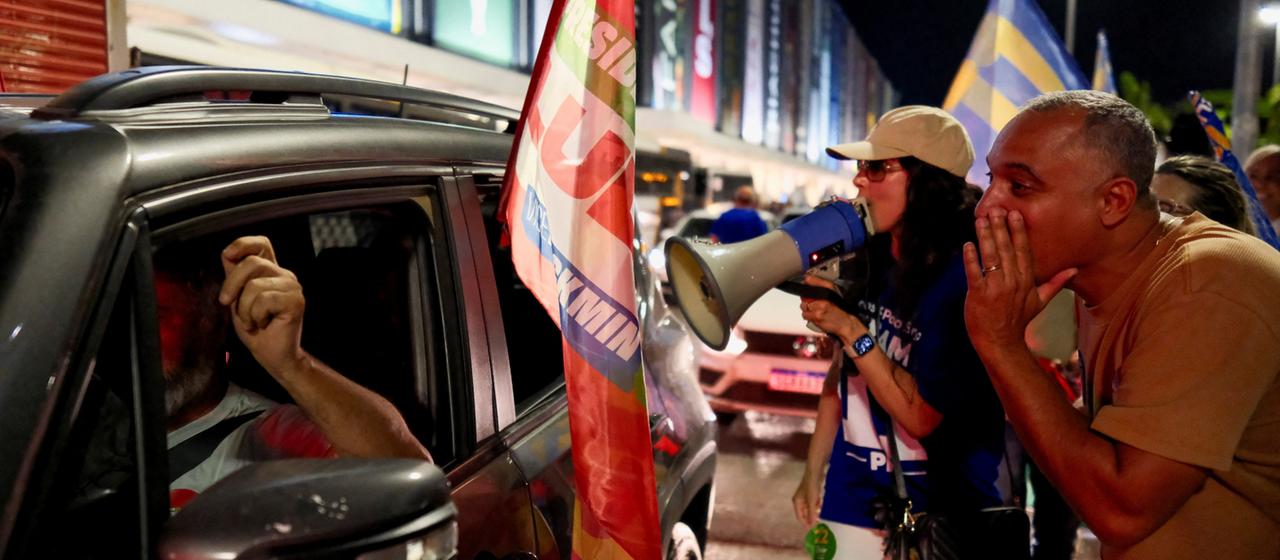
Beyond the digital sphere, Bolsonaro’s camp has increasingly turned to street mobilizations, a tactic traditionally associated with the left. Meanwhile, Lula’s supporters, particularly students, workers, artists, and LGBTQ+ movements, have taken to Brazil’s city centers to rally for their candidate, showcasing a vibrant, grassroots energy.
The campaign also saw unusual endorsements. Former congresswoman and journalist Joice Hasselmann, a prominent one-time Bolsonaro ally known for her staunch opposition to the Workers’ Party, publicly declared her intention to vote for Lula. Her viral video articulated a growing sentiment among some conservatives: "The two sides are not equal. One represents ideas that I have fought against for decades – but within democratic rules." She sharply criticized the Bolsonaro family as a "clan" with criminal connections, standing for "hate, lies, violence, and theft." This "Left and Right together against Bolsonaro" slogan reflected a broader movement of former adversaries uniting against what they perceive as a threat to democratic norms.
Implications for Brazil’s Future
Democracy on the Brink
The shadow of the January 8, 2023, attack on government buildings in Brasília looms large over this election. Luis dos Santos, a souvenir vendor who had his stall set up on the "Praça dos Três Poderes" (Three Powers Plaza) that day, vividly recalls the mob of approximately 4,000 Bolsonaro supporters who stormed the Congress, Supreme Court, and presidential palace, fueled by false claims of electoral fraud. "I don’t want to experience that again," the street vendor worriedly states. This memory serves as a stark reminder of the fragility of democratic institutions and the potential for post-election unrest in a deeply polarized nation. The upcoming election is not just about policy; it’s about the future of Brazilian democracy itself.
Economic Trajectories and Social Equity
Economically, a Lula presidency would likely mean a return to increased state intervention, social spending, and potentially higher taxes for the wealthy, alongside efforts to boost domestic industries. Bolsonaro’s re-election would likely continue his agenda of privatization, fiscal austerity, and reduced regulation, aiming to attract foreign investment. Both paths carry risks and opportunities, and Brazil’s vast informal economy and persistent poverty present significant challenges regardless of the victor. The recent passage of a historical labor reform in Congress, abolishing the six-day work week, highlights the ongoing efforts to address workers’ rights and economic conditions, which will continue under the next administration.
Brazil’s Place in the World
Internationally, Lula promises to restore Brazil’s image as a global player committed to multilateralism, environmental diplomacy, and South-South cooperation. He would likely re-engage with international organizations and prioritize climate action. Bolsonaro’s continuation would likely see Brazil maintain a more isolationist stance, focusing on national interests and forging alliances with ideologically aligned leaders. The world watches keenly, aware of Brazil’s geopolitical weight and its critical role in global environmental stewardship.
Echoes of the Past, Fears for the Future
As Brazilians head to the polls, the sense of apprehension is palpable. The outcome is not merely a choice between two political figures, but a decision that will profoundly shape the nation’s identity, its social fabric, and its democratic resilience. With a country so evenly split, and the scars of past political turmoil still fresh, the post-election period will be crucial in determining whether Brazil can heal its deep divisions or if the polarization will continue to threaten its stability. The hope remains that, despite the acrimony, democratic processes will prevail and a peaceful transition or continuation of power will underscore the strength of Brazil’s institutions.