BREMEN – As Germany marked the 36th anniversary of its reunification on October 3, 2026, the festivities in the Hanseatic city of Bremen served as more than just a celebratory milestone. Under the official motto "Many Strengths – One Country," the day became a stage for sober introspection, political soul-searching, and a candid acknowledgment of the lingering psychological and structural rifts that continue to define the German experience.
While the streets of Bremen were filled with hundreds of thousands of citizens enjoying a vibrant citizens’ festival, the halls of power and the pulpits of the city’s historic cathedrals echoed with warnings: that the unity achieved in 1990 is not a static state of grace, but a fragile project requiring constant maintenance against the corrosive forces of polarization, extremism, and socio-economic inequality.
The Liturgy of Cohesion: Church Leaders’ Urgent Appeal
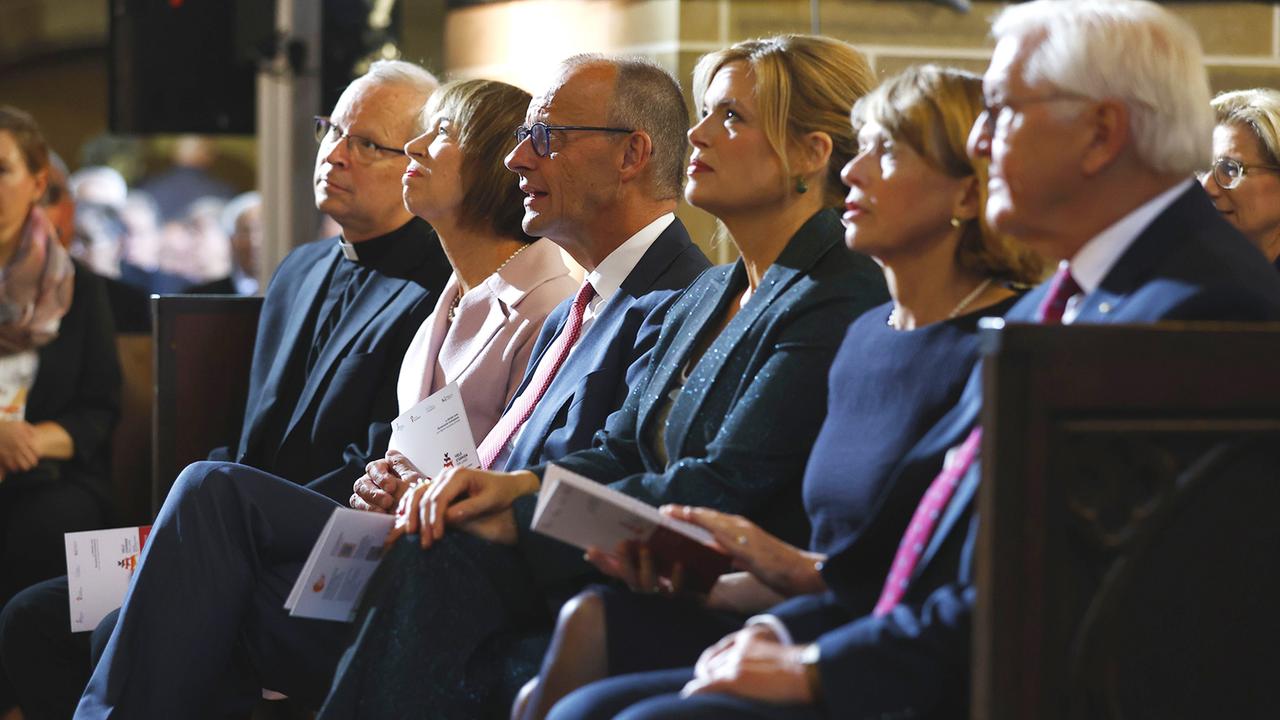
The day began with an ecumenical service in the St. Petri Cathedral, a setting that underscored the moral dimension of the national holiday. Amidst a backdrop of political uncertainty, church leaders framed the German identity not as a product of geography or history, but as a commitment to mutual reliance.
Bernd Kuschnerus, president of the Bremische Evangelische Kirche, delivered a sermon that resonated with the current national mood. "True strength arises where we need one another and place trust in our neighbors," he declared. Kuschnerus warned against the "anxiety of the times," urging citizens to resist the temptation to retreat into individualistic shells. "Charity means bearing burdens collectively and recognizing the inherent worth of every individual’s contribution to the whole," he noted.
Complementing this, Bishop Dominicus Meier of the Catholic Diocese of Osnabrück issued a stark warning against the "atomization" of society. He cautioned that if the prevailing political ethos shifts toward a "survival of the fittest" mentality, the foundations of the German social market economy would crumble. "The dignity of the human being, enshrined in our Basic Law, is our primary shield against the rising tides of xenophobia and antisemitism," Meier stated. His words served as a direct challenge to the political establishment to ensure that no citizen feels left behind in the transition to a modern, digital, and green economy.
Chronology of a Commemoration
The schedule of the day highlighted the bridge between traditional ritual and modern political discourse:
- 10:00 AM: The Ecumenical Service at St. Petri Cathedral, focusing on the theme "Many Gifts – One Spirit."
- 12:30 PM: The state banquet and official reception at the "Die Glocke" concert hall, attended by federal constitutional bodies, state leaders, and industry representatives.
- 2:00 PM: The keynote address by Federal President Frank-Walter Steinmeier, followed by a plenary session on the future of federalism.
- 4:00 PM onwards: The public "Ländermeile," where all 16 federal states showcased their cultural and economic identities to the public.
- 8:00 PM: A celebratory concert featuring national cultural icons, designed to bring the diverse crowds together.
The Political Reality: Steinmeier’s Stark Warning
Following the religious ceremony, the focus shifted to the "Die Glocke" concert hall for the state ceremony. The atmosphere was notably serious. Federal President Frank-Walter Steinmeier, in a address that stretched nearly 50 minutes, did not shy away from the darker realities of the contemporary German landscape.
Steinmeier admitted that his own expectations for the democracy that emerged from reunification had, in some respects, remained unfulfilled. He spoke of a collective disappointment felt by many citizens, both East and West, who had hoped for a swifter integration of living standards and a more harmonious social fabric. He characterized the current threats to democracy—fueled by extremism—as a crisis of "self-assertion."
"We must realize that the unity of 1990 was the starting point, not the finish line," Steinmeier remarked. His speech was a call to action for the political class to recognize that when large segments of the population feel alienated from the democratic process, the stability of the entire republic is at risk.
The East-West Divide: Persistent Structural Inequalities
A recurring theme throughout the day was the persistent, albeit shrinking, gap between the former East and West Germany. Elisabeth Kaiser, the federal government’s Commissioner for the New Federal States, provided the most pointed critique of the day.
Kaiser argued that despite decades of investment, the visual and structural representation of East Germans in the highest echelons of federal power remains alarmingly low. "When the leaders of our country gather here in Bremen, the absence of East German voices at the highest levels is glaring," Kaiser noted. "It risks creating the impression that East Germans are relegated to the ‘kids’ table’ of our democracy."
She pushed for a symbolic and substantial shift, explicitly calling for the election of an East German woman as the next Federal President. This, she argued, would signal a maturation of the German state, recognizing the specific historical experiences of the East—the "existential upheavals" of the post-1990 era—as a vital part of the national narrative rather than a peripheral footnote.
Supporting this view, former Thuringian Minister-President Bodo Ramelow added that the "depth of mistrust" in the East remains a significant hurdle. "The rooms for genuine understanding are rare," he lamented, emphasizing that while economic parity is slowly being achieved, the cultural and emotional integration is a process that has yet to conclude.
Implications for the Future: A "Marriage" with Crisis
Wolfgang Thierse, the former President of the Bundestag, offered a metaphor that captured the sentiment of many observers: the German unity project is akin to a long-term marriage. "Nobody wants a divorce," he told Deutschlandfunk, "but every healthy marriage goes through crises and heated arguments."
Thierse argued that the current friction between federal states—such as the differences in political temperament between Saxony and Rhineland-Palatinate—should be viewed as a sign of normalcy rather than a symptom of imminent collapse. The challenge, according to Thierse, is to institutionalize that "normalcy" so that disagreements do not escalate into systemic delegitimization.
This was echoed by the current Bundesratspräsident and Mayor of Bremen, Andreas Bovenschulte. "Democracy requires debate," he emphasized during the ceremony. "But the political opponent is not an enemy. We must ensure that the quality of life, access to education, and public services are not determined by one’s postal code."
Data and Public Engagement
The logistical scale of the 2026 celebrations serves as a proxy for the country’s enduring interest in its national identity. With over 400,000 visitors expected over the weekend, the city of Bremen transformed into a laboratory of national unity.
- The Ländermeile: Over 100 stages and exhibition booths were erected, featuring regional industries, technological innovations, and culinary traditions.
- Economic Context: While statistics show that East German GDP has risen to roughly 85% of Western levels, the disparity in private wealth accumulation remains a point of contention. Government data indicates that the "wealth gap" between households in the East and West is the primary driver of the lingering sense of inequality.
- Public Participation: Despite the rhetoric of "polarization," the massive turnout at the festivities suggests that the public remains deeply invested in the idea of a shared German future, even if they hold vastly different visions of what that future should look like.
Conclusion: Toward a More Resilient Unity
As the lights dimmed over the Weser River on the evening of October 3, the message from Bremen was clear: Germany is entering a phase of its history where the "reunification" phase is giving way to a "re-evaluation" phase.
The challenges of 2026—rising populism, the economic strain of the energy transition, and the unresolved emotional legacy of the division—are not signs that the unity project has failed. Rather, they are signs that the project has entered its adult phase. The calls for an East German head of state, the insistence on democratic discourse, and the warnings against social isolation all point to a country that is wrestling with its identity in real-time.
As the festivities conclude, the task for the coming years will be to translate the solemn promises made in Bremen into tangible policies that ensure every citizen—regardless of their history or their region—feels that they are a full partner in the German experiment. The "many strengths" mentioned in the official motto are only as good as the unity that binds them together. In 2026, Germany has proven that it is still a nation in the making, and perhaps, that is the most authentic way to celebrate the Day of German Unity.