Berlin, Germany – In the hushed, ornate salons of Café Einstein Unter den Linden, where the aroma of freshly brewed coffee mingles with the faint scent of ambition and power, a peculiar ingredient often seasons the morning conversations: cynicism. This isn’t the light, playful cynicism of a morning talk show, but a professional hardening, a thick layer of strategic detachment and gallows humor that permeates discussions among the capital’s political elite, media mavens, and influential lobbyists. It’s a place where the next strategic maneuver in the perpetual drama of coalition politics, or the latest whisper of a chancellor’s downfall, is dissected with surgical precision, often before the first croissant is buttered.
Yet, on a crisp October morning, amid this familiar tableau of power and pragmatism, one man stood out. Jens Nordalm, a seasoned political strategist and former speechwriter for some of Germany’s most prominent figures, presented a striking counter-narrative. While tables around him buzzed with analyses of the latest political machinations and the ever-present speculation surrounding the Chancellor’s stability, Nordalm offered a diagnosis for the nation’s malaise that bypassed conventional policy prescriptions entirely. His proposed remedy? A rediscovery of Eduard Graf von Keyserling, a somewhat overlooked Baltic German aristocrat and writer from a bygone era.
Nordalm’s assertion was delivered with earnest conviction: Keyserling, a figure from the early 20th century, held the key to rekindling Germany’s soul and, by extension, safeguarding its democratic foundations. His "soul-warming powers," Nordalm posited, could offer a much-needed antidote to the pervasive cynicism and existential angst gripping the nation. More Keyserling, he argued, could lead to less danger for German democracy.
Taking a sip from his tea – a concession to the season’s first significant cold – Nordalm elaborated on his broader vision. Just as the tea promised relief for his ailment, he believed Germany needed a balm for its turbulent spirit: its own history, its rich cultural and intellectual heritage. The man who once crafted words for the likes of Joachim Gauck, Wolfgang Schäuble, and Angela Merkel, and now advises Friedrich Merz, expressed unwavering certainty: Germany must simply re-engage with its profound cultural and intellectual legacy. Only then, he insisted, would the nation truly heal and prosper.
Main Facts: An Unconventional Prescription for a Nation in Flux
At the heart of Berlin’s political and social life, Café Einstein Unter den Linden serves as an unofficial parliament, a crucible where Germany’s future is often forged in hushed tones over breakfast. The prevailing mood is one of guarded realism, often bordering on professional cynicism, reflecting the complex challenges facing the nation.
Into this atmosphere steps Jens Nordalm, a prominent intellectual and veteran speechwriter whose career spans multiple political generations and ideologies, from the moral authority of Joachim Gauck to the pragmatic conservatism of Friedrich Merz. Nordalm’s unique perspective challenges the conventional wisdom prevalent in these circles.
His central, provocative argument is that Germany’s current political and societal difficulties—manifested in widespread cynicism, political polarization, and a perceived erosion of democratic health—cannot be solved purely through economic policy or political maneuvering. Instead, Nordalm advocates for a profound cultural introspection.
The cornerstone of his proposed solution is the rehabilitation of Eduard Graf von Keyserling, a largely forgotten aristocratic writer. Nordalm contends that Keyserling’s literary contributions, imbued with a melancholic beauty and a deep understanding of human experience, possess "soul-warming powers" that could serve as a vital emotional and intellectual anchor for contemporary Germany. He suggests that a greater appreciation for Keyserling’s work could directly translate into a more resilient and empathetic democratic society.
Broadening this specific literary focus, Nordalm posits a grander thesis: Germany’s path to overcoming its current predicaments lies in a comprehensive re-engagement with its entire cultural and intellectual heritage. This includes its philosophical traditions, artistic achievements, and literary masterpieces, arguing that such a reconnection would inherently strengthen the nation’s identity, foster a deeper sense of community, and ultimately lead to a healthier political landscape. His conviction is that by drawing upon the wisdom and beauty of its past, Germany can navigate the complexities of its present and secure a more stable future.
The Heart of Berlin’s Power: Café Einstein Unter den Linden
Café Einstein Unter den Linden is more than just a place to grab a morning coffee; it is an institution, a vibrant nexus where the arteries of German power converge. Housed in a magnificent Gründerzeit villa, its grand ceilings, polished wooden floors, and crisp white tablecloths exude an air of understated elegance that belies the intensity of the conversations held within. Here, the clinking of porcelain and the murmur of discreet whispers form the soundtrack to the unwritten history of the Federal Republic.
From early morning, the café’s tables are occupied by a distinct clientele: Bundestag members strategizing over the day’s agenda, influential journalists gathering insights or shaping narratives, and high-ranking association representatives lobbying for their causes. The air is thick with a particular kind of energy – one born of proximity to power, constant negotiation, and the relentless churn of policy-making. This environment fosters a unique dialectic: on one hand, a commitment to democratic processes and public service; on the other, a professional weariness, a deep-seated skepticism born from endless compromise and the often-frustrating realities of governance.
This is the cynicism Nordalm observed, a pervasive sentiment that transcends political affiliation. It’s not necessarily a malicious cynicism, but rather a coping mechanism, a shield against disappointment, and a tool for navigating the often-brutal landscape of Berlin politics. Conversations frequently revolve around the latest political crisis, the perceived missteps of the government, or the perennial challenge of maintaining a fragile coalition. The epic drama surrounding the "Kanzlersturz" – the continuously rumored downfall of the Chancellor – serves as a constant backdrop, fueling an atmosphere of uncertainty and heightened tension. In this high-stakes environment, quick fixes, tactical maneuvers, and immediate reactions often take precedence over long-term strategic thinking or profound philosophical reflection.
A Voice Against the Current: Jens Nordalm’s Unconventional Wisdom
It is precisely against this backdrop of pragmatic cynicism that Jens Nordalm’s voice resonates with particular clarity. His demeanor, perhaps softened by the lingering cold, contrasts sharply with the sharp-edged discourse around him. Nordalm is not an outsider to this world; his resume speaks volumes about his deep immersion in the machinery of German politics. He has been an intellectual architect behind some of the nation’s most pivotal speeches, translating complex ideas into compelling narratives for figures who have shaped modern Germany. Yet, his current discourse suggests a subtle but significant departure from the conventional wisdom he has long helped to articulate.
Nordalm’s initial deviation from the prevailing political chatter is his invocation of Eduard Graf von Keyserling. While his peers might be debating economic forecasts or electoral strategies, Nordalm is championing a figure from the annals of German literary history, one whose name might draw a blank stare from many of the café’s power brokers. He speaks with a quiet conviction, underscoring Keyserling’s perceived neglect and then launching into an earnest, almost poetic, defense of the author’s enduring relevance. His argument is not merely an academic exercise; it is presented as a direct intervention into the nation’s current predicament.
The Enduring Relevance of Eduard Graf von Keyserling
Eduard Graf von Keyserling (1855-1918) was a Baltic German aristocrat, a novelist, dramatist, and short story writer, often associated with Impressionism and Naturalism. His works, frequently set in the fading aristocratic estates of his native Courland (modern-day Latvia), explored themes of melancholy, longing, the beauty of nature, the complexities of human relationships, and the gradual decline of the old social order. He possessed a keen psychological insight, crafting narratives steeped in a nuanced understanding of internal lives and unspoken desires. His prose was often described as elegant and atmospheric, evoking a world of subtle emotions and profound introspection.
Nordalm’s assertion that Keyserling possesses "soul-warming powers" is not an appeal to nostalgia but a call for a re-engagement with a specific kind of artistic sensibility. In Keyserling’s world, beauty was often found in transience, strength in vulnerability, and meaning in quiet observation rather than grand pronouncements. His characters, often grappling with existential questions and societal constraints, offer a mirror to contemporary anxieties – the search for authenticity in an increasingly superficial world, the yearning for genuine connection amidst digital distractions, and the quiet despair that can accompany rapid societal change.
Nordalm suggests that Keyserling’s ability to depict the nuances of human experience, to articulate unspoken longings and the delicate interplay of individual fate with broader historical currents, offers a balm for the modern German psyche. In an age of stark political divides and reductive public discourse, Keyserling’s literature could encourage empathy, foster a greater appreciation for complexity, and remind individuals of the enduring human spirit beyond ideological battles. His tales, while set in a specific historical context, touch upon universal themes of love, loss, duty, and the search for meaning, offering a sense of connection to a shared human experience that transcends the immediate political fray. This, Nordalm implies, is the foundation for a more robust and compassionate democracy – one built not just on laws and policies, but on a deeper understanding of the human condition.
Culture as a Cure: Nordalm’s Grand Thesis
Nordalm’s advocacy for Keyserling is but a specific manifestation of his broader and more ambitious thesis: that Germany’s current political and social ills can only truly be remedied by a profound and deliberate refocus on its rich cultural and intellectual heritage. This is not merely an academic exercise but a strategic imperative. In his view, a nation disconnected from its historical intellectual roots becomes susceptible to superficiality, short-term thinking, and the corrosive effects of cynicism.
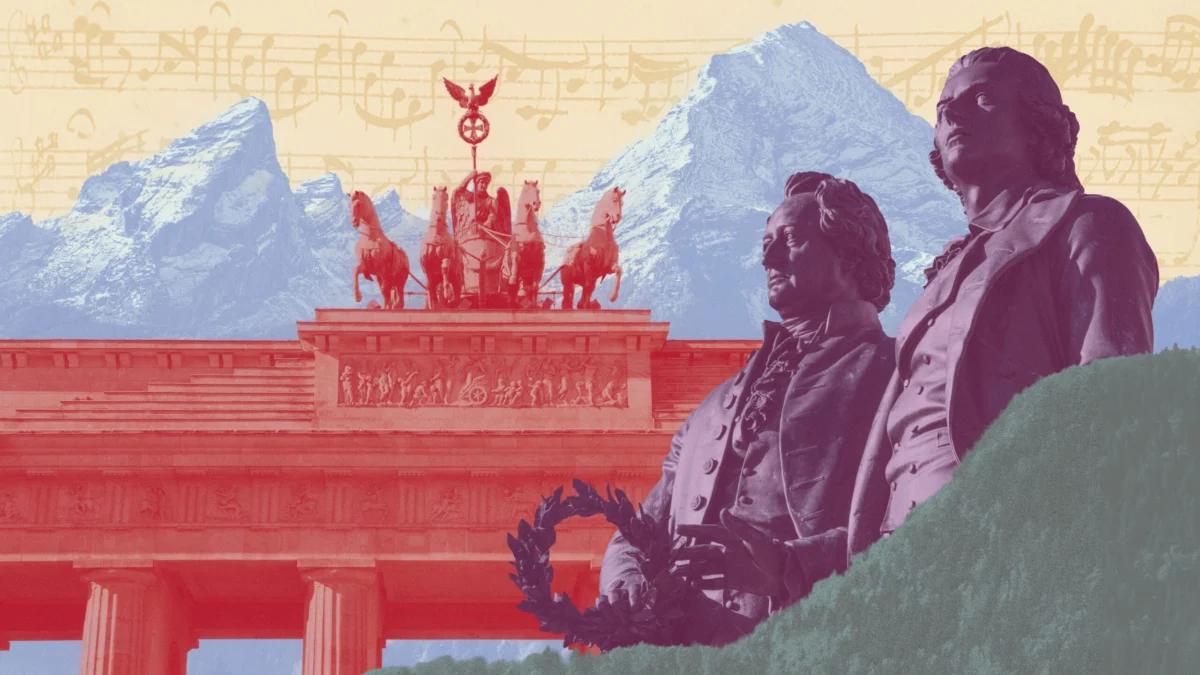
He envisions a Germany that actively engages with its philosophical giants – from Kant’s categorical imperative to Hegel’s dialectics and Nietzsche’s revaluation of values – not as dusty academic subjects, but as living frameworks for understanding contemporary challenges. He speaks of a rediscovery of German Romanticism’s profound connection to nature and emotion, the Enlightenment’s emphasis on reason and individual liberty, and the rich tapestry of German classical music, art, and literature that has profoundly shaped Western civilization.
The link between cultural grounding and political stability, in Nordalm’s estimation, is direct and potent. A populace deeply immersed in its heritage gains a stronger sense of identity, a shared narrative that transcends regional or political differences. This fosters resilience, critical thinking, and a long-term perspective essential for navigating complex global challenges. It encourages a nuanced understanding of history, allowing for both pride and critical reflection, rather than a simplistic, often polarized, view of the past. By drawing upon the intellectual rigor and aesthetic beauty of its heritage, Germany could cultivate a public discourse characterized by depth, empathy, and a collective commitment to shared values, thereby inoculating itself against the dangers of populism, polarization, and democratic erosion. Nordalm believes that if the collective German spirit is nourished by its own profound cultural wellspring, the country will automatically find its way back to a path of strength and cohesion.
Chronology of a Nation’s Discontent: The "Kanzlersturz" Context
The "epic drama surrounding the continuously rumored Chancellor’s downfall" that Nordalm observes is not a sudden eruption but the culmination of a series of interlocking challenges that have tested Germany’s political resilience. Following years of relative stability under Angela Merkel, the current coalition government, an unlikely alliance of Social Democrats, Greens, and Liberals, has faced an unrelenting barrage of crises.
The initial optimism surrounding the "traffic light coalition" quickly gave way to the harsh realities of governance in a volatile global landscape. The immediate aftermath of the Russian invasion of Ukraine plunged Germany into an unprecedented energy crisis, forcing a rapid re-evaluation of its energy policy and a scramble for alternative sources. This was compounded by persistent inflation, impacting household budgets and fueling public discontent.
Domestically, the coalition has struggled with internal divisions, particularly between the more fiscally conservative Liberals and the social spending priorities of the Social Democrats and Greens. Debates over climate policy, immigration, and economic reforms have often been protracted and contentious, giving the impression of a government more preoccupied with internal squabbles than with decisive action. Public confidence has wavered, reflected in declining approval ratings for the Chancellor and his cabinet.
Furthermore, a broader sense of social fragmentation has emerged. Issues of identity, migration, and the future of Germany’s industrial base have created deep fissures in society, exploited by populist movements on both the left and right. The rise of extremist parties, fueled by economic anxieties and cultural grievances, has put immense pressure on mainstream political discourse, making consensus-building increasingly difficult.
This constant state of crisis and political infighting has contributed to the pervasive cynicism Nordalm identifies. Citizens and political observers alike have grown weary of the perceived lack of vision, the endless compromises, and the often-combative rhetoric. In such an environment, the appeal of a deeper, more unifying cultural narrative, as proposed by Nordalm, becomes particularly poignant.
Supporting Data and Historical Precedent: Culture as a National Anchor
Historically, nations in times of profound crisis have often turned to their cultural and intellectual heritage as a source of solace, identity, and renewal. Post-war Germany, for instance, embarked on a deliberate path of cultural rebuilding and re-engagement with its democratic traditions, seeking to reconnect with the "other Germany" – the Germany of Goethe, Schiller, and democratic ideals – after the catastrophe of Nazism. The arts, literature, and philosophy played a crucial role in re-establishing a sense of national purpose and moral compass.
Globally, other examples abound. France, following periods of national trauma, has consistently invoked its Enlightenment heritage and cultural grandeur to reaffirm its identity and mission. Britain, in moments of imperial decline or social upheaval, has often looked to its literary giants and historical narratives to reinforce a sense of continuity and resilience. The very concept of "national identity" is inextricably linked to shared cultural narratives, symbols, and intellectual traditions.
Public intellectuals, like Nordalm, have often served as crucial figures in these moments, articulating visions that transcend immediate political battles. From Thomas Mann’s appeals for a democratic Germany during his exile to the philosophical debates that shaped post-war European integration, the power of ideas and cultural discourse to influence political trajectories is well-documented.
However, the path is not without its pitfalls. A focus on "heritage" can, if not carefully managed, devolve into a romanticized or exclusionary nationalism, selectively highlighting aspects of the past while ignoring others. The challenge lies in fostering an inclusive appreciation of culture, one that acknowledges complexities, contradictions, and multiple perspectives within a nation’s history, rather than presenting a monolithic, idealized version. Nordalm’s emphasis on "soul-warming powers" and an appeal to deeper human values suggests an attempt to steer clear of such dangers, aiming for a unifying, rather than divisive, cultural reawakening.
Official Responses and Political Receptiveness: A Difficult Sell?
The reception of Nordalm’s ideas within the corridors of power would undoubtedly be mixed. While his intellectual gravitas and extensive network, forged through years of speechwriting for political heavyweights, would ensure he’d be heard, translating his abstract cultural vision into concrete political action presents a significant challenge.
Some, particularly those on the more traditional conservative wing of politics, might find his call for a return to cultural heritage appealing, seeing it as a way to reinforce national identity and traditional values. Friedrich Merz, Nordalm’s current employer, leading the CDU, might appreciate the emphasis on a strong cultural foundation as part of a broader conservative renewal, though perhaps with a more pronounced focus on specific German traditions.
Conversely, many within the progressive and pragmatic centrist camps might view such proposals with skepticism. In a political landscape dominated by pressing economic, environmental, and social crises, the idea of solving problems through "more Keyserling" might be dismissed as overly academic, idealistic, or simply not actionable. Policy-makers are often pressured to deliver tangible results, and the impact of cultural immersion is inherently long-term and difficult to quantify.
A figure like Joachim Gauck, for whom Nordalm once wrote, might have been most receptive. Gauck, known for his moral authority and emphasis on civic education and historical consciousness, would likely appreciate the call for deeper reflection and a stronger connection to Germany’s intellectual traditions. Angela Merkel, with her renowned pragmatism, might acknowledge the intellectual merit but question its immediate practical application in governing a complex modern state. Wolfgang Schäuble, the architect of fiscal discipline, while a cultured man himself, would likely prioritize economic stability and structural reforms.
The challenge for Nordalm lies in demonstrating how a cultural renaissance can directly address the immediate anxieties of citizens and the systemic issues facing the government. He would need to bridge the gap between abstract cultural values and their concrete manifestation in public policy, education, and social cohesion. Without such a bridge, his profound insights might risk remaining a poignant, yet ultimately unheard, lament within the cynical heart of Berlin.
Implications for Germany’s Future: A Path Less Traveled
If Jens Nordalm’s vision were to gain significant traction, the implications for Germany’s future could be profound, representing a significant paradigm shift in how the nation approaches its challenges. It would signal a move away from purely technocratic or economic solutions towards a more holistic understanding of national well-being, one that acknowledges the vital role of shared cultural identity and intellectual depth.
Such a shift could manifest in several ways: a renewed emphasis on humanities and arts education, fostering critical thinking and historical consciousness from an early age; public initiatives promoting cultural literacy and engagement; and a more nuanced, reflective public discourse that values complexity over simplistic narratives. It might encourage a national conversation about what it truly means to be German in the 21st century, rooted in a rich heritage while embracing diversity and global interconnectedness.
However, the path would be fraught with difficulties. In a fast-paced, crisis-driven political environment, implementing such a long-term cultural strategy is a monumental undertaking. It would require sustained political will, significant investment, and a collective societal commitment that transcends immediate electoral cycles. The very cynicism Nordalm seeks to combat could prove to be the biggest obstacle, making it challenging to convince a skeptical populace and political class that a deeper engagement with Keyserling or Kant holds more promise than the next policy package.
Ultimately, Nordalm’s solitary voice in the bustling Café Einstein serves as a powerful reminder. It’s a testament to the enduring human need for meaning beyond the mundane, for a connection to something larger than immediate political skirmishes. Whether a "Keyserling renaissance" can truly offer a balm for a cynical nation remains to be seen. But in proposing such an unconventional cure, Jens Nordalm forces Berlin’s power brokers, and indeed the entire nation, to ponder a fundamental question: What truly nourishes the soul of a democracy, and what, in the relentless pursuit of power and progress, might Germany be in danger of forgetting? His tea may soothe his cold, but the efficacy of his cultural cure for the nation’s spiritual malaise is a debate that has only just begun.