ROME, Italy – Tens of thousands of Italians have taken to the streets across the nation in a powerful demonstration of opposition against the right-wing government led by Prime Minister Giorgia Meloni. A nationwide day of protest, marked by widespread rallies and planned industrial action, saw citizens voice their anger over soaring inflation, stagnant wages, and what they perceive as misdirected government spending priorities. As students and workers joined forces, security forces were deployed in large numbers, particularly in major urban centers, amidst concerns of potential unrest.
The demonstrations, which unfolded on Monday, October 30th, were organized in approximately 50 cities, from the bustling metropolises of Rome, Milan, and Turin to smaller towns and communities. This broad geographic spread underscores the depth of dissatisfaction simmering within Italian society. Students and university undergraduates were particularly prominent, amplifying calls for increased investment in education, while various unions, most notably the Unione Sindacale di Base (USB), orchestrated strikes across critical sectors, including public transport and healthcare. The sheer scale and coordinated nature of these protests signal a significant challenge to Meloni’s year-old administration.
A Nation on Edge: The Scale of Discontent
The protest movement, coalescing under the banner of social justice and economic fairness, brought together a diverse coalition of activists, labor union members, and young people. In Rome, thousands marched through the historic city center, culminating in a rally that echoed with chants against the government’s policies. Similar scenes unfolded in Milan, Italy’s financial hub, and Turin, a key industrial city, where early morning clashes between demonstrators and police briefly marred an otherwise largely peaceful day of protest. The scuffles in Turin, though quickly contained, served as a stark reminder of the underlying tensions.
At the heart of the grievances lies the profound impact of Italy’s economic climate on ordinary citizens. Protesters vehemently criticized the Meloni government for its handling of the economy, particularly the persistent inflation rate, which currently stands at 4.3 percent. This figure, while a decrease from previous highs, continues to erode purchasing power, especially for low-income households and those on fixed incomes. Compounding this challenge are wages that have largely failed to keep pace with the rising cost of living, leading to a palpable sense of economic insecurity among many.
A central demand articulated by the demonstrators, particularly students and young workers, was a redirection of public funds. They decried the government’s perceived emphasis on high defense spending, arguing that these resources would be better allocated to bolster public services, education, and social welfare programs. The USB union, a vocal advocate for workers’ rights, emphasized the need for improved working conditions, better pay, and greater job security in both public and private sectors. Their call for strikes, encompassing public transport (local and national), and the health sector, aimed to disrupt daily life sufficiently to underscore the gravity of their demands. While the impact on public transport was somewhat mitigated by a government intervention, the symbolic weight of the strikes remained significant.
A Timeline of Rising Tensions
The current wave of protests is not an isolated incident but rather the latest manifestation of simmering discontent that has been building since Giorgia Meloni’s Brothers of Italy party, in coalition with Matteo Salvini’s League and Silvio Berlusconi’s Forza Italia, swept to power in October 2022. Meloni’s ascent marked a significant shift in Italian politics, bringing the most right-wing government since World War II to power. Initially, her administration enjoyed a honeymoon period, buoyed by promises of stability and a strong stance on national interests. However, as the economic realities of high inflation and slow wage growth persisted, public sentiment began to sour.
The seeds of widespread opposition were sown through several key policy decisions and prevailing economic conditions. Throughout 2023, various sectors experienced localized protests, including strikes by truck drivers over high fuel prices, which led to significant disruptions in supply chains and shortages in supermarkets, particularly impacting perishable goods like meat and dairy. These earlier actions, though fragmented, highlighted the vulnerability of the Italian economy to cost-of-living pressures and demonstrated the capacity for collective action.
Student activism, a historically significant force in Italian politics, also gained momentum throughout the year. Concerns over underfunded universities, inadequate infrastructure, and limited career prospects for graduates fueled numerous smaller demonstrations on campuses and in city squares. These youth-led movements increasingly criticized the government’s budgetary priorities, perceiving a disinvestment in future generations in favor of other, less pressing, areas.
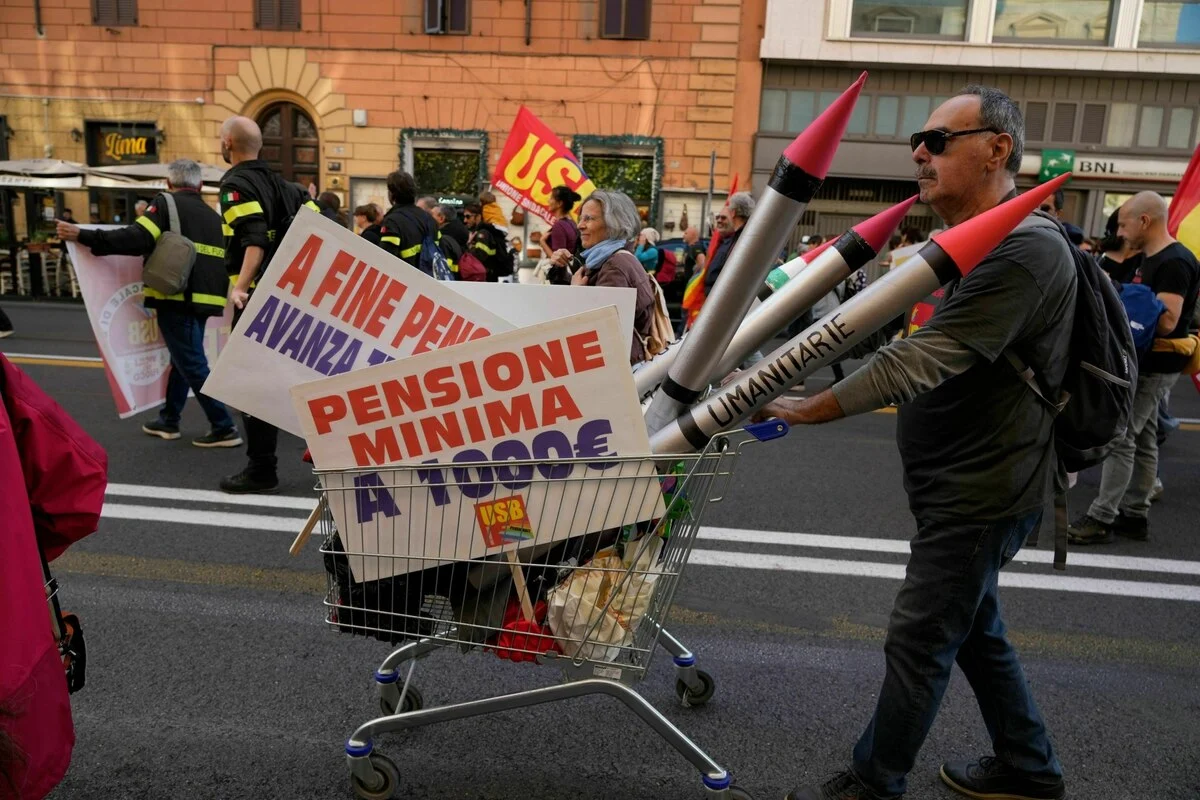
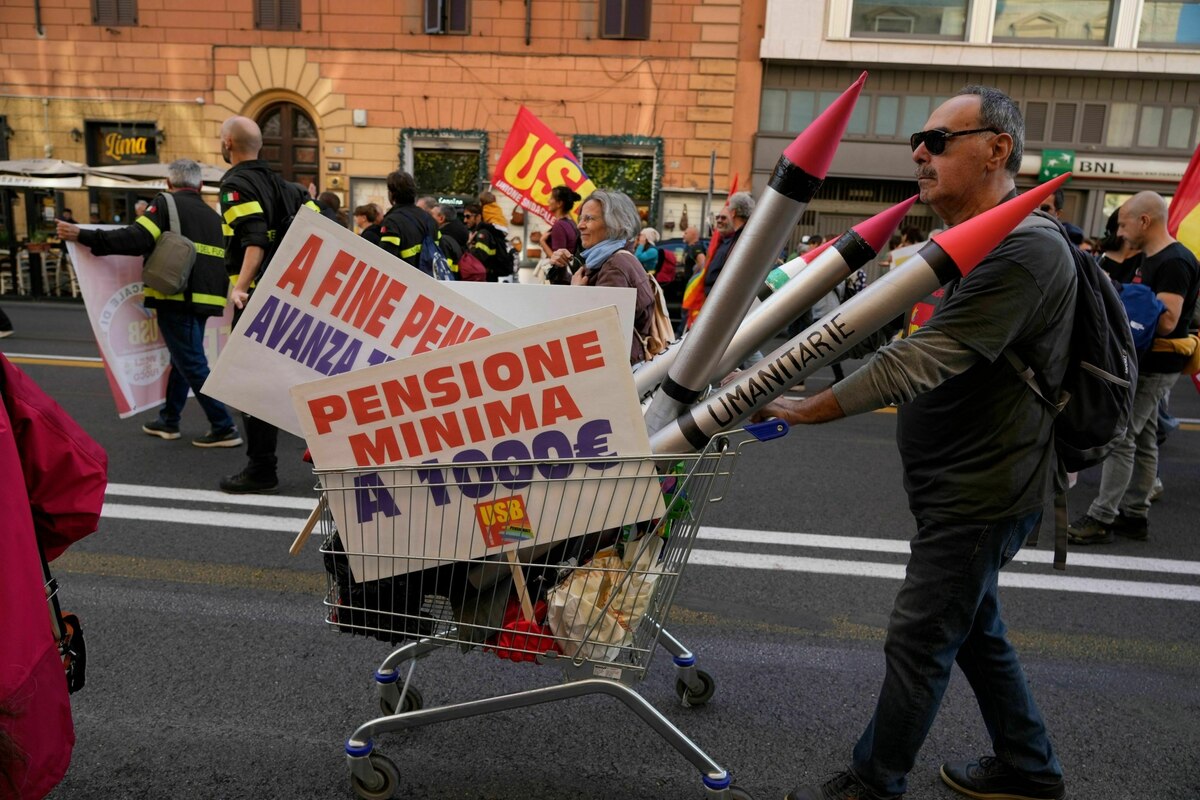
The USB union’s call for a nationwide general strike on October 30th was therefore a culmination of these various threads of discontent, aiming to unite disparate grievances into a powerful, collective voice. The choice of date, preceding the national holiday of All Saints’ Day on November 1st, was strategic, designed to maximize impact before a period of reduced activity, although this also prompted the government’s intervention regarding transport strikes. The image of a person with protest signs in a shopping cart during a union demonstration in Rome on October 30th encapsulates the blend of worker and citizen grievances, highlighting the intersection of economic hardship and political expression.
The Economic and Social Undercurrents
To fully grasp the magnitude of the protests, it is essential to delve deeper into the economic and social challenges currently facing Italy.

Inflation Crisis and Stagnant Wages
The 4.3 percent inflation rate, while lower than the peak, represents a significant burden for Italian households. Energy prices, although somewhat stabilized, have had a cascading effect on the cost of goods and services. Food prices, in particular, have seen steep increases, making essential groceries unaffordable for many families. This disproportionately affects lower-income groups, who spend a larger percentage of their income on basic necessities. The erosion of purchasing power is a constant theme in public discourse, with many Italians feeling a squeeze on their household budgets that makes it increasingly difficult to maintain their standard of living.
Compounding the inflation crisis is the issue of stagnant wages. Italy has long grappled with slow wage growth, a structural problem that predates the current government. Unlike some other European nations, Italy has no statutory minimum wage, leading to significant disparities in pay across sectors and regions. Union negotiations have struggled to secure wage increases that adequately reflect the rising cost of living, leaving many workers feeling undervalued and economically vulnerable. The protest demands for "decent wages" are therefore not merely a request for more money but a call for a fundamental reevaluation of labor market policies and social protection mechanisms.
Budgetary Priorities: Guns vs. Butter
A key point of contention for protesters is the government’s allocation of the national budget. Critics argue that the Meloni administration has prioritized increased defense spending, in line with its nationalist agenda and commitments to NATO, at the expense of vital social services. While specific figures on recent defense budget increases were not immediately available in the original article, the perception among protesters is that resources are being diverted from areas that directly benefit citizens’ daily lives.
In contrast, students and educators are demanding more substantial funding for schools and universities. Italian public education has faced chronic underinvestment for decades, leading to dilapidated infrastructure, overcrowded classrooms, and a shortage of qualified personnel. Universities struggle with limited resources for research, outdated facilities, and a brain drain of talented graduates seeking opportunities abroad. The student protests are not just about tuition fees or specific campus issues; they are a broader appeal for a future where education is valued as a cornerstone of societal progress and economic competitiveness. They see increased defense spending as a misplacement of priorities when the foundational pillars of education are crumbling.
Youth Disenchantment and Precarious Futures
The strong participation of students and young people in these protests highlights a deep sense of disenchantment with their economic prospects and the political establishment. Italy has one of the highest youth unemployment rates in the Eurozone, and even for those who find work, it is often precarious, low-paying, and short-term. The dream of stable employment and upward mobility remains elusive for many young Italians.

This generation feels particularly vulnerable to the current economic climate, inheriting a legacy of public debt, limited social mobility, and environmental challenges. Their demands for "more money for schools and universities" are thus intertwined with a broader yearning for a more secure and equitable future, one where their education leads to meaningful employment and a dignified life, rather than perpetual struggle.
Government’s Stance and Countermeasures
The Meloni government’s response to the protests has been a mix of preemptive action and rhetorical defense of its policies. Transport Minister Matteo Salvini, a prominent figure in the ruling coalition, took the controversial step of banning strikes in critical transport sectors due to the proximity of the All Saints’ Day holiday. This move, justified by the need to avoid disruption to public services during a peak travel period, was met with strong condemnation from unions, who viewed it as an infringement on the right to strike. While the ban did limit the immediate impact on public transport, it also fueled accusations of authoritarian tendencies and deepened the chasm between the government and organized labor.
Regarding the wider protests, government officials have generally defended their economic policies, asserting that they are working to stabilize the national economy and address long-standing structural issues. They often point to the slight decrease in the inflation rate as evidence of their efforts, while attributing the broader economic challenges to global factors. There have been no immediate indications of policy shifts in response to the protests; instead, the government appears committed to its current trajectory, including its defense spending commitments.
In anticipation of potential unrest, particularly after past incidents of violence following peaceful demonstrations in cities like Milan, security forces were placed on high alert. Enhanced controls and security measures were implemented in numerous cities, with iconic landmarks such as the Colosseum in Rome and the Milan Cathedral receiving special protection. Authorities also issued appeals to demonstrators to refrain from wearing items like hoods or helmets, often associated with radical elements, in an effort to de-escalate tensions and prevent confrontations. The scuffles in Turin, though minor, reinforced the government’s concern about the potential for peaceful protests to turn violent.
Potential Ramifications and Future Outlook
The nationwide protests pose a significant challenge to Giorgia Meloni’s government, testing its resilience and potentially influencing its future policy direction. While it is too early to predict the long-term impact, several implications can be considered.

Firstly, the demonstrations could erode public confidence in the ruling coalition, particularly if the economic grievances remain unaddressed. A sustained period of social unrest could impact Meloni’s approval ratings and potentially strain the relationships within her diverse right-wing coalition. While the government currently holds a stable majority, prolonged public dissatisfaction could complicate future legislative initiatives and reduce its political capital.
Secondly, the protests highlight the growing power of organized labor and student movements in Italy. Despite attempts by the government to curb strike action, the ability of unions like USB to mobilize tens of thousands of people across the country demonstrates their continued relevance as a check on government power. The collaboration between student activists and labor unions could foster a more unified and potent opposition movement in the future, capable of exerting greater pressure on the government.
Economically, ongoing industrial action and widespread protests, even if limited in their direct impact, contribute to an atmosphere of uncertainty. While the direct economic cost of a single day of protest may be manageable, a sustained period of strikes and social instability could deter investment and hinder economic recovery efforts.
Finally, Italy’s protests are not an isolated phenomenon but rather part of a broader wave of social discontent sweeping across Europe. Similar demonstrations against the cost of living, inadequate public services, and government policies have been observed in France, Germany, Spain, and Albania, as indicated by related reports. This suggests that Italy’s challenges are reflective of wider societal pressures within the European Union, including high inflation, energy crises, and growing inequality. The Meloni government, like others across the continent, will need to navigate these complex socio-economic currents while maintaining stability and addressing the legitimate concerns of its citizens.
In conclusion, the widespread protests across Italy represent a critical moment for the Meloni government. As thousands demand better economic conditions and a reorientation of national priorities, the administration faces the delicate task of responding to popular discontent while upholding its policy agenda. The outcome of this standoff will not only shape Italy’s domestic political landscape but also offer insights into the broader trajectory of social and economic stability across Europe. The call for dialogue and effective solutions remains paramount to prevent further escalation and to build a more equitable future for all Italians.