Public fast-charging infrastructure has transitioned from a luxury amenity to the bedrock of the global automotive transition. As nations pivot toward electric vehicles (EVs) to meet decarbonization targets, the disparity in charging infrastructure rollout has become a defining geopolitical and economic fault line. While China and Europe accelerate their efforts, the United States finds itself increasingly sidelined, hampered by shifting political agendas and a fragmented approach to grid investment.
The success of the EV transition is no longer just about the number of cars sold; it is about the "refueling" experience. As of 2026, the global race for charging dominance has created three distinct models of development, each with its own set of risks and rewards.
The Global Landscape: A Three-Way Split
The International Energy Agency (IEA) Global EV Outlook 2026 paints a stark picture of the current state of play. China remains the undisputed global powerhouse, responsible for roughly 80% of all new public fast-charging installations in 2024. By the end of 2025, China boasted an impressive 2.2 million public charging points, up from 1.6 million just a year prior.
In contrast, the European Union is operating under a regulatory framework that emphasizes interoperability and network coverage rather than state-mandated saturation. The U.S., meanwhile, is experiencing a stagnation that many industry analysts attribute to a lack of coherent federal strategy, with total fast-charging numbers growing only modestly—from 40,000 to approximately 50,000 in the same period.
Defining the "Fast" Standard
The IEA categorizes charging infrastructure into three tiers:
- Slow Charging: Up to 22 kW.
- Fast Charging: 22 kW to <150 kW.
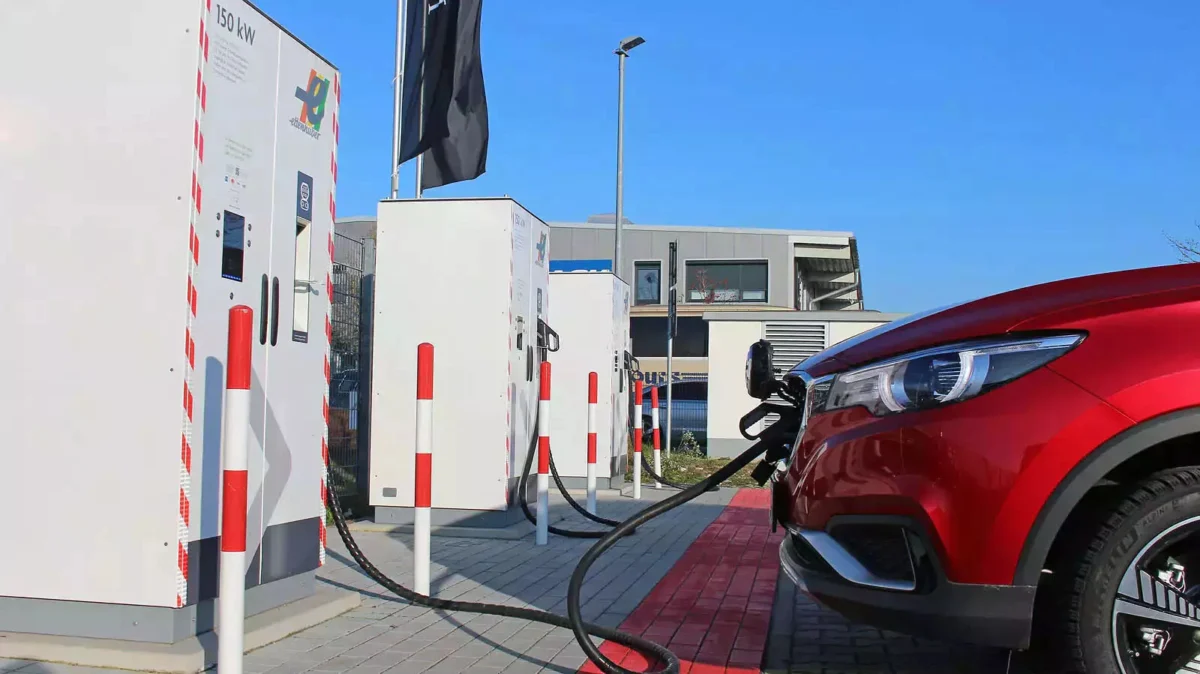
- Ultra-Fast Charging: 150 kW and above.
While the raw number of chargers is the most cited metric, the industry is shifting its focus. As reported by Automotive News, the mere existence of a charger is no longer a competitive advantage. The new frontier is "experience-driven charging"—focusing on reliability, ease of payment, and integration with smart grid technologies.
Chronology of Infrastructure Expansion (2024–2027)
- 2024: China cements its lead, accounting for the vast majority of global fast-charger growth. Total public charging points globally surpass 5 million, with China holding a 65% share.
- April 2025: The EU’s Alternative Fuels Infrastructure Regulation (AFIR) takes effect, mandating that operators provide real-time, transparent data on availability and pricing.
- June 2025: The Chinese government issues a directive calling for 100,000+ ultra-high-power chargers (250 kW+) by the end of 2027.
- October 2025: China releases an action plan aiming to double total charging capacity to 300 gigawatts by 2027.
- October 2026: BYD showcases its "Flash Charging" technology at the Paris Motor Show, promising 10–70% charge in just five minutes.
- Early 2027: BYD initiates the European rollout of its 3,000-unit flash-charging station network.
Supporting Data: Capacity vs. Density
When evaluating infrastructure, raw volume can be misleading. A more accurate metric is the "installed capacity per vehicle."
| Region | Public Chargers per 10 EVs (approx.) | Est. Capacity per Vehicle |
|---|---|---|
| China | 1.0+ | > 3.0 kW |
| EU | 0.76 | 2.6 kW |
| USA | N/A | < 1.5 kW |
The variance in these figures is heavily influenced by domestic living conditions. In China’s dense urban centers, where private home-charging is a rarity, the state has prioritized high-density public hubs. The 15 largest cities in China account for over 50% of the nation’s entire charging network.
In Europe, the demographic profile is more varied. In Germany, for example, nearly 60% of the population lives in multi-unit dwellings, making public, high-speed street charging an absolute necessity rather than a supplementary option.
The Crisis of Reliability: Defining "Online"
A recurring issue in Western markets is the discrepancy between a charger being "online" and being "functional." A study by the California Energy Commission highlighted that many chargers labeled as operational were, in fact, inaccessible due to payment system failures or software glitches.
California has pioneered a "97% Uptime" requirement for state-funded projects, treating payment system failures as full outages. This standard is increasingly becoming the global benchmark for quality. In Europe, the AFIR regulation is the first legislative attempt to force this level of transparency, requiring operators to report real-time status, availability, and ad-hoc pricing. This data is essential for independent auditors to move beyond marketing claims and measure the actual utility of the network.
China’s Top-Down Strategy: Integration and Innovation
China’s aggressive growth is the result of a coordinated state-industrial complex. Unlike the fragmented European market, China’s approach integrates government planning with manufacturer-led innovation.
The June 2025 government mandate is highly specific: it requires 98% availability for ultra-fast chargers and mandates that these units be linked to national monitoring platforms. To ensure profitability and grid stability, the government is incentivizing the use of:
- Long-term land leases (10+ years) to ensure network permanence.
- Buffering storage systems to prevent grid strain during peak hours.
- Integrated Photovoltaics to reduce the carbon footprint of the charging process.
Manufacturers like BYD are pushing the hardware envelope. By coupling their new 1.5-megawatt chargers with large-scale battery storage, they are essentially creating "energy hubs" that can operate independently of the local grid’s immediate capacity. The integration of the BYD Atto 8, designed to utilize this high-speed architecture, signals a new era where the vehicle and the charger are developed as a single, optimized system.
Implications for Europe and the West
For Europe, the path forward is one of mandatory minimums rather than state-led saturation. The AFIR mandates that by the end of 2027, the TEN-T core network must provide 600 kW of charging power every 60 kilometers.
However, the industry faces a looming "consolidation phase." According to the Roland Berger EV Charging Index 2026, Western Europe currently has one fast-charger for every 45 electric vehicles. While this sounds like a comfortable ratio, experts suggest that a sustainable business model requires a ratio of at least 1:100. This implies that many current operators are struggling with low utilization rates, which will likely lead to mergers, acquisitions, and the exit of smaller, less efficient players.
Security and Data Sovereignty
As Chinese hardware enters the European and potentially American markets, new questions arise. Who controls the back-end software? Where is the sensitive location and payment data processed? How are over-the-air (OTA) updates managed for infrastructure?
While no specific security breaches have been attributed to charging infrastructure to date, the geopolitical tension surrounding critical energy infrastructure suggests that these will become major policy debates by 2028. Governments will likely need to decide whether to treat charging networks as critical national infrastructure, subject to the same oversight as telecommunications or electricity grids.
Conclusion: The Race is Far from Over
The divergence between China’s state-mandated velocity and the West’s more cautious, market-driven rollout is creating a two-speed world of electric mobility. China has successfully leveraged its urbanization and industrial policy to build a network that is both extensive and technologically advanced.
Europe, meanwhile, is betting on a model that prioritizes consumer rights, transparent data, and standardized regulations. The U.S. remains the wild card; without a fundamental shift in infrastructure strategy, the country risks being left with a patchwork network that cannot support the mass adoption of electric vehicles.
Ultimately, the winner of the global charging race will not necessarily be the country with the most plugs, but the one that ensures the most reliable, efficient, and user-friendly experience for the driver. As the industry moves toward 2030, the ability to balance grid stability, technological innovation, and data security will determine who holds the keys to the future of transportation.