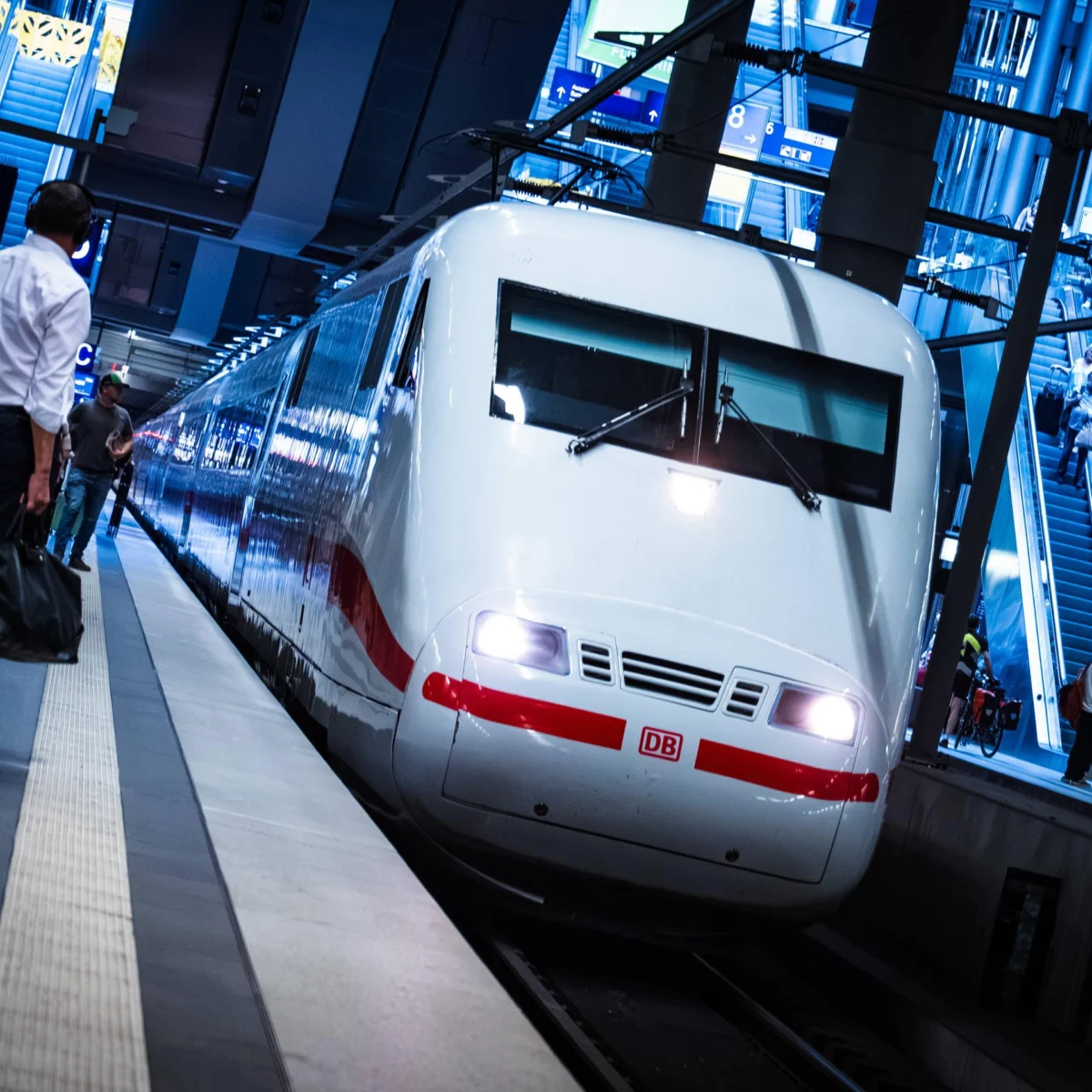
Berlin/Hamburg, Germany – October 27, 2026 – Germany’s vital high-speed rail corridor connecting its two largest cities, Hamburg and Berlin, experienced significant disruption this morning after the discovery of unexploded ordnance (UXO) from World War II. The discovery of a British air-to-ground missile warhead necessitated an immediate closure of the critical railway line, causing extensive delays, diversions, and partial cancellations for thousands of passengers. The incident underscores the enduring legacy of the war, as decades later, the country’s infrastructure projects continue to unearth dangerous relics.
The explosive device was successfully neutralized and removed by a specialist bomb disposal unit, allowing train services to gradually resume in the afternoon. However, the temporary shutdown sent ripples of inconvenience across the national rail network, highlighting the fragility of modern transport systems in the face of historical hazards.
Main Facts of the Incident
At approximately 08:30 AM CET on Tuesday, October 27, 2026, routine maintenance work being conducted alongside the main railway line between Hamburg and Berlin, specifically near the town of Wittenberge in Brandenburg, led to the discovery of what appeared to be remnants of a large explosive device. Workers immediately halted operations and notified authorities.
Upon inspection by initial responders, it was confirmed to be the warhead of a British air-to-ground missile, a dangerous piece of unexploded ordnance from World War II. Given the immediate proximity to one of Germany’s busiest railway lines, the risk to public safety was deemed significant. Deutsche Bahn, the national railway operator, swiftly announced an immediate and indefinite closure of the affected section of the track.
The closure impacted all Intercity-Express (ICE) and Intercity (IC) services operating on the Hamburg-Berlin route, a crucial artery for both business and leisure travel. Deutsche Bahn initiated a widespread rerouting strategy, diverting long-distance trains via alternative, often longer, routes, leading to considerable delays. Several connections were partially cancelled, leaving many passengers stranded or facing unforeseen travel extensions.
A specialized bomb disposal unit from the state of Brandenburg was dispatched to the scene. Their experts assessed the situation and, after several hours of meticulous work, successfully defused and removed the warhead. The operation concluded safely by early afternoon, paving the way for the gradual resumption of rail traffic. While the immediate danger was averted, the incident served as a stark reminder of the persistent challenge posed by WWII ordnance across Germany.
Chronology of Disruption
The morning unfolded with a series of rapid developments that quickly escalated into a major logistical challenge for Deutsche Bahn and its passengers:
- 08:30 AM CET: Construction workers near Wittenberge discover a metallic object resembling an explosive device during trackside maintenance. Work is immediately halted, and emergency services are alerted.
- 08:50 AM CET: Local police and fire brigades arrive on site. Preliminary assessment suggests the object is a WWII-era bomb. A safety perimeter is established.
- 09:15 AM CET: Based on the initial assessment, Deutsche Bahn is informed. Recognizing the potential threat, the decision is made to immediately halt all rail traffic on the affected section of the Hamburg-Berlin line.
- 09:30 AM CET: Deutsche Bahn issues its first public announcement, informing passengers of an "unforeseen operational disruption" due to a "police operation" and advising of significant delays and diversions. Online schedules are updated to reflect the closures and rerouted services.
- 09:45 AM CET: A specialized bomb disposal unit (Kampfmittelräumdienst) from Brandenburg is mobilized and en route to the site.
- 10:30 AM CET: The bomb disposal team arrives. Their experts begin a detailed examination of the ordnance, identifying it as a British air-to-ground missile warhead. The precise nature and condition of the warhead are assessed to determine the safest method of neutralization.
- 10:45 AM CET – 12:45 PM CET: The bomb disposal unit undertakes the delicate task of defusing and securing the warhead. This involves careful inspection, removal of detonators, and preparation for transport. The entire area remains under strict lockdown.
- 12:50 PM CET: The bomb disposal unit successfully neutralizes the warhead and safely transports it away from the site for further processing or controlled demolition at a secure facility.
- 01:00 PM CET: Authorities declare the area safe. Deutsche Bahn is notified, and track inspections commence immediately to ensure structural integrity and safety for train operations.
- 01:30 PM CET: Deutsche Bahn announces that the line is cleared, and services will gradually resume. However, significant follow-on delays are expected as trains are repositioned and schedules recalibrated. Passengers are advised to expect continued disruptions throughout the afternoon and evening.
- 02:00 PM CET onwards: The first trains begin to traverse the reopened section of the track, albeit at reduced speeds initially. The process of normalizing the schedule is expected to take several hours, impacting services well into the night.
The swift response by emergency services and the bomb disposal unit was critical in mitigating the danger, but the inherent time required for such delicate operations inevitably led to widespread passenger inconvenience.
Supporting Data and Historical Context
The discovery of World War II ordnance, while disruptive, is far from an isolated incident in Germany. Over 80 years after the cessation of hostilities, the country continues to grapple with the deadly legacy of the Allied bombing campaigns and intense ground battles. Millions of tons of bombs, shells, and other explosives were dropped or fired across Germany, and a significant percentage – estimates range from 10% to 30% – failed to detonate upon impact. These "duds" lie buried beneath cities, fields, and critical infrastructure, posing an ongoing threat.
The Enduring Legacy of War
Germany was subjected to some of the most intense aerial bombardments in history during WWII. British and American air forces aimed to cripple industrial capacity and break civilian morale. Cities like Hamburg, Berlin, Dresden, Cologne, and many others were devastated. The sheer volume of ordnance used means that discoveries are a routine occurrence. Each year, thousands of unexploded bombs, grenades, and other munitions are found and defused across Germany. In 2022 alone, authorities reported over 2,000 such finds nationwide.
The specific finding of a "British air-to-ground missile warhead" is particularly noteworthy. While conventional aerial bombs are more common, specialized munitions like missiles or rocket warheads also remain. These devices can be highly unstable due to degraded fuses, corroded casings, or internal chemical reactions over time, making their defusal extremely hazardous. Bomb disposal experts often face components that are far more volatile than when they were first dropped.
The Bomb Disposal Challenge
Germany maintains highly specialized and well-trained Kampfmittelräumdienst (explosive ordnance disposal, EOD) units across its federal states. These teams are on constant standby, equipped with advanced technology to locate, identify, and safely neutralize UXO. The process typically involves:
- Detection: Often by chance during construction, farming, or infrastructure work, or through systematic surveys using magnetometers and ground-penetrating radar.
- Identification: Experts determine the type, nationality, and condition of the ordnance. This dictates the defusal strategy.
- Risk Assessment: Evaluating the immediate environment, potential blast radius, and necessary safety measures, including evacuations.
- Neutralization: This can involve defusing the bomb by carefully removing its detonators, or, if too unstable, a controlled detonation in situ or after transport to a safe location.
- Removal: Once safe, the ordnance is removed and properly disposed of.
The operation near Wittenberge today exemplified this complex process, requiring precision and expertise to manage a potentially catastrophic situation close to a vital transportation link.
Infrastructure and Economic Impact
The recurring discovery of WWII ordnance has significant implications for Germany’s infrastructure development and economy. Major construction projects – from new housing developments and highways to rail upgrades and renewable energy installations – almost invariably involve prior surveying for UXO. However, even with extensive preparatory work, deeply buried or previously undetected devices can still surface.
The disruption to the Hamburg-Berlin rail line highlights the economic cost. This route is one of the busiest in Germany, serving both passenger and freight traffic. Estimates for the economic impact of such a closure include:
- Direct Costs for Deutsche Bahn: Fuel for diverted trains, compensation for staff overtime, potential refunds for delayed passengers, and increased operational complexity.
- Lost Revenue: From cancelled tickets and reduced capacity on rerouted services.
- Passenger Productivity Losses: Business travelers missing meetings, commuters arriving late, and holidaymakers experiencing significant delays. While hard to quantify precisely, for a few hours of closure on a major route, this could easily run into several million euros.
- Supply Chain Disruptions: Although this incident primarily affected passenger traffic, similar events impacting freight lines can delay goods, affecting industries across the country.
Moreover, the psychological impact on passengers can be considerable. While most Germans are aware of the ongoing bomb problem, experiencing direct disruption due to it can be stressful and frustrating. Many travelers reported missing connecting flights, important appointments, or simply enduring hours of unexpected travel.
Official Responses and Public Communication
Following the discovery and subsequent closure, Deutsche Bahn swiftly moved to manage the crisis and communicate with the affected public.
A spokesperson for Deutsche Bahn, speaking from their operations center in Frankfurt, issued a statement acknowledging the significant inconvenience: "We understand the frustration and disruption this unexpected closure has caused for our passengers. The safety of our travelers and employees is our absolute top priority. As soon as the unexploded ordnance was identified, we had no alternative but to close the line immediately to ensure no one was put at risk."
The spokesperson further detailed the measures taken: "Our teams worked tirelessly to implement extensive diversions for long-distance services, though this regrettably led to significant delays and some partial cancellations. We deployed additional staff at major stations in Hamburg, Berlin, and along the affected route to provide information and assistance to passengers. We thank our customers for their patience and understanding in this challenging situation."
Local police authorities in Brandenburg confirmed the safe removal of the ordnance. A police press officer stated, "The bomb disposal unit successfully neutralized a British air-to-ground missile warhead found near Wittenberge. The operation was conducted without incident, and there was no danger to the public at any point thanks to the swift establishment of safety zones and the professional work of our EOD specialists. We commend the construction workers for their vigilance in reporting the find immediately."
The incident was widely reported by German media, including Deutschlandfunk, which had initially broken the news. Media outlets emphasized the ongoing nature of the WWII ordnance problem and the professionalism of the bomb disposal teams. Social media channels were abuzz with passenger updates, complaints, and shared experiences of navigating the altered travel landscape. Deutsche Bahn’s digital platforms, including its app and website, were continuously updated with real-time information on train status and alternative travel options, though the sheer scale of the disruption meant that information could sometimes lag behind rapidly changing operational conditions.
Implications for the Future
The October 27, 2026, incident on the Hamburg-Berlin line serves as a potent reminder of the long shadow cast by World War II on modern Germany. The implications extend far beyond a single day’s travel disruption:
Persistent National Challenge
The problem of unexploded ordnance is not diminishing. While significant efforts have been made over the decades to clear known sites, new discoveries are inevitable as infrastructure ages, land is developed, and deeper excavations are undertaken. This means Germany will continue to invest heavily in specialized bomb disposal units, equipment, and training for the foreseeable future. It is a permanent fixture in the nation’s security and public safety budget.
Future Infrastructure Planning
For any major infrastructure project in Germany, comprehensive UXO surveys are a prerequisite. This adds considerable time and cost to planning and execution. Today’s event will likely reinforce the need for even more stringent pre-construction surveys, particularly in areas known to have been heavily bombed. It also highlights the need for contingency plans within critical infrastructure operators like Deutsche Bahn, acknowledging that such disruptions are not if, but when.
Public Awareness and Preparedness
While most Germans are aware of the bomb problem, direct exposure to its disruptive potential can heighten public consciousness. Campaigns for public awareness, especially for those working in construction or agriculture, are crucial to ensure that suspicious objects are reported immediately and handled by professionals, preventing potential tragedies.
Technological Advancements
The incident also underscores the continuous need for innovation in UXO detection and disposal technologies. Advances in ground-penetrating radar, drone-based surveys, and robotic manipulation could potentially make future operations safer and less disruptive. Investment in research and development in this field remains critical.
Societal Memory
Beyond the practical challenges, each discovery of a WWII bomb is a tangible link to Germany’s past. It prompts reflection on the devastating scale of the conflict and the profound impact it continues to have on daily life, even generations later. It serves as a stark historical marker, reminding society of the importance of peace and conflict resolution.
In conclusion, while the immediate crisis on the Hamburg-Berlin rail line was professionally managed and resolved, the underlying issue of unexploded World War II ordnance remains a complex and enduring challenge for Germany. It demands ongoing vigilance, significant resources, and a collective understanding that the echoes of history can still profoundly impact the present.