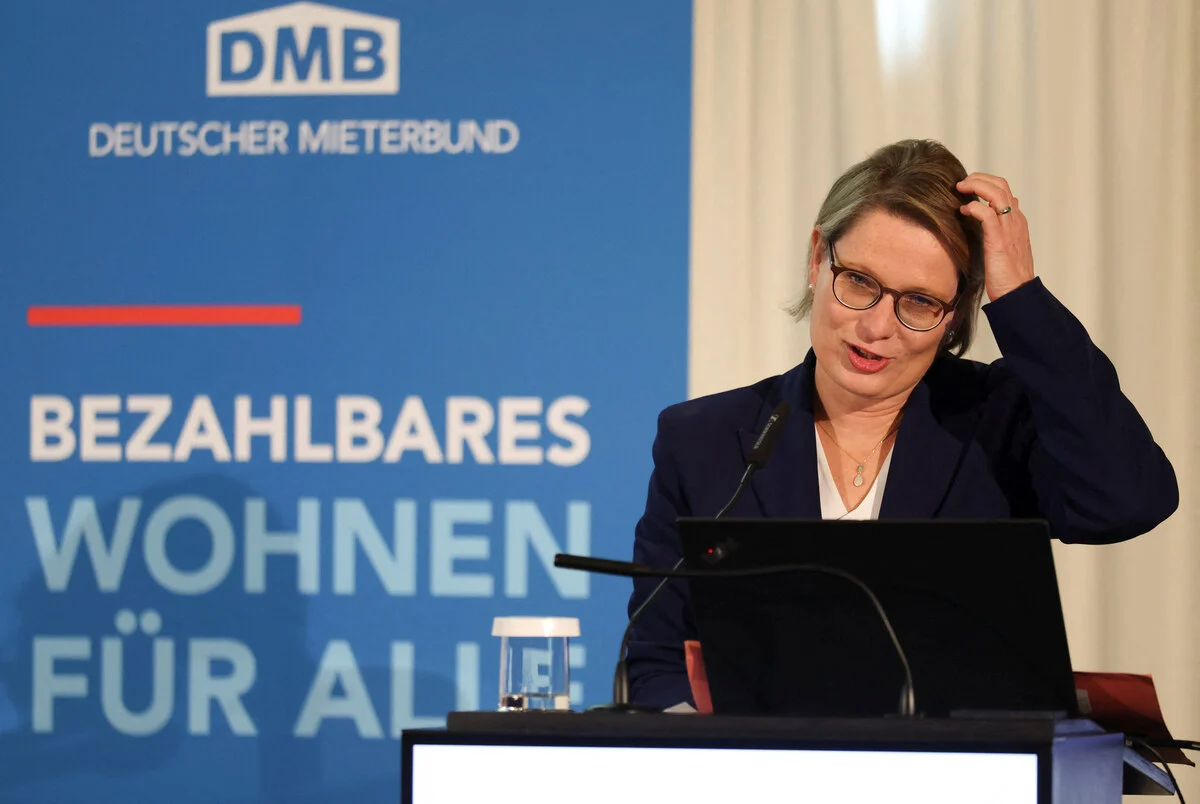
Berlin, Germany – A simmering debate over the potential nationalization of large private housing stocks in Germany has reached a critical juncture, with Federal Justice Minister Stefanie Hubig (SPD) calling for "considerable clarification" regarding a proposed federal law designed to significantly impede such efforts. The controversial legislation, spearheaded by prominent conservative voices like Federal Interior Minister (designate) Alexander Dobrindt (CSU), aims to erect high legal barriers against what he terms "arbitrary leftist nationalization fetish." This federal initiative directly clashes with ambitious plans by Berlin’s aspiring Red-Green-Red coalition to socialize housing in the capital, setting the stage for a profound constitutional and political battle with far-reaching implications for Germany’s housing market and property rights.
Main Facts: A Clash Over Property Rights and Affordable Housing
At the heart of the conflict lies the urgent need for affordable housing in Germany’s booming urban centers, particularly Berlin. Following a successful referendum, the capital’s prospective left-leaning government is pushing to nationalize properties held by large corporate landlords. In response, the federal government is moving to introduce an "Investment Protection Law" that would make such nationalization exceptionally difficult, if not practically impossible.
Federal Justice Minister Stefanie Hubig finds herself in a delicate position, acknowledging the "constitutional and political concerns" surrounding the proposed federal law, while simultaneously stressing her commitment to coalition agreements and constructive collaboration. Her nuanced stance reflects the deep divisions within the ruling federal coalition, particularly between the more centrist Social Democrats and the conservative Union parties, on how to address the housing crisis. Hubig explicitly criticized Berlin’s approach as "unsuitable," citing massive compensation costs and prolonged legal uncertainty, instead advocating for increased investment in new construction and the strengthening of social tenancy laws.
Alexander Dobrindt (CSU), a vocal proponent of the federal bill, has articulated a firm stance against housing nationalization, portraying it as an ideological overreach incompatible with Germany’s Basic Law. His proposed legislation seeks to establish stringent conditions, requiring irrefutable proof of absolute necessity and the exhaustion of all other housing policy measures before any nationalization could even be considered. This federal intervention is widely seen as a direct attempt to preempt Berlin’s plans and set a national precedent against similar initiatives in other German cities.
Chronology of a Mounting Crisis
The current standoff is the culmination of years of escalating housing prices and a severe shortage of affordable accommodation, particularly in Germany’s major cities.
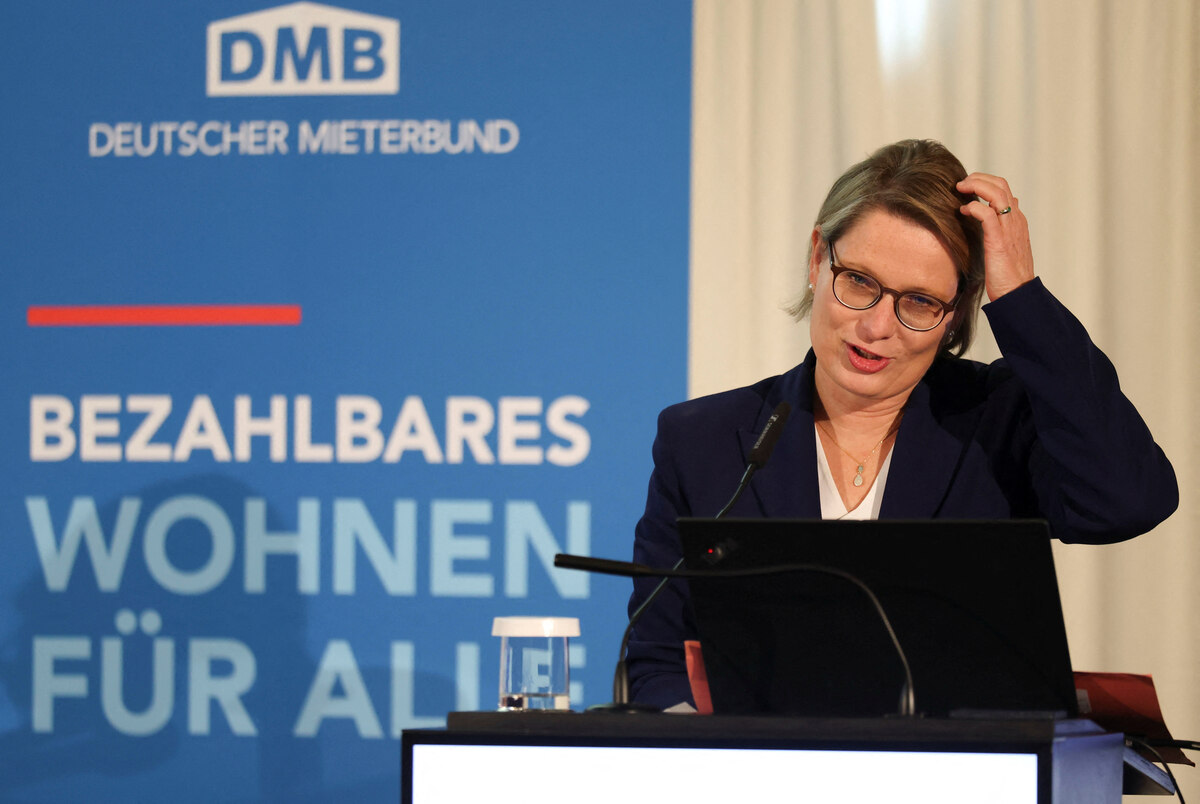
2019-2021: The Genesis in Berlin
The movement for housing nationalization gained significant traction in Berlin, where soaring rents and aggressive acquisition strategies by large real estate corporations sparked widespread public discontent. This culminated in the "Deutsche Wohnen & Co. enteignen" (Expropriate Deutsche Wohnen & Co.) initiative, a grassroots campaign calling for the nationalization of housing from large private landlords owning more than 3,000 units. The initiative garnered immense public support, leading to a referendum held in September 2021, where nearly 60% of Berlin voters cast their ballots in favor of nationalization. This overwhelming mandate created significant political pressure on the incoming Berlin government.
October 2021: Berlin’s Red-Green-Red Coalition Takes Shape
Following the state elections, the Linke (Left Party), Grüne (Greens), and SPD (Social Democrats) entered coalition negotiations in Berlin. Their joint exploratory paper explicitly outlined plans to pursue the nationalization of large private housing portfolios, specifically targeting corporations with more than 10,000 residential units. The paper estimated compensation costs for such a measure to be around €16 billion. Crucially, this figure is widely understood to be below the market value of the properties, reflecting a key point of contention in the ensuing legal and political debate.
November 2021: The Federal Government’s Counter-Offensive
Almost immediately, the federal government signaled its intent to counter Berlin’s plans. Alexander Dobrindt (CSU), then a prominent figure in the outgoing Merkel government and still an influential voice within the conservative bloc, publicly announced the federal government’s intention to introduce an "Investment Protection Law." Speaking to the Bild newspaper, Dobrindt declared, "We will make it clear in an Investment Protection Law that arbitrary leftist nationalization fetish is incompatible with the Basic Law." This statement underscored the ideological battle lines being drawn.
December 2021: Justice Minister Hubig Enters the Fray
As the federal government’s plans began to solidify, Federal Justice Minister Stefanie Hubig (SPD) voiced her reservations. In an interview with the Kölner Stadt-Anzeiger, she stated, "There are still many question marks – and of course, the debate is not over. I take the constitutional and political concerns against the project seriously." While acknowledging these concerns, Hubig also emphasized her commitment to coalition unity, stating, "At the same time, it is clear to me: if something has been decided in the coalition committee, then everyone is well advised to contribute constructively and cooperate trustfully. That is my line." This carefully worded statement highlighted the internal tensions within the SPD and the broader federal coalition regarding the proposed law.
Supporting Data: The Housing Crisis, Article 15, and Economic Realities
The debate over housing nationalization is not merely theoretical; it is rooted in pressing socio-economic realities and complex legal interpretations.

The German Housing Crisis: Germany, particularly its major cities, has been experiencing a severe housing crisis for over a decade.
- Rising Rents: Rents have skyrocketed, especially in desirable urban areas. In Berlin, average rents per square meter have increased by over 50% in the last decade, far outpacing wage growth.
- Housing Shortage: Estimates suggest a shortage of hundreds of thousands of affordable housing units nationwide. Construction has struggled to keep pace with population growth and urbanization.
- Speculation: Critics argue that large real estate companies, often backed by international investors, have contributed to the crisis by treating housing primarily as an investment vehicle rather than a social good, driving up prices and displacing long-term residents.
Article 15 of the German Basic Law (Grundgesetz): This constitutional provision is central to the legal discussion. Article 15 states: "Land, natural resources and means of production may, for the purpose of nationalization, be transferred into public ownership or other forms of public enterprise by a law which provides for the nature and extent of compensation."
- Permissibility, Not Mandate: The article clearly permits nationalization, indicating it is not inherently unconstitutional. However, it requires a specific law and mandates "compensation."
- "Fair Compensation": The interpretation of "compensation" is crucial. Legal scholars widely agree that "fair compensation" under Article 15 does not necessarily equate to full market value. It must be fair to both the former owner and the public interest, considering the purpose of the nationalization. This provides legal leeway for Berlin’s plan to offer €16 billion, which is likely below market value.
- Public Interest Clause: Nationalization must serve a "purpose of nationalization," implying a clear public interest goal, which advocates argue the housing crisis undeniably provides.
Economic Realities and Compensation:
- Berlin’s €16 Billion Estimate: The €16 billion proposed by Berlin’s coalition is a substantial sum, representing a massive outlay for the state. Even if below market value, it would require significant borrowing or reallocation of funds.
- Market Value vs. Book Value: The actual market value of the targeted housing portfolios could be considerably higher than €16 billion, potentially reaching €25-35 billion according to some estimates. The difference between the proposed compensation and market value is a key area of legal dispute.
- Investor Confidence: Critics of nationalization, including Dobrindt, argue that such moves would severely damage investor confidence in Germany, deterring future investment in housing construction and other sectors. This could exacerbate the very housing shortage it aims to solve.
Official Responses: A Divided Government
The responses from key political figures highlight the deep ideological and practical divisions within Germany’s political landscape.
Alexander Dobrindt (CSU): The Uncompromising Opponent
Dobrindt’s rhetoric has been uncompromising. As a leading voice within the CSU, he represents a conservative faction deeply committed to the protection of private property and free-market principles. His characterization of nationalization as an "arbitrary leftist nationalization fetish" underscores an ideological rejection of the policy. His proposed "Investment Protection Law" is designed to raise the legal bar so high that any attempt at nationalization would face insurmountable hurdles, requiring proof of "absolute necessity" and the exhaustion of "all other means" – conditions that would be exceedingly difficult to meet in practice. This stance reflects a broader conservative concern about what they perceive as an overreach of state power into the economy.

Stefanie Hubig (SPD): The Balancing Act
Justice Minister Hubig’s position is far more nuanced, reflecting the internal complexities of the SPD. On one hand, she acknowledges the significant "constitutional and political concerns" about Dobrindt’s proposed federal law. This suggests an awareness within parts of the SPD that the federal government cannot simply override a measure permitted by the Basic Law, especially one supported by a democratic referendum. The "many question marks" she mentions likely refer to the legal viability and proportionality of the federal bill itself.
On the other hand, Hubig also emphasizes her commitment to the federal coalition’s decisions, indicating a willingness to work within the agreed framework. She explicitly states that Berlin’s approach to nationalization is "unsuitable," citing the "many billions in compensation" and "years of legal uncertainty." Her preferred alternatives – investing in new affordable housing construction and strengthening social rent law – align with traditional SPD housing policies that prioritize state intervention and regulation over outright expropriation. This shows an SPD minister trying to navigate the tension between her party’s left-leaning base (which might support nationalization) and the pragmatism of coalition governance, while also advocating for less radical but potentially more effective solutions.
Berlin’s Red-Green-Red Coalition: The Determined Path
The aspiring coalition in Berlin remains determined to pursue nationalization. Their commitment stems from the clear mandate of the referendum and the belief that only such a drastic measure can effectively tackle the city’s housing crisis, particularly by reining in the power of large corporate landlords. They view nationalization not as an ideological fetish, but as a necessary tool of last resort to ensure housing as a human right, rather than a speculative asset. Their proposed compensation, while substantial, is justified by the argument that it should reflect the social purpose of the expropriation, rather than merely rewarding speculative gains.
Implications: Legal Battles, Political Fallout, and Market Uncertainty
The ongoing dispute carries significant implications across legal, political, and economic spheres.
Legal Battles and Constitutional Challenges:

- Federal vs. State Competence: The proposed federal "Investment Protection Law" raises fundamental questions about federalism and the division of powers. Can the federal government effectively block a measure that is explicitly permitted by Article 15 of the Basic Law and supported by a state-level referendum? Legal experts cited in related articles (like "Dobrindt will das Grundgesetz aushebeln") suggest that Dobrindt’s proposed law could itself be unconstitutional if it attempts to nullify Article 15 or impose conditions that are disproportionate.
- Interpretation of Article 15: The legal battle will inevitably center on the interpretation of "fair compensation" and the conditions under which nationalization is "necessary." Courts, potentially up to the Federal Constitutional Court, will likely be called upon to adjudicate these complex issues.
- Prolonged Uncertainty: As Hubig correctly points out, any nationalization process, especially one challenged by federal law, would lead to "years of legal uncertainty." This would affect not only property owners but also tenants and the broader housing market, potentially delaying urgently needed solutions.
Political Fallout and Internal Party Dynamics:
- SPD’s Internal Conflict: The SPD is caught in the middle. While its Berlin branch is pushing for nationalization, its federal leadership, including figures like Hubig, appears more cautious. This internal struggle highlights the ideological fault lines within the party and could strain its cohesion.
- Federal Coalition Tensions: The debate puts pressure on the federal coalition. The SPD’s partners (Greens and FDP in a potential future coalition, or CDU/CSU in the current one) hold differing views on the issue, making consensus difficult. A strong-armed approach by conservatives could alienate potential allies or deepen existing rifts.
- Precedent for Other Cities: The outcome in Berlin and the federal government’s response will set a crucial precedent. Other German cities facing similar housing crises are closely watching, and a successful nationalization in Berlin could inspire similar movements elsewhere, while a federal blockage would deter them.
Economic Consequences and Housing Market Impact:
- Investor Confidence: The primary concern articulated by Dobrindt and others is the potential chilling effect on investor confidence. If private property rights are perceived as insecure, investors might shy away from the German real estate market, potentially reducing investment in new construction.
- Financial Burden: Even if compensation is below market value, the acquisition of tens of thousands of housing units represents a monumental financial undertaking for the public sector. This could divert funds from other essential public services or lead to increased debt.
- Impact on New Construction: Critics argue that nationalization does not create a single new apartment. Instead, the focus should be on accelerating new construction through streamlined planning processes, subsidies, and making more land available. Hubig’s preference for investing in new affordable housing aligns with this perspective. However, proponents argue that nationalization stabilizes existing rents and provides public control over a significant portion of the housing stock, which can then be used to provide affordable housing.
Conclusion: A Defining Moment for Germany’s Housing Future
The struggle over housing nationalization in Germany represents a defining moment for the country’s approach to its housing crisis. It pits fundamental principles of private property and market economics against the social imperative of affordable housing and the democratic will of citizens. Justice Minister Stefanie Hubig’s call for clarification underscores the complexity and sensitivity of the issue, revealing the deep ideological fissures within the political landscape.
While the federal government, driven by conservative voices like Alexander Dobrindt, aims to erect substantial legal barriers, the constitutional permissibility of nationalization under Article 15 of the Basic Law remains a powerful counter-argument. The path forward is fraught with legal challenges, political maneuverings, and significant economic considerations. The ultimate resolution, whether through robust federal legislation, successful state-level implementation, or a compromise involving massive investment in social housing and strengthened tenant protections, will undoubtedly shape Germany’s urban landscapes and social fabric for generations to come. The debate is far from over, promising continued legal battles and political negotiations as Germany grapples with how best to ensure a fundamental human need: a safe and affordable place to call home.