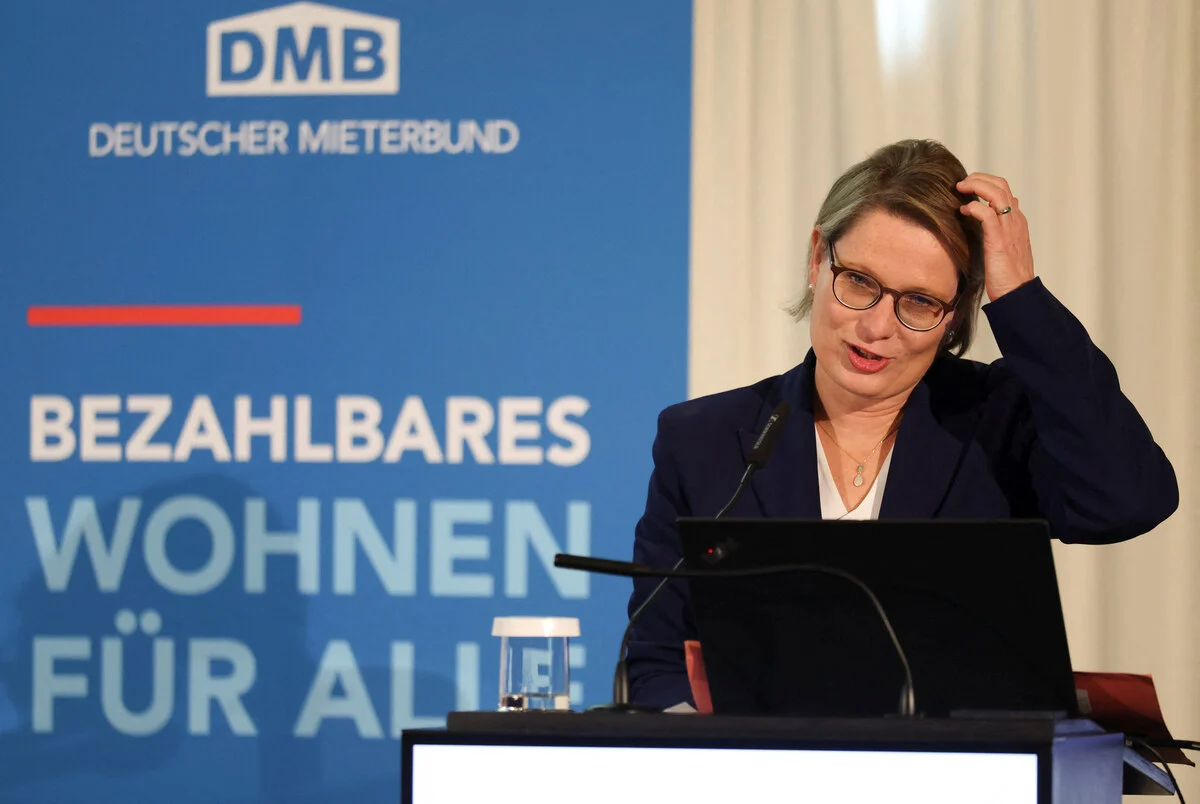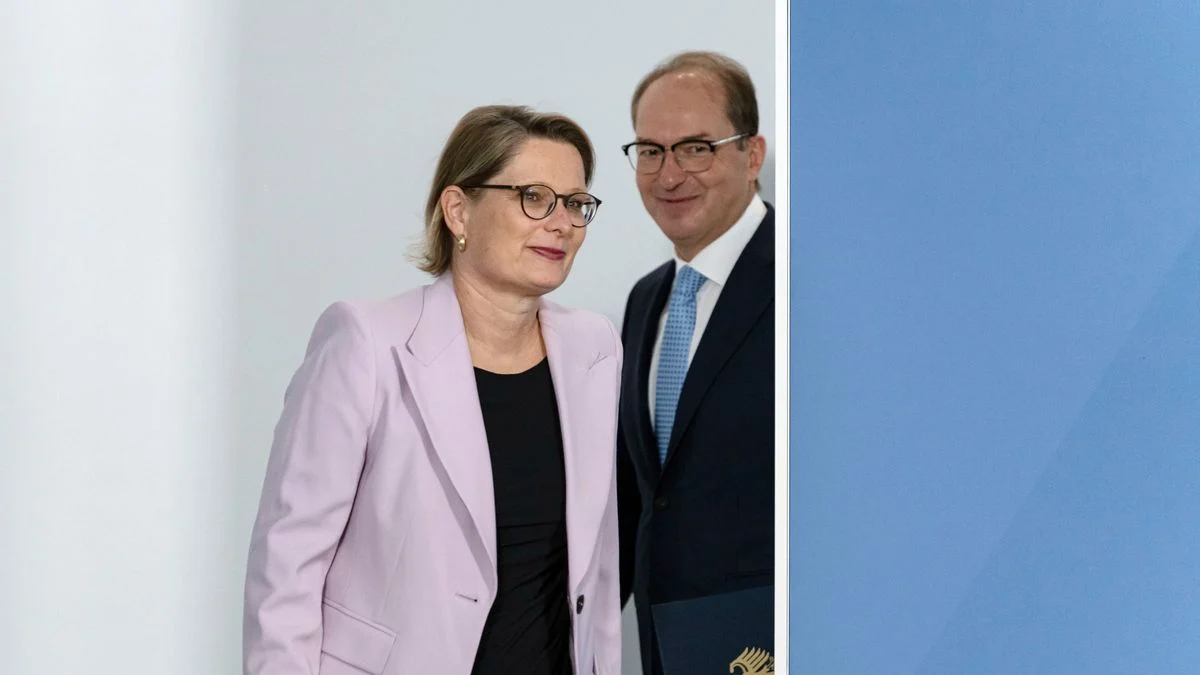
Berlin/Mainz. A proposed federal law designed to significantly restrict the scope for nationalization, particularly targeting ambitious plans like those currently pursued in Berlin, is facing considerable scrutiny and has ignited a heated constitutional and political debate across Germany. Federal Minister of Justice, Stefanie Hubig (SPD), has openly acknowledged "many question marks" and a "considerable need for clarification" regarding the draft, signaling internal unease within the governing coalition.
Speaking to the Kölner Stadt-Anzeiger, Minister Hubig stated, "There are still many question marks, and of course, the debate is not over." She emphasized taking the constitutional and political concerns surrounding the proposed legislation "very seriously." Her cautious stance highlights the delicate balance the Social Democratic Party (SPD) must strike between its federal coalition responsibilities and the policy objectives of its regional counterparts, particularly in Berlin, where the SPD is part of a coalition actively pursuing large-scale housing nationalization.
Simultaneously, Hubig affirmed her commitment to constructive engagement within the federal "traffic light" coalition (comprising the SPD, Greens, and FDP). "If something has been decided in the coalition committee, then everyone is well advised to contribute constructively and work together in trust. That is my line," she explained, underlining the imperative for unity despite evident internal friction.
In stark contrast, Alexander Dobrindt, a prominent conservative politician and leading member of the Christian Social Union (CSU), launched a scathing critique of nationalization efforts. Referring to the planned federal legislation, Dobrindt told Bild newspaper, "We will make it clear in an investment protection law that arbitrary left-wing nationalization fetish is incompatible with the Basic Law." His forceful language underscores the deep ideological divide that frames this national discussion, pitting fundamental property rights against calls for greater social equity in the housing market.
Main Facts and the Looming Conflict
The core of the dispute lies in the federal government’s intention to establish stringent conditions for any future nationalization, a move widely perceived as a direct pre-emption of the Berlin state government’s plans. The proposed federal law’s key provisions include:
- Strict Necessity: Nationalization, such as that of residential properties, would only be permissible if it can be proven to be "compellingly necessary" (zwingend notwendig).
- Exhaustion of Alternatives: All other measures, including investments and housing construction subsidies, must have been exhausted before nationalization can be considered.
- Market Value Compensation: In the event of expropriation, compensation must be paid "immediately in money" and at "market value," determined by an expert appraisal.
These conditions stand in direct opposition to the ambitions of Berlin’s ruling coalition of the Left, Greens, and SPD. This coalition has explicitly outlined its intention to target large private housing corporations owning more than 10,000 residential units in the capital for nationalization. Their preliminary estimates for compensation costs stand at 16 billion euros, a figure widely believed to fall significantly below the actual market value of the properties involved. This discrepancy forms a central battleground, both legally and financially.
The federal government’s move, therefore, represents a significant intervention into a matter traditionally seen as falling under state (Länder) jurisdiction, particularly concerning urban development and housing policy. It highlights a fundamental tension between federal oversight and regional autonomy, exacerbated by the divergent political philosophies within the country’s multi-tiered governance structure.
A Chronology of Housing Crisis and Political Response
The current federal-state standoff is the culmination of years of escalating housing tensions in Germany’s capital, Berlin, and the subsequent political and legal responses.
Early 2010s: The Genesis of the Housing Crisis
Berlin, once renowned for its affordable rents, began experiencing a dramatic surge in housing costs following reunification. A booming population, coupled with insufficient new construction and increased investment by large, often internationally operating, real estate companies, led to a severe shortage of affordable housing. Rents skyrocketed, displacing long-term residents and fostering widespread social discontent.
2018: "Deutsche Wohnen & Co. Enteignen" Initiative
In response to the crisis, a grassroots movement emerged, culminating in the "Deutsche Wohnen & Co. Enteignen" (Expropriate Deutsche Wohnen & Co.) initiative. This citizens’ movement advocated for the nationalization of large private housing companies (those owning more than 3,000 units) to bring housing back into public ownership and stabilize rents. The initiative quickly gained significant public support, highlighting the depth of frustration among tenants.
2021: Berlin Referendum and Political Mandate
On September 26, 2021, coinciding with the federal elections, Berliners voted in a referendum on the nationalization proposal. A clear majority of 59.1% voted in favor of the initiative, sending a powerful political signal to the newly formed state government. While the referendum was not legally binding, it created immense political pressure for the incoming coalition to act.
Late 2021: Formation of Berlin’s Red-Red-Green Coalition
Following the state elections, a coalition of the Left Party, Greens, and SPD formed the new government in Berlin. Their coalition agreement explicitly committed to exploring the implementation of the referendum’s outcome. This included establishing an expert commission to assess the constitutional viability and practical implications of nationalizing large housing stocks. The agreement detailed plans to target private housing groups with more than 10,000 units.
Early 2023: Federal Government Signals Intervention
As Berlin’s expert commission began its work and the state government explored pathways for nationalization, the federal "traffic light" coalition (SPD, Greens, FDP) began to formulate its own legislative response. Driven primarily by the economically liberal FDP and a significant portion of the conservative wing of the SPD, concerns mounted within the federal government about the potential chilling effect on investment, the cost to taxpayers, and the perceived undermining of property rights. The proposed federal law’s "cornerstones" were subsequently formulated, setting the stage for the current clash.
Recent Developments: Hubig’s Reservations and Dobrindt’s Denunciation
Minister Hubig’s recent statements reveal the internal complexities within the SPD, caught between its progressive base in Berlin and its role in a federal coalition seeking to limit such radical economic interventions. Dobrindt’s strong condemnation from the CSU further illustrates the stark ideological battle lines drawn across the German political landscape.
Supporting Data and Legal Framework
The debate hinges on a critical article of Germany’s Basic Law (Grundgesetz), Article 15, which deals with nationalization:
Article 15 of the Basic Law (Grundgesetz):
"Land, natural resources and means of production may, for the purpose of nationalization (Vergesellschaftung), be transferred to public ownership or other forms of public enterprise by a law which determines the nature and extent of compensation. For the compensation, the third and fourth sentences of Article 14 (3) shall apply mutatis mutandis."
This article is crucial because it explicitly allows for nationalization, but it also links it to compensation principles outlined in Article 14(3), which governs expropriation (Enteignung). Article 14(3) states that "expropriation shall be permissible only for the public good. It may be effected only by or pursuant to a law which determines the nature and extent of compensation. Compensation shall be determined by establishing an equitable balance between the public interest and the interests of those affected. In case of dispute concerning the amount of compensation, recourse to the ordinary courts shall be open."
Key Differences: Vergesellschaftung vs. Enteignung
While both involve taking private property for public use, there’s a nuanced legal distinction in Germany:
- Enteignung (Expropriation): Refers to the taking of specific assets or properties from individual owners for a specific public purpose (e.g., land for a road). Compensation is typically at "market value" or "full compensation" (volle Entschädigung).
- Vergesellschaftung (Nationalization/Socialization): Refers to the transfer of an entire economic sector or means of production into public ownership, often with a broader societal aim (e.g., housing, energy). Article 15 explicitly mentions this. The debate over compensation under Article 15 is whether it must also be "market value" or if it can be "equitable" (gerechte Entschädigung), potentially below market value, reflecting the broader societal context and the specific purpose of nationalization. Berlin’s plan for 16 billion euros, explicitly stated to be below market value, directly challenges this interpretation.
The Federal Law’s Intent:
The proposed federal law aims to clarify the "nature and extent of compensation" under Article 15 by explicitly mandating "market value" and "immediate payment in money." This would significantly raise the financial bar for any nationalization efforts and align Article 15 more closely with the stricter compensation rules of Article 14(3) for individual expropriation. Furthermore, the requirement of "compelling necessity" and the exhaustion of all other measures would make it exceedingly difficult for any state to justify nationalization. Critics argue this effectively neuters Article 15.
Berlin’s Housing Market Data:
- Population Growth: Berlin’s population has grown significantly over the past two decades, by hundreds of thousands.
- Rent Increases: Average rents have more than doubled in many parts of the city over the last 10-15 years.
- Housing Shortage: Estimates suggest a shortage of tens of thousands of apartments.
- Large Housing Corporations: Companies like Vonovia, Deutsche Wohnen, and LEG own hundreds of thousands of units across Germany, with significant portfolios in Berlin, making them primary targets for nationalization advocates.
Official Responses and Political Alignments
Stefanie Hubig (SPD, Federal Minister of Justice): A Balancing Act
Minister Hubig’s position exemplifies the internal struggle within the SPD. On one hand, the SPD’s core values traditionally lean towards social justice and public welfare, which could support the aims of nationalization to address housing inequality. Many within the party’s left wing and grassroots identify with the "Deutsche Wohnen & Co. enteignen" movement. On the other hand, as a federal minister in a coalition with the FDP (a staunch defender of property rights and market economics), Hubig is bound by the coalition agreement and the need for government stability. Her emphasis on "clarification needs" and "question marks" suggests:
- Constitutional Scrutiny: A genuine concern about the legal soundness and potential challenges to the federal law. The law must withstand scrutiny by the Federal Constitutional Court.
- Political Compromise: An attempt to find a middle ground or refine the law to make it more palatable to all coalition partners and potentially less confrontational for federal-state relations.
- Internal Party Cohesion: Acknowledging the strong pro-nationalization sentiment within parts of her party without directly undermining the federal government’s policy. Her call for "constructive cooperation" is a plea for unity despite ideological differences.
Alexander Dobrindt (CSU, Prominent Conservative Politician): Uncompromising Opposition
Dobrindt’s fiery rhetoric ("arbitrary left-wing nationalization fetish," "incompatible with the Basic Law") leaves no room for ambiguity. His stance reflects the deeply ingrained conservative belief in:
- Sacrosanct Property Rights: For conservatives, private property is a fundamental pillar of the social market economy and a core individual right enshrined in Article 14 of the Basic Law. Nationalization is seen as a radical infringement.
- Investment Protection: His reference to an "investment protection law" highlights concerns that nationalization would deter domestic and international investment, creating economic uncertainty and potentially harming Germany’s reputation as a reliable business location.
- Ideological Warfare: Dobrindt frames the debate in stark ideological terms, portraying nationalization as a dangerous, socialist experiment that goes against the principles of the German economic order. The CSU, historically a strong advocate for free markets and limited state intervention, views such measures with deep suspicion.
Berlin’s Red-Red-Green Coalition: Asserting State Autonomy
While not directly quoted in the original article, the anticipated response from Berlin’s ruling coalition would be one of strong defense of its autonomy and policy goals. They would likely argue:
- Democratic Mandate: The referendum provides a clear democratic mandate for nationalization.
- Addressing a Crisis: Nationalization is a necessary tool to address a severe housing crisis that market mechanisms have failed to resolve.
- State’s Rights: The federal government is overstepping its bounds by trying to dictate state-level economic policy, particularly on a matter explicitly mentioned in Article 15. They would argue for the state’s right to interpret and apply Article 15.
- "Equitable" Compensation: They would likely contend that "market value" compensation for nationalization under Article 15 is not constitutionally mandated and that a lower, "equitable" compensation is permissible, especially when addressing systemic market failure and public good.
Real Estate Industry and Property Owners:
Expected to vehemently oppose the federal law, albeit for different reasons than Berlin. Their primary concern would be any form of nationalization, regardless of compensation. They would likely advocate for:
- Investment in New Construction: Arguing that the solution to housing shortages is more building, not expropriation.
- Fairness and Legal Certainty: Demanding clear legal frameworks that protect existing investments and deter any notion of arbitrary state intervention.
- Economic Consequences: Warning of capital flight, reduced housing supply, and a general decline in the attractiveness of Germany’s real estate market.
Implications: Constitutional, Economic, and Political Fallout
The proposed federal law and the ensuing debate carry profound implications across several dimensions:
1. Constitutional Implications: The Future of Article 15
This legislative effort forces a crucial re-interpretation of Article 15 of the Basic Law. The key question for the Federal Constitutional Court, should the law be challenged (which is highly likely), will be whether the federal government has the authority to define "compensation" under Article 15 so narrowly as to effectively equate it with "market value" compensation under Article 14(3).
- Weakening of Article 15: Critics argue that mandating market value compensation would render Article 15 largely toothless. The cost of nationalizing entire sectors at market value would be prohibitive for most states or municipalities, effectively making it an unusable tool.
- Federalism vs. Centralization: The law could be seen as a centralizing move by the federal government, limiting the policy space of the Länder in areas like urban planning and housing, where they traditionally hold significant power.
- Precedent: The court’s decision would set a powerful precedent for future debates on state intervention in the economy, impacting not only housing but potentially other sectors like energy or infrastructure.
2. Economic Consequences: Investment Climate and Housing Market
- Investment Uncertainty: Regardless of the law’s final form, the ongoing debate itself creates uncertainty for investors in the German real estate market. This could lead to a slowdown in new construction and a reluctance to invest in existing housing stock, potentially exacerbating the housing crisis in the long run.
- Compensation Costs: If Berlin’s nationalization proceeds and "market value" compensation is mandated, the financial burden on the state would be enormous, potentially bankrupting the city or requiring massive federal bailouts. Even the estimated 16 billion euros (below market value) represents a significant sum.
- Market Dynamics: Proponents of nationalization argue it would stabilize rents and increase the supply of affordable housing. Critics contend it would disrupt market mechanisms, lead to inefficient public management, and ultimately worsen the housing situation by discouraging private development.
3. Political Fallout: Coalition Cohesion and Federal-State Relations
- Federal Coalition Stress Test: The debate severely tests the cohesion of the federal "traffic light" coalition. The FDP is ideologically aligned with the law’s restrictive nature, while parts of the SPD and the Greens are more sympathetic to Berlin’s aims. Hubig’s statements reflect this internal tension. If the law is pushed through without significant SPD consensus, it could strain coalition relations.
- Federal-State Conflict: The law is a direct challenge to Berlin’s policy autonomy and will likely lead to a protracted legal and political battle between the federal government and the state of Berlin. This could set a precedent for other states seeking to implement radical economic policies.
- Electoral Impact: The issue resonates deeply with voters, particularly in urban areas facing housing shortages. The outcome of this debate could have significant implications for future elections, both at the federal and state levels.
4. Social Impact: Tenant Rights vs. Property Rights
At its heart, the debate is about fundamental rights: the right to affordable housing versus the right to private property.
- Tenant Empowerment: Advocates for nationalization see it as a powerful tool to empower tenants, protect them from exploitation, and ensure housing is treated as a social good rather than purely a commodity.
- Property Owner Protection: Property owners and the real estate industry argue that nationalization undermines their legitimate investments, creates a climate of insecurity, and ultimately harms the economy.
The proposed federal law to curb nationalization represents a pivotal moment in German politics. It pits deeply held ideological convictions against pressing social needs, challenging constitutional interpretations, testing coalition loyalties, and redefining the boundaries of state intervention in the economy. As Stefanie Hubig correctly observes, "the debate is not over," and its resolution will undoubtedly shape Germany’s social and economic landscape for years to come.