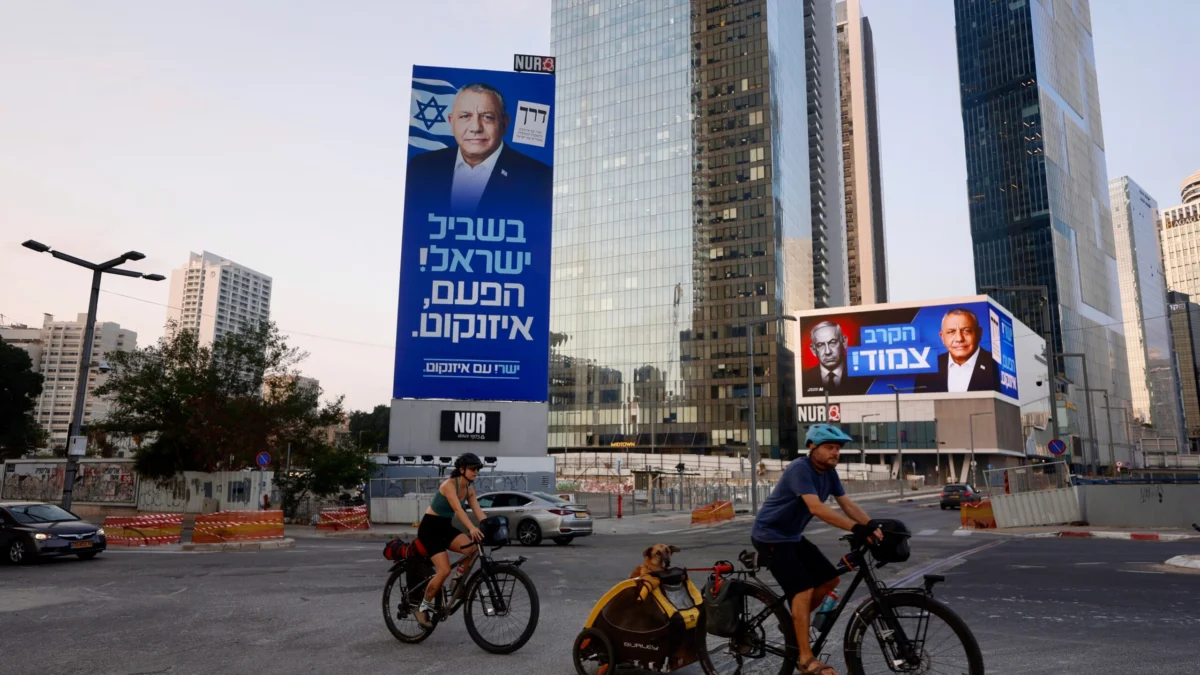
Düsseldorf. Israel is currently undergoing its first parliamentary election since the devastating Hamas attack of October 7, 2023. This election is not merely a routine exercise in democracy; it is a profoundly charged and deeply consequential moment for a nation grappling with unprecedented security challenges, profound societal divisions, and a desperate search for stable leadership. Tens of thousands of Israelis living abroad have made the arduous journey home specifically to cast their votes, underscoring the extraordinary stakes involved. Voter participation is expected to be unusually high, with many of these returning citizens likely to lend their support to the opposition, signaling a potential shift in the country’s political landscape.
Prime Minister Benjamin Netanyahu, the nation’s longest-serving leader, is vying for another term, campaigning on a platform that highlights military operations over the past three years, which he claims have bolstered Israel’s security. However, his political adversaries present a starkly contrasting view, asserting that Netanyahu himself represents the greatest threat to Israel’s future. The electoral battle is unfolding amidst a backdrop of deep societal fragmentation, fueled by contentious issues such as the government’s proposed judicial overhaul and the ongoing debate over military conscription for ultra-Orthodox citizens. As polling stations prepare to close at 9 PM CET, the nation holds its breath, awaiting the initial television projections that will offer the first glimpse into the will of the people.
Main Facts: Israel at a Crossroads
This election, the 26th in Israel’s history, is being held under extraordinary circumstances, fundamentally reshaped by the events of October 7th. The attacks by Hamas not only triggered a devastating war in Gaza but also profoundly shook public confidence in the nation’s leadership and security apparatus. The election for the 120-seat Knesset is typically held every four years, but Israel’s political system, characterized by a highly fragmented multi-party landscape, frequently leads to snap elections. The last parliamentary vote was as recent as November 2022, highlighting the chronic political instability that has plagued the country.
Approximately 7.3 million eligible voters are tasked with electing their representatives, a decision many perceive as a "destiny election" that will define Israel’s political and social trajectory for years to come, with far-reaching implications for the broader Middle East conflict. The nation remains deeply polarized, not only by the war but also by long-standing domestic issues. The government’s controversial judicial reform proposals sparked months of widespread protests, exposing deep rifts within Israeli society regarding the balance of power between the executive, legislative, and judicial branches. Furthermore, the contentious issue of military conscription, particularly the exemption granted to ultra-Orthodox Jews, continues to be a flashpoint, fueling resentment among those who bear the burden of military service.
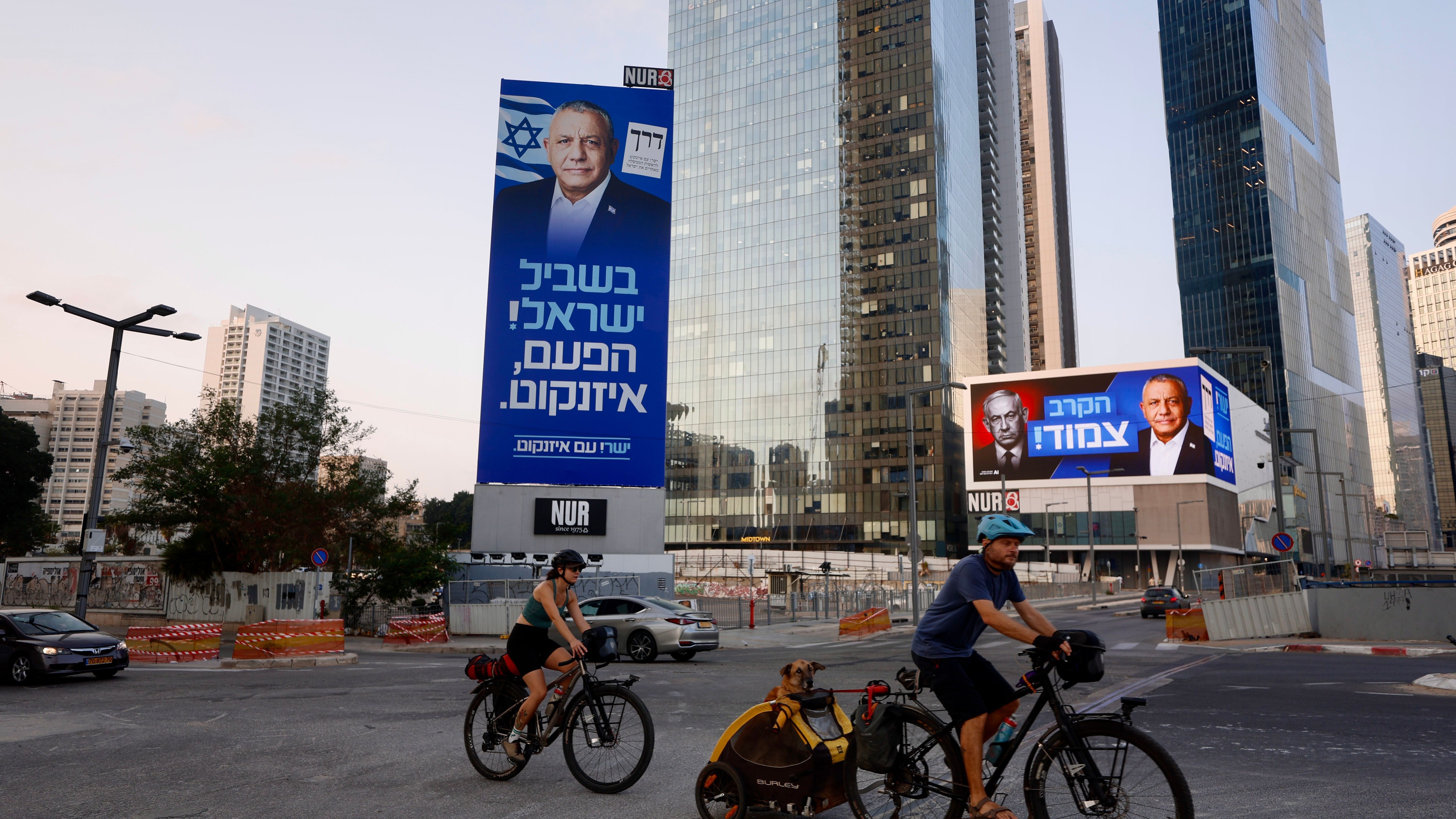
The primary contenders for leadership are the incumbent Prime Minister Benjamin Netanyahu, leading the right-conservative Likud party, and a diverse array of opposition figures. Among them, Gadi Eisenkot, a former military chief and leader of the centrist Yashar party, has emerged as a significant challenger. Yair Golan, another former military leader heading the left-leaning Democrats, also plays a crucial role within the broader opposition bloc. These elections are poised to determine whether Israel continues under Netanyahu’s veteran, right-leaning leadership or shifts towards a more centrist or even left-leaning coalition, with profound implications for its domestic policies, security doctrines, and regional relations.
Chronology: A Nation on Edge
Israel’s recent political history is marked by a cycle of instability, a phenomenon that predates the current conflict but has been exacerbated by it. Between April 2019 and March 2021, Israelis went to the polls an unprecedented four times, each election failing to produce a stable, lasting government. This chronic deadlock underscores the inherent challenges of forming broad-based coalitions in a highly pluralistic and often polarized society.
The most recent election in November 2022 saw Benjamin Netanyahu return to power, forming what is widely considered the most right-wing and religiously conservative government in Israel’s history. This coalition included several far-right parties and ultra-Orthodox factions, whose policy priorities immediately ignited fierce debate and division across the country. The government’s ambitious plans for judicial overhaul, aiming to curb the power of the Supreme Court, triggered widespread protests and a national crisis, with critics arguing it threatened the democratic foundations of the state.
The landscape was dramatically altered on October 7, 2023, when Hamas launched its devastating cross-border attack from Gaza. The coordinated assault, which resulted in widespread casualties and the abduction of hundreds, caught Israel’s vaunted security establishment off guard. The ensuing war in Gaza, and the deep emotional and psychological scars left by the attack, fundamentally shifted public priorities and intensified scrutiny of the government’s leadership, particularly Netanyahu’s role. The attack led to a temporary, emergency war cabinet that included opposition figures like Gadi Eisenkot, a testament to the immediate need for national unity in crisis. However, as the initial shock subsided and the war continued, political divisions re-emerged, culminating in the decision for another snap election, driven by a loss of confidence in the existing leadership and a demand for accountability.

The voting period concludes at 9 PM Central European Time, after which national television channels will release their initial exit polls and projections. These early results are eagerly anticipated, as they will provide the first indications of the election’s outcome. However, due to the complex nature of coalition politics in Israel, a clear picture of the next government may not emerge immediately. Preliminary results are expected around October 30th, but the official final results, which confirm the exact seat allocation in the Knesset, will not be published until approximately one week after the election, on November 4th. This period between preliminary and official results, and subsequently between official results and government formation, is often characterized by intense negotiations and political maneuvering.
Supporting Data: The Mechanics of Power
The Israeli political system operates on a principle of proportional representation, which, while ensuring broad representation, also contributes to a highly fragmented parliament. The Knesset comprises 120 seats, and a working majority requires at least 61 mandates. With approximately 7.3 million citizens eligible to vote, each ballot carries significant weight in shaping the nation’s future.
A key feature of Israel’s electoral system is its relatively low electoral threshold, currently set at 3.25%. This low barrier allows numerous smaller parties to gain representation in the Knesset. In this election, a staggering 36 different lists are competing, and current polls suggest that roughly a third of these, around a dozen parties, are likely to cross the threshold and enter parliament. This fragmentation means that no single party has ever achieved an absolute majority in Israel’s history, making coalition governments an inevitable and often complicated necessity. The power dynamics often hinge on the ability of major parties to broker alliances with smaller, ideologically diverse factions, whose few seats can become kingmakers in government formation.
Recent opinion polls indicate an exceptionally tight race, often described as a "head-to-head" contest between Netanyahu’s right-religious bloc and the more liberal opposition. Neither side is projected to secure the coveted 61-seat majority outright, foreshadowing potentially lengthy and arduous coalition negotiations. This scenario heightens the risk of yet another political deadlock, where the failure to form a stable government could eventually lead to another snap election, perpetuating the cycle of instability.

Economically, Israel faces significant challenges, compounded by the ongoing conflict. Prime Minister Netanyahu, in a controversial move during the campaign, suggested exploring cryptocurrencies as a means to circumvent potential international sanctions. However, this idea was swiftly rejected by the Bank of Israel, which underscored the unsuitability of cryptocurrencies for such a purpose and emphasized the paramount importance of maintaining stable international trade relations for the country’s economy. Observers warn that any exclusion from the global financial system, even partial, would severely impact Israel’s trade-dependent economy. While comprehensive restrictions against Israeli banks have not materialized to date, the discussion itself highlights the economic anxieties surrounding the nation’s international standing and future.
A critical demographic that could swing the election are Arab Israelis, who constitute approximately 20% of the country’s population. Their voter turnout, historically lower than that of Jewish Israelis, is expected to be higher in this election, potentially making them crucial "kingmakers." Both major Arab parties have indicated a willingness to support a government led by Gadi Eisenkot, which would represent a significant shift in Israeli politics. However, this proposition faces resistance from some of Eisenkot’s potential coalition partners, who reject the idea of forming a government reliant on Arab votes. This ideological divide within the opposition underscores the complexities of forging a unified front. Alternatively, a minority government led by Eisenkot, tacitly supported by Arab parties from outside the coalition, remains a plausible outcome, reflecting a pragmatic approach to overcoming the perpetual challenge of coalition building.
Official Responses: Leaders and Their Agendas
Benjamin Netanyahu: The Embattled Incumbent
Benjamin Netanyahu, at 77 years old, leads the right-conservative Likud party and is Israel’s longest-serving Prime Minister. Following the November 2022 elections, he formed a government with religious and far-right parties, establishing the most right-leaning coalition in the nation’s history. His political career has been marked by a strong emphasis on national security and a robust, often hawkish, stance on foreign policy.
In this campaign, Netanyahu has heavily leaned on his security credentials. His Likud party asserts that Israel has successfully put its adversaries on the defensive since 2023, citing the military’s control over two-thirds of the Gaza Strip, a weakened Hezbollah, and significant damage inflicted upon Iran’s nuclear and missile programs. His supporters argue that his experience and firm hand are indispensable for navigating the country through turbulent times. They also controversially assign blame for the October 7th attacks not to Netanyahu’s leadership, but to the security establishment, attempting to deflect responsibility from the political leadership. Netanyahu has also received public endorsements from former US President Donald Trump, signaling a preference for his right-wing policies.

However, Netanyahu faces severe criticism. Opponents accuse him of disregarding intelligence warnings leading up to the October 7th attack, a failure they deem catastrophic. He is also charged with undermining the rule of law and the separation of powers through his judicial overhaul proposals, which many see as an attempt to weaken democratic institutions and potentially shield himself from ongoing corruption charges. Furthermore, critics lambaste his government for perpetuating a system that exempts ultra-Orthodox individuals from military service, even amidst a war that demands broad societal participation. His controversial suggestion to explore cryptocurrencies to circumvent potential international sanctions was met with strong opposition from the Bank of Israel, which emphasized the importance of stable trade relations over speculative financial maneuvers. Observers warn that such a path could severely harm Israel’s economy, which is heavily reliant on external trade.
Gadi Eisenkot: The Centrist Challenger
Gadi Eisenkot, 66, a former military chief, leads the centrist Yashar party. His credibility as a leader has been deeply impacted by personal tragedy, having lost a son in the Gaza war. After the October 7th attack, he briefly joined Netanyahu’s emergency war cabinet, demonstrating a willingness to prioritize national unity during crisis.
Eisenkot’s campaign narrative directly challenges Netanyahu’s approach, accusing the Prime Minister of employing fear-mongering tactics. He criticizes Netanyahu for failing to achieve stated objectives in recent conflicts, specifically the elusive goal of regime change in Tehran. Eisenkot deems such a goal unattainable and instead advocates for a strategy focused on halting Iran’s nuclear program. At his final campaign rally, Eisenkot issued a stark warning, suggesting that Netanyahu might not allow a peaceful transfer of power should he lose the election, raising concerns about the stability of Israel’s democratic processes. His platform generally seeks to restore a sense of national cohesion and responsible governance, moving away from what he perceives as the divisive politics of the current administration.
Yair Golan: The Left-Wing Standard-Bearer
Yair Golan, another former military leader, heads the left-leaning Democrats. While aligned with the broader opposition bloc against Netanyahu, Golan distinguishes himself with several key policy positions. He advocates for the inclusion of the Arab party Ra’am in a future government coalition, a stance that sets him apart from other opposition figures like Eisenkot, Naftali Bennett, and Avigdor Lieberman, who have explicitly rejected such an alliance.
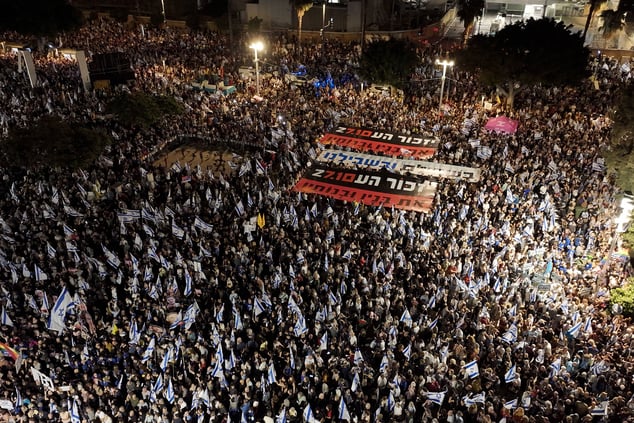
Furthermore, Golan is a proponent of a Palestinian state, a position largely unshared by many of his potential coalition partners within the opposition. Despite these differences, the leaders of the opposition bloc, including Eisenkot, former Prime Minister Naftali Bennett, Yair Lapid, and Avigdor Lieberman, publicly pledged in late September to refrain from attacking each other during the campaign and to collaborate on forming a unified government. This commitment reflects a shared imperative to unseat Netanyahu, despite their ideological divergences. Political observers widely anticipate that a change in government would at least lead to a de-escalation of violence in the West Bank, signaling a potential shift in policy towards the Palestinian territories. The strong public sentiment for change was evident in the tens of thousands who protested against Netanyahu’s coalition on the weekend leading up to the election.
Implications: The Road Ahead
The outcome of this election carries immense implications for Israel’s future, touching upon its domestic stability, regional standing, and international relations.
Government Formation: A Test of Unity
With polls predicting a tight race where neither Netanyahu’s right-religious bloc nor the liberal opposition is likely to secure an outright majority of 61 seats, the path to government formation will undoubtedly be complex. The proportional representation system and the low electoral threshold contribute to a fragmented Knesset, making coalition building an intricate dance of negotiations and compromises. Should no clear majority emerge, the nation could face a prolonged period of political uncertainty. The President, Isaac Herzog, will first task the candidate with the most viable path to forming a coalition. This candidate has 28 days to succeed, with a possible 14-day extension. If this attempt fails, the President can then designate another Member of Knesset. Should all attempts to form a government prove futile, Israel would be forced into yet another round of snap elections, a scenario the country has experienced repeatedly, notably between April 2019 and March 2021 when Israelis voted four times. Until a new government is successfully formed, the current cabinet, led by Benjamin Netanyahu, would remain in office as a caretaker administration.
Domestic Policy: Healing Divisions or Deepening Rifts
A new government would immediately face the challenge of addressing the deep societal divisions exposed by the judicial overhaul proposals and the ultra-Orthodox conscription debate. A centrist or left-leaning coalition might seek to roll back some of the more controversial judicial reforms, aiming to restore institutional balance and national unity. The question of ultra-Orthodox conscription, a source of significant tension between secular and religious segments of society, would also demand urgent attention, especially in the context of increased national service demands during wartime. The ability of any new government to bridge these internal divides will be crucial for the nation’s long-term stability.

Regional Stability: A Shifting Landscape
The election’s outcome will inevitably impact regional dynamics. Observers anticipate that a change in leadership could lead to a reduction in tensions and violence in the West Bank, particularly if more moderate voices gain influence. The ongoing conflict in Gaza and the threat posed by Hezbollah in Lebanon will remain paramount security concerns, regardless of who governs.
Iran Conflict: Enduring Threat
The conflict with Iran, a persistent and existential threat for Israel, will continue to be a central foreign policy challenge. Even under a caretaker government, Netanyahu and his allies, like former US President Trump, have previously hinted at aggressive action against Iran. While Eisenkot and other opposition figures advocate for a more targeted approach to halt Iran’s nuclear program rather than seeking outright regime change, a new government is still widely expected to confront potential new rounds of conflict with Tehran. Recent diplomatic efforts, such as the talks held in Tehran between Saudi Arabia, Turkey, and Pakistan to de-escalate Middle East tensions, underscore the broader regional desire for stability, a sentiment that was reflected in a slight increase in Brent crude oil prices, rising 0.6 percent to $116.50 per barrel (159 liters).
Economic Outlook: Navigating Uncertainty
Israel’s economy, already under strain from the war and global economic uncertainties, faces additional risks. The debate over potential international sanctions and the Bank of Israel’s rejection of cryptocurrency solutions highlight the vulnerability of an economy heavily reliant on international trade. A period of prolonged political instability or a government perceived as reckless by international markets could deter foreign investment and lead to further economic challenges. Conversely, a stable government with a clear economic strategy could help restore confidence and attract much-needed capital.
International Relations: Realigning Alliances
The election will also shape Israel’s international standing and its relationships with key allies and regional partners. The nature of the next government could influence its alignment with the United States, its ongoing efforts to normalize relations with Arab states, and its overall global perception. A more centrist government might find it easier to engage with a broader range of international actors, while a more ideologically driven government could face greater diplomatic challenges.

As the votes are counted and the arduous process of coalition building begins, Israel stands at a critical crossroads. The choices made in this election will not only determine its leadership but also profoundly influence its path towards security, unity, and peace in a volatile region.
With material from news agencies Reuters, dpa, and Bloomberg.