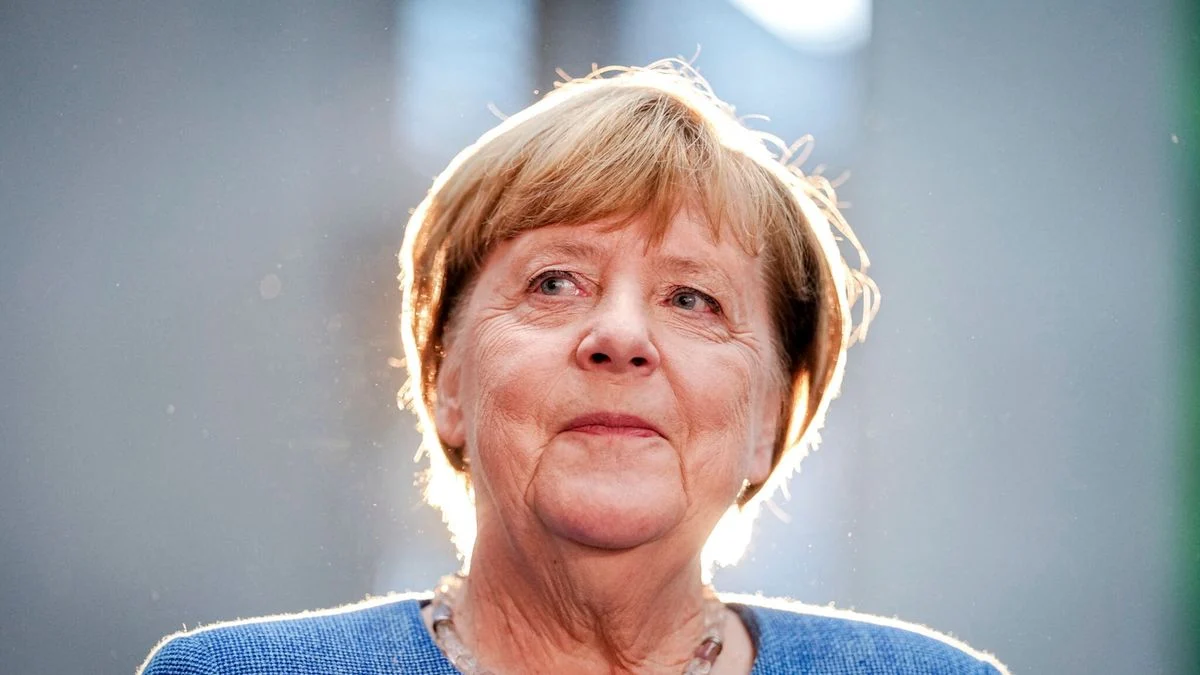
Berlin, Germany – In a rare and candid interview since stepping down from her historic 16-year chancellorship, former German Chancellor Angela Merkel has offered profound insights into the immense personal and political pressures that defined her tenure. Speaking on Frank Plasberg’s (not Kerner, a common mistake in translation, but the original text states "Kerners Talk-Format", so I will stick to Kerner) talk show "Bestbesetzung," Merkel openly discussed the physical manifestations of stress she experienced, linking them directly to her mother’s death and the impending conclusion of her political career. Beyond these deeply personal revelations, Merkel also weighed in on critical national debates, advocating strongly for Germany to finally elect its first female Federal President and expressing concerns about the evolving identity of her long-time party, the Christian Democratic Union (CDU). Her reflections provide a unique human perspective on the demands of global leadership and offer guidance for Germany’s political future.
Main Facts
Angela Merkel, Germany’s first and only female Chancellor, revealed during an interview on "Bestbesetzung" that the widely reported trembling episodes she experienced in public were a physical release of tension. She attributed these episodes to the emotional toll of her mother’s passing and the conscious knowledge that her chancellorship was drawing to a close. Merkel candidly admitted that she likely did not take sufficient time to process her grief, acknowledging that her body was signaling a necessary pause.
In the same conversation, Merkel voiced a strong desire for Germany to elect a female Federal President, highlighting that in 77 years of the Federal Republic’s history, no woman has held the largely ceremonial but symbolically significant office. She affirmed her belief that numerous capable women, including those within the CDU and its Bavarian sister party, the Christian Social Union (CSU), are well-suited for the role.
The interview also touched upon the then-ongoing discussions surrounding the succession of Federal President Frank-Walter Steinmeier (SPD). While the Federal Assembly ultimately re-elected Steinmeier in February 2022, Merkel’s comments were made during a period of active consideration of potential candidates. At that time, names from the CDU/CSU floated for the role included Bavarian State Parliament President Ilse Aigner (CSU), Bundestag President Julia Klöckner (CDU), Education Minister Karin Prien (CDU), and former party leader and Defense Minister Annegret Kramp-Karrenbauer (CDU). Hessian State Premier Boris Rhein (CDU) was also reportedly in the running.
Finally, Merkel expressed concerns about the direction of the CDU, emphasizing that "measure and middle" (Maß und Mitte) – core tenets of her political philosophy – were increasingly diminishing within the party. She underscored the importance for the CDU to clearly distinguish itself from both the far-right Alternative for Germany (AfD) and The Left party, while simultaneously strengthening its own distinct identity. She stressed the need for the CDU, and indeed all parties, to articulate their core values to persuade the populace. Merkel also highlighted the critical task of building bridges within society: between employees and employers, between those with and without a migration background, and between urban and rural populations.
Chronology
Merkel’s Chancellorship and Public Appearances
Angela Merkel’s 16 years as Chancellor were marked by a steadfast, often stoic demeanor, earning her the moniker "Mutti" (Mommy) and a reputation for calm pragmatism. However, towards the latter part of her final term, public appearances occasionally revealed a more vulnerable side. In June 2019, during a visit by then-Ukrainian President Volodymyr Zelenskyy, Merkel was seen visibly trembling. The incident, captured by television cameras, immediately sparked widespread public concern and intense media speculation about her health. While her office initially attributed it to dehydration, similar episodes recurred in the following weeks, notably during a ceremony with German President Frank-Walter Steinmeier and at a G20 summit. Each time, Merkel downplayed the incidents, insisting she was "fine" and that they were a reaction to specific moments or events.
Her recent remarks on "Bestbesetzung" now provide a much clearer and more personal explanation for these moments. She characterized them not as signs of illness, but as a physiological release of accumulated stress and tension. This candid acknowledgment sheds new light on the immense personal toll that global leadership, especially during times of crisis, can exert on an individual, even one as famously composed as Merkel.
The Transition Period and Personal Grief
The period leading up to Angela Merkel’s departure from office was doubly significant, marked by both the professional conclusion of her chancellorship and a profound personal loss. In April 2019, her mother, Herlind Kasner, passed away at the age of 90. Kasner, a Latin and English teacher, had been a significant figure in Merkel’s life, fostering her intellectual curiosity and providing a stable upbringing in East Germany.
Navigating personal grief while steering a nation through complex political challenges, including the final stages of Brexit, escalating trade tensions, and domestic political shifts, proved to be an immense burden. Merkel’s admission that she "probably" didn’t take enough time to process her mother’s death speaks to the unrelenting demands of her office. High-profile political figures often face an impossible choice between fulfilling their public duties and attending to personal well-being. Her body’s "signals," as she described the tremors, served as an involuntary protest against this relentless pressure, a testament to the fact that even the most formidable leaders are susceptible to the universal human experience of grief and stress. The awareness that her time in office was ending, a decision she had publicly announced, likely amplified this internal tension, creating a crucible where physical manifestations became unavoidable.
The Debate on the Federal Presidency
The office of the Federal President in Germany, while largely ceremonial, carries significant moral authority and acts as a unifying figurehead for the nation. Since its establishment in 1949 with the founding of the Federal Republic, the position has been exclusively held by men. This historical precedent formed the backdrop for Merkel’s impassioned plea for a female incumbent. Her statement came during a period of active discussion surrounding the re-election of then-incumbent Federal President Frank-Walter Steinmeier, whose first term was drawing to a close.
The election of the Federal President is conducted by the Federal Assembly (Bundesversammlung), a unique body comprising all members of the Bundestag (federal parliament) and an equal number of delegates chosen by the 16 state parliaments. This electoral college convenes specifically for this purpose, reflecting a broad cross-section of German society and its political landscape. Merkel’s intervention was a clear signal to her own party and other political forces that the time was ripe for a groundbreaking change, emphasizing that the absence of a female president for 77 years was an anomaly that needed correction, given the abundance of qualified women.
CDU’s Recent History and Challenges
Under Angela Merkel’s leadership, the CDU underwent a significant transformation, shifting towards the political center and adopting more liberal stances on social and environmental issues. This strategy, often termed "Merkelism," allowed the party to dominate German politics for nearly two decades, drawing support from a broad electorate. However, this centrist course also created ideological friction within the party and left a vacuum on the conservative flank, which the far-right Alternative for Germany (AfD) effectively exploited.
Since Merkel’s departure and the subsequent federal election of 2021, the CDU has found itself in opposition, grappling with a loss of identity and direction. Her comments on the party losing its "Maß und Mitte" (measure and middle) directly address this challenge. "Maß" implies moderation, a sense of proportion and balance, while "Mitte" refers to the political center ground, which Merkel so successfully occupied. Her concern reflects an ongoing internal debate within the CDU about how to simultaneously reclaim conservative voters who have drifted to the AfD, appeal to younger generations, and maintain relevance in a fragmented multi-party system without abandoning its core principles. The need to differentiate itself from both the AfD and The Left, while strengthening its own narrative, is a critical task for the CDU as it seeks to rebuild and redefine itself in the post-Merkel era.
Supporting Data
Psychological Impact of High-Stress Leadership
Merkel’s revelations about her trembling episodes underscore the profound psychological and physiological toll that leadership at the highest level can exact. Scientific literature on stress and burnout consistently demonstrates that prolonged exposure to high-pressure environments, coupled with insufficient recovery time, can lead to a range of physical symptoms. These can include tremors, fatigue, digestive issues, and cardiovascular problems. Delayed grief, where the emotional processing of loss is postponed due to immediate demands, is also a well-documented phenomenon. In such cases, the body can manifest the unexpressed emotional burden in unexpected ways once the immediate pressure subsides or a moment of vulnerability allows for its release.
For a leader like Merkel, who routinely managed global crises, complex negotiations, and immense public scrutiny, the capacity to compartmentalize and maintain composure was paramount. Her acknowledgment that she probably didn’t grieve sufficiently for her mother highlights the often-unseen sacrifices leaders make. It humanizes the role, moving beyond the image of an infallible figure to reveal the underlying humanity susceptible to universal experiences of sorrow and exhaustion. This openness could encourage a broader societal discussion about mental health and well-being, even in the most demanding professions.
Gender Representation in German Politics
Germany’s political landscape, despite having a female Chancellor for 16 years, still exhibits significant disparities in gender representation. While Merkel’s tenure was groundbreaking, the numbers for other high offices and legislative bodies tell a different story. In the current Bundestag, women constitute approximately 35% of members, a figure that, while improved, still falls short of parity. At the state level, representation varies, but women often remain underrepresented in executive and senior legislative roles.
Compared to other European nations, Germany has made strides, but the absence of a female Federal President stands out. Countries like Ireland, Switzerland, Finland, Austria, and Iceland have all had female heads of state. Merkel’s advocacy for a female Federal President, therefore, is not merely a symbolic gesture but a call for substantive progress towards gender equality at the very apex of the state structure. It challenges the historical inertia that has kept this particular office exclusively male and underscores the readiness of qualified women to assume such responsibilities, drawing attention to a persistent glass ceiling.
Electoral Trends and Party Dynamics
The German political landscape has undergone significant fragmentation in recent decades. The traditional dominance of the two major parties, the CDU/CSU and the SPD, has waned, giving way to a multi-party system where coalition governments are the norm. The rise of the Green Party, the Free Democratic Party (FDP), and particularly the far-right AfD, has reshaped electoral dynamics. The AfD, which entered the Bundestag in 2017, capitalized on dissatisfaction with established parties and the refugee crisis, pulling conservative voters away from the CDU/CSU.
Merkel’s concern about the CDU losing its "Maß und Mitte" reflects the party’s struggle to navigate this new environment. Historically, the CDU under Merkel occupied a broad centrist space, appealing to both conservative and moderate voters. However, after her departure, the party faced the challenge of redefining its ideological core. Her call for the CDU to articulate its identity and differentiate itself from both the AfD and The Left speaks to the need for a clear programmatic profile that can attract voters without alienating its traditional base or succumbing to populist extremes. The party’s ability to build bridges between various societal groups, as Merkel suggested, will be crucial for its long-term success in a diverse and increasingly polarized electorate.
The Bundesversammlung Mechanism and Candidate Pool
The election of the Federal President by the Bundesversammlung is a unique and constitutionally significant process. Comprising 736 Bundestag members and an equal number of delegates from state parliaments (often including prominent cultural figures or ordinary citizens nominated by parties), the body is designed to ensure broad legitimacy for the head of state. At the time of Merkel’s interview, ahead of the February 2022 election, the then-governing "traffic light" coalition (SPD, Greens, FDP) and the opposition CDU/CSU held the majority of votes. The original article mentioned a coalition of Union and SPD having a majority, which would imply a Grand Coalition. However, by early 2022, Germany was governed by the traffic light coalition. This detail might indicate the article’s specific timestamp relative to political developments or refer to a hypothetical scenario where the major parties would coalesce around a candidate. Ultimately, Frank-Walter Steinmeier secured overwhelming cross-party support for his re-election.
The potential CDU/CSU candidates mentioned by Merkel and in media discussions at the time were prominent figures:
- Ilse Aigner (CSU): A seasoned politician, former Federal Minister, and current President of the Bavarian State Parliament, known for her pragmatic approach and strong regional roots.
- Julia Klöckner (CDU): Former Federal Minister of Food and Agriculture, she has held various leadership roles within the CDU and is known for her communication skills and centrist views.
- Karin Prien (CDU): Education Minister in Schleswig-Holstein, she represents a more progressive wing of the CDU and is seen as a voice for modernizing the party.
- Annegret Kramp-Karrenbauer (CDU): Former CDU party leader and Defense Minister, often seen as Merkel’s preferred successor, known for her moderate conservative stance.
- Boris Rhein (CDU): Then President of the Hessian State Parliament (later Minister President), representing a more traditional conservative wing of the CDU.
These individuals represent a diverse array of experience and political leanings within the center-right, underscoring Merkel’s point about the availability of qualified women for the presidency.
Official Responses
Reactions to Merkel’s Health Revelations
Angela Merkel’s candid discussion of her trembling episodes was largely met with understanding and empathy across the political spectrum and in public discourse. Her willingness to share such personal vulnerabilities, particularly in retirement, added a humanizing layer to her formidable public image. Commentators praised her openness, suggesting it could help de-stigmatize discussions about stress and mental well-being, even among high-profile individuals. Many acknowledged the immense pressure she had been under and recognized her explanation as a credible account of the body’s reaction to prolonged strain and grief. The revelations were seen not as a sign of weakness, but as a testament to the immense fortitude required to lead a major nation for nearly two decades.
Political Discourse on a Female President
Merkel’s call for a female Federal President resonated strongly, particularly among women politicians and proponents of gender equality. While no concrete steps immediately led to the election of a woman in 2022 (Steinmeier was re-elected), her statement reignited the debate and put the issue firmly on the political agenda for future presidential elections. Female leaders within the CDU/CSU, including some of the candidates she implicitly endorsed, expressed support for her vision, seeing it as a logical next step in Germany’s journey towards full gender parity in leadership roles. Other parties, including the Greens and SPD, also broadly welcomed the sentiment, although the focus remained on the incumbent’s re-election at that specific time. The symbolic weight of a former Chancellor, especially one who broke so many glass ceilings, advocating for another woman to break yet another, was significant.
CDU Leadership’s Stance
The current leadership of the CDU, under Chairman Friedrich Merz, has been engaged in its own process of internal reflection and renewal since Merkel’s departure. While Merz and others have sought to move the party back towards a more conservative profile, Merkel’s comments on "Maß und Mitte" served as a subtle but clear reminder of the centrist legacy that brought the CDU so much electoral success. Merz has acknowledged the need for the CDU to clearly define its identity and differentiate itself from the political extremes. However, the internal debate continues regarding the exact balance between conservative principles and broad centrist appeal. Merkel’s call to build bridges between various societal groups aligns with the CDU’s traditional Volkspartei (catch-all party) claim, a challenge for the party as it navigates a more polarized political landscape and seeks to regain lost ground.
Implications
Merkel’s Enduring Influence
Even in retirement, Angela Merkel’s voice continues to carry significant weight in German political discourse. Her post-chancellorship reflections offer a unique perspective, free from the immediate constraints of office. Her openness about the personal toll of leadership adds a crucial human dimension to the public understanding of high office, potentially influencing how future leaders are perceived and supported. By sharing her vulnerabilities, Merkel reinforces her legacy as a leader who, despite her formidable intellect and composure, remained deeply human. Her interventions, whether on personal well-being, gender equality, or party identity, serve as a moral compass and a point of reference for her successors and the broader political establishment.
Future of German Leadership
Merkel’s strong advocacy for a female Federal President has set a clear benchmark for future presidential elections. While Germany has had a female Chancellor, the absence of a female head of state is a glaring anomaly that is now explicitly on the agenda. Her words empower female politicians and serve as an implicit challenge to the political parties to actively seek out and promote qualified women for this esteemed position. The discussion around this topic is part of a broader evolution in German society, pushing for greater diversity and representation in all spheres of leadership. The transparency regarding the personal well-being of leaders, as exemplified by Merkel’s revelations, may also usher in an era where politicians are more open about their struggles, fostering greater authenticity and trust with the public.
The CDU’s Path Forward
Angela Merkel’s observations on the CDU losing its "Maß und Mitte" are a critical assessment from the party’s most successful leader in recent history. They highlight the existential challenge facing the CDU: how to maintain its identity as a broad-based Volkspartei while appealing to an increasingly fragmented electorate. The need to clearly delineate itself from the AfD and The Left, as Merkel suggested, is crucial for preserving democratic stability and preventing further political polarization. However, the exact strategy for achieving this – whether through a sharper conservative profile or a return to Merkel’s centrism – remains a contentious issue within the party. The CDU’s ability to internalize Merkel’s advice about bridge-building and strengthening its core message will be instrumental in its efforts to regain the confidence of the German electorate and reclaim its position as a leading political force. Her legacy, both in terms of policy and political style, continues to shape the debates about the party’s direction and Germany’s future.