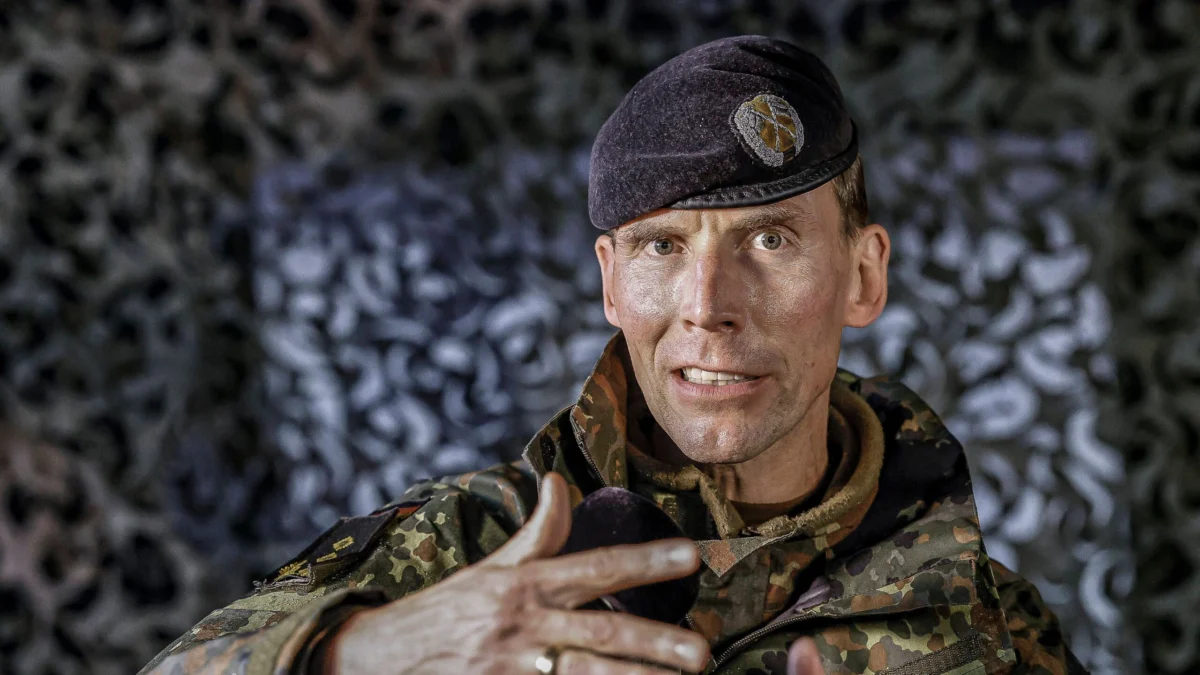
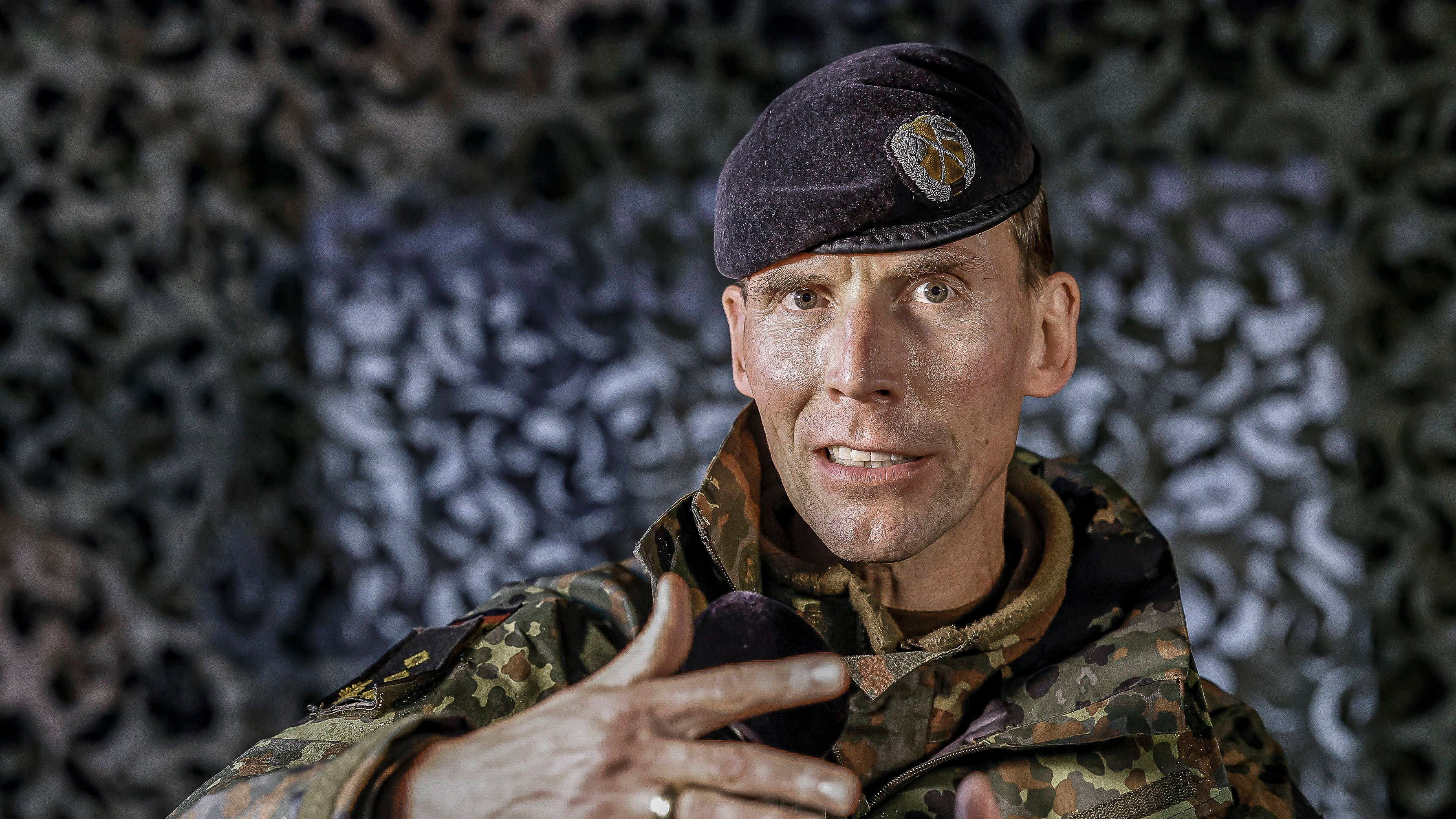
Berlin, Germany – In a candid and far-reaching interview, Lieutenant General Christian Freuding, the Inspector of the German Army, has laid out an ambitious roadmap for the Bundeswehr’s land forces, aiming to transform them into a larger, fully equipped, and technologically advanced fighting force by 2035. His vision, articulated amidst growing geopolitical tensions and the ongoing conflict in Ukraine, emphasizes digital superiority, long-range strike capabilities, and a robust defense against hybrid threats. While acknowledging significant challenges in procurement and digitalization, Freuding expressed confidence in the army’s trajectory, driven by a commitment to operational readiness and a pragmatic approach to technological integration.
Main Facts: A Vision for 2035 – A Resurgent Army
Lieutenant General Christian Freuding’s strategic outlook for the German Army by 2035 paints a picture of a military profoundly different from its current state. At its core, the transformation aims to create a land force capable of decisively asserting itself and achieving victory in modern combat scenarios. This vision is underpinned by several key pillars:
Growth and Modernization
The German Army is projected to be significantly larger, a critical expansion achieved through the full integration of both active-duty personnel and reservists. This increased manpower is intended to ensure sustained operational capacity and resilience. Concurrently, the army aims for near full equipment, moving away from past shortages towards a state of comprehensive readiness. This modernization extends beyond mere quantity, focusing on acquiring a multitude of innovative capabilities essential for contemporary warfare.
Leadership and Readiness
A crucial, yet often overlooked, aspect of Freuding’s vision is the cultivation of an "appreciative and comradely leadership culture." This emphasis on internal cohesion, morale, and professional development is seen as foundational to an effective fighting force. The ultimate objective is clear: to forge an army that possesses the inherent ability to assert its will on the battlefield and secure victory, a sentiment that resonates deeply with Germany’s renewed focus on national and collective defense.
The Imperative of Digitalization
Central to this transformation is the ambitious "Digitalization of Land-Based Operations" (D-LBO) project. This initiative seeks to integrate advanced digital technologies across all aspects of ground combat, from communication and command to reconnaissance and engagement. Freuding’s commitment to D-LBO underscores a recognition that future conflicts will be defined by information superiority and rapid, networked decision-making. However, as the interview reveals, this digital leap is not without its significant hurdles.
Chronology of Transformation: Milestones and Hurdles
The journey towards the 2035 vision is marked by both strategic achievements and persistent obstacles, particularly in the realm of digital integration and equipment modernization.

Digitalization of Land-Based Operations (D-LBO) Progress
The implementation of D-LBO, designed to bring the Bundeswehr’s ground forces into the digital age, has faced considerable scrutiny. Skepticism has been fueled by ongoing issues with the introduction of digital radio systems, a foundational component of D-LBO. Freuding, however, offered a nuanced perspective, highlighting a critical intermediate success: the 37th Panzergrenadier Brigade, slated to serve as a NATO Forward Land Forces spearhead in 2027, has successfully achieved digital command capabilities. Operational tests confirmed that the brigade can "drive, radio, and shoot" effectively, even under challenging tactical conditions and adverse weather. This achievement is a significant proof of concept, demonstrating that despite initial setbacks, core functionalities are being met.
Nonetheless, Freuding candidly admitted that "much work remains." The path forward requires accelerated integration of D-LBO across a wider array of weapon systems and vehicles. This includes incorporating more diverse transmission methods, such as advanced satellite communication, to fully leverage the system’s potential. Crucially, enhancing system stability remains a priority. Freuding stated that industry partners have committed to these improvements, indicating an ongoing collaborative effort to overcome technical challenges.
The Marder-Puma Dilemma
A notable decision impacting current readiness involves the Marder infantry fighting vehicle (IFV). The older Marder, initially planned for the Forward Land Forces deployment, has been withdrawn from this critical role due to its failure to meet stringent quality criteria, specifically concerning system stability within the digital framework. Freuding emphasized that he would not compromise on these standards, as soldiers must be able to rely on their equipment in combat. This decision necessitates a redistribution of assignments within the army, with the Panzergrenadierbataillon 112, equipped with the more modern Puma IFV, being affected.

Despite its removal from the immediate spearhead role, the Marder will not be immediately phased out. Approximately 120 Marder units are still slated for digital radio retrofitting, as the vehicle is expected to remain in service for another decade. This suggests a pragmatic approach to lifecycle management, where the Marder, even if not at the cutting edge, will still benefit from digital upgrades to enhance its operational value for its remaining service life.
Embracing Software-Defined Defense
Addressing concerns about the pace of modernization and the potential for new technologies to become obsolete quickly, Freuding introduced the concept of "Software Defined Defense." He argued that the age of hardware is less critical than the currency of its embedded software. Modern military equipment, particularly communication systems, relies on software that can be rapidly updated and enhanced, akin to commercial "app stores."
This paradigm shift is exemplified by the "Center for Digitalization of Land Operations," which will play a pivotal role in regularly updating the software of all weapon systems. Freuding asserted that "modernity is no longer measured by the thickness of the armor steel, but by the currency of the software." This approach aims to future-proof investments and allow for agile adaptation to evolving threats and technological advancements, mitigating the risk of long procurement cycles leading to outdated equipment upon delivery.
Streamlining Procurement and Industrial Partnerships
The structural reorganization of the army is nearing completion, with the finalized blueprint for the future force structure currently under review by the Ministry of Defense. Approval is anticipated within the current year, which will provide industry with concrete procurement demands for tanks, howitzers, drones, and other essential systems.
However, Freuding did not shy away from criticizing the defense industry, noting that "too many procurement projects are behind schedule and below our quality standards," citing the Skyranger air defense tank as an example. While refraining from "manufacturer-bashing," his remarks underscore a clear expectation for industry to accelerate delivery and meet performance benchmarks. This highlights a persistent tension between military requirements and industrial capacity/efficiency, a challenge that Germany, like many other NATO allies, faces in its rearmament efforts.
Supporting Data: Addressing Critical Capability Gaps
The interview meticulously outlines specific areas where the German Army currently faces significant capability gaps, and how these are being addressed through targeted investments and strategic initiatives.

Air Defense and Indirect Fire Power
Two critical deficiencies identified are protection against low-altitude air threats and the need for enhanced indirect fire capabilities. The proliferation of drones and loitering munitions (colloquially termed "Kamikaze drones") in conflicts like Ukraine has starkly demonstrated the vulnerability of ground forces to these airborne threats. Germany is therefore prioritizing systems for effective air defense against such dangers. Simultaneously, the army seeks to significantly improve its indirect fire capabilities, specifically through long-range artillery and advanced loitering munitions, to project power and suppress enemy targets beyond the immediate frontline.
The Quest for Deep Precision Strikes (1500km+)
Perhaps the most ambitious capability gap identified is the army’s current inability to execute "Deep Precision Strikes" – the capacity to engage enemy targets far behind the front lines, at distances of 1500 kilometers and beyond. Freuding explicitly stated that the land forces require this capability. Currently, the Bundeswehr lacks such systems, but several approaches are under consideration:
- Low-Cost Cruise Missiles: The army is evaluating two models of low-cost cruise missiles that could be rapidly qualified and introduced. The US firm Covenant, which plans mass production in Saxony, was mentioned as a potential supplier, indicating a dual strategy of leveraging commercial innovation and bolstering domestic production.
- High-End Cruise Missiles: For more advanced requirements, a two-pronged approach is envisioned: joint European development of high-end cruise missiles, complemented by interim procurement from the United States to bridge immediate gaps. This strategy reflects Germany’s commitment to European defense cooperation while also ensuring rapid access to proven capabilities.
The aspiration to strike 1500 km into enemy territory represents a fundamental shift in the German Army’s operational doctrine, moving towards a more offensive-capable, deterrent posture.

Revolutionizing Digital Command and Control
Digital command capability is dissected into three hierarchical layers:
- Digital Backbone: The foundational platform and network architecture that underpins all digital operations.
- Data Management and Consolidation: The processes and systems for collecting, managing, and integrating vast amounts of battlefield data from diverse sources.
- Data Exploitation (NATO concept): The ability to strategically analyze and utilize collected data to inform and enhance combat decision-making, providing a decisive advantage in real-time.
Freuding reported that the Bundeswehr has developed comprehensive architectural concepts and initial concrete models and applications across all these areas. A prime example is "Uranos AI," an AI-supported reconnaissance and effect network for armored combat troops, which is slated for introduction in the Lithuania Brigade next year. The immediate challenge is to integrate these disparate individual projects into a cohesive digital command concept, thereby enabling the "leap into the 21st century" for battlefield management.
The Rise of Unmanned Systems
The integration of unmanned systems (drones and ground robots) is identified as a multi-layered priority:

- Universal Drone Proficiency: Every soldier must possess basic knowledge in operating and defending against drones, recognizing their pervasive role in modern warfare.
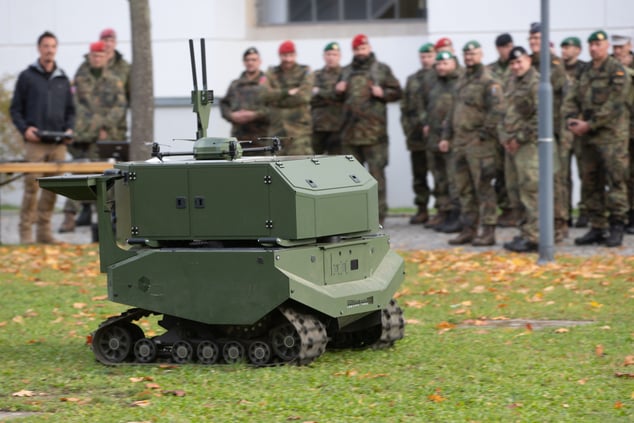
- Enhanced Unit Combat Value: Unmanned systems are expected to significantly augment the combat effectiveness of traditional combat arms units. To achieve this, pilot companies are being established within Jäger, Panzer, and Army Reconnaissance troops to develop and integrate drone tactics.
- Dedicated Drone Regiment: A standalone Drone Regiment is being formed, designed to provide diverse capabilities. This regiment will conduct operations at short, medium, and long ranges, with aspirations for strike capabilities up to 500 kilometers, and potentially beyond. It will also specialize in drone defense and electromagnetic warfare. Crucially, the regiment will include a dedicated company for testing and experimentation, operating "door-to-door" with operational units to ensure rapid adaptation to the high pace of innovation in this field.
This multi-faceted approach underscores the Bundeswehr’s commitment to leveraging autonomous and remotely operated systems as force multipliers, reflecting lessons learned from recent conflicts.
Official Responses: Freuding’s Stance on Challenges and Strategy
Freuding’s interview reveals a pragmatic yet firm approach to the challenges confronting the German Army, particularly concerning industry performance and geopolitical dependencies.
Industry Accountability and Quality Standards
While careful to avoid "manufacturer-bashing," Freuding’s critique of procurement delays and quality shortfalls is unambiguous. He emphasized that "too many procurement projects are behind schedule and below our quality standards," citing the Skyranger air defense system as an example. This direct feedback signals a heightened expectation for defense contractors to deliver on commitments, not just in terms of quantity but also adherence to rigorous operational requirements. The decision to remove the Marder IFV from a key NATO role due to system stability issues reinforces this principle: quality and reliability are non-negotiable when soldiers’ lives are at stake.

Regarding the procurement of drone systems, such as the recently approved framework contract for net-launcher drones worth over a billion euros, Freuding clarified that such contracts do not automatically translate into full procurement. He articulated a strategic balance:
- Fully Equipped Units: Ensuring front-line units have all necessary modern equipment.
- Required Stockpiles: Maintaining sufficient reserves for sustained operations.
- Production Capacity: Developing the capability for industry to rapidly manufacture large quantities of modern systems in a crisis.
This means the Bundeswehr needs "full depots and prepared factory halls" – a holistic approach to readiness that combines immediate availability with future production potential. This strategy aims to bridge the gap between current needs and the rapid innovation cycle of modern warfare.
Navigating External Dependencies: Palantir and Starshield
The interview touched upon the sensitive issue of reliance on foreign, often private, technological providers. Freuding addressed the role of Palantir’s Maven software, which is utilized by NATO. While declining to evaluate individual providers, he stressed the importance of coordinating with NATO on the appropriate level of Maven’s use and ensuring national connectivity for Germany. His primary concerns were "information speed and data security," indicating a desire for interoperability while safeguarding national interests and data sovereignty.
The critical role of Elon Musk’s Starshield (Starlink) satellite constellation in the Ukraine conflict also came up. Freuding acknowledged its "highest importance" for combat operations and expressed hope that "all partners of Ukraine continue to reliably stand by them in their fight for freedom." This highlights a significant dependency on private infrastructure in modern warfare. To mitigate similar vulnerabilities for Germany, Freuding revealed that the Bundeswehr is investing €35 billion over the coming years into developing its own sovereign space capabilities. This substantial investment is a direct response to the recognized "relevance of space" for military operations and a move towards greater strategic autonomy. He firmly stated that for all future weapon system procurements, integration into Germany’s "own sovereign network architecture" is "criterion number one," signaling a clear shift away from reliance on external, potentially unreliable, communication channels.

Balancing Readiness with Innovation in Procurement
Freuding acknowledged that the pace of technological change often outstrips traditional procurement timelines. The solution, he suggested, lies in focusing on "Software Defined Defense," where the core functionality resides in constantly updated software rather than fixed hardware. This allows for continuous modernization without replacing entire systems. The Center for Digitalization of Land Operations is key to this, acting as an "app-shop" for regular software updates. This approach is intended to ensure that despite long lead times for physical platforms, the capabilities remain cutting-edge.
Implications: Germany’s Role in a "Shadow War"
The Inspector of the Army’s statements carry significant implications for Germany’s defense posture, its role within NATO, and the broader European security landscape, especially in light of the evolving nature of global conflicts.
Geopolitical Imperatives and the Russian Threat
The conventional planning horizon for a potential Russian attack on a NATO country has often been cited as 2029. Freuding unequivocally dismissed the notion that Russia would adhere to such timelines, stating, "I am sure Russia does not orient itself by our planning periods." This underscores the urgent imperative for Germany to accelerate its military build-up and achieve readiness "every day faster and better," prepared for an unpredictable escalation.

Freuding’s assessment of the current geopolitical climate is stark. He describes a significant increase in Russia’s "hybrid outreach," referencing a series of unsettling incidents: drone incursions (such as in Leipzig/Halle), mysterious occurrences in ammunition factories across Italy and Bulgaria, and provocative statements from Russia regarding potential "special operations" in the Baltic states. These events, combined with the BND President’s apt description of a "shadow war," paint a picture of a persistent, low-level conflict designed to destabilize and test the resolve of Western nations. This "shadow war" encompasses cyberattacks, disinformation campaigns, economic coercion, and covert military activities, requiring a comprehensive and agile response beyond traditional warfare concepts. Germany’s military transformation, therefore, is not merely about preparing for a conventional conflict but also about developing robust capabilities to counter these multifaceted, ambiguous threats.
The Broader Impact on NATO and European Security
Germany’s commitment to a larger, more capable, and digitally integrated army directly contributes to strengthening NATO’s collective defense. The successful digital command capability of the 37th Panzergrenadier Brigade, designated as a NATO spearhead unit, is a tangible demonstration of this commitment. The push for long-range precision strike capabilities and a dedicated drone regiment further enhances NATO’s deterrent posture, particularly on its eastern flank.
However, the identified capability gaps and procurement challenges highlight ongoing vulnerabilities within the alliance. The slow pace of modernization across some projects, coupled with the reliance on external private entities for critical communication infrastructure (as seen with Starshield in Ukraine), points to areas where NATO collectively needs to invest more in sovereign, resilient capabilities. Germany’s €35 billion investment in its own space assets is a crucial step towards this collective resilience. By prioritizing its own secure network architecture, Germany aims to ensure that its contributions to NATO are not hampered by external dependencies.

A Call for Continuous Adaptation
Lieutenant General Freuding’s interview is a powerful call for continuous adaptation and innovation within the Bundeswehr. His emphasis on "Software Defined Defense" and the rapid updating of systems reflects a deep understanding of the dynamic nature of modern warfare. The establishment of a test and experimentation company within the new Drone Regiment further illustrates this commitment to staying ahead of the technological curve.
The vision for 2035 is not a static endpoint but a dynamic process of evolution. It requires not only significant financial investment but also a cultural shift towards embracing technological agility, fostering a resilient leadership ethos, and maintaining unwavering vigilance against a multifaceted and unpredictable threat landscape. The German Army, under Freuding’s leadership, appears determined to transform itself into a formidable force, ready to meet the complex security challenges of the 21st century.