By Editorial Staff
November 4, 2026
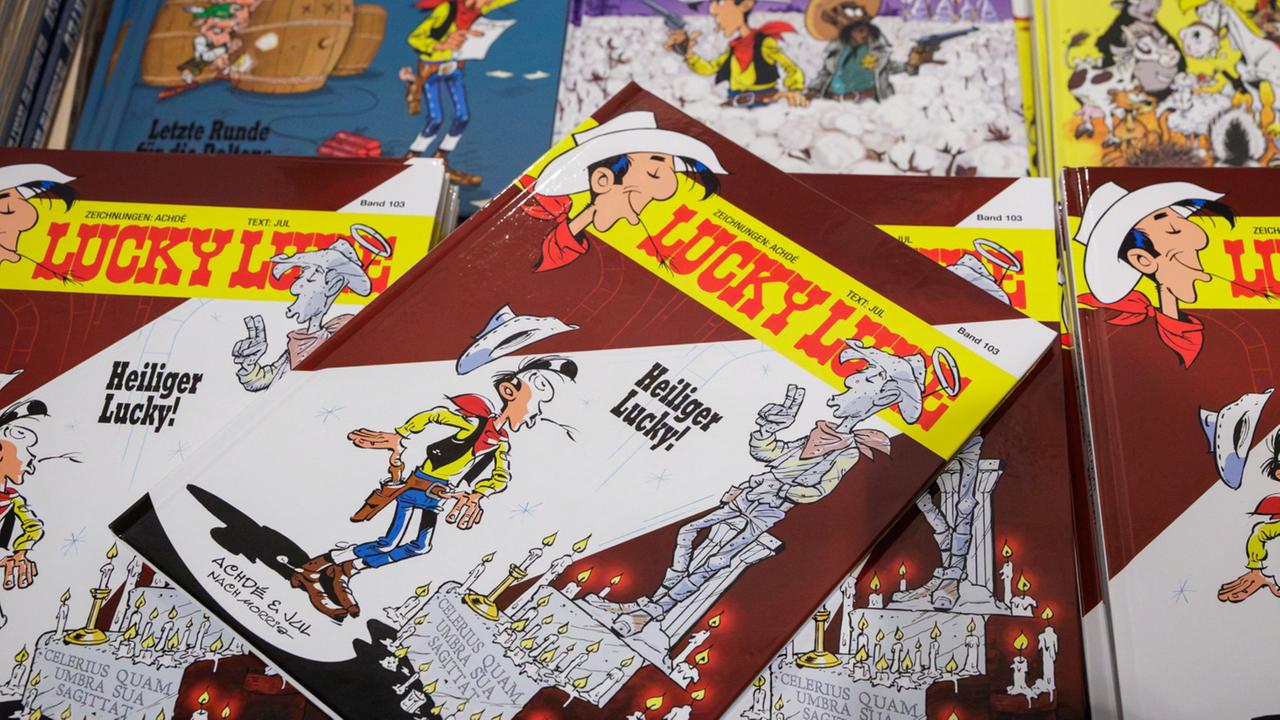
For eight decades, the "man who shoots faster than his shadow" has been a staple of global comic culture. However, the latest volume, Heiliger Lucky! (Holy Lucky!), marks a definitive shift in the trajectory of the iconic character. Rather than merely engaging in traditional Wild West shootouts, Lucky Luke has been thrust into the role of a reluctant messiah, a development that underscores the series’ transformation from a simple parody of the American frontier into a sophisticated platform for socio-political commentary.
Main Facts: The Deification of the Cowboy
In Heiliger Lucky!, the plot centers on the inhabitants of the towns "Faith" and "Beliefs Junction." These settlers, desperate for guidance and plagued by a catastrophic locust swarm—a historical nod to the real 1874 Kansas infestation—begin to worship the passing cowboy. Because he displays uncanny skills, such as his legendary marksmanship and his ability to communicate with his horse, Jolly Jumper, the townsfolk elevate him to the status of a religious figure.
This phenomenon, dubbed "Lukism," serves as a satirical exploration of modern fandom and the mechanics of cult-like devotion. The narrative arc forces the stoic, cynical hero to confront a society that would rather project its insecurities and hopes onto a savior than take responsibility for its own trajectory. The volume also introduces a conspiracy theorist who rejects the scientific consensus of a round Earth, framing the spherical planet as a government invention designed to justify taxation—a pointed reference to the polarization and misinformation cycles of the 21st century.
A Chronological Evolution: From Parody to Social Commentary
To understand the current state of Lucky Luke, one must view the series through a longitudinal lens. Created in 1946 by the Belgian cartoonist Morris, the series began as a straightforward, lighthearted Western parody. However, the mid-1950s served as a turning point when the legendary René Goscinny—the architect behind Asterix—took over as the series’ writer.
Goscinny infused the adventures with wit and societal relevance, laying the groundwork for the thematic depth we see today. Throughout the 1970s, titles like The Emperor of America (1976) used the Western setting to mock the megalomania of political figures, a strategy that remains relevant today.
The Turning Point: The Great Health Shift
The most visual sign of the series’ adaptation occurred in 1983. In the album Fingers, Lucky Luke famously swapped his signature cigarette for a blade of grass. This decision was not merely an aesthetic choice but a proactive alignment with modern health standards, prompted by the series’ growing popularity in the United States. In 1988, the World Health Organization (WHO) formally recognized this change, awarding Morris a medal for his contribution to public health. This moment marked the beginning of a long-term strategy: ensuring the character remained an icon for new generations without sacrificing his rugged identity.
Supporting Data and Editorial Vision
The current creative team, led by author Jul (who has been at the helm since 2016) and artist Achdé, maintains a delicate balance. According to internal data from the publisher, Egmont, the decision to pivot toward "relevant themes" has been financially and critically successful.
The volume Fackeln im Baumwollfeld (Torches in the Cotton Field), which addressed the systemic racism of the Antebellum South, outperformed several of its predecessors in market penetration. This suggests that the modern reader, particularly younger demographics, is more engaged with a character who acts as a mirror to contemporary struggles rather than a static relic of the 1940s.
"It is not enough for me to simply write a funny story," says Jul. "While the books sell well, I believe I have a responsibility to address what we believe, what we share, and how we relate to one another in an increasingly fragmented world."
The "Internet of the 19th Century": Telegraphy as Metaphor
A recurring theme in the latest work is the impact of communication technology on public discourse. In Heiliger Lucky!, the expansion of the telegraph network serves as a direct, albeit period-appropriate, metaphor for the modern internet.
In one scene, the character Apotheker Colson Creed laments the sheer volume of "nonsense" transmitted through the wires. This narrative device allows the authors to critique the velocity of misinformation in the age of social media. By framing the telegraph as a double-edged sword—a tool for progress that simultaneously facilitates the spread of conspiracy theories—Jul successfully bridges the gap between 1870s Kansas and 2026 digital culture.
Implications for the Future of the Franchise
The transition of Lucky Luke into a vehicle for social critique raises questions about the limitations of the medium. Felix Görmann, known in the comic industry as "Flix," recently curated a Lucky Luke exhibition at the Museum for Communication in Berlin. He argues that this "fresh cell therapy" is vital for the series’ survival.
"The strongest volumes are those that do not simply wander through an adventure, but have something to negotiate," says Flix. "When you take a legacy character like Lucky Luke and place him in a situation where he has to confront, for instance, animal welfare or systemic racism, you are not just updating the character; you are maintaining his relevance as an American icon."
The Balance of Tone
However, there is a clear imperative to avoid "preachiness." Wolf Stegmaier, the program director at Egmont, emphasizes that the primary goal remains entertainment. "We must not overwhelm the reader with contemporary issues," Stegmaier notes. "The themes must be woven into the fabric of the Western genre. Lucky Luke must remain, first and foremost, the man who shoots faster than his shadow. If he loses his identity as a Western hero, he loses his essence."
Conclusion: A Hero for the Ages
As the series celebrates its 80th anniversary, the transformation of Lucky Luke serves as a case study in how cultural icons can endure. By evolving from a simple caricature into a medium for discussing racism, environmentalism, and the dangers of misinformation, the series has managed to remain "current."
The "Lonesome Cowboy" no longer rides alone; he carries the weight of modern concerns with him. By successfully navigating the tension between tradition and social responsibility, the creative team has ensured that Lucky Luke remains not just a hero of the past, but a necessary observer of the present. As long as the character continues to question the world around him—even when he is being hailed as a god by his neighbors—he will remain a vital voice in popular literature.