By Editorial Staff
Updated: October 28, 2026
In the quiet corners of Germany’s landscape, from the rolling hills of the Wörsbach Valley to the historic urban centers of the Rhineland, a quiet revolution is taking place. It is a movement defined not by grand state mandates, but by the persistent, often volunteer-led efforts of private citizens. As the debate over urban density, climate change, and economic efficiency intensifies, the role of "Denkmalschutz" (monument protection) has evolved from a purely bureaucratic function into a vibrant, albeit contentious, battleground of civic identity and architectural stewardship.
The Pillars of Preservation: Stories from the Ground Up
The preservation of history is rarely a top-down affair. While state agencies provide the legal framework, the soul of monument protection often lies in the hands of those who own the buildings or volunteer their weekends to restore them.
Consider the case of Lauren and Dirk Liss, residents of Hünstetten in Hesse. Their property is not merely a home; it is a 14th-century landmark. The Burgruine Wallrabenstein, a 14-meter-high relic, stood on the brink of collapse before the couple intervened. Through years of personal sacrifice, meticulous manual labor, and support from the German Foundation for Monument Protection, they transformed a crumbling ruin into a site of historical significance. Their dedication was formally recognized this year with the prestigious "German Prize for Monument Protection."
Similarly, the association "Historische Altstadt Rheine e.V." has garnered acclaim for its efforts in preserving a 16th-century Mauerhaus. Once a humble dwelling for wool weavers, butchers, and their livestock, the house is a testament to the lives of the "common people." By researching the building’s 450-year history and securing the necessary funding to repurpose the space, the association has ensured that the narrative of Rheine’s past remains anchored in its physical environment. "Our goal was to ensure the city’s history remains complete by preserving the dwellings of the common folk, not just the cathedrals and palaces," says association member Peter Rohlmann.
A Chronology of Stewardship
The history of monument protection in Germany is inextricably linked to the birth of the nation’s civic consciousness.
- 19th Century – The Enlightenment of Heritage: The concept of "Kulturerbe" (cultural heritage) began to take root as the burgeoning middle class sought to define national identity through architecture and landscape. It was during this era that the first organized citizen movements for preservation emerged.
- Post-War Reconstruction: In the mid-20th century, preservation became a moral imperative as Germany sought to recover from the physical and cultural scars of the Second World War.
- The Modern Era: Today, the "German National Committee for Monument Protection" acts as the primary orchestrator. Comprised of representatives from politics, economics, religious institutions, and civic organizations, it sets the standards for preservation.
- 2026 – The Current Turning Point: The debate has shifted from "should we preserve?" to "how do we adapt?" Modern pressures, such as the housing crisis and the need for energy-efficient retrofitting, have brought monument protection to a legislative crossroads.
Economic and Environmental Dimensions
While critics often frame monument protection as an expensive hurdle, the reality is far more nuanced. Experts argue that heritage preservation is a vital economic engine. It sustains a specialized ecosystem of traditional craftspeople—masons, carpenters, and restorers—whose skills are essential to maintaining the high quality of the built environment.
Furthermore, the "green" argument for preservation is gaining traction. Ulrike Wendland, head of the office of the German National Committee for Monument Protection, highlights the concept of "grey energy" (embedded carbon). "When we renovate an existing building rather than demolishing it, we are saving the energy that was originally invested in its construction," she explains. In the era of the climate crisis, the most sustainable building is often the one that already exists. By retrofitting historical structures with modern energy standards, Germany can drastically reduce its construction-related carbon footprint.
Official Responses and the Legislative Friction
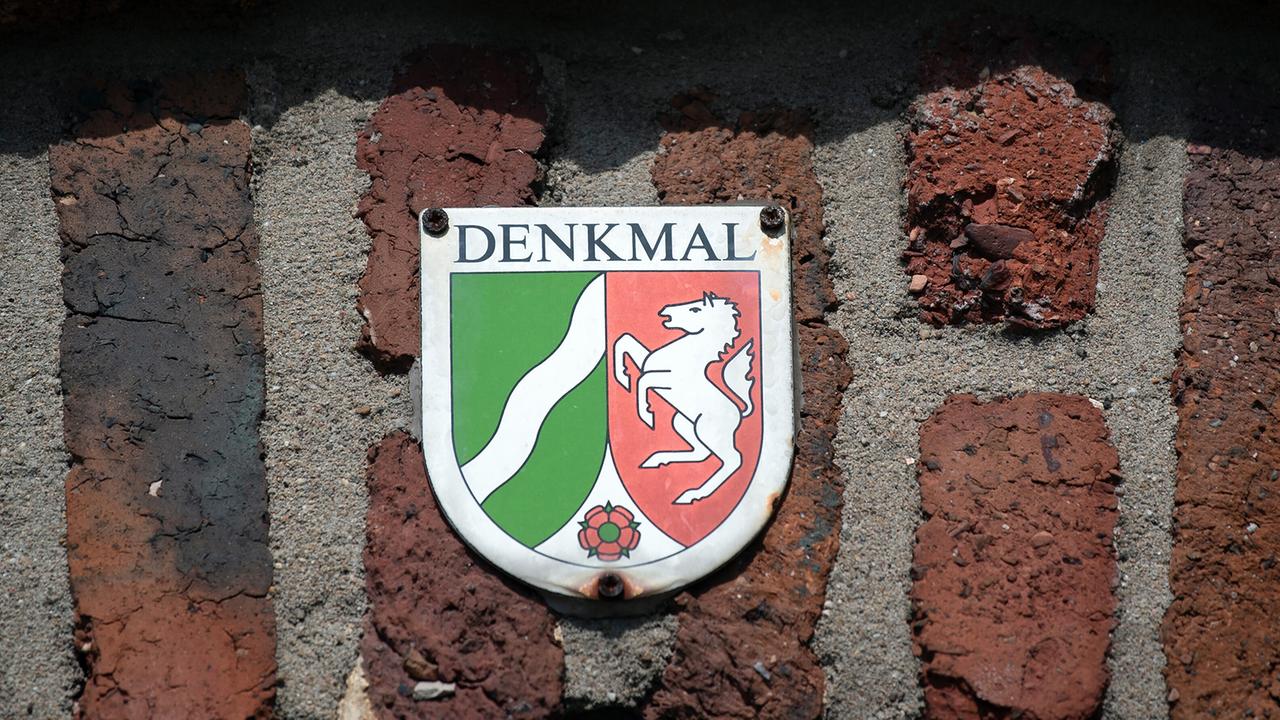
Despite the successes, the legal framework is under heavy fire. In Hesse, the current governing coalition between the CDU and SPD has explicitly stated that the existing Monument Protection Act is "out of time." Their goal is a major overhaul—a "debureaucratization" aimed at making the rules more "citizen-friendly" and allowing for the easier installation of renewable energy systems, such as solar panels, on protected roofs.
This political sentiment reflects a broader tension. Municipalities are desperate for housing, and in many German cities, the value of land is so high that a protected two-story historical house is viewed by some developers as a missed opportunity for a ten-story residential complex.
Ulrike Wendland acknowledges the frustration: "The friction often arises from the potential value of the soil. When land is scarce, a protected monument is seen as a barrier to development. Additionally, the process of expert assessment and high-quality restoration is time-consuming and costly."
Implications: The Social Contract of Heritage
The implications of these debates are profound. If the law is relaxed too far, there is a risk of losing the historical fabric that makes German cities globally attractive. As Wendland points out, tourists do not flock to Germany to see generic glass-and-steel skyscrapers; they come to experience the historical atmospheres of cities like Bamberg, Dresden, and Zons.
The "ideological foundation" of preservation, as Wendland describes it, remains the civic engagement of the people. If the government alienates homeowners with overly rigid rules, it loses its best allies. Conversely, if the government abandons protection in favor of rapid development, it risks erasing the "identity-forming" assets that define the nation.
The path forward requires a delicate balance. It necessitates a shift toward "adaptive reuse"—a strategy where modern needs for climate efficiency and housing are reconciled with the preservation of structural integrity. This requires not just legislative change, but a collaborative dialogue between state experts, private owners, and the public.
Conclusion: Beyond the Stone
The story of the Burgruine Wallrabenstein and the Mauerhaus in Rheine are not just isolated anecdotes; they are manifestations of a deep-seated commitment to continuity. As Germany navigates the 21st century, the true test of its cultural maturity will be its ability to innovate while honoring its past.
The "German Prize for Monument Protection" serves as a reminder that history is not a static object to be put behind glass. It is a living, breathing entity that requires constant maintenance, advocacy, and passion. Whether through the lens of economic utility, climate responsibility, or simple civic pride, the protection of the built environment remains an essential endeavor. As the legislative landscape shifts in the coming years, the challenge will be to ensure that in the rush to build the future, the foundation of the past is not discarded as an inconvenience, but rather utilized as an enduring asset for generations to come.