Analysis | October 29, 2026
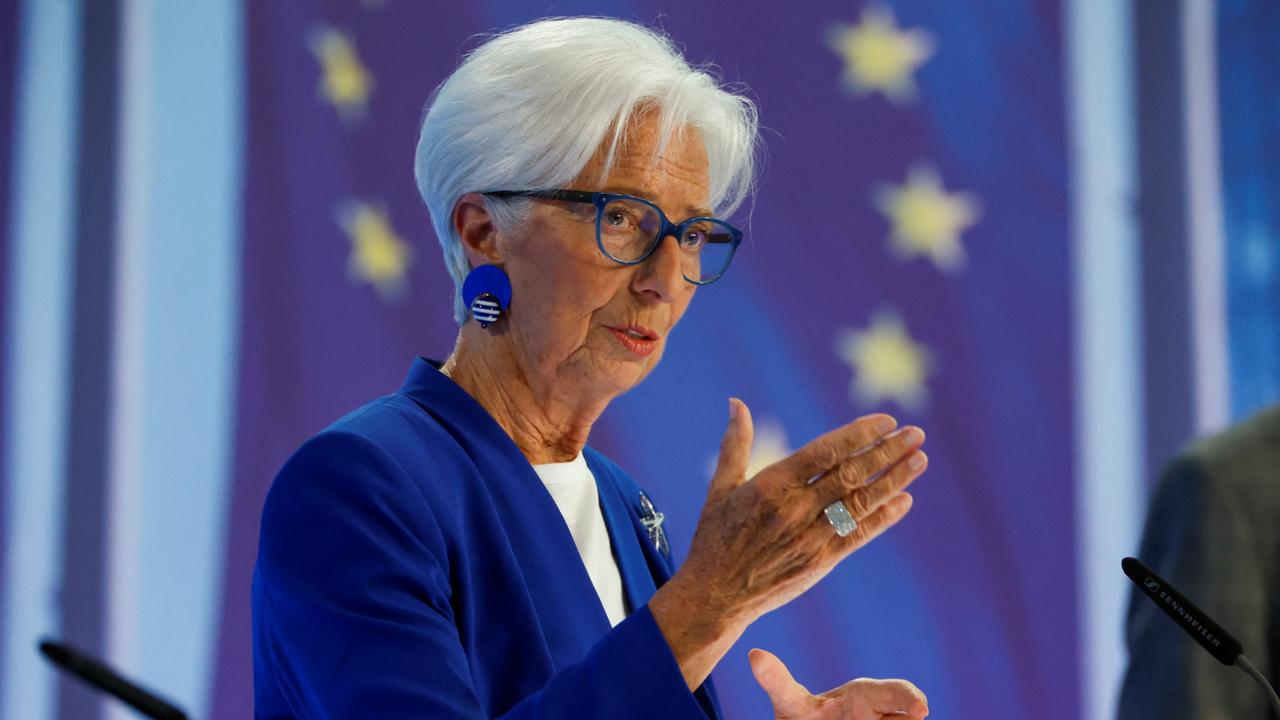
The European Central Bank (ECB) finds itself at a precarious crossroads. As the Eurozone grapples with anemic economic growth, stubborn inflationary pressures, and a burgeoning fiscal crisis in its second-largest economy, France, the institution faces an additional, internal challenge: the looming question of President Christine Lagarde’s future. Persistent speculation regarding her potential departure for the World Economic Forum (WEF) in Davos has created a vacuum of certainty, complicating the ECB’s ability to steer the European economy through its most turbulent period in years.
The Core Conflict: A Leadership in Flux
For months, whispers have echoed through the corridors of the Eurotower in Frankfurt. The core of the issue is whether Christine Lagarde, whose term is officially set to expire in October 2027, intends to step down prematurely to assume the helm of the World Economic Forum. While Lagarde has neither confirmed nor definitively silenced these rumors, the lack of clarity has begun to frustrate both ECB staff and members of the Governing Council.
In the world of central banking, predictability is currency. When the markets cannot discern the commitment of the primary architect of monetary policy, the effectiveness of that policy is diminished. Observers suggest that the hesitation to address these rumors directly is fostering an environment of instability at a time when the Eurozone requires an iron-fisted, focused, and present leadership.
A Chronology of Uncertainty
The speculation surrounding Lagarde’s tenure has not emerged in a vacuum. It is a narrative that has built momentum over the past eighteen months.
- Mid-2025: Initial murmurs begin in Brussels and Frankfurt regarding Lagarde’s dissatisfaction with the rigid constraints of central banking.
- Early 2026: Reports surface linking the former IMF chief to the top role at the World Economic Forum. Lagarde’s public comments regarding her commitment to the ECB become noticeably more qualified, leading to increased skepticism among financial analysts.
- Summer 2026: Economic indicators in the Eurozone begin to diverge sharply. While some northern economies remain stagnant, France faces a widening budget deficit and a loss of market confidence.
- October 2026: As the November deadline for major international organizational appointments approaches, the intensity of the speculation reaches a fever pitch. Analysts, including Carsten Brzeski of ING, suggest that a formal announcement could be expected before the end of the year.
Supporting Data: The Economic Reality
To understand why the leadership question is so critical, one must look at the data currently facing the ECB. The economic landscape is darkening, characterized by a "stagflationary" shadow.
Inflationary Pressures
In September 2026, the inflation rate in the Eurozone surged to 3.8 percent, significantly higher than the 3.2 percent recorded in the previous month. This is nearly double the ECB’s stated medium-term target of 2.0 percent. The persistent nature of this inflation suggests that the "transitory" arguments of the past have failed, forcing the bank into a corner where it must choose between suppressing growth to curb prices or loosening policy to support struggling national budgets.
The French Fiscal Crisis
France is currently the epicenter of European market volatility. Yields on ten-year French government bonds have climbed above five percent—a level not seen in fifteen years. The "spread"—the difference in yield between French debt and the "safe haven" of German Bunds—has widened to levels reminiscent of the 2011–2012 Eurozone debt crisis. This is not merely a technical fiscal problem; it is a political one. With a fragmented parliament, the French government finds itself unable to pass the necessary structural reforms or aggressive austerity measures required to stabilize the markets.
Professional Perspectives: Is the "Heart" in the Job?
The criticism from market experts is biting. Carsten Brzeski, Chief Economist at ING Germany, observes that Lagarde has treated the Davos rumors with increasing nonchalance. "She has denied the reports with decreasing conviction," Brzeski notes. "A premature exit would serve as ultimate proof that she never saw herself as a true central banker. It is clearly not her ‘heart’s job.’"
This sentiment is echoed by Jörg Krämer, Chief Economist at Commerzbank. For Krämer, the issue is less about the person and more about the distraction. "The discussion surrounding Lagarde is profoundly unfortunate; it has dragged on far too long," he argues. "It serves as a massive distraction from the structural rot in the French budget and the reality of persistent inflation. We need a captain at the helm who is entirely focused on the ship, not one looking for the next port."
Critics often draw unfavorable comparisons to her predecessors, such as Mario Draghi, who were viewed as quintessential technocrats who "lived and breathed" the mandate of price stability. The perception that Lagarde views the ECB as a stepping stone rather than a career apex is, according to these analysts, damaging the institution’s credibility.
Implications for Monetary Policy
The ECB is now faced with a series of agonizing decisions that will define the Eurozone for the next decade.
The Interest Rate Conundrum
While inflation dictates that rates should rise, the threat of recession and the fiscal fragility of member states like France suggest that caution is required. Most market participants anticipate a pause in rate hikes during the upcoming meeting. However, economists warn that a pause might be interpreted as a sign of weakness or a lack of resolve. The consensus remains that a further hike is necessary by December, particularly as new growth and inflation projections will provide the legal and economic cover required for such a move.
The "Whatever It Takes" Dilemma
The current crisis raises the inevitable question: will the ECB initiate a new emergency bond-buying program to support France? The dilemma is extreme. If the ECB buys French debt, it risks moral hazard—rewarding fiscal indiscipline. If it does not, it risks a sovereign debt crisis that could threaten the integrity of the Euro.
Lagarde is in a position where she could potentially provide a "Draghi-esque" moment—a clear, decisive signal that the ECB will act to preserve the currency union. However, doing so requires a level of political capital and institutional commitment that may be lacking if her eyes are indeed set on a departure.
Conclusion: A Need for Clarity
The European Central Bank is arguably the most important institution in the Eurozone. Its mandate—to maintain price stability—is the foundation upon which the prosperity of millions rests. The current state of uncertainty regarding Christine Lagarde’s future is a luxury the Eurozone cannot afford.
Whether she stays or goes is, in the long term, less important than the immediate need for transparency. If she intends to leave, an early announcement would allow the markets to price in a transition and for the Council to prepare for new leadership. If she intends to stay, she must forcefully reassert her authority and pivot the institution back to its core mandate.
As the Eurozone enters the final quarter of 2026, the markets and the public are waiting. The ECB cannot afford to be an institution in transition when the economy itself is in such a precarious state. The era of speculation must end, so that the era of decisive policy can begin. The survival of the Eurozone’s economic stability may well depend on the clarity of the next few weeks.