Introduction: A Clash of Ideologies on the Campaign Trail
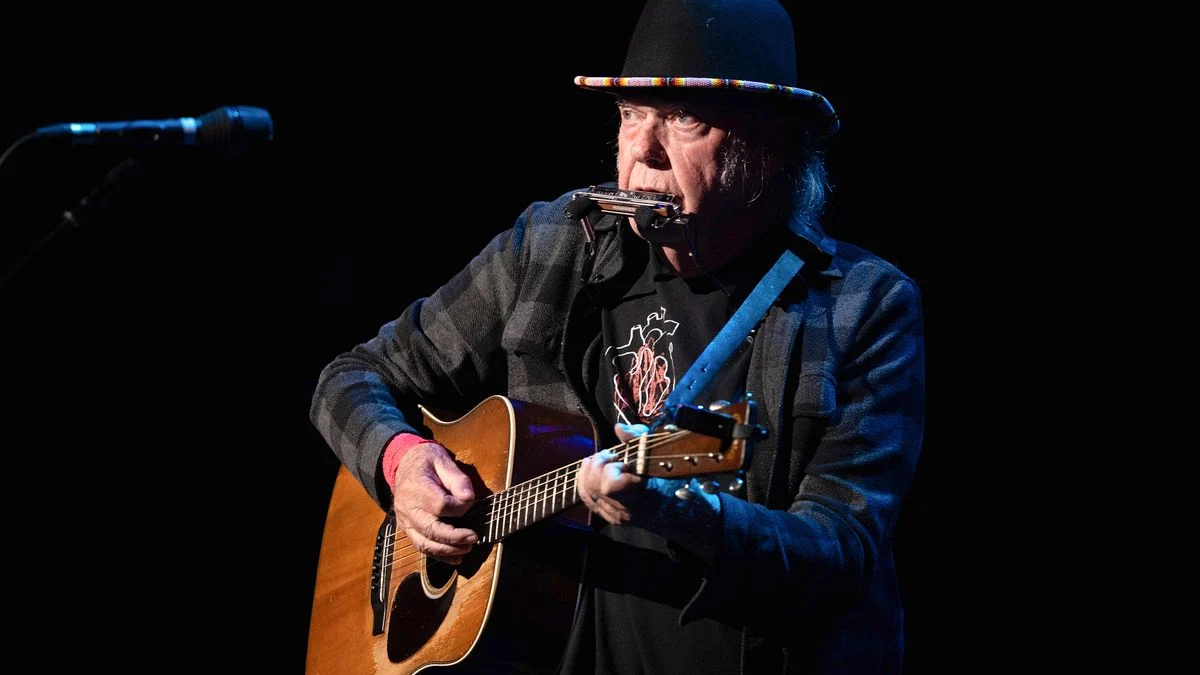
In a high-stakes legal maneuver that underscores the deepening divide between the American cultural establishment and the Trump political machine, legendary singer-songwriter Neil Young has filed a lawsuit against the "Trump 47 Committee Inc." Seeking $10 million in damages, the 80-year-old rock icon is challenging the unauthorized use of his seminal 1989 anthem, "Rockin’ in the Free World," at campaign rallies.
The lawsuit, which was recently brought to light by Variety, serves as a stark reminder of the long-standing animosity between the musician and the former President. For Young, this is not merely a matter of intellectual property rights; it is a profound moral objection to seeing his work co-opted by a political platform he fundamentally opposes. As the 2026 midterm election cycle gains momentum, the case highlights the recurring friction between artists who seek to protect the integrity of their message and political campaigns that utilize iconic tracks to energize their base.
Chronology: A Recurring Legal Saga
This litigation is far from the first time Neil Young has locked horns with Donald Trump over musical copyrights. The conflict traces back several years, evolving from public statements of disapproval into formal legal proceedings.
The 2020 Precedent
Back in 2020, during the heat of the presidential election, Young first took formal action against the Trump campaign for the same usage of "Rockin’ in the Free World." At that time, the legal confrontation centered on the lack of proper licensing and the public perception of endorsement. That initial dispute resulted in an informal agreement, with the campaign acknowledging the artist’s concerns. However, the current lawsuit alleges that Trump has effectively reneged on the spirit—and potentially the letter—of that earlier understanding.
The Return of the Unauthorized Usage
The current legal filing asserts that despite the previous resolution, the Trump 47 Committee has continued to employ the song as a signature walk-on track at rallies. By ignoring the established boundary, the committee has effectively triggered a renewed legal offensive. The plaintiff argues that the defendant, Donald J. Trump, was fully aware that the song required a license—a license that Young had explicitly refused to grant and maintained he would never provide.
The Philosophical Divide: "Rockin’ in the Free World" vs. The Trump Agenda
To understand the gravity of the lawsuit, one must examine the content of the song itself. Released in 1989, "Rockin’ in the Free World" is frequently misunderstood by casual listeners as a patriotic, jingoistic anthem. In reality, it is a scathing critique of the American sociopolitical landscape.
Decoding the Lyrics
The lawsuit provides a poignant analysis of the song’s lyrical depth, emphasizing that it was written to contrast the empty promises of political rhetoric with the harsh realities faced by the marginalized. The filing notes:
"The lyrics draw haunting portraits—a mother abandoning her baby, addicts sinking into despair, garbage piling up in the shadow of prosperity—while the repetitive chorus conveys a biting irony, celebrating a freedom that is clearly not shared by all."
The legal document further posits that the song acts as a direct antithesis to the platform represented by Donald J. Trump. For Young, the irony of the song being played at a Trump rally is a distortion of its original intent, effectively turning a critique of poverty and neglect into a triumphalist theme for a political movement.
Supporting Data: Intellectual Property and Brand Integrity
The lawsuit is built upon two primary pillars: the violation of copyright laws and the damage inflicted upon Neil Young’s professional reputation and personal brand.
The Licensing Argument
The core of the legal claim rests on the assertion that the defendant knowingly utilized the track without authorization. In the music industry, the use of a song at a large-scale political event requires specific performance licenses. The filing claims that the Trump campaign was well-versed in the necessity of these licenses and chose to circumvent the process. By knowingly proceeding without the creator’s consent, the campaign has arguably committed a willful infringement of copyright, opening the door for substantial statutory damages.
The "Brand Damage" Claim
Beyond the financial aspect of licensing, the suit addresses the intangible—but vital—notion of brand integrity. The document states:
"Among other things, Young has suffered damage to his reputation and his brand, as the impression has been created that he supports Donald J. Trump in any way."
For an artist whose career has been defined by political activism and a commitment to progressive values, being linked to a polarizing political figure can cause irreparable harm. The lawsuit argues that the unauthorized association suggests an endorsement that is diametrically opposed to Young’s historical advocacy, thereby diluting the value of his life’s work.
Implications for Political Campaigning
The outcome of this case could have significant implications for how political campaigns manage their musical playlists in the future.
The Precedent of Artist Autonomy
Many artists, including the Rolling Stones, R.E.M., and the estate of Tom Petty, have previously voiced opposition to their songs being played at political rallies. However, the legal landscape is complex; many venues possess "blanket licenses" that theoretically cover the performance of music. The question before the court will be whether those blanket licenses hold up when an artist has specifically and publicly revoked permission for a particular entity to use their work for political purposes.
The Cost of Political Musical Choices
By seeking $10 million in damages, Young is signaling that there is a steep price to pay for disregarding the wishes of an artist. If the court rules in favor of the plaintiff, it could set a powerful precedent, effectively forcing campaigns to be more diligent in curating their music. This would potentially put an end to the "ask for forgiveness, not permission" strategy that many campaigns currently employ regarding stadium-filling playlists.
The Wider Cultural Context
This litigation is not occurring in a vacuum. It represents the broader struggle between the music industry and political entities over the ownership of "the national narrative." Music has long been used to build emotional resonance at political events, but as the political climate becomes increasingly fractured, artists are becoming more protective of how their art is deployed.
For Neil Young, at 80 years old, this lawsuit is a continuation of a lifetime of standing by his convictions. Whether or not he wins the $10 million in damages, the act of filing the suit serves as a public declaration that his art is not a tool for any political agenda he deems harmful.
Conclusion: A Test Case for Artistic Rights
As the legal teams prepare their arguments, the music world watches with bated breath. The case of Young v. Trump 47 Committee Inc. is a test case for the limits of political campaign speech and the rights of creators in the digital and political age.
If the lawsuit succeeds, it will empower other artists to take firmer control over the use of their intellectual property in political contexts. If it fails, it may embolden political campaigns to continue utilizing popular music, regardless of the artist’s personal objections. Regardless of the legal outcome, the case has already succeeded in drawing a bright line: for Neil Young, "Rockin’ in the Free World" will never be the soundtrack to a Trump presidency. As the battle shifts to the courtroom, it remains a defining moment in the ongoing conversation about who owns the music, and who gets to decide what it stands for in the theater of American politics.