In a sobering report, the German Foundation for Monument Protection (Deutsche Stiftung Denkmalschutz) has unveiled its second "Black Book of Monument Preservation," revealing a staggering loss of 1,077 historical structures across the nation within a mere two-year span. As political priorities shift toward economic efficiency and rapid development, the fabric of Germany’s cultural identity is being systematically dismantled, one brick at a time.
The Core Crisis: A Nation Losing Its Face
For many, historical buildings are the anchors of local identity—silent witnesses to centuries of architectural evolution, social change, and human craftsmanship. Yet, according to the latest data from the German Foundation for Monument Protection, these structures are increasingly viewed not as cultural treasures, but as obstacles to progress.
Between 2024 and 2025, Germany lost at least 1,077 listed buildings. These are not merely abandoned ruins; they are legally protected sites that have been demolished or so radically altered that their historical integrity has been permanently erased. Steffen Skudelny, the executive board member of the Foundation, delivered a grim assessment during the presentation of the "Black Book": "Every single day, more than one monument is lost in Germany."
The Foundation’s report serves as a formal alarm bell, highlighting a systemic failure in the current approach to urban planning, environmental regulations, and the valuation of cultural heritage.
Chronology of Loss: From the 17th Century to Postmodernity
The destruction of heritage is not limited to a specific era or region. The "Black Book" catalogs a wide range of losses, illustrating that no architectural period is safe from the wrecking ball.
- The Early Modern Tragedy: One of the most poignant examples cited is the "Untere Linde" inn in Oberkirch, Baden-Württemberg. A structure dating back to the 17th century, it represented a tangible connection to the region’s past. Despite its protected status, it was demolished, stripping the local townscape of its historical anchor.
- Modern Conflicts: The loss is not limited to ancient timber-framed houses. Postmodern architecture is also under threat. In Monheim, North Rhine-Westphalia, the "Mack-Pyramid"—an iconic structure built between 1987 and 1990—was subjected to a massive expansion project. The result was a compromise that stripped the building of its original character, effectively nullifying its status as a recognized monument.
- The Invisible Erosion: These high-profile cases are merely the tip of the iceberg. The Foundation notes that many buildings are removed from heritage lists quietly, often without public debate, before the bulldozers arrive. Consequently, the actual number of losses is likely significantly higher than the 1,077 recorded cases, as the "official" loss is only tracked after a building has been de-listed.
Supporting Data: Why Heritage Matters
To understand the gravity of the situation, one must look at the statistical reality of the German landscape. Only about three percent of all buildings in Germany are currently listed as protected monuments. This small fraction represents the entirety of the nation’s legally safeguarded architectural heritage.
The Foundation’s methodology for the "Black Book" is robust, drawing from a variety of sources:
- Administrative Inquiries: Formal data requests submitted to regional and municipal heritage authorities.
- Media Monitoring: Tracking reports of demolitions and planning disputes in regional press.
- Citizen Reports: A vital component of the research, the Foundation relies on tips from local residents who witness the degradation or sudden destruction of landmarks in their own neighborhoods.
This data paints a picture of a "death by a thousand cuts." While public interest in heritage tourism remains high, the political and administrative will to protect these sites is visibly waning.
The "Primat der Wirtschaftlichkeit": The Economic Imperative
The central tension, according to Skudelny, is the "Primat der Wirtschaftlichkeit"—the primacy of economic efficiency. In modern German urban planning, land value, energy efficiency mandates, and the pressure to build new, modular housing are increasingly taking precedence over the complex task of restoring old structures.
"Political pressure on heritage conservation is rising," says Skudelny. He argues that heritage legislation is being systematically hollowed out. Across the 16 federal states, there is a growing trend toward expanding the authority of politicians to override the decisions of professional heritage preservationists.
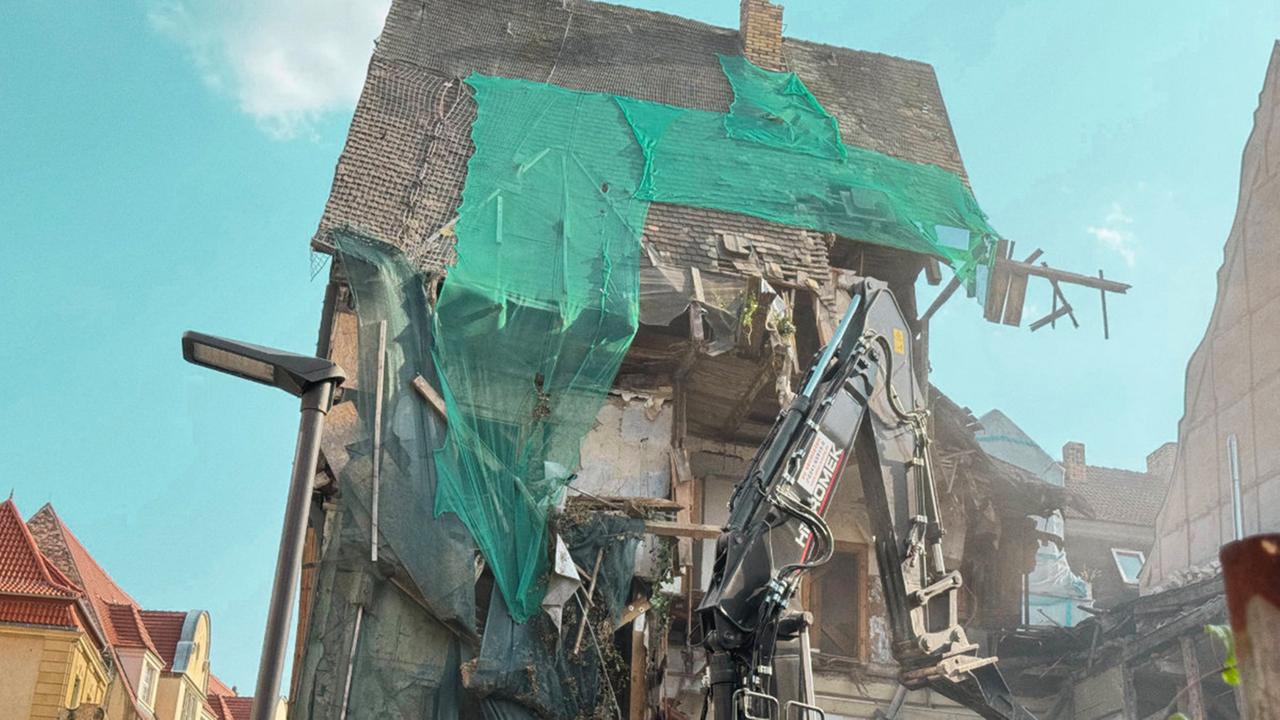
When a building is deemed "uneconomical" to maintain—often due to high renovation costs related to modern fire safety or energy standards—the path to demolition is being greased by local authorities who prioritize quick development over long-term cultural value.
Implications: A Fragmented Legal Landscape
A significant hurdle in protecting German heritage is the federalist structure of the country. Because culture falls under the purview of the individual states (Kulturhoheit der Länder), there are 16 different sets of heritage protection laws.
This fragmentation leads to:
- Inconsistent Enforcement: A building might be protected in one state but left vulnerable in another.
- Administrative Overload: Local heritage offices are often understaffed and overwhelmed. They lack the resources to enforce existing laws or to provide the necessary expert guidance to owners who genuinely wish to maintain their historic properties but are daunted by the bureaucratic hurdles.
- Lack of Transparency: There is no uniform, transparent, and accessible public record for when a monument is struck from the list. This lack of accountability makes it difficult for civil society to intervene before the damage is done.
Toward a New Heritage Strategy
The Foundation for Monument Protection has issued a clarion call for reform, emphasizing that heritage conservation should not be viewed as an obstacle to modern life, but as an essential element of sustainable development.
1. Unified National Documentation
The Foundation advocates for a comprehensive, nationwide digital registry of the Denkmalbestand (monument stock). Such a registry would increase transparency, making it impossible for buildings to be de-listed in the dark without public scrutiny.
2. Simplifying "Bauen im Bestand"
"Bauen im Bestand" (building within existing structures) is the most environmentally sustainable form of construction. By reusing old buildings, we save the "grey energy" embedded in the materials and retain the character of our cities. The Foundation demands simpler, more pragmatic building codes that allow for the modernization of historical buildings without requiring them to meet the exact standards of new builds, which often force the destruction of historic fabric.
3. Financial Support and Capacity Building
The burden of preservation should not rest solely on private owners. The Foundation calls for:
- Low-threshold funding: Financial support programs that are easy to access for homeowners, reducing the economic incentive to demolish.
- Expert Empowerment: Strengthening the authority and independence of heritage conservation agencies so that they can effectively push back against commercial interests that favor demolition.
Conclusion: The Cost of Forgetting
The loss of a monument is not just the loss of stone, timber, or glass; it is the loss of a chapter of history that can never be recovered. As Germany continues to grapple with the pressures of modernization, it stands at a crossroads.
If the current trend continues—where the "Primat der Wirtschaftlichkeit" is allowed to dictate the fate of the nation’s history—Germany risks losing the very charm and historical depth that define its identity. The "Black Book" is a warning: once these monuments are gone, they are gone forever. The preservation of heritage is not merely a task for historians; it is a fundamental responsibility to future generations, ensuring they inherit a landscape that reflects the rich complexity of their past, rather than a sterile, homogenized present.