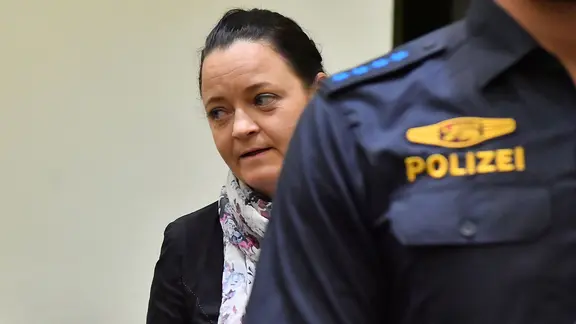
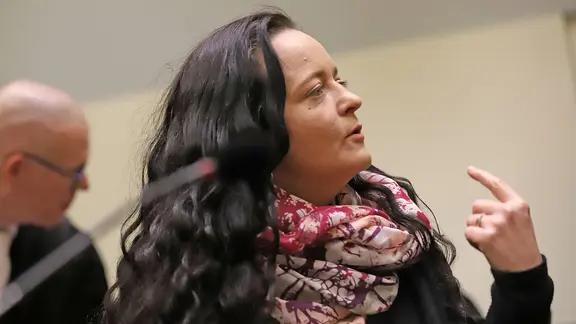
The legal proceedings surrounding the "National Socialist Underground" (NSU) have reached a new milestone. The Munich Higher Regional Court has ruled that convicted right-wing terrorist Beate Zschäpe, a core member of the NSU, will not be eligible for parole in the near future. According to official reports, the court has set the earliest possible date for a review of her life sentence to 2035, effectively ensuring she remains incarcerated for at least another nine years.

The decision, which marks a significant development in one of the most prominent criminal cases in post-war German history, comes after months of deliberation by the court’s criminal division. The ruling, while not yet legally binding, underscores the gravity of the crimes committed by the neo-Nazi cell and the judicial system’s commitment to addressing the severity of the "special weight of guilt" attached to Zschäpe’s conviction.

The Core Facts: A Life Sentence and "Special Weight of Guilt"
In July 2018, the Munich Higher Regional Court delivered a landmark verdict, sentencing Beate Zschäpe to life imprisonment. The court found her guilty of complicity in the murder of ten individuals—nine men of migrant backgrounds and one police officer—as well as involvement in multiple bomb attacks and bank robberies orchestrated by the NSU between 2000 and 2007.
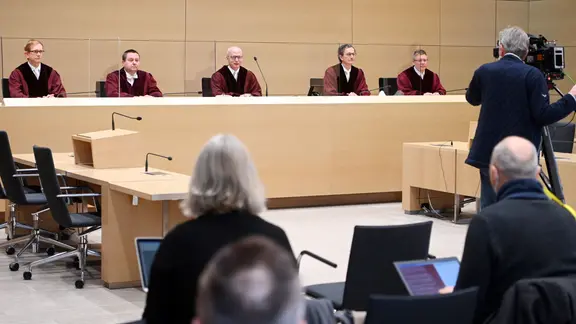
Crucially, the court established the "particular gravity of guilt" (besondere Schwere der Schuld). Under German law, a life sentence is rarely an indefinite state; it typically involves a review after 15 years to determine if the remainder of the sentence can be served under probation. However, when a court determines that the guilt is exceptionally grave, this standard 15-year threshold is effectively bypassed. The recent decision from the Munich court serves to clarify the timeline for this review, pushing the possibility of parole off the table for at least another decade.
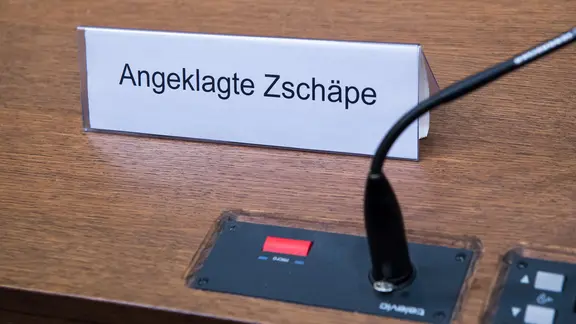
Zschäpe has been in custody since November 2011, shortly after the death of her accomplices, Uwe Mundlos and Uwe Böhnhardt, following a botched bank robbery in Eisenach. Shortly after their deaths, Zschäpe set fire to the trio’s Zwickau apartment before surrendering to the police, an act that marked the public collapse of the NSU’s decade-long shadow existence.
Chronology of the NSU Terror and Legal Aftermath
To understand the weight of the court’s decision, one must reflect on the timeline of the NSU’s terror and the subsequent judicial struggle to bring justice to the victims’ families.
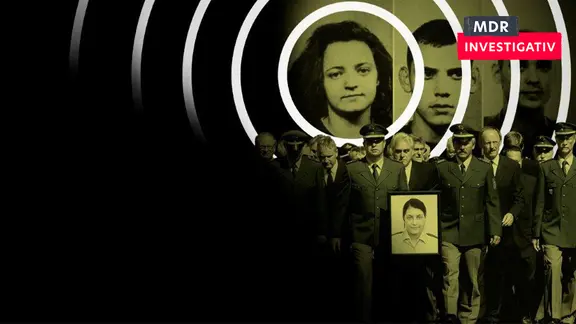
- 2000–2007: The NSU engages in a series of xenophobic murders and high-profile explosive attacks across Germany. The investigation was initially marred by systemic failures, with authorities long overlooking the racial motivations behind the crimes and focusing instead on unfounded theories regarding the victims.
- November 2011: Following the suicide of Mundlos and Böhnhardt and the arson of the Zwickau hideout, Zschäpe turns herself in. The discovery of the NSU’s weapon—used in the murders—in the burned-out apartment provides the final link to the "Ceska" series of murders.
- 2013–2018: The Munich NSU trial begins. It becomes one of the longest and most complex trials in German judicial history, lasting over five years and involving hundreds of witnesses, experts, and victims’ representatives.
- July 2018: The verdict is delivered. Zschäpe is sentenced to life.
- 2021–2024: Various appeals and constitutional complaints are filed by the defense. The Federal Court of Justice (BGH) and the Federal Constitutional Court subsequently reject these efforts, confirming the original verdict and the assessment of the gravity of her crimes.
- October 2026: The Munich Higher Regional Court formally announces that any deliberation regarding early release will not commence until 2035.
Understanding the Legal Mechanism: Why 2035?
In the German legal system, the term "life imprisonment" is often misunderstood by the public as meaning the offender will remain in prison until their death. While this is a possibility, the Federal Constitutional Court ruled in 1977 that the state must provide prisoners with a "reasonable chance" of regaining their freedom, provided that they no longer pose a danger to society and that their release can be justified.
However, the "particular gravity of guilt" acts as a legal brake. It implies that the crimes committed—in Zschäpe’s case, a series of politically motivated, racist murders—are so abhorrent that the standard 15-year expectation for a sentence review is insufficient.
When a court sets a date like 2035, they are essentially stating that, even if Zschäpe were to demonstrate exemplary conduct and a complete renunciation of her extremist past, the nature of the crimes demands a longer period of retribution. The decision is not a final denial of parole forever, but a postponement that balances the constitutional right to a perspective of freedom against the interest of the public in severe punishment for severe crimes.
Official Responses and Judicial Transparency
The decision, confirmed by the Munich Higher Regional Court, follows a non-public, months-long review of the case files and current assessments of the convict. The court has maintained a policy of keeping the specific contents of the reports—which include psychological evaluations and assessments of her behavior while in prison—confidential.
Legal experts have noted that the court’s decision is consistent with the sentencing guidelines applied to cases of mass murder and terrorism. While the defense has historically argued for leniency, citing Zschäpe’s role as the "administrator" rather than the "shooter," the judiciary has consistently maintained that her active participation in the planning and execution of the NSU’s operations made her an equal perpetrator in the eyes of the law.

Implications for the Victims and Society
For the families of the victims, the decision to keep Zschäpe in prison until at least 2035 provides a measure of stability. For years, the victims’ families have expressed frustration with the judicial system, particularly regarding the perceived lack of full transparency about the NSU’s wider support network and the systemic failures of intelligence agencies.
The news that Zschäpe remains behind bars serves as a reminder that the German justice system continues to hold the perpetrators of the NSU era accountable. It also serves to deter those who might be inspired by the same extremist ideologies that fueled the NSU’s terror.

However, the broader implications remain: Does the ongoing imprisonment of a key figure resolve the collective trauma of the nation? Many observers argue that while the criminal justice process has reached its natural conclusion regarding Zschäpe, the social and political "aftermath" of the NSU is far from over. Ongoing parliamentary investigations and discussions about the role of state agencies during the NSU’s years of operation continue to shape the political discourse in Germany.

The Broader Context: Extremism in Germany
The case of the NSU is not an isolated event but a foundational element of contemporary German discussions on right-wing extremism. Since the 2018 verdict, the German landscape of domestic terror has evolved. Authorities now face a more decentralized threat, often characterized by "lone wolf" actors and radicalized online subcultures.

The denial of parole for Zschäpe also highlights the state’s rigorous approach to handling high-profile terrorists. Unlike some other nations where political prisoners or high-profile terrorists might eventually be integrated into rehabilitation programs, the German judiciary’s stance remains firm: the severity of the offense against the democratic order and the victims themselves must be reflected in the duration of the sentence.
Conclusion: A Long Road Ahead
As the year 2035 approaches, the legal and social significance of the NSU trial will likely continue to be a subject of academic study and public debate. For now, the decision by the Munich Higher Regional Court serves as a final, definitive barrier against the early release of one of Germany’s most notorious terrorists.

The case of Beate Zschäpe serves as a sobering reminder of the devastating impact of hate-driven ideology. By ensuring she remains in custody, the court reaffirms the principle that such acts, which strike at the heart of human rights and societal coexistence, carry consequences that extend far beyond the initial act of violence. While the victims’ families can find some peace in the knowledge that justice is being served, the nation as a whole continues to grapple with the lessons learned from the dark chapter that was the NSU.
The road to 2035 will be marked by continued scrutiny of the prison system and, undoubtedly, further reflections on how Germany handles the legacy of its most violent neo-Nazi cell. For the moment, the state has spoken: the price for the lives lost at the hands of the NSU remains a life in confinement.