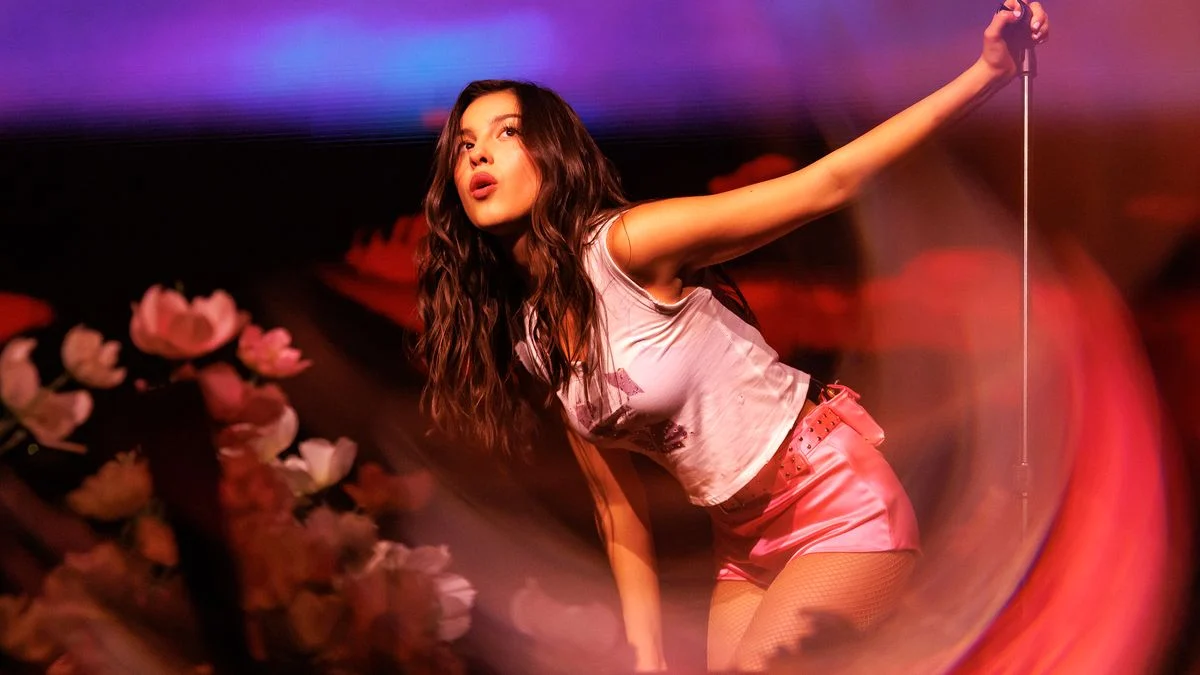
In the contemporary American political climate, the intersection of pop culture and civic engagement has become a potent force. Few figures embody this shift as dynamically as 23-year-old singer-songwriter Olivia Rodrigo. Far from the typical celebrity detachment, Rodrigo has leveraged her massive platform to influence voter behavior, confront political leaders, and take a definitive stand on the most polarizing issues facing the United States today. As the country approaches critical midterm elections, Rodrigo’s active participation serves as a case study in how modern stardom can serve as a catalyst for political mobilization.
The Intersection of Pop Stardom and Civic Duty
Olivia Rodrigo’s foray into political advocacy is not a fleeting trend but a core component of her public identity. Throughout her career—on social media, in high-profile interviews, and during her sold-out world tours—she has consistently challenged the rhetoric of Donald Trump and urged her predominantly young fan base to exercise their democratic right to vote.
The singer’s commitment to electoral participation became particularly evident in July, when she launched a targeted campaign to increase voter registration. By utilizing a creative incentive structure, including a sweepstakes that rewarded fans for checking their voter registration status and engaging with educational materials about the upcoming midterms, Rodrigo successfully gamified civic responsibility. Her approach acknowledges a harsh reality of American politics: the youth vote is powerful, yet notoriously difficult to mobilize. By meeting her audience where they live—online—she has bridged the gap between passive fandom and active citizenship.
A Tour Transformed: The Ohio Statement
Rodrigo’s activism is not confined to the digital sphere; it is a live, breathing element of her current concert tour. During a recent performance in Columbus, Ohio, the singer took a moment to share a personal anecdote with her audience. She revealed that she had personally completed her mail-in ballot for the upcoming midterms just hours before taking the stage. This intimate disclosure was followed by a sharp, direct reminder to the thousands of attendees: the midterms are not merely a formality, but a pivotal moment for the future of the state and the nation.
The statement culminated in a bold visual endorsement. Upon returning to the stage for her encore, Rodrigo wore a T-shirt emblazoned with the slogan "Dr. Amy Acton for Governor." By donning the campaign gear of the Democratic candidate for Ohio’s gubernatorial race, Rodrigo moved beyond vague calls for "voting" and into the realm of explicit political alignment, signaling her support for Acton in a race that has drawn national attention for its volatility.
The Ohio Campaign: A Descent into Toxicity
The context of Rodrigo’s endorsement in Ohio is essential to understanding why the race has become a focal point of national political discourse. The gubernatorial campaign has devolved into what many observers characterize as a "sludge-fest," marked by extreme rhetoric and deeply personal attacks.
The escalation reached a fever pitch when the Republican candidate, Vivek Ramaswamy—a biotech billionaire who previously explored a presidential bid for 2024—launched a controversial digital and television advertisement. The campaign spent $4 million on a spot that featured Amy Acton’s own mother, who proceeded to characterize her daughter as a "liar."
The gravity of this attack cannot be overstated. Amy Acton has been remarkably transparent about her traumatic childhood, including her experience as a victim of sexual abuse by her stepfather at the age of ten. Acton has stated publicly that her mother failed to intervene during that period, and that the subsequent legal proceedings served as the final interaction she had with her mother. By weaponizing this estrangement for political gain, the Ramaswamy campaign ignited a firestorm of condemnation from both sides of the aisle. While many Democrats and a significant number of moderate Republicans viewed the ad as a moral failure, the incident underscored the deep entrenchment of the modern Republican base. Notably, Donald Trump and his political ally, JD Vance, rallied behind Ramaswamy, framing the attack as a justified component of a high-stakes campaign.
The Ideological Foundations of Rodrigo’s Activism
Rodrigo’s public backing of Amy Acton is entirely consistent with her established political trajectory. Her ideological alignment has been public for years, most notably during the last presidential election, when she threw her support behind Kamala Harris. Her advocacy is rooted in a clear rejection of the populist-nationalist agenda championed by figures like Donald Trump.
This resistance is not purely performative; it is reactive. One of the most stark examples of this occurred when the Department of Homeland Security utilized her song "all-american bitch" in an advertisement regarding immigration enforcement. The advertisement, which encouraged the deportation of undocumented individuals, prompted a fierce, public rebuke from the singer.
"Never use my songs to promote your racist, hateful propaganda," Rodrigo wrote in a direct response to the government agency. This reaction was deeply personal, reflecting her heritage as the great-great-granddaughter of a Filipino immigrant. For Rodrigo, the intersection of her music and her identity is non-negotiable. She refuses to allow her artistic output to be co-opted by state-sponsored narratives that she views as fundamentally antithetical to her values.
Implications for the Future of Celebrity Advocacy
The phenomenon of Olivia Rodrigo’s political activism raises significant questions about the role of celebrities in American democracy. Critics often argue that entertainers should refrain from wading into political waters, suggesting that such involvement alienates segments of their audience. However, the data suggests that for the Gen Z demographic, the expectation of political alignment is increasing. Fans no longer look to pop stars solely for music; they look for a moral compass.
By linking her brand to specific causes and candidates, Rodrigo is redefining the contract between artist and fan. She is essentially arguing that if one is to support her art, one should understand the values that inform it. In a polarized media environment where traditional gatekeepers have lost influence, the reach of a social media-savvy pop star can, in some instances, rival that of traditional political surrogates.
However, this influence comes with risks. As the Ohio gubernatorial race demonstrates, the political arena is a place where personal histories are distorted and grievances are manufactured for electoral gain. By stepping into this fray, Rodrigo opens herself up to the same vitriol that political candidates face. Yet, her refusal to retreat suggests that she views the preservation of democratic norms as a higher priority than the maintenance of a sanitized, non-political public image.
Conclusion: A New Era of Engagement
As the midterms approach, the impact of influencers like Olivia Rodrigo will be measured not only by the turnout of young voters but by the shift in the tone of the national conversation. Her advocacy is a symptom of a generation that views political silence as a form of complicity.
Whether her endorsement of Amy Acton will sway the election in Ohio remains to be seen. But the symbolic weight of her intervention is undeniable. She has successfully brought the complexities of the midterm cycle to an audience that might otherwise have remained disengaged. By forcing a confrontation between her platform and the rhetoric of politicians like Vivek Ramaswamy and Donald Trump, Rodrigo has proven that pop culture is not merely a distraction from politics—it is an increasingly essential front line in the battle for the future of American governance.
Ultimately, Rodrigo’s journey reflects a broader trend: the politicization of the personal. When the highest levels of government use the music of a young artist to enforce ideological agendas, the artist is forced to become a political actor. Olivia Rodrigo has accepted that role with a clarity of purpose that suggests she will remain a permanent fixture in the American political landscape for years to come.