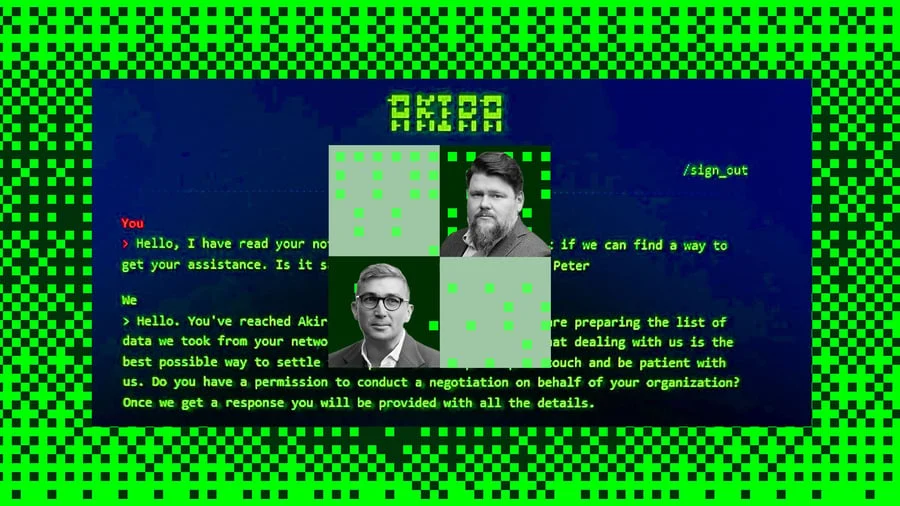
In the modern digital landscape, the question facing corporate leadership is no longer whether they will encounter a cyber-threat, but rather when that threat will materialize into a full-scale operational crisis. As ransomware groups become increasingly sophisticated, their reach has expanded far beyond high-profile multinational conglomerates, systematically targeting the backbone of the global economy: the small and medium-sized enterprises (SME).
In this exclusive deep dive, we sit down with crisis negotiation experts Michael Sjöberg and Peter Skovbo of Delta Crisis. With backgrounds in high-stakes hostage negotiations and military-grade incident response, they provide a harrowing look at the current state of digital extortion and how businesses can survive the most critical hours of a breach.
1. The Anatomy of a Modern Ransomware Attack
Ransomware is no longer just a "virus" that locks a single computer. It is a multi-layered extortion racket. Modern threat actors operate like organized crime syndicates, employing sophisticated tactics to maximize pressure on their victims.

The Double-Extortion Model
The primary goal of the modern attacker is not merely to encrypt data but to ensure that the victim has no choice but to engage in negotiations. This is achieved through the "double-extortion" technique:
- Encryption: The attackers infiltrate the network and encrypt vital production and administrative systems, effectively bringing the business to a standstill.
- Exfiltration: Before locking the systems, the attackers siphon off sensitive intellectual property, customer data, and financial records. They then threaten to publish this data on "leak sites" if the ransom is not paid, creating a massive risk of regulatory fines and reputational damage.
"When we are called into a room during a live attack, the panic is palpable," says Michael Sjöberg. "The leadership is often shell-shocked. They are looking at a screen that tells them their entire infrastructure is gone, and they have 72 hours to pay a million dollars in Bitcoin. That is the moment where the most expensive mistakes are made."
2. Chronology of a Crisis: The Critical First Hours
According to Sjöberg and Skovbo, the first 24 to 48 hours of an incident are the most crucial. Decisions made in this window often dictate whether a company recovers in weeks or whether it faces permanent closure.

Phase 1: Detection and Immediate Denial (Hours 0–4)
Most companies first detect a breach through a generic error message or a "ransom note" on a terminal. The immediate instinct is to attempt to reboot or disconnect systems. While this may prevent further spread, it often destroys volatile memory (RAM) that contains the "keys" to the kingdom—evidence that could have helped in forensic recovery.
Phase 2: The Fog of War (Hours 4–12)
Communication channels break down. Email is often encrypted, and the IT department is in a state of chaos. This is when the "command and control" structure must be established. If an organization does not have a pre-existing Incident Response (IR) plan, they are already at a severe disadvantage.
Phase 3: The Negotiation Window (Hours 12–48)
This is the stage where the threat actors initiate contact. "They want the money," explains Peter Skovbo. "They are businesspeople in their own twisted way. They often provide ‘proof of life’—a sample of decrypted data—to show they have the capability to restore the system. This is the stage where a professional negotiator is essential. You do not want the CEO talking to these people."
3. Supporting Data: The Rising Tide of Cyber-Extortion
The statistics surrounding the rise of ransomware are sobering. According to recent industry reports, the average ransom payment has climbed into the hundreds of thousands of dollars, while the total cost of downtime—including lost revenue, forensic investigation, and legal fees—is estimated to be nearly 20 times the amount of the actual ransom.
- Frequency: An organization is hit by a ransomware attack every 11 seconds globally.
- Targeting: While tech giants have massive security budgets, the middle market is increasingly targeted due to perceived vulnerabilities in their legacy IT systems.
- Recovery Rates: Less than 50% of companies that pay the ransom successfully regain access to all their data without further issues.
"Companies that think they are too small to be targeted are the most dangerous environments to work in," notes Skovbo. "The hackers use automated scripts. They don’t care who you are; they care that you have a hole in your firewall."
4. Official Responses and Legal Implications
Governments and law enforcement agencies, including the FBI and Europol, strongly advise against paying ransoms. The official stance is clear: paying a ransom only serves to fund future criminal activity and does not guarantee the return of stolen data.

The Regulatory Minefield
Beyond the technical aspect, companies must grapple with complex legal frameworks.
- GDPR and Data Privacy: If customer data is stolen, the company has an immediate legal obligation to notify regulators. Failure to do so can lead to fines that far exceed the ransom amount.
- Sanctions: In many jurisdictions, paying a ransom to a known sanctioned group is a criminal offense in itself. Legal counsel must be involved before a single Bitcoin is moved.
5. Strategic Implications: Building Resilience
How can a company protect itself when the threat landscape is constantly shifting? Sjöberg and Skovbo emphasize that security is not just an IT issue; it is a business strategy issue.
The "Assume Breach" Mindset
Companies must move from a "prevention-only" mindset to a "resilience" mindset. This involves:

- Immutable Backups: Having backups that are physically separated from the network and cannot be encrypted by the ransomware.
- Crisis Exercises: Conducting "tabletop" exercises where the executive board is forced to simulate a ransomware event. "You need to know who is authorized to make the payment decision before the server goes down," says Sjöberg.
- Human Factors: The vast majority of attacks begin with a single phishing email. Continuous employee training is the most cost-effective defensive measure available.
Why Negotiation Matters
If the worst happens, having a professional negotiator is not about "paying the bad guys." It is about buying time. It is about verifying the threat, identifying the specific threat actor (as some are more reliable than others), and slowing the pace of the extortion to give the internal IT teams a chance to attempt a recovery from backups.
Conclusion: A New Corporate Reality
The era of digital innocence is over. Ransomware is a structural hazard of doing business in the 21st century, much like fire, flood, or supply chain disruption.
"When we talk to CEOs, we tell them: ‘If you aren’t prepared to handle a breach, you aren’t prepared to run a business today,’" concludes Sjöberg. The path forward requires a blend of technological vigilance, robust legal planning, and a clear-eyed understanding that the threat is persistent.

By treating cybersecurity as a core business function rather than an IT sub-department, organizations can shift from a state of reactive panic to one of calculated defense. The goal is not to be impenetrable—because no one is—but to be unshakeable. When the inevitable occurs, the organizations that survive will be the ones that have already played the scenario out, practiced their response, and defined their red lines.