By International Financial Correspondent
The United States Federal Reserve, led by Chair Kevin Warsh, has opted for a strategic pause in its monetary policy tightening cycle. As of October 29, 2026, the central bank’s rate-setting committee has decided to maintain the federal funds rate within the target range of 3.75 to 4.00 percent. While this decision was largely anticipated by market analysts, it underscores the precarious balancing act the Fed must perform as it grapples with stubborn inflation, volatile employment data, and an increasingly tense political environment ahead of the upcoming U.S. elections.
The Current State of Play: A Strategic Pause
The decision to hold rates steady comes at a time when the "wait-and-see" approach has become the prevailing philosophy at the Federal Reserve. Although the central bank had previously initiated a 0.25 percentage point hike in mid-September—its first move since July 2023—the decision to hold firm now suggests that policymakers are seeking more clarity on the trajectory of consumer prices.
Despite the pause, the underlying economic data remains concerning. Inflation, while showing signs of potential stabilization in specific sectors, remains significantly elevated above the Fed’s long-term target of two percent. For households and businesses alike, the current interest rate environment represents a significant shift from the era of "easy money," forcing a recalibration of capital investment and borrowing costs across the American economy.
Chronology: How We Arrived at the Present Stance
To understand the Fed’s current position, one must look back at the shift in policy direction that occurred earlier this year.

- July 2023 – Mid-2026: For an extended period, the Federal Reserve maintained a stance of relative inaction regarding rate hikes, allowing previous policy changes to permeate the economy. This period was characterized by cautious optimism that supply chain pressures would ease.
- September 2026: Facing persistent inflationary pressures that refused to return to the target zone, the Fed broke its streak of inactivity. Under the leadership of Kevin Warsh, the board implemented a 25-basis-point increase, signaling a renewed commitment to price stability.
- Late October 2026: The current decision reflects a consolidation phase. The committee has opted to assess the impact of the September hike before committing to further restrictive measures, though the hawkish bias within the committee remains palpable.
Supporting Data: The Internal Divide
The internal dynamics of the Federal Reserve reveal that the consensus for a "pause" is far from universal. Internal deliberations have been robust, with a clear majority of the committee expressing a preference for a more hawkish path.
According to internal projections, 16 out of 18 Fed members expressed that at least one further rate increase of 25 basis points would be necessary before the end of the year to curb the ongoing price surge. Even more striking is the fact that four of these members have indicated they would support an even more aggressive tightening cycle if data continues to point toward systemic inflation.
Looking ahead to 2027, the long-term forecasts remain high. A significant majority of members project the federal funds rate to settle between 4.00 and 4.25 percent, with a subset of the committee anticipating rates reaching the 4.25 to 4.50 percent range. These projections, while subject to revision during the December meeting, highlight the expectation that the "high-for-longer" interest rate environment is likely to persist well into the coming year.
Official Responses and Political Friction
The Federal Reserve’s mandate is legally insulated from political influence, yet in practice, the institution faces intense pressure from the executive branch. President Donald Trump has been an vocal critic of current monetary policy, repeatedly calling for interest rate cuts—at one point suggesting rates should be at or below one percent.
These calls have been largely dismissed by economists and the Federal Reserve as inconsistent with the realities of current economic indicators. The disconnect between the White House and the central bank has placed Chair Kevin Warsh in a difficult position. While he was once viewed as a candidate favored by the administration, his current policy path demonstrates a commitment to the Fed’s dual mandate of price stability and maximum employment, rather than political expediency.

Financial analysts point to the upcoming parliamentary elections as a critical factor influencing the optics of these decisions. Thomas Gitzel, Chief Economist at VP Bank, noted that the Fed’s decision-making process is likely being filtered through a lens of political neutrality. "A rate hike during this window could have been interpreted as a direct signal against the President’s economic agenda," Gitzel remarked.
Similarly, Christian Scherrmann, Chief Economist for the US at DWS, emphasized the ambiguity of the current climate. "Neither inflation nor employment numbers are currently providing the central bankers with a clear, unambiguous signal," Scherrmann explained. This lack of a clear trend makes the task of setting interest rates exceptionally difficult, as the risk of over-tightening (stifling growth) must be weighed against the risk of under-tightening (letting inflation spiral).
Global Implications: The European Perspective
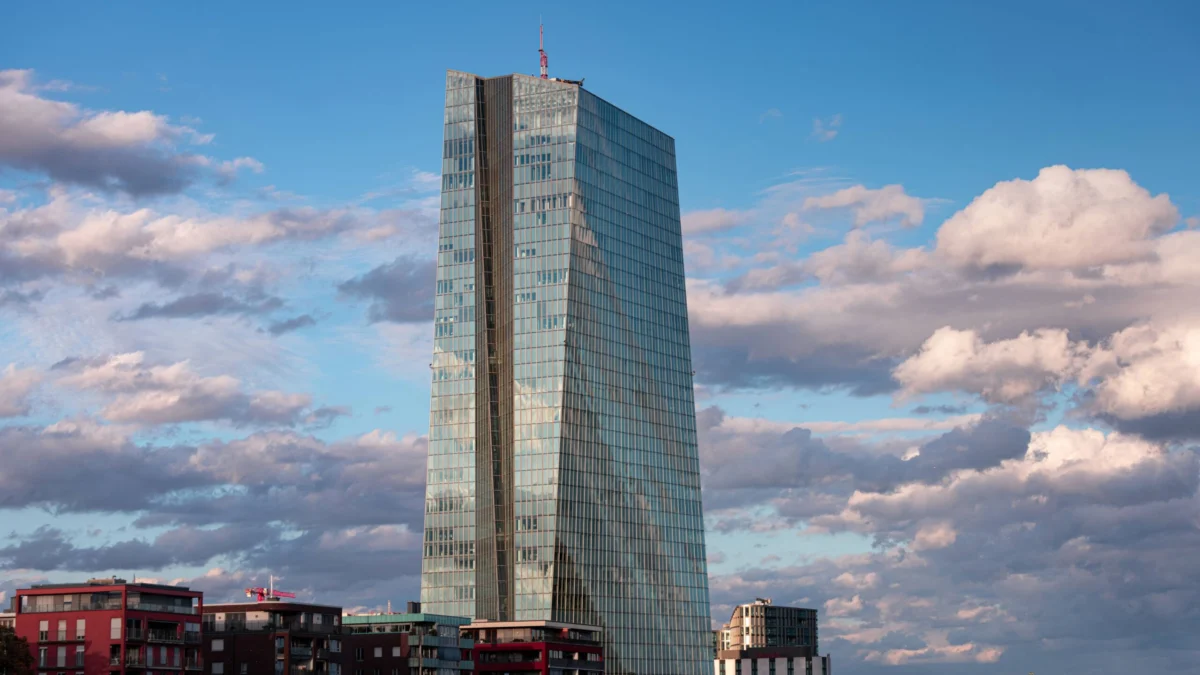
The cautious approach adopted by the Fed is not happening in a vacuum. Across the Atlantic, the European Central Bank (ECB) is navigating a parallel set of challenges. Market expectations indicate that the ECB, meeting in Frankfurt, is likely to keep its own key interest rates unchanged, despite similar inflationary pressures in the Eurozone.
For global markets, the synchronized hesitation between the Fed and the ECB suggests a period of transition. The 2.5 percent deposit rate currently held by the ECB is expected to remain stable, as European policymakers wait to see how the global economic environment—influenced by U.S. policy decisions—develops.
The Path Forward: What Investors and Households Should Expect
As the year draws to a close, all eyes are on the Federal Reserve’s December meeting. This meeting will be pivotal, as it will include updated economic projections and a clearer roadmap for 2027.

For the average consumer, the immediate impact of the current "pause" is a temporary stabilization of borrowing costs. However, the prospect of further hikes before the end of the year remains a distinct possibility. Investors are currently pricing in a high probability of at least one additional rate movement, as the Fed attempts to anchor inflation expectations firmly back to the two percent goal.
The challenge for Chair Kevin Warsh and his colleagues is immense. They are effectively trying to navigate a ship through a storm where the radar—the economic data—is flickering. If they move too slowly, they risk losing credibility on inflation. If they move too fast, they risk triggering an unnecessary economic contraction.
As we approach the final months of 2026, the global financial system remains in a state of watchful anticipation. The "pause" is not an end to the policy debate, but rather a tactical regrouping. Whether this decision will be remembered as a prudent correction or a missed opportunity to curb inflation remains a question that only time—and the next few months of economic indicators—will answer.