PARIS, France – November 5, 2026 – France is bracing for a day of widespread disruption and potential confrontation as a broad coalition of the nation’s most influential trade unions, alongside the resurgent "Yellow Vests" (Gilets Jaunes) movement and various student and pupil organizations, have called for a nationwide general strike today. The coordinated action, which began in the early hours of Thursday, November 5, 2026, aims to deliver a resounding rebuke to the government’s deeply unpopular austerity measures and its broader economic policies.
The strike, heralded by union leaders as a critical test of public resolve against what they describe as an assault on social welfare and public services, is expected to bring significant parts of the country to a standstill. Transport networks, schools, hospitals, and various public and private sector operations are anticipated to experience severe disruptions. Authorities, acutely aware of the potential for escalation, have deployed an unprecedented police presence across major cities, particularly in light of recent violent clashes that marred protests in mid-October. The spectre of renewed urban unrest, reminiscent of past social upheavals, looms large over the nation.
Main Facts: A Nation on Edge
Today’s general strike represents a formidable challenge to the current administration, already grappling with a delicate political balance. The call for a unified day of action has resonated across a diverse spectrum of French society, uniting traditional labour movements with more spontaneous protest groups like the "Yellow Vests" and younger generations vocalizing their concerns about their future.
At the heart of the widespread discontent are the government’s proposed austerity plans, which include significant cuts to public spending, reforms to social security, and perceived erosion of workers’ rights. Union federations such as the Confédération Générale du Travail (CGT), Force Ouvrière (FO), and Solidaires, among others, have been vociferous in their opposition, arguing that these measures disproportionately affect the most vulnerable and threaten the foundational principles of the French social model.
The scale of the planned demonstrations is a primary concern for law enforcement. While unions have stressed their commitment to peaceful protest, the involvement of elements from the "Yellow Vests" movement, known for their more confrontational tactics in the past, adds an unpredictable dimension. Authorities in numerous cities, including Paris, Lyon, Marseille, and Bordeaux, have taken the contentious step of rerouting demonstration marches away from central business districts. This controversial decision, aimed at protecting shops and businesses from potential looting and vandalism, has been met with fierce criticism from protest organizers who view it as an attempt to diminish the visibility and impact of their movement.
Early reports indicate significant participation in key sectors. Public transport in major urban centres, including the Parisian RATP network and national SNCF train services, is operating on a heavily reduced schedule, leading to widespread commuter frustration. Schools in many regions have reported high rates of teacher absenteeism, with numerous establishments either closed or offering minimal services. Energy sector workers are also participating, raising concerns about potential impacts on power generation and distribution.
The government, for its part, has urged calm and reiterated its commitment to fiscal responsibility, arguing that the austerity measures are necessary to stabilize the national economy and ensure long-term prosperity. However, the depth of public anger suggests that this message is failing to resonate with a significant portion of the population.
Chronology: A History of Discontent and Escalation
The roots of today’s general strike are deeply embedded in France’s recent political and social history, characterized by recurrent clashes between reformist governments and a highly mobilized civil society. While the immediate trigger is the latest round of austerity plans, the current unrest is the culmination of years of simmering resentment and previous protest movements.
Early 2020s: Fiscal Tightening and Social Security Reforms
The current government, having come to power on a platform of economic modernization, has consistently sought to rein in public spending and reform France’s extensive social security system. Initial reforms focused on pension adjustments, which sparked major strikes and demonstrations in the late 2010s and early 2020s, often leading to prolonged periods of social paralysis. These earlier reforms, while eventually passed, left a legacy of mistrust between the government and labour unions.
Mid-2020s: The Austerity Push Intensifies
As global economic pressures mounted and national debt levels remained a concern, the government announced a more aggressive package of austerity measures in the spring of 2026. These plans included a freeze on public sector salaries, significant budget cuts to ministries (particularly education and healthcare), and a review of unemployment benefits designed to encourage workforce participation. These proposals immediately drew the ire of unions, who saw them as an attack on the purchasing power of ordinary citizens and the quality of public services.
The Resurgence of the "Yellow Vests"
The "Yellow Vests" movement, which burst onto the scene in late 2018 initially protesting fuel price increases, had seen its activity wane in recent years. However, the announcement of the 2026 austerity measures, coupled with a general sense of economic insecurity and frustration with the political elite, provided fertile ground for its resurgence. By late summer, calls for renewed direct action and solidarity with union movements began to grow louder within the "Yellow Vests" ranks. Their participation today signals a significant broadening of the protest base beyond traditional union membership.
Student Mobilization and the "Mid-October" Flashpoint
Adding another layer to the unrest, student and pupil organizations have joined the protest, voicing concerns about cuts to higher education funding, declining job prospects, and what they perceive as a narrowing of opportunities. Their involvement echoes historical moments of student-led activism in France, from 1968 to more recent movements against education reforms.
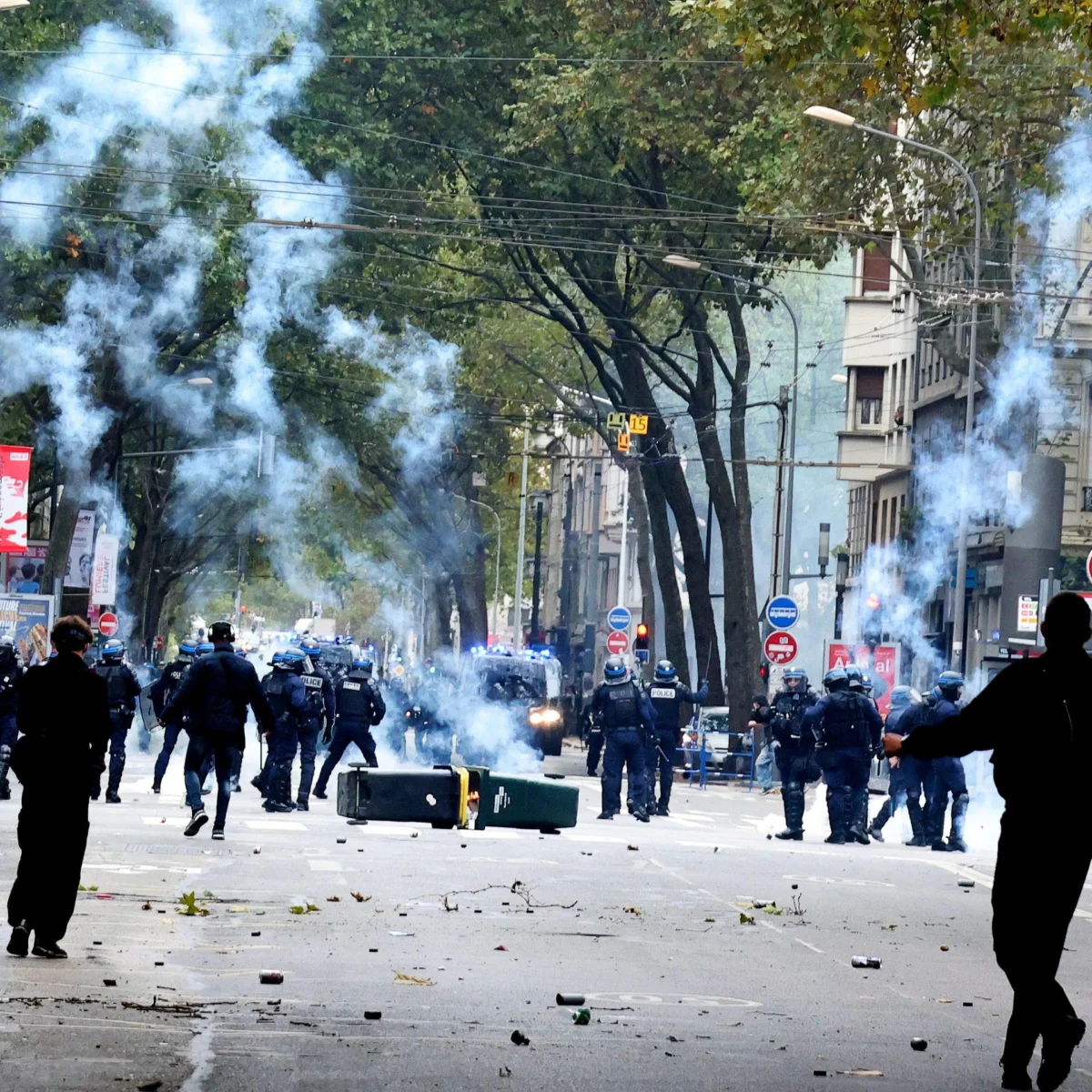
The specific reference to "violent protests like here in Lyon (Image from Oct 24)" highlights a crucial turning point. On October 24, 2026, a protest initially organized by student groups in Lyon against proposed cuts to university grants escalated dramatically. What began as a peaceful march through the city centre devolved into clashes between a fringe element of protestors and riot police. Overturned bins, burning barricades, and extensive property damage were reported, culminating in dozens of arrests and injuries. The image captured from that day – police confronting demonstrators amidst smoke and debris – has become a potent symbol of the rising tensions and the potential for any demonstration to turn volatile. This event directly informed the authorities’ heightened security posture and contentious route restrictions for today’s general strike.
Failed Dialogue and the Path to General Strike
In the weeks leading up to today, attempts at dialogue between government representatives and union leaders largely broke down. Unions accused the government of intransigence and an unwillingness to genuinely negotiate on the core austerity package. The government, conversely, maintained that the economic realities necessitated difficult choices and that it was open to discussion on implementation details, but not on the overall direction of reform. With no common ground found, the call for a general strike became the unions’ ultimate recourse to force a policy rethink.
Supporting Data: Scope, Impact, and Public Sentiment
The potential reach and impact of today’s general strike are substantial, threatening to paralyze key sectors of the French economy and daily life. Preliminary data and expert analyses paint a picture of widespread disruption.
Transportation Paralysis:
- SNCF (National Railways): Only 1 in 5 high-speed TGV trains are expected to run, with regional services even more severely affected, operating as little as 10% of their usual schedule. International services like Eurostar are also facing significant cancellations.
- RATP (Paris Public Transport): The Parisian metro, bus, and tram networks are experiencing major disruptions, with several metro lines completely closed and others operating only during peak hours with skeleton services.
- Air Traffic Control: Unions representing air traffic controllers have joined the strike, leading to significant delays and cancellations at major airports including Charles de Gaulle, Orly, and Lyon-Saint Exupéry. Airlines have preemptively cancelled an estimated 30-40% of their flights.
Public Services and Education:
- Education: The Ministry of National Education reported that approximately 60% of primary school teachers and 45% of secondary school teachers are on strike. This has led to the closure of thousands of schools and significant challenges for parents regarding childcare.
- Healthcare: While emergency services are legally mandated to maintain minimum staffing, non-urgent medical appointments and elective surgeries are being postponed. Several public hospitals have reported reduced services due to striking staff.
- Energy Sector: Workers at nuclear power plants and oil refineries have initiated localized stoppages and blockades, although immediate impacts on national energy supply are not yet critical, the potential for escalation exists if the strike is prolonged.
Economic Ramifications:
Economists estimate that a single day of general strike could cost the French economy hundreds of millions of euros in lost productivity, reduced consumer spending, and logistical delays. Prolonged unrest could further deter foreign investment and negatively impact France’s growth projections for the coming year. The hospitality and retail sectors, still recovering from previous economic shocks, are particularly vulnerable to the disruption and potential for property damage.
Public Opinion and Support:
Recent polls conducted in late October indicated a complex public sentiment. While approximately 55% of respondents expressed understanding or support for the strike action against austerity measures, a significant minority (40%) voiced frustration over the disruption to daily life. Support for the "Yellow Vests" movement had seen a slight uptick, particularly among lower-income households and those outside major urban centers. However, there was also a strong desire for protests to remain peaceful, with 70% condemning violence and property damage. This nuanced public mood presents a challenge for both the government and the protest organizers, who must navigate the fine line between impactful action and alienating the broader public.
Geographic Spread:
While Paris and Lyon remain key epicentres of protest, major demonstrations are also reported in Marseille, Bordeaux, Toulouse, Nantes, Strasbourg, and Rennes. The strategy of moving rallies to outer districts in many of these cities has led to smaller, more fragmented gatherings, but also increased the likelihood of spontaneous, unauthorized marches attempting to converge on city centres.
Official Responses: Firmness, Security, and Calls for Calm
The government has responded to the general strike with a blend of unwavering commitment to its reform agenda, a strong emphasis on maintaining public order, and appeals for peaceful expression of dissent.
Government Stance:
President Emmanuel Macron, through his spokesperson, reiterated the government’s determination to proceed with its fiscal reforms, stating that "France cannot afford to delay necessary adjustments to its public finances." Prime Minister Jean Castex addressed the nation yesterday evening, acknowledging the "legitimate concerns" of some citizens but firmly asserting that the austerity measures were crucial for the nation’s economic sovereignty and future generations. He called upon unions to return to the negotiating table, but without offering concessions on the core policy direction. Finance Minister Bruno Le Maire emphasized the need for budgetary discipline, warning that succumbing to pressure would jeopardize France’s credit rating and economic stability.
Security Measures and Police Strategy:
Interior Minister Gérald Darmanin announced the deployment of over 100,000 police and gendarmerie officers nationwide, with a particular focus on Paris, Lyon, and other major urban centres. The strategy is two-pronged: to secure critical infrastructure and public buildings, and to contain demonstrations to designated routes and areas. "We will not tolerate any violence, looting, or damage to public or private property," Darmanin stated, warning that "those who engage in such acts will face the full force of the law."
The decision to reroute demonstrations to peripheral areas has been a major point of contention. While authorities argue it is a preventative measure to protect businesses and public safety, union leaders and human rights organizations have criticized it as an infringement on the right to protest and an attempt to marginalize the movement. "Moving us to the outskirts is an attempt to silence us, to make us invisible," declared Philippe Martinez, head of the CGT. "We will not be relegated to the shadows." Despite these objections, police have set up extensive cordons and checkpoints to enforce the route restrictions, leading to early skirmishes in some areas as protestors attempted to breach these lines.
Calls for Calm and Dialogue:
Beyond the stern warnings, government officials have also issued calls for calm and responsibility. Ministers have urged citizens to respect public order and for protestors to express their grievances peacefully. There have been repeated invitations for unions to re-engage in dialogue, though without clear indications of willingness to compromise on the fundamental austerity package. This approach reflects a government walking a tightrope, attempting to assert authority while avoiding further inflaming social tensions.
Implications: A Critical Juncture for France
Today’s general strike marks a critical juncture for France, with far-reaching implications for the government’s reform agenda, the future of social dialogue, and the nation’s broader political landscape.
Immediate Consequences:
In the short term, the strike will undoubtedly cause significant economic disruption and personal inconvenience for millions of French citizens. Businesses will suffer losses, public services will be strained, and the already tense social atmosphere will likely intensify. The success or failure of the police strategy in containing violence will be a key determinant of the day’s immediate aftermath. If widespread unrest occurs, it could further erode public trust in both the government’s ability to govern and the unions’ capacity to control their own movements.
Political Fallout for the Government:
For President Macron and his administration, the general strike represents a significant test of their political resilience. Should the movement gain momentum and prolong, it could force the government to reconsider or significantly modify its austerity plans, a move that would be perceived as a major political defeat. Conversely, if the government stands firm and the strike eventually fizzles out without achieving its aims, it could embolden Macron to pursue further reforms, albeit at the cost of deepening social divisions. The ability to push through unpopular reforms without triggering sustained social paralysis has been a defining challenge for successive French governments, and this administration is no exception.
The Future of Social Dialogue:
The breakdown of negotiations leading to this strike highlights a fundamental challenge in French industrial relations: the difficulty of achieving genuine consensus on major reforms. The strike could either serve as a catalyst for a more constructive dialogue in the future, forcing both sides to re-evaluate their positions, or it could further entrench animosity, making future compromise even more difficult. The inclusion of non-traditional actors like the "Yellow Vests" and student groups also complicates the landscape, as their demands and methods may differ from those of established unions.
Broader Societal Impact:
Beyond politics, the strike reflects deeper societal anxieties in France: concerns about economic inequality, the erosion of the welfare state, and a perceived disconnect between the political elite and ordinary citizens. The convergence of unions, "Yellow Vests," and students suggests a growing and diverse opposition to the current direction of the country. This broad coalition could evolve into a more permanent force in French politics, challenging the established order and shaping future electoral contests.
Furthermore, the events in France are being closely watched across Europe, where many nations grapple with similar challenges of fiscal austerity, social inequality, and the rise of protest movements. The outcome of this period of unrest in France could offer lessons or warnings for other governments attempting to implement difficult reforms in an era of heightened social sensitivity.
As the day progresses, the focus will remain on the streets of France – on the scale of participation, the nature of the demonstrations, and critically, whether the fragile peace can be maintained amidst such widespread discontent. The nation holds its breath, aware that the events of today could define its social and political trajectory for years to come.