
Date: November 5, 2026
Headline: Europe’s Supermarkets Face Unprecedented Cyber Crisis as Cooling Systems Are Compromised; Experts Demand Immediate Security Overhaul
Sub-headline: Recent coordinated attacks across multiple European nations expose critical vulnerabilities in retail infrastructure, leading to massive food spoilage and urgent calls for enhanced cybersecurity measures from manufacturers and operators alike.
Main Facts: A Chilling Reality
European supermarkets are grappling with the aftermath of a series of sophisticated cyberattacks that targeted and compromised their critical cooling systems, leading to widespread disruption and significant financial and environmental losses. The unprecedented incidents, reported across Belgium, Sweden, Ireland, Estonia, and even isolated cases in Germany, saw vital refrigeration units maliciously heated to extreme temperatures of up to 50 degrees Celsius. This deliberate sabotage rendered vast quantities of perishable goods unsalvageable, forcing retailers to dispose of millions of euros worth of food and sparking urgent warnings from cybersecurity experts.
IT specialists are united in their assessment: the responsibility to prevent future attacks lies squarely with the companies involved – from the manufacturers of networked refrigeration equipment to the supermarket chains themselves. There is an immediate and critical need for these entities to drastically improve their cybersecurity postures and implement robust protective measures against an increasingly aggressive threat landscape.
The attacks, first widely reported on November 5, 2026, have sent shockwaves through the European food retail sector, highlighting a severe underestimation of the risks associated with interconnected industrial control systems (ICS) within consumer-facing environments. The incident serves as a stark reminder that even seemingly mundane infrastructure, when networked, can become a potent target for malicious actors, with far-reaching consequences for supply chains, consumer trust, and economic stability.
Chronology of Disruption and Expert Alarm
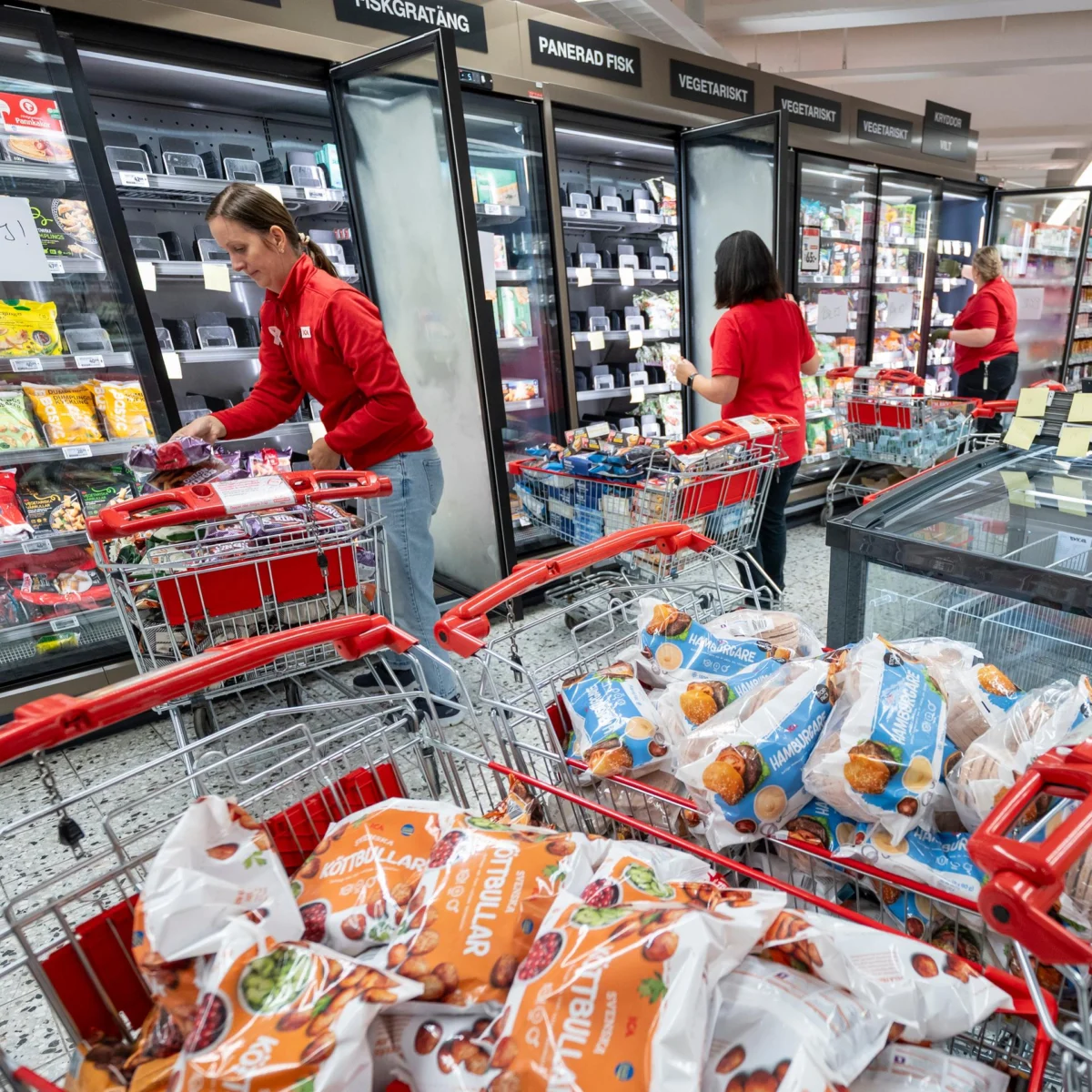
The first reports of unusual activity emerged from supermarkets in Sweden, with the ICA Kvantum chain in Sjöbo notably pictured emptying its freezers as temperatures soared. Soon after, similar incidents were confirmed across other European nations, including Belgium, Ireland, and Estonia, indicating a coordinated or at least widespread attack vector rather than isolated malfunctions. While German supermarkets reported only "isolated cases," the very fact of their occurrence underscores the systemic nature of the vulnerability.
As images of supermarket staff discarding trolleys full of thawed frozen goods circulated, the scale of the crisis became apparent. The deliberate heating of cooling units to 50 degrees Celsius was not merely an act of disruption but a targeted destruction of inventory, designed to cause maximum damage and loss.
In the wake of these incidents, cybersecurity experts quickly weighed in, articulating the underlying weaknesses that facilitated the attacks. On November 5, 2026, during a broadcast on Deutschlandfunk, prominent voices from the IT security community provided critical insights and issued stern warnings, pointing fingers at both hardware manufacturers and operational practices within the retail sector. Their analyses revealed a landscape rife with preventable vulnerabilities that, if left unaddressed, could pave the way for even more devastating cyber incidents.
Christoph Fischer, an IT security expert based in Karlsruhe, was among the first to highlight the fundamental flaws. He unequivocally stated that manufacturers of networked devices bore a significant share of the responsibility. Fischer condemned the practice of delivering and operating control systems with unaltered factory settings and default passwords, describing it as a "serious omission." He stressed that such practices provide an open invitation for attackers, who routinely scan the internet for devices using easily guessable or publicly known credentials.
Fischer’s proposed solution was clear: manufacturers must re-engineer their system configurations to mandate the creation of unique, individual passwords during the very first commissioning process. While acknowledging the inherent value of automated remote access for maintenance – a common feature in modern industrial systems – he insisted that such access must be rigorously secured. He specifically cited methods like certificates and asymmetric encryption as essential tools for safeguarding these critical remote connections, moving beyond simplistic password-based authentication.
Echoing Fischer’s concerns, Dirk Engling of the renowned Chaos Computer Club (CCC) offered further critical perspectives. When asked about the probable reasons behind the attacks’ success, Engling pointed to a likely scenario rooted in the evolving regulatory and operational landscape of the European food industry. He explained that European Union regulations, which mandate comprehensive traceability and an unbroken cold chain for food products, have inadvertently led to a significant centralization of monitoring and control systems.
Engling elaborated that the oversight of these vital cold chains is often outsourced to specialized firms that manage these systems remotely, typically via internet-connected central hubs. This centralization, coupled with the integrated remote control capabilities that allow for adjusting cooling levels, creates a single point of failure and a highly attractive target for cyber adversaries. "That makes [these systems] vulnerable," Engling asserted, highlighting the trade-off between efficiency, compliance, and security.
Furthermore, Engling brought a forward-looking dimension to the discussion, cautioning about the growing sophistication of threat actors. He specifically referenced the proliferation of AI models, which are increasingly being deployed to scour networked systems for vulnerabilities. These AI-powered tools can automate and accelerate the discovery of security flaws, making it easier for attackers to identify and exploit weaknesses in vast networks of connected devices, including those controlling supermarket cooling systems.
The combined expert analyses painted a concerning picture of an industry ill-prepared for the current cybersecurity climate, characterized by outdated security practices, systemic vulnerabilities, and an escalating threat from advanced attack methodologies.
Supporting Data: The Digital Underbelly of the Cold Chain
The successful exploitation of supermarket cooling systems underscores a broader, systemic issue concerning the security of Industrial Control Systems (ICS) and Operational Technology (OT) that are increasingly integrated with IT networks. Modern retail environments, in their pursuit of efficiency and regulatory compliance, have embraced the Internet of Things (IoT), connecting everything from inventory management to refrigeration units to central networks. While this connectivity offers numerous benefits – such as real-time monitoring, predictive maintenance, and streamlined operations – it simultaneously expands the attack surface for malicious actors.
The Peril of Default Settings and Weak Passwords: Christoph Fischer’s emphasis on unaltered factory settings and default passwords highlights a critical and disturbingly common vulnerability. Many IoT and ICS devices are shipped with generic credentials (e.g., "admin/admin," "user/password," "root/toor") that are widely known or easily guessed. Attackers often use automated tools, sometimes augmented by search engines like Shodan (which indexes internet-connected devices), to identify vulnerable systems. Once identified, exploiting these systems is trivial, requiring minimal technical skill. The failure to enforce strong, unique passwords upon installation is not just an oversight; it’s a fundamental security flaw that effectively leaves the digital back door wide open.
The Centralization Conundrum and EU Regulations: Dirk Engling’s analysis of the EU’s cold chain regulations leading to centralization is particularly insightful. The European Union has stringent rules, such as those outlined in Regulation (EC) No 852/2004 on the hygiene of foodstuffs, which necessitate robust systems for ensuring food safety, including temperature control throughout the supply chain. To meet these demands efficiently, many retailers and their logistics partners have adopted centralized, internet-enabled monitoring and control solutions. These systems often connect thousands of refrigeration units across multiple locations to a single management platform, frequently operated by third-party service providers.
While this approach ensures compliance and operational efficiency, it inadvertently creates a "honey pot" for cybercriminals. A successful breach of this central management system or the third-party provider’s network can grant attackers control over an entire network of cooling units, as demonstrated by the recent attacks. The convenience of remote access and centralized control, therefore, comes with an amplified risk.
The Rise of Offensive AI and Automated Vulnerability Discovery: Engling’s reference to AI models actively searching for system weaknesses is a significant point of concern for the future of cybersecurity. Artificial Intelligence and Machine Learning algorithms are increasingly being used to automate the process of vulnerability discovery, penetration testing, and even the generation of exploit code. These AI tools can analyze vast amounts of network data, identify patterns indicative of misconfigurations or unpatched software, and even predict potential attack vectors with greater speed and accuracy than human analysts. This means that the window of opportunity for organizations to discover and patch vulnerabilities before they are exploited is shrinking rapidly, demanding a proactive and continuously adaptive security posture.
The Economic and Environmental Cost of Food Waste: The immediate consequence of the attacks – cooling systems heating to 50 degrees Celsius and the subsequent spoilage of "large quantities of food" – represents a staggering loss. While precise figures for these specific incidents are yet to be fully compiled, similar large-scale food spoilage events can result in millions, if not tens of millions, of euros in direct losses for affected retailers. This includes the cost of the spoiled products, disposal fees, and the operational expenses incurred during the crisis. Beyond the direct financial impact, there are significant environmental implications:
- Resource Waste: All the water, energy, land, and labor used to produce, transport, and store the food are squandered.
- Greenhouse Gas Emissions: Decomposing food in landfills produces methane, a potent greenhouse gas. The energy consumed by cooling systems before they were compromised, and the energy required for emergency responses, also contribute to carbon emissions.
- Supply Chain Disruptions: The sudden loss of inventory can strain supply chains, leading to temporary shortages and price fluctuations for consumers.
These cascading effects highlight that cyberattacks on critical infrastructure, even those seemingly confined to individual businesses, have far-reaching societal and ecological consequences.
Official Responses and Industry Accountability
In the immediate aftermath, official responses from industry bodies acknowledged the gravity of the situation while attempting to reassure the public. The German Food Retail Association (Bundesverband des Deutschen Lebensmittelhandels) stated that only "isolated cases" of German markets had been affected by the cyberattacks. They further declared that "digital and physical resilience are ongoing tasks for retail companies."
While this statement acknowledges the continuous nature of cybersecurity challenges, it also implicitly suggests that the industry views these attacks as part of an ongoing battle rather than a singular, catastrophic failure. However, the experts’ analyses paint a more urgent picture, indicating that current "ongoing tasks" may not be sufficient to address fundamental systemic weaknesses. The incidents serve as a critical test for the retail sector’s ability to transition from a reactive to a truly proactive cybersecurity stance.
The calls from experts like Christoph Fischer and Dirk Engling place a clear onus on both manufacturers and operators:
- Manufacturer Accountability: The demand for "security by design" is no longer optional. Manufacturers of all IoT and ICS devices integrated into critical infrastructure must prioritize security from the earliest stages of product development. This includes enforcing strong default security configurations, providing secure update mechanisms, and offering clear guidelines for secure deployment and operation. The practice of shipping devices with easily exploitable default settings must cease.
- Retailer Responsibility: Supermarket chains and other food retailers must recognize cybersecurity as a core business function, not merely an IT department concern. This entails:
- Comprehensive Risk Assessments: Regularly identifying and evaluating potential cyber threats to all networked systems, especially those controlling critical infrastructure.
- Robust Security Policies: Implementing and strictly enforcing policies for strong password usage, multi-factor authentication (MFA), network segmentation, and access control.
- Vendor Security Management: Demanding stringent security standards from third-party service providers who manage critical systems like cold chains.
- Incident Response Planning: Developing and regularly testing detailed plans for responding to cyberattacks, including communication strategies, system recovery protocols, and business continuity measures.
- Employee Training: Educating all staff, from IT professionals to shop floor employees, on cybersecurity best practices and threat awareness.
- Regular Audits and Penetration Testing: Proactively seeking out and addressing vulnerabilities before malicious actors can exploit them.
The European Union, as the body whose regulations inadvertently contributed to the centralization vulnerability, is also likely to face increased pressure to review its directives. While ensuring food safety and traceability remains paramount, future regulations might need to incorporate explicit cybersecurity requirements for critical food supply chain infrastructure, potentially mandating specific security controls for networked cold chain management systems.
Implications: A Wake-Up Call for a Connected World
The cyberattacks on European supermarket cooling systems carry profound implications that extend far beyond the immediate losses suffered by retailers. They represent a significant wake-up call for governments, industries, and consumers about the fragility of our increasingly interconnected world.
Erosion of Consumer Trust: The most immediate long-term impact could be on consumer confidence. When basic necessities like food safety are compromised due to cyber warfare or criminal activity, public trust in both retailers and the broader digital infrastructure can erode rapidly. Consumers might question the safety of digitally managed products or the reliability of supply chains, potentially leading to behavioral shifts or increased demand for more transparent and resilient systems.
Escalation of Cyber Threats to Critical Infrastructure: These incidents highlight a dangerous trend: the targeting of operational technology (OT) systems that control physical processes. Unlike traditional IT attacks focused on data theft, OT attacks can cause real-world physical damage, disruption, and even endanger public safety. The attacks on cooling systems could be seen as a precursor to more severe incidents targeting other critical infrastructure sectors such as energy grids, water treatment plants, or transportation networks. This necessitates a paradigm shift in how governments and industries approach critical infrastructure protection, moving beyond data security to encompass physical process integrity.
Food Security and Supply Chain Resilience: On a larger scale, coordinated attacks could pose a significant threat to national and regional food security. While these particular incidents resulted in spoilage, future attacks could aim for more prolonged disruptions, potentially affecting food availability and exacerbating existing supply chain fragilities. Governments will likely need to integrate cybersecurity considerations into their national food security strategies, exploring ways to decentralize control where appropriate or build in redundant, offline capabilities for critical systems.
Regulatory and Policy Overhaul: The European Union and national governments are now under immense pressure to re-evaluate existing regulations and implement new cybersecurity mandates. This could include:
- Stricter IoT/ICS Security Standards: Mandatory security standards for all connected devices used in critical sectors, including requirements for secure boot, firmware updates, and vulnerability disclosure.
- Enhanced Cold Chain Cybersecurity: Specific regulations for the cybersecurity of cold chain management systems, possibly including certification requirements for third-party providers and mandatory penetration testing.
- Increased Information Sharing: Fostering greater collaboration and information sharing between government agencies, industry bodies, and private companies to collectively identify and mitigate emerging threats.
- Liability Frameworks: Exploring frameworks that assign liability to manufacturers or operators who fail to implement adequate cybersecurity measures, thus incentivizing greater due diligence.
Economic Ripple Effects: Beyond the direct costs of spoiled food and system repairs, the economic implications are substantial. Increased insurance premiums for cyber risk, potential legal liabilities from consumer class actions or regulatory fines, and the long-term cost of reputation management will all impact the retail sector’s bottom line. Furthermore, the need for significant investment in cybersecurity upgrades will place additional financial strain on businesses, especially smaller retailers.
The Future of Cyber Warfare and Criminality: The sophistication and coordinated nature of these attacks raise questions about their perpetrators. While the exact motives remain unclear – whether financially driven cybercriminals, state-sponsored actors seeking to destabilize economies, or even hacktivists – the incidents demonstrate the growing capability of adversaries to inflict tangible harm. This necessitates a robust national and international cybersecurity defense strategy, including intelligence gathering, threat attribution, and deterrent measures.
In conclusion, the cyberattacks on European supermarket cooling systems represent a pivotal moment in the ongoing battle against digital threats. They serve as an undeniable testament to the urgent need for a fundamental re-evaluation of cybersecurity practices across the entire supply chain, demanding proactive measures, stringent standards, and a collaborative approach from all stakeholders to safeguard our essential infrastructure in an increasingly perilous digital age. The lessons learned from this crisis must drive immediate and sustained action to prevent future, potentially more catastrophic, disruptions.