Berlin stands at a political crossroads, gripped by an intense debate surrounding the potential formation of a left-wing governing coalition between the Left Party (Die Linke), the Social Democratic Party (SPD), and the Greens. For weeks, this prospective "Red-Green-Red" alliance has been subjected to an unprecedented barrage of media criticism and political pressure, often transcending the usual boundaries of local politics to become a national "fateful question." At the heart of the controversy lie allegations of antisemitism against the Left Party, largely stemming from its stance on Palestine solidarity, coupled with accusations of journalistic bias and disproportionate public outcry. The underlying current of the debate suggests a fundamental tension between democratic electoral outcomes and a powerful narrative orchestrated by segments of the media and established political forces.
Main Facts: The Storm Around Berlin’s Left Alliance
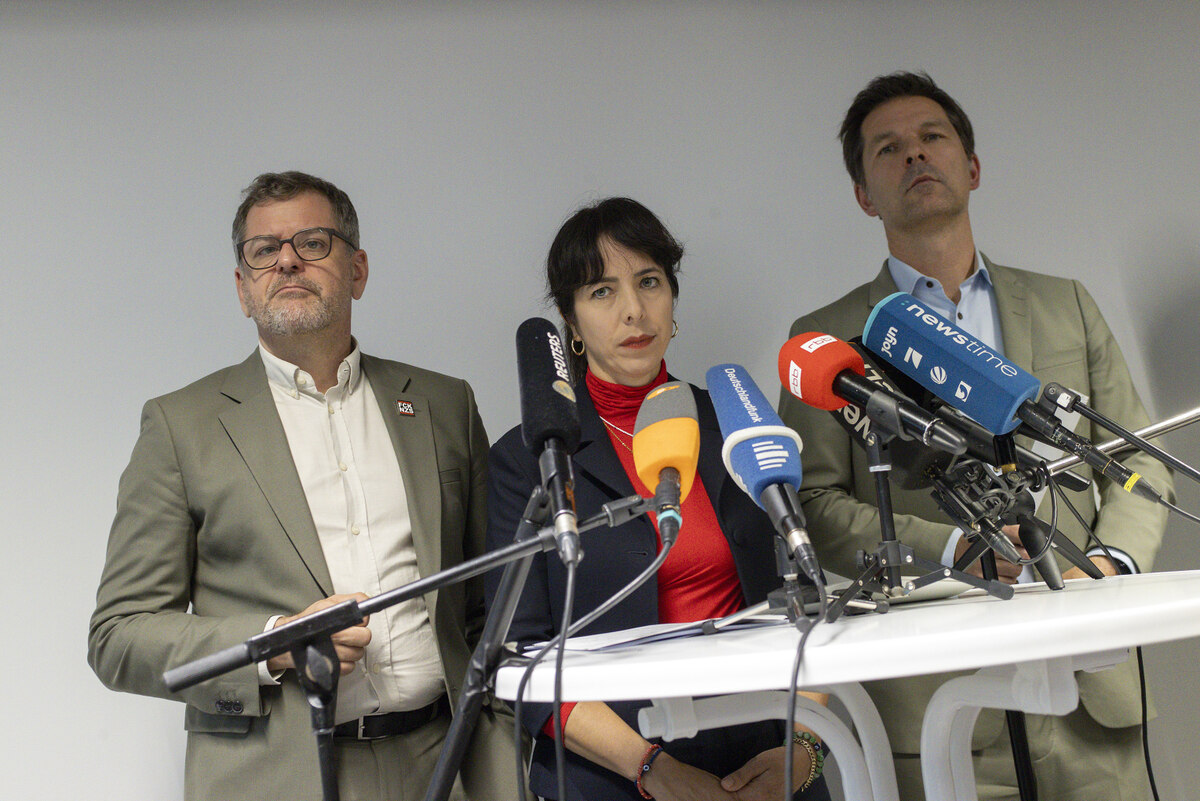
The capital of Germany is currently witnessing a fierce political struggle as the Left Party, SPD, and Greens attempt to forge a governing coalition following recent state elections. Despite the Left Party securing a surprisingly strong electoral performance, particularly in certain districts, the path to government has been fraught with challenges. The proposed alliance has ignited a firestorm of controversy, primarily fueled by a series of incidents and accusations leveled against Die Linke, particularly its lead candidate Elif Eralp and other prominent figures.
Key points of contention include:
- The "Backbencher" Dispute: A debate over whether a specific Left Party backbencher, Vanessa Emde, should be allowed to take her seat in the Berlin House of Representatives, with SPD Berlin leader Steffen Krach reportedly making this a precondition for a coalition. Emde’s past statements regarding Israeli policies have been cited as problematic.
- Palestinian Activist Photos: Photographs of Left Party politicians, including Elif Eralp, with a Palestinian activist who has been accused of expressing Hamas sympathies. These images quickly became a focal point of media scrutiny and political condemnation.
- The Spiegel Document Leak: An incident involving a staff member of Elif Eralp inadvertently forwarding a confidential Word document, complete with internal annotations, to Der Spiegel. This was framed as a breach of trust and further intensified the scrutiny on Eralp and her party.
- Palestine Solidarity Stance: The Left Party’s consistent and vocal solidarity with Palestinians, often critical of Israeli government policies, has been a persistent source of "antisemitism" allegations, irrespective of the nuances of their position.
- Pre-Election "Rapper Scandal": Prior to the election, a controversy erupted over the appearance of a rapper at a local Left Party district event, whose lyrics were deemed controversial and anti-Zionist by critics.
These incidents, according to the article’s original premise, have been "inflated into national questions of destiny," revealing more about the state of German journalism and the priorities of federal politicians than about Berlin’s local politics or the Left Party itself. The core argument posits that the media and political establishment are engaged in a concerted effort to delegitimize and ultimately prevent a left-wing government in Berlin, seemingly unwilling to accept the democratic mandate given to Die Linke by Berlin’s voters.
Chronology of Controversy: A Campaign Unfolding
The intense scrutiny surrounding Berlin’s prospective left-wing government did not emerge overnight but rather represents the culmination of a sustained campaign that began even before the recent state elections.
Pre-Election Warnings and the Rapper Scandal
The political atmosphere in Berlin was already charged in the months leading up to the state elections. Established parties and mainstream media outlets began issuing stern warnings against the possibility of a Red-Green-Red coalition, portraying it as a dangerous shift for the capital. A significant early incident that fueled this narrative was the "rapper scandal." In early September, a district branch of the Left Party in Neukölln invited a local rapper, whose anti-Zionist lyrics and expressions of solidarity with Palestinian resistance groups were deemed highly controversial by critics. This event was immediately seized upon by various media outlets, including the Bild newspaper and the newly launched right-wing portal NIUS, which "scandalized" it "beyond all measure," framing it as irrefutable evidence of the Left Party’s alleged antisemitism. Politicians from the CDU, CSU, and even some within the SPD and Greens amplified these concerns, creating a climate of intense pressure on the Left Party and its potential coalition partners. The narrative was clear: a party tolerating such views was unfit for government.
Post-Election Escalation: The Linke’s Surge and Renewed Attacks
Despite the concerted efforts to delegitimize Die Linke, the election results delivered a significant surprise. Contrary to most polls, which had predicted a decline or stagnation for the Left Party, it achieved what the original article terms an "Erdrutschsieg" (landslide victory). This unexpected success, which saw Die Linke leave the CDU "clearly behind" in the capital and secure "every second vote" in some districts, particularly resonated with younger, female, and migrant voters. This outcome, rather than silencing the critics, merely intensified the attacks, shifting the focus from pre-emptive warnings to active sabotage of coalition negotiations.
Following the election, several new controversies emerged:
- The Vanessa Emde Dispute: The spotlight fell on Vanessa Emde, a relatively unknown backbencher from the Left Party. Her past social media posts and activism, particularly concerning Palestinian rights and criticisms of Israeli policy, were unearthed and highlighted. SPD Berlin leader Steffen Krach, in a highly publicized appearance on the talk show Markus Lanz on a Wednesday evening (e.g., October 28th), reportedly made Emde’s presence in the Left Party’s parliamentary faction a "prerequisite" for coalition talks. This move was seen by many as an attempt to force the Left Party to distance itself from its more outspoken members on the issue, effectively ceding ground on internal party matters.
- The Palestinian Activist Photos: Shortly after, photographs resurfaced showing Left Party lead candidate Elif Eralp and other party members with a Palestinian elder and political activist. This activist was described by media outlets as having "Hamas sympathies," although the specifics of these sympathies were often left ambiguous or based on interpretations of his statements. These photos quickly became another weapon in the arsenal of critics, further cementing the narrative of the Left Party’s alleged proximity to extremist elements.
- The Spiegel Document Leak: Adding to the pressure, Der Spiegel published an article based on a confidential Word document inadvertently leaked by a staff member of Elif Eralp. The document contained internal notes and discussions, reportedly revealing sensitive details about the party’s strategies and internal debates. The leak was not only a "gross breach of trust" but also provided further fodder for critics to question the party’s internal cohesion and professional conduct.
The SPD’s Dilemma and Coalition Talks
Steffen Krach’s public statements on Markus Lanz underscored the immense pressure on the SPD. As the junior partner in the potential coalition, the SPD found itself caught between the electoral mandate for a progressive alliance and the relentless media and political assault. Krach’s attempt to impose conditions on the Left Party, such as the removal of Vanessa Emde, was widely interpreted as an effort to appease critics and demonstrate the SPD’s commitment to the "German Staatsräson" concerning Israel. The Greens, too, faced internal divisions and external pressure, navigating the complexities of their own foreign policy positions and the desire to form a stable left-leaning government. The constant barrage of accusations threatened to derail negotiations, creating an environment where every minor detail could be weaponized.
Supporting Data: Electoral Mandate vs. Media Narrative
The current political deadlock in Berlin highlights a stark divergence between the democratic will expressed by voters and a powerful, often uniform, media narrative.
The Left Party’s Unexpected Triumph
The September state election results painted a picture dramatically different from what many media outlets and established political parties had anticipated. The Left Party, instead of facing the predicted decline, secured an "Erdrutschsieg" (landslide victory), particularly in key urban districts. For instance, while overall percentages might have seen the Left Party around 15-18% statewide, specific districts like Friedrichshain-Kreuzberg, Neukölln, and Mitte saw the party garnering upwards of 30%, and in some cases, "every second vote." This performance far outstripped the CDU in the capital, placing the Left Party on a "Volkspartei-Niveau" (major party level) that the SPD could only dream of in many places. This success was attributed not only to its strong platform on housing, social justice, and climate action but also, crucially, to its unwavering stance on Palestine solidarity – a position that resonated with a significant segment of the electorate, particularly "many predominantly young, female, and migrant voters." This electoral mandate, however, appeared to be largely dismissed or reinterpreted by a significant portion of the media.
The Media Landscape: A Chorus of Condemnation
The article sharply criticizes the German media for its role in amplifying the controversy. Publications like Bild, NIUS (a relatively new, right-wing online platform known for its provocative style), the Berlin Tagesspiegel, and even the reputedly liberal Der Spiegel are identified as key players in "drumming against Red-Green-Red in Berlin."
- Der Spiegel: Accused of a "gross breach of trust" for publishing the leaked confidential document, demonstrating "how little sympathy even Der Spiegel holds for a left-wing alliance." This suggests an editorial bias that transcends mere reporting.
- Bild and NIUS: These outlets are characterized by their sensationalist approach, quickly turning minor incidents into national "scandals." Their consistent focus on alleged antisemitism within the Left Party, often with inflammatory headlines, contributed significantly to the hostile public discourse.
- Tagesspiegel: As a prominent Berlin newspaper, its critical stance further legitimized the narrative of a problematic left-wing coalition, shaping local opinion.
The criticism extends to prominent individual journalists whose rhetoric has been particularly incendiary:
- Robin Alexander: A Welt journalist, he publicly declared it a "scandal" even before the election that "in the city where the Holocaust was planned," a figure like Vanessa Emde could run for the Left Party. This statement not only amplified Emde’s profile nationally but also explicitly linked local politics to Germany’s gravest historical trauma in a highly charged manner.
- Jörg Thadeusz: On the ARD’s Tagesthemen, a flagship news program, Thadeusz controversially asserted that a left-wing alliance in Berlin would equate to a "betrayal of the victims of Auschwitz," concluding his "bizarre tirade" with the nationalist Hebrew phrase "Am Israel Chai" ("Long live Israel"). Such pronouncements, made on national television, further blurred the lines between journalistic commentary and political activism, weaponizing the Holocaust for domestic political gain.
- Harald Martenstein: A columnist for Die Welt, Martenstein speculated that the motives of female Left Party politicians showing solidarity with Palestinians might be "sexual in nature." This "sexist outburst" and "misuse of the Holocaust for political purposes" drew "little outrage," revealing a perceived double standard where "different criteria apply to German top journalists than to Berlin local politicians."
The ‘Staatsräson’ Debate and Double Standards
A crucial aspect of the supporting data is the perceived hypocrisy and double standards in the outrage. The article highlights that "it is probably no coincidence that it is primarily those journalists who have been particularly loud in their silence on Israel’s actions in the Gaza Strip over the past three years who are now particularly vehemently outraged about the Left Party." This suggests a "substitute action" for a lack of critical engagement with Israeli policies.
The piece explicitly details what it perceives as overlooked issues:
- Israeli Actions: The bombing of Gaza "into rubble and ashes," attacks on multiple regional countries, border shifts in Lebanon and Syria, and escalated settlement construction in the West Bank (e.g., "550 settlements"), leading to thousands of displacements and deaths.
- Two-State Solution: The categorical rejection of a internationally demanded two-state solution by the current "at least partially right-wing radical Israeli government under Benjamin Netanyahu," as well as "the majority of the opposition."
- International Legal Proceedings: The fact that Netanyahu’s government is facing "arrest warrants in The Hague for war crimes and crimes against humanity," and Israel as a state is "even accused of genocide."
In contrast to the silence or lack of outrage on these complex international matters, the media and political establishment are "preferably outraged here at those who protest against it, sometimes misstep in tone, or overreach." The article challenges the "German Nibelungentreue" (unwavering loyalty) to Israel, questioning whether this unquestioning support, even for a government accused of grave international crimes, is truly "the right lesson from German history." The discussion around "German Staatsräson" (reason of state) concerning Israel, meant to reflect Germany’s historical responsibility, is portrayed as being used to stifle any domestic dissent or nuanced debate on Israeli policy, effectively punishing those who dare to voice "quiet or even loud doubts." This also extends to Germany’s continued "delivery of weapons to Israel," which passes largely uncommented upon by the same critics who scrutinize the Left Party.
Official Responses: Navigating the Minefield
The various political actors involved have responded to the ongoing controversies with a mix of defiance, conciliation, and strategic maneuvering, all under the intense glare of public scrutiny.
The Left Party’s Stance and Concessions
The Left Party, particularly its Berlin leadership under Elif Eralp, has found itself in an unenviable position. On one hand, it needs to defend its core principles and the mandate given by its voters, many of whom explicitly supported its stance on Palestine solidarity. On the other hand, it faces immense pressure to make concessions to facilitate coalition talks and shed the "antisemitism" label.
- Initial Defiance: Initially, the party expressed defiance, asserting its right to internal autonomy and defending its members’ freedom of expression, albeit with careful caveats about rejecting antisemitism in all forms. Eralp herself pushed back against the accusations, arguing for a nuanced understanding of critical solidarity with Palestinians that does not equate to antisemitism.
- Strategic Distancing: However, as the pressure mounted, there were reports of the Left Party attempting to strategically distance itself from the most controversial statements or individuals. While the article notes the party has "long since done" this in some instances, it implies that such efforts are never deemed sufficient by critics. This includes internal discussions about Vanessa Emde’s role and public statements clarifying the party’s position on Hamas (e.g., condemning its actions while maintaining a distinction between Hamas and the broader Palestinian population).
- The "Problem Pony" Remark: Even trivial aspects were weaponized. The reference to the "Problem-Pony" (problematic bangs/fringe) of a leading Left Party figure (likely referring to a hairstyle, used derisively) exemplifies the level of personal and superficial attacks that became part of the broader campaign to delegitimize the party. This suggests that even appearance could be scrutinized to reinforce a negative image.
SPD and Greens: Caught in the Crossfire
Both the SPD and the Greens, potential coalition partners, have been caught in a difficult bind, balancing their desire for a progressive government with the need to appease a vocal opposition and media.
- Steffen Krach’s Public Statements: The SPD’s Berlin leader, Steffen Krach, notably on Markus Lanz, epitomized this dilemma. His insistence on conditions regarding the Left Party’s members, such as Vanessa Emde, was a clear attempt to demonstrate the SPD’s adherence to the Staatsräson and its distance from perceived "radical" elements. This was a strategic move to manage public perception and fend off federal-level criticism, but it also strained relations with the Left Party.
- Internal Debates: Both parties experienced internal debates. Within the SPD, a pragmatic wing favored a Red-Green-Red coalition, while a more conservative faction, often influenced by federal party lines, pushed for a more "moderate" approach, potentially even a grand coalition with the CDU. The Greens, while generally more aligned with the Left on social and environmental policies, also faced scrutiny over their foreign policy stances, particularly from their more centrist members who prioritize consensus with established narratives on Israel.
- Pressure from Federal Politicians: Federal politicians from across the spectrum, including within the SPD and Greens, exerted significant pressure on their Berlin counterparts. This federal-level intervention often overshadowed local political considerations, making it harder for the Berlin branches to pursue an independent course.
Opposition’s Amplification
The CDU and CSU have played a central role in amplifying the criticism against the Left Party and, by extension, the entire Red-Green-Red project.
- Relentless Criticism: The conservative opposition consistently highlighted every perceived misstep or controversial statement by the Left Party, portraying the potential coalition as a threat to Berlin’s stability and Germany’s international standing. They leveraged the national media attention to their advantage, arguing that a Red-Green-Red government would be unstable and irresponsible.
- Alternative Vision: The CDU, as the largest single party in the election, although unable to form a majority, presented itself as the only credible alternative, pushing for a return to a grand coalition (CDU-SPD) or even a CDU-Green alliance. This stance was bolstered by the ongoing controversies, which allowed them to frame a left-wing government as too risky.
- CDU’s Own Scandals: The article provocatively contrasts the outrage directed at the Left Party with the relative silence on the CDU’s own past governance in Berlin. It points out that the CDU was "responsible for numerous scandals" during its time in government, including allegations of "distributing funds for the fight against antisemitism to questionable projects of party friends." It also mentions a "Berlin CDU mayor who preferred to play tennis rather than take care of his city," referencing a period when "entire neighborhoods sank into darkness due to a power outage." This serves to highlight a perceived hypocrisy in the moral outrage directed solely at the Left Party.
Implications: Beyond Berlin’s Red-Green-Red
The saga of Berlin’s potential left-wing coalition extends far beyond the confines of municipal politics, raising profound questions about the future of progressive governance, media ethics, and the very health of democratic discourse in Germany.
The Future of Progressive Politics in Germany
The intense backlash against the Left Party in Berlin illustrates the formidable challenges facing left-wing parties attempting to form coalitions, particularly when their platforms include critical foreign policy stances.
- Coalition Barriers: The Berlin case demonstrates how foreign policy issues, especially those concerning Israel and Palestine, can become insurmountable obstacles to domestic coalition building for left-leaning parties. This creates a chilling effect, forcing parties to either abandon core principles or face political isolation.
- Identity Politics and Foreign Policy: The intertwining of identity politics (e.g., antisemitism accusations) with foreign policy (e.g., Israel-Palestine conflict) in domestic debates highlights a growing trend that can polarize electorates and limit political maneuverability.
- Fragmentation or Radicalization: If mainstream paths to power are consistently blocked for parties like Die Linke, despite electoral success, it could lead to increased fragmentation within the left or, in extreme cases, push segments of the electorate towards more radical, anti-establishment movements, further destabilizing the political landscape.
Media Ethics and Freedom of Speech
The article presents a damning critique of the German media, suggesting a systemic bias and a willingness to engage in "disproportionate" and "unverhältnismäßig" attacks.
- Journalistic Standards: The accusations against Der Spiegel for a "gross breach of trust" and the critical remarks about the rhetoric of journalists like Jörg Thadeusz and Harald Martenstein raise serious questions about journalistic ethics, objectivity, and the potential for media outlets to act as political players rather than impartial observers.
- Public Discourse and Polarization: The sustained "Dauerfeuer" (constant barrage) from the media contributes significantly to political polarization. By framing complex issues in simplistic, often moralistic terms (e.g., equating dissent with antisemitism), it stifles nuanced debate and entrenches divisions within society.
- Chilling Effect: The intense scrutiny and public shaming of Left Party members create a "chilling effect" on freedom of speech, particularly concerning critical views on Israel. Politicians, especially those from the left, might self-censor to avoid career-ending accusations, thereby limiting the range of permissible political expression in Germany.
The Democratic Mandate Under Threat
Perhaps the most significant implication is the perceived undermining of the democratic mandate. The Left Party’s unexpected electoral success, especially among younger and diverse voters, is being systematically challenged by external forces.
- Undermining Voter Choice: The relentless pressure, which demands ever more concessions from the Left Party, even on trivial matters ("problem pony"), conveys the message that their voters’ choices are unacceptable. This risks alienating a significant portion of the electorate who feel their voices are being ignored or delegitimized.
- "Coalition of Election Losers": The article’s cynical suggestion that the Greens, SPD, and CDU should form a "coalition of election losers" underscores the deep frustration with a system that seems to prioritize narrative control over democratic outcomes. Such a scenario, where parties that lost ground or failed to secure a clear mandate come together to exclude a legitimately elected force, could erode public trust in democratic processes.
- Germany’s Political Culture: The Berlin situation reveals a deeper tension within Germany’s political culture, particularly concerning its historical responsibility towards Israel. While the Staatsräson is a cornerstone of German foreign policy, its rigid application in domestic politics, often used to silence dissent, raises questions about the country’s commitment to robust democratic debate and pluralism.
A Call for Retreat or Resilience?
The concluding paragraphs of the original article, framed with heavy sarcasm and resignation, suggest a stark choice. The author provocatively states that it "would therefore be better to give up efforts for a left-wing alliance in Berlin." This proposed retreat, allowing a "coalition of election losers" to form, would, ironically, appease "the dear press" and allow Germany to continue its "uninterrupted delivery of weapons to Israel" without "a state government raising quiet objections." The Israeli flag could fly again "undisturbed" before the Rotes Rathaus, "as if nothing had happened."
This cynical conclusion is a powerful indictment. It implies that no matter how many concessions the Left Party makes – even if it "excludes Vanessa Emde, Ferat Koçak, and the entire Neukölln district association," "swears a holy oath on the German Staatsräson," "gives up its socialization dreams," and renames itself "Die Mitte" (The Center) – "it will never be enough." The message to the Left Party’s voters, especially the young, female, and migrant demographic, would simply be: "Tough luck!" because "we owe this to the German Staatsräson." This provocative ending serves as a scathing commentary on the state of German democracy, suggesting that in the current climate, genuine political change, especially from the left, is systematically stifled, and critical voices are effectively silenced in the name of a predefined "reason of state." The question remains whether Berlin’s progressive forces will succumb to this pressure or find a way to forge a path forward that respects both democratic mandates and complex international realities.