125 million years after its death in the murky wetlands of what is now Southern England, a young dinosaur has finally claimed its place in history. In a landmark study published in the Journal of Systematic Palaeontology, researchers from London’s Natural History Museum have formally described a new genus and species of herbivorous dinosaur: Paludohadros proudlovii. This discovery serves as a vital piece in the complex puzzle of Early Cretaceous ecosystems, shedding light on the biodiversity that thrived long before the reign of more famous giants like Tyrannosaurus rex.
The Anatomy of a Discovery: Main Facts
The fossil, unearthed in the renowned Smokejacks Pit in Surrey, represents a remarkable addition to the Iguanodontia group—a clade of ornithopod dinosaurs known for their distinct anatomical features and widespread success during the Cretaceous period.
Paludohadros proudlovii derives its name from a blend of Latin and Greek roots. "Paludo" stems from the Latin palus, meaning swamp, referencing the waterlogged, muddy environment the creature inhabited. "Hadros," from the Greek, translates to "sturdy" or "bulky," a fitting descriptor for a dinosaur that, even in its youth, possessed an impressive physical stature.
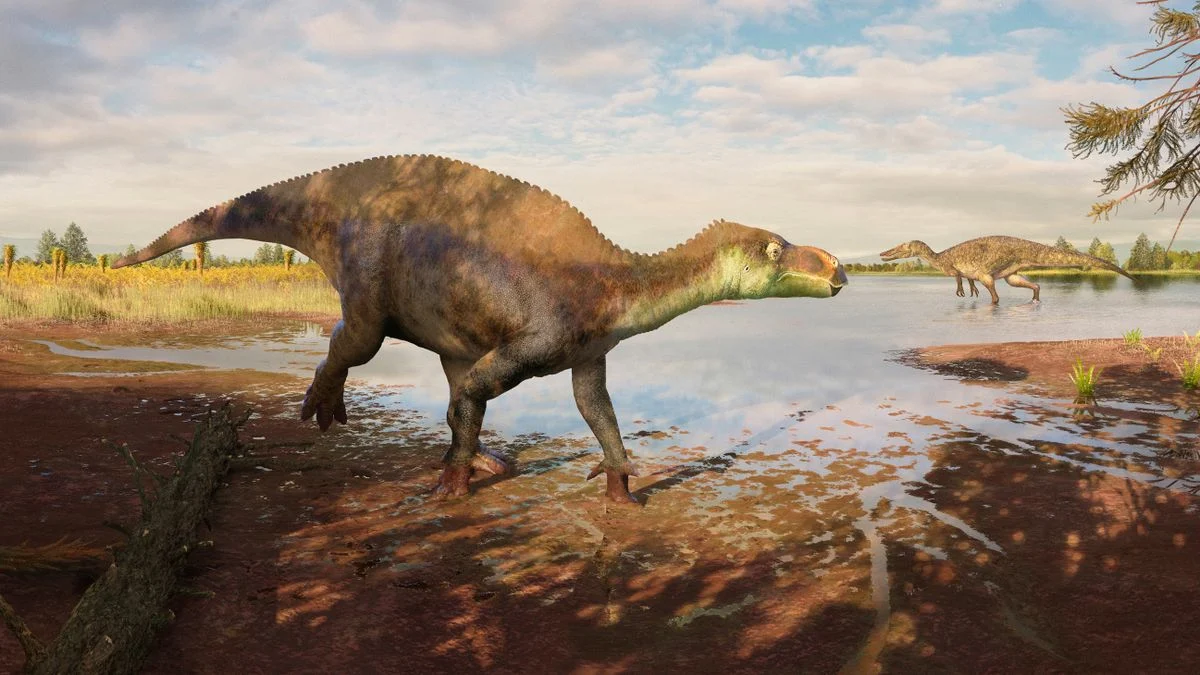
Based on current skeletal analysis, the individual discovered was likely a juvenile. Estimates suggest that at the time of its death, it measured approximately five meters in length and weighed between 1.5 and two tons. Lead author Ricardo Sacamoto notes that had the animal reached full maturity, it could have potentially doubled in size, reaching formidable dimensions. Regarding its locomotion, researchers believe the dinosaur was a facultative biped, utilizing its four limbs for steady movement but frequently rising to a bipedal stance to forage or navigate its lush, swampy habitat.
A Chronology of the Finds
The path to identifying Paludohadros was neither quick nor straightforward. The fossil was originally recovered from the earth in 2001 and subsequently donated to the Natural History Museum. However, for decades, the classification of Iguanodontia remains in Southern England remained stagnant. Most specimens were lumped into just two broadly defined categories, effectively masking the true diversity of the region’s prehistoric wildlife.
It was only within the last several years that paleontologists began applying more rigorous, granular diagnostic methods to these specimens. This shift in taxonomic scrutiny has triggered a wave of "new" dinosaur identifications, as fossils that once gathered dust in museum archives were re-examined through the lens of modern digital technology.
The specific naming of the creature—proudlovii—carries a poignant human history. It honors William Proudlove, the former operations manager of the Smokejacks Pit. Proudlove, who tragically passed away at the age of 35 in the year 2000, did not live to see the discovery of the fossil in the ground he once managed. By naming the species after him, the research team pays tribute to his legacy and the contributions of those working in the fossil-rich clay pits of England.
Supporting Data: Technology and Morphology
The identification of Paludohadros proudlovii as a distinct genus was not a matter of visual estimation, but of high-tech verification. The research team employed advanced Computer Tomography (CT) scans to analyze the internal structure of the skull and dental remains.
The findings were definitive: the dental and cranial morphology of this specimen deviated significantly from known Iguanodontia species. These micro-anatomical differences—specifically in the teeth and bone architecture—provided the necessary evidence to classify it as a unique genus.
One of the most iconic features of the Iguanodontia is the "thumb spike." This bony, conical protrusion at the end of the first digit is a hallmark of the group. Paleontologists theorize that these spikes, which featured a sharp, bony core, served a dual purpose: they were formidable defensive weapons against the apex predators of the era, and they functioned as specialized tools for stripping bark or pulling down high-hanging branches to reach foliage.
While the Paludohadros skeleton is incomplete, the lack of bite marks or pathological indicators on the preserved bones suggests that the animal did not succumb to a violent predator attack, nor did it perish from an obvious, bone-deforming illness. Its cause of death remains a mystery, buried in the sediment of time.
Predators and Ecosystems: The Context of the Early Cretaceous
The environment in which Paludohadros lived was far from tranquil. It shared its habitat with one of the most feared predators of the Early Cretaceous: Baryonyx walkeri.
"Paludohadros was found only 100 meters away from the site where we recovered Baryonyx fossils, which are also curated here at the Natural History Museum," explains Susannah Maidment, the study’s principal investigator. Baryonyx was a large, bipedal carnivore, and evidence suggests that young Iguanodonts were indeed a staple of its diet.
The proximity of these two species provides a rare, localized snapshot of a predator-prey dynamic. While Paludohadros may have been a victim of the Baryonyx during its lifetime, the fossilized evidence does not definitively confirm a direct kill. The interaction between these two species underscores the brutal, high-stakes nature of the Early Cretaceous ecosystem, where survival depended on growth, defensive morphology, and environmental adaptation.
Implications for Paleontology and Conservation
The identification of Paludohadros proudlovii is more than just a taxonomic update; it is a call to action for the scientific community. It highlights the vast, untapped potential of museum collections. As paleontologists move toward more sophisticated classification systems, the "hidden" diversity of the dinosaur age is finally being revealed.
However, this scientific progress is increasingly threatened by the commercialization of paleontology. The global market for dinosaur fossils has seen prices skyrocket, driven by private collectors and wealthy investors who view skeletal remains as luxury assets rather than scientific treasures. This "commodification" of prehistory poses a severe risk to public research institutions. When a significant specimen like a Tyrannosaurus rex skeleton is auctioned for $43 million—as was the case with the specimen dubbed "Gus"—museums are often priced out of the market.
This creates a precarious situation where science is at the mercy of private owners. If a specimen is purchased by a private individual, it may be lost to the public record, hidden away in a private gallery, or inaccessible to researchers. The case of Paludohadros serves as a reminder of why institutional collection is paramount. Because the fossil was donated to the Natural History Museum in 2001, it remained available for the long-term, iterative study required to identify it as a new species.
Conclusion
The story of Paludohadros proudlovii is one of persistence—the persistence of the dinosaur in the earth for 125 million years, the persistence of the researchers who sought to understand its unique place in the tree of life, and the persistence of the museum system in preserving our natural heritage.
As technology continues to advance, our ability to interpret the fragments of the past will only improve. Each new genus described is not merely a name on a page; it is a recovered chapter of Earth’s biological history. Paludohadros reminds us that beneath the surface of the modern world lies a complex, shifting landscape of lost ecosystems, waiting for the right tools and the right dedication to be brought into the light. The challenge for the future remains clear: to ensure that these discoveries continue to be made in the public interest, rather than being silenced by the gavel of an auction house.