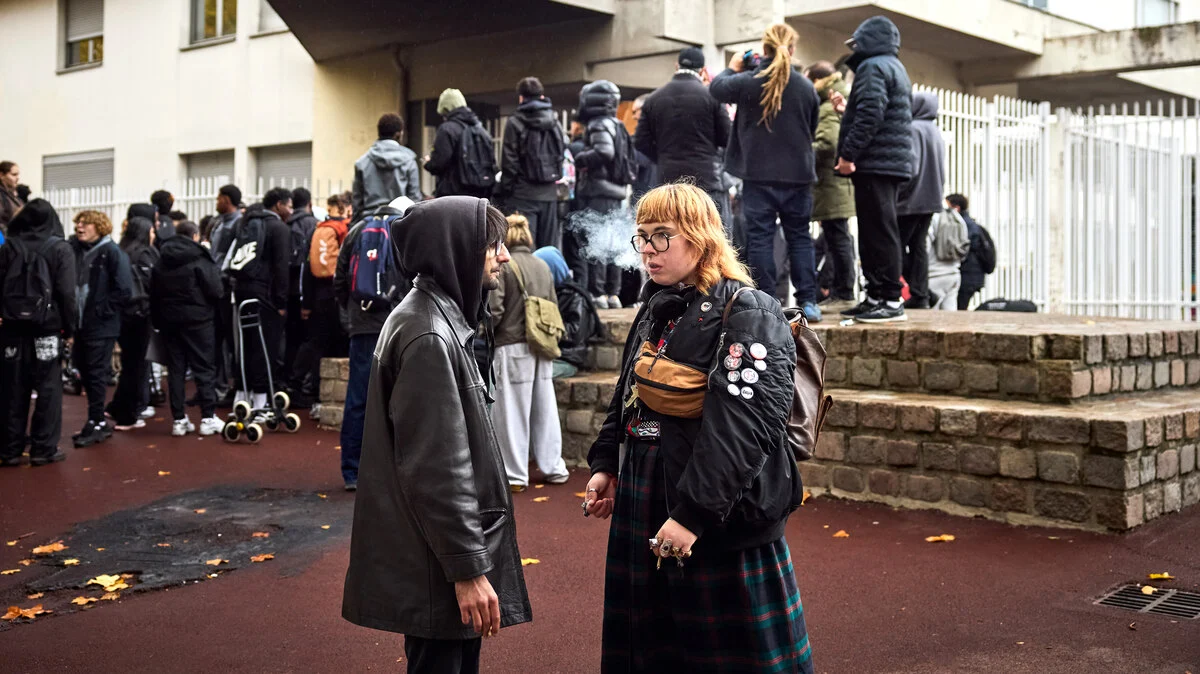
The corridors of power in Paris are echoing with the sound of a generation in revolt. From the working-class suburbs of Saint-Denis to the prestigious halls of Sciences Po, France is currently witnessing a massive, multifaceted protest movement led by students and supported by labor unions. What began as a localized cry for educational reform has mutated into a broader systemic challenge against the government of President Emmanuel Macron, fueled by a toxic mix of economic hardship, police brutality, and profound disagreement over French foreign policy in the Middle East.
The Epicenter of Discontent: Saint-Denis and Beyond
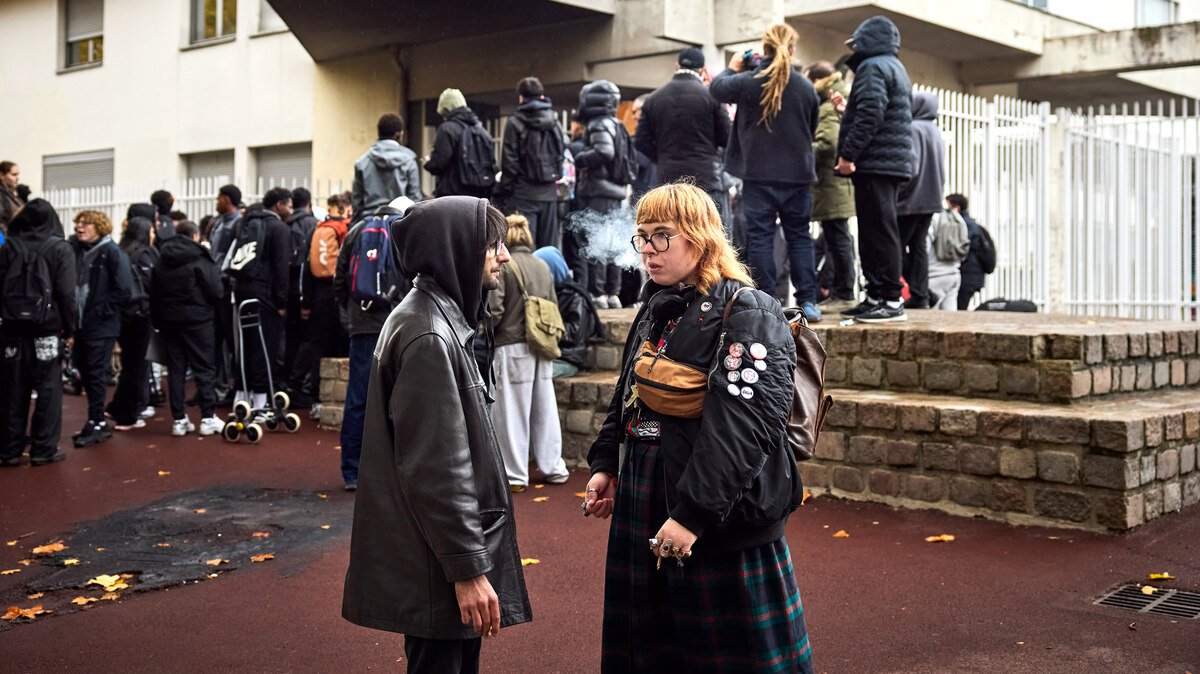
At the University of Paris 8 in Saint-Denis, the atmosphere is tense. On a recent Monday evening, security personnel barred access to the Bauhaus-style campus after a student assembly voted to extend a blockade that has paralyzed the institution since early October. For many, this is not merely an academic dispute; it is a battle for survival.
Marius and Pablo, both 20-year-old undergraduates, represent the face of this movement. While Marius studies literature and Pablo focuses on computer science, their lives are defined by the daily struggle to balance their studies with the crushing reality of the French cost-of-living crisis. In a city where a shared room in a flat-share often exceeds 800 euros a month, the dream of a degree is increasingly overshadowed by the fear of poverty. "After every academic year, I ask myself if I can afford to continue or if I have to drop out," says Pablo.
This sentiment has triggered a domino effect. Starting at high schools in late September, the protest movement quickly swept through universities. By mid-October, government figures acknowledged that at least 51 of France’s 184 universities and 48 high schools were experiencing significant disruptions. Student unions, however, place these figures much higher, claiming that nearly half of all higher education institutions are now involved in some form of protest.
Chronology of a Growing Rebellion
The roots of the current unrest are deeply embedded in the "Parcoursup" system, a centralized university enrollment platform introduced under Macron. Students and educational advocates view the system as opaque and discriminatory, disproportionately disadvantaging those from lower-income backgrounds. The protesters’ demands are extensive: the abolition of Parcoursup, the creation of 250,000 additional university spots, the hiring of more permanent teaching staff, and a massive investment in school infrastructure, estimated at 10 billion euros annually.
The government’s response has been viewed as a drop in the ocean. Ministers have offered to fund half of the requested sum, create 15,000 university places, and hire 500 new teachers. Student organizations, including the Union Étudiante, have rejected these concessions as "utterly insufficient," noting that they fail to address the systemic inequality that has driven students to the barricades.
As the movement gained momentum, it began to intersect with the broader labor movement. With general strikes looming and tensions mounting, the streets of France have become a theater of confrontation. The police response has been severe, with reports suggesting that up to 12,000 individuals have been taken into custody since the protests began in October. The use of tear gas and rubber bullets has led to horrific injuries, including permanent disfigurement and the loss of limbs among protesters—a level of state repression that observers claim is unprecedented in post-WWII France.
The Geopolitical Dimension: The Gaza Factor
While economic inequality is the primary engine of the protests, the conflict in Gaza has provided the movement with its moral compass and its most passionate slogans. Many student committees, such as the Comité Palestine Paris 8, have become hubs for mobilization. For this generation, the war in Gaza is not a distant foreign policy issue; it is a defining moral crisis.
"It is the first live-streamed genocide," says Pablo, who spent part of his childhood in Jerusalem. "It has shaped an entire generation." This perspective has forced the issue into the center of the political discourse. At elite institutions like Sciences Po, student pressure has successfully forced some university branches to sever or suspend ties with Israeli academic partners.
The French political establishment has largely condemned these protests, often equating them with antisemitism or support for terrorism. However, the movement has found a surprising ally in Jean-Luc Mélenchon’s La France Insoumise (LFI). Mélenchon’s refusal to label Hamas as a terrorist organization—framing the conflict instead as a struggle involving a colonial state—has made him a pariah in the National Assembly but a hero to many of the protesting youth.
Official Responses and Political Implications
The government’s strategy has been two-fold: repression and administrative maneuvering. Conservative figures, including Senate President Gérard Larcher, have even floated the idea of banning the LFI party, accusing it of "instrumentalizing" the youth and inciting rebellion.
Hadrien Clouet, an LFI deputy and key architect of the party’s new platform, views the government’s reaction as a sign of desperation. "Macron acts increasingly authoritarian, trying to push the youth off the streets," Clouet says. He characterizes the current administration as a form of "Western European Putinism." Clouet argues that the government is failing to address the basic needs of the population, noting that while the state claims a lack of funds for schools, energy giants like Total have seen their profits soar.

The political stakes are monumental. With the next presidential election approaching in April, the divide between the youth and the establishment is widening. Recent polls indicate that nearly half of French citizens aged 18–24 would vote for Mélenchon in a first round, yet the wider electorate remains polarized. While the far-right Rassemblement National (RN) led by Marine Le Pen continues to poll strongly among older demographics and law-enforcement supporters, LFI is positioning itself as the sole voice of the mobilized youth.
Systemic Failure or Democratic Awakening?
The implications of this uprising extend far beyond the immediate demands for better classroom conditions. The movement has tapped into a profound sense of "faktische Enteignung" (de facto expropriation)—the feeling that the younger generation is being robbed of its future by an economic system that favors corporate interests over social welfare.
The inclusion of labor unions in the protest movement signals a dangerous escalation for the government. If the industrial sector links its survival to the quality of education and the economic stability of the youth, the Macron administration faces a multi-front crisis that cannot be resolved through police presence alone.
As of late October, the movement shows little sign of waning. Even in the face of bans on protests in central Paris and the relocation of demonstrations to the periphery, the resolve of the participants remains unshaken. Activists like Nana, a 32-year-old Parisian of Algerian descent, encapsulate the spirit of the movement: "All these issues belong together—climate change, capitalism, social justice, and the rights of the Palestinians."
Whether this "concerted revolt" will translate into lasting political change or be absorbed and neutralized by the machinery of the Fifth Republic remains to be seen. However, one thing is clear: the youth of France have broken their silence. They are no longer content to wait for the government to grant them a future; they are actively attempting to seize it, even if that means facing the full force of the state. As the autumn rain falls on the barricades of Saint-Denis, the message to the Élysée Palace is unequivocal: the status quo is no longer sustainable.