Berlin, Germany – The German political arena is currently gripped by a multifaceted debate, with the impending succession of Federal President Frank-Walter Steinmeier taking center stage. As the nation looks towards the next head of state, prominent figures from across the political spectrum are signaling their preferences, while critical economic and security issues continue to challenge the governing coalition. From the contentious discussions around fuel price caps and property rights to a significant cyberattack on the Left Party, Germany’s political landscape is experiencing heightened activity and sharp divisions.
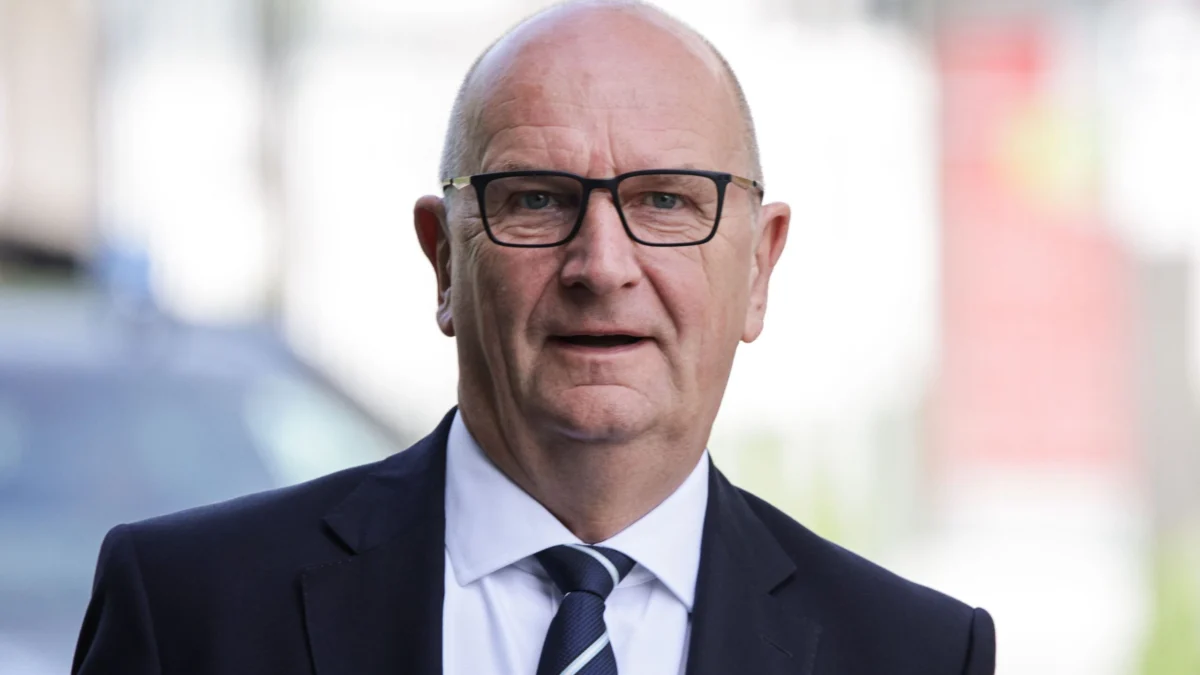
Brandenburg’s Minister President Dietmar Woidke (SPD) has publicly endorsed Bavarian State Parliament President Ilse Aigner (CSU) as a "perfect candidate" for the federal presidency, a sentiment echoed by several CDU leaders. This cross-party support for Aigner highlights a potential consensus candidate, even as Chancellor Friedrich Merz (CDU) advocates for a female president from the "political center" and reaffirms the CDU’s right to propose a candidate. Meanwhile, the SPD is intensifying its pressure on the Federal Minister of Economics, Katherina Reiche (CDU), over a proposed fuel price cap, deeming it insufficient and poorly timed. Other pressing issues include the near-completion of an anti-expropriation law, the AfD’s controversial stance on Ukrainian neutrality, and a cyberattack that crippled the mailboxes of Left Party parliamentarians.
Presidential Succession: The Race to Bellevue Palace
The question of who will succeed Federal President Frank-Walter Steinmeier in 2027 has ignited a fervent discussion across Germany’s political establishment. With Steinmeier ineligible for a third term, the search for a new head of state has prompted a flurry of endorsements and strategic positioning, signaling a complex interplay of party interests and the desire for national unity.

Aigner Gains Cross-Party Momentum
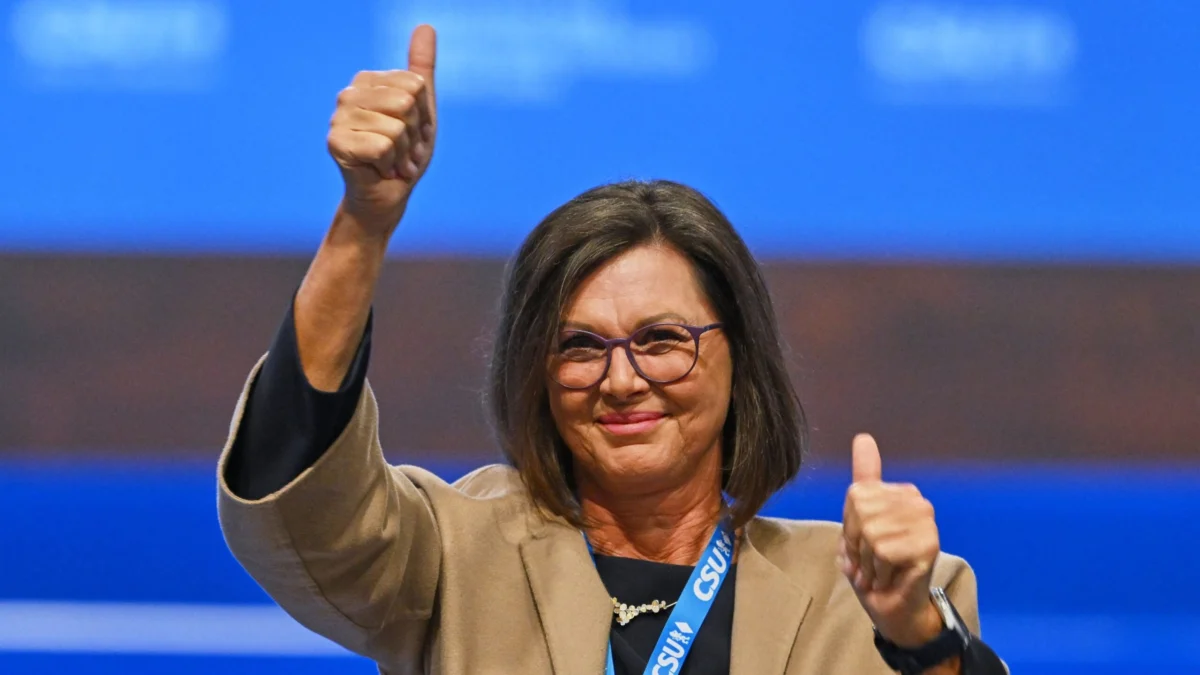
Bavarian State Parliament President Ilse Aigner (CSU) has emerged as a frontrunner in the early stages of the presidential succession debate, garnering significant cross-party support. Notably, Dietmar Woidke, the Social Democratic Minister President of Brandenburg, offered a ringing endorsement, telling "Politico" that Aigner "brings everything that makes a good Federal President." Woidke further elaborated, describing Aigner as "the perfect candidate" due to her intimate knowledge of German politics, her approachable demeanor, her ability to listen, and her capacity to command respect. Such praise from a leading SPD figure for a CSU politician underscores a potential for broad consensus around Aigner’s candidacy, transcending traditional party lines.
This sentiment was swiftly echoed within the Union bloc. Thorsten Frei, the parliamentary group leader for CDU/CSU, praised Aigner as an "outstanding personality" who has proven her capabilities over "many decades in Bavarian and German politics." His comments, made to "Bild," suggested that Aigner’s candidacy would likely receive widespread approval across parties. Further reinforcing this growing consensus, several East German CDU Minister Presidents have also openly backed Aigner. Sven Schulze, the acting Minister President of Saxony-Anhalt, told "Focus" that Aigner "would be a very good candidate." He was joined by Saxony’s Minister President Michael Kretschmer, who expressed his hope that Aigner would be the Union’s joint candidate, and Thuringia’s Minister President Mario Voigt, who affirmed to "Stern" that she "has what it takes to be Federal President." This broad support, particularly from figures in both major parties, points to Aigner’s unifying potential in a politically diverse nation.
Merz’s Strategic Maneuvers and the Call for a Female President
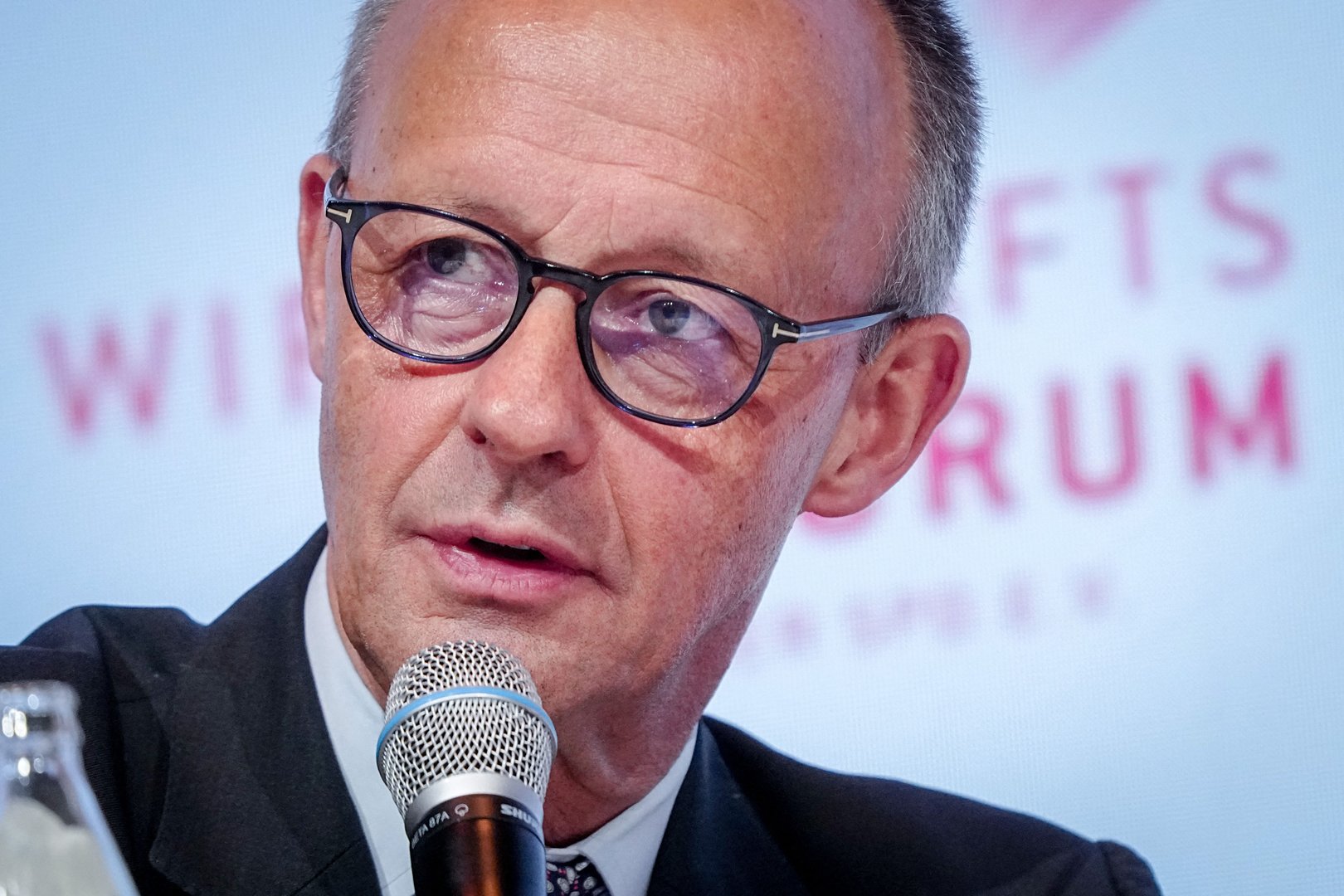
Amidst the growing endorsements for Ilse Aigner, Chancellor Friedrich Merz, who also serves as the leader of the CDU, has been navigating the delicate process of candidate selection. Merz has unequivocally stated his preference for a woman to succeed President Steinmeier. Speaking at a closed CDU district chairpersons’ conference in Berlin, Merz declared, "I will propose a common candidate to the party, a candidate from the political center. I am determined that it must be a woman." This statement reflects a significant commitment to breaking the historical precedent of male-only federal presidents, a sentiment also shared by former Chancellor Angela Merkel.

Initially, rumors circulated, fueled by media reports citing high-ranking CDU circles, that Merz favored Ines Claus, the leader of the Hessian CDU parliamentary group, for the highest office. However, Merz’s inner circle swiftly denied these reports, clarifying that the Chancellor had "neither made a decision nor submitted a proposal," and emphasizing his desire for an "orderly process" that includes consultations with state party leaders and the CSU. Claus, for her part, acknowledged the mention as a "great honor" and stressed the importance of following proper party procedures. Merz’s focus on a "candidate of the political center" suggests a strategic effort to find a figure who can unite a broad spectrum of political opinion, appealing beyond the traditional conservative base. The upcoming meetings of the CDU Presidium and Executive Board on November 9th are anticipated to be crucial in formalizing the party’s position.
Voices for Unity and Restraint
The presidential debate has also drawn calls for calm and unity. Former Chancellor Angela Merkel, a figure whose influence still resonates deeply within German politics, added her voice to the discussion, emphasizing the symbolic importance of a female head of state. In an interview with MagentaTV, Merkel pointed out, "There are 77 years of history of the Federal Republic of Germany, and there has never been a woman as Federal President," urging a re-evaluation of this historical imbalance.
Omid Nouripour, a leading Green Party politician and Vice President of the Bundestag, expressed "great irritation" over the early naming of candidates like Ines Claus. Speaking from China, where he was accompanying President Steinmeier on a state visit, Nouripour stressed the need for "a person who holds the country together, who is supported by everyone in these times." He highlighted Ilse Aigner as a potential unifying candidate, underscoring the Green Party’s openness to a cross-party choice. Johann Wadephul, a CDU foreign policy expert, echoed calls for restraint, cautioning against premature public statements that "serve neither the office nor the potential candidates." Such appeals reflect a broader understanding within the political establishment of the need for a dignified and unifying selection process for the nation’s highest symbolic office.
The Electoral Body: Federal Assembly
The Federal President is elected by the Bundesversammlung (Federal Assembly), a unique constitutional body comprising all members of the Bundestag and an equal number of delegates chosen by the 16 state parliaments. These delegates often include prominent public figures, cultural icons, and citizens, adding a non-partisan dimension to the election. In a notable move, the CDU in Schleswig-Holstein announced its intention to send former Chancellor Angela Merkel to the Federal Assembly for the upcoming election. This decision, following the CDU faction’s departure from the Schwerin state parliament, was justified by Schleswig-Holstein CDU faction leader Tobias Koch as a matter of "full conviction." Other delegates from Schleswig-Holstein will include Federal Minister of Education Karin Prien, Minister President Daniel Günther, and former handball star Patrick Wiencek, underscoring the diverse representation in this crucial electoral body. With President Steinmeier’s second term concluding, the assembly faces the historic task of selecting a successor who can embody national unity and represent Germany on the global stage.
Economic Policy Battles: Fuel Prices and Property Rights
Beyond the presidential succession, Germany’s political landscape is heavily influenced by intense debates surrounding economic policy, particularly in the areas of energy costs and property rights. These discussions highlight fundamental disagreements within the ruling coalition and between federal and state governments, reflecting the ongoing challenges of balancing social welfare with economic stability.
SPD Demands Robust Fuel Price Cap
The Social Democratic Party (SPD) is ratcheting up pressure on Federal Minister of Economics Katherina Reiche (CDU) to deliver a more effective and timely fuel price cap. SPD faction vice Armand Zorn sharply criticized the current proposals, demanding a concrete plan by the "next week" that would be in effect "when people drive into the Christmas holidays." Zorn rejected any legislation that would force citizens to "endure historic price increases for three weeks in January" before the cap takes effect, or one that would expire prematurely by the end of March. He argued that it is "time to limit the margins of the mineral oil industry," emphasizing that "the crisis is now and we must act now," especially in light of price surges exacerbated by the Iran conflict.
SPD General Secretary Tim Klüssendorf echoed these sentiments, telling Reuters that Reiche’s draft law was "much too late" and would remain "largely ineffective in practice." He warned that a cap triggered only after prices have "long exploded" would provide relief "much too late for the people." Furthermore, Klüssendorf expressed concerns about "misincentives," suggesting that mineral oil companies could easily circumvent the proposed mechanism. He insisted that the draft "must be revised and decisively tightened," declaring, "It cannot and will not remain as it is." SPD parliamentary group leader Matthias Miersch also called for "improvements" to ensure the cap achieves its intended effect. The SPD highlighted the expiring "Tankrabatt" (fuel discount) on December 31st, stressing that the coalition "must not stand empty-handed before the citizens on January 1st." Zorn further elaborated on the SPD’s vision for a fuel price cap: "A maximum retail or wholesale price for diesel and gasoline would be determined based on oil prices, processing, and distribution costs, following a transparent formula negotiated between mineral oil companies and the government." This ongoing dispute underscores the significant internal tensions within the coalition regarding economic relief measures. Economist Manuel Frondel’s calculation that such a price cap would have been ineffective for consumers this year adds another layer to the debate, questioning the practicality and impact of the proposed intervention.
Merz Pushes Anti-Expropriation Law
Chancellor Friedrich Merz has announced significant progress on the federal government’s anti-expropriation bill aimed at protecting housing companies. Speaking at an event hosted by the German Chamber of Industry and Commerce in Berlin, Merz stated, "The draft law is finished." The only remaining point of contention, he explained, is whether compensation in the event of expropriation should be at 100 percent or 80 percent of the market value, with Merz unequivocally advocating for full market value compensation.
Merz used the opportunity to reiterate his strong criticism of potential government coalitions in Berlin involving the Left Party, Greens, and SPD, which have discussed expropriation measures for large housing companies. He warned that "if expropriations are openly discussed in Germany, in the capital of our country, it has repercussions all the way to capital markets in London, Paris, and New York." Merz underscored that the protection of property is one of the fundamental principles of Germany’s economic order, asserting, "Only those who reliably protect property preserve trust, and without trust, there are no investments." He argued that "socialization creates neither jobs nor housing," but instead "massively harms Germany as a business location." This legislation is a direct response to a referendum in Berlin where a majority voted for the expropriation of large housing companies, a proposal fiercely opposed by the CDU on grounds of economic principle and investor confidence.

Union’s Constitutional Threat
The debates over economic policy and political alignment have escalated to the point where several Union (CDU/CSU) parliamentary group leaders in the federal states are threatening constitutional complaints. Leaders from Lower Saxony, Bavaria, and Thuringia issued a joint statement warning potential new state governments in Berlin and Saxony-Anhalt – where "radical or extremist" coalitions might emerge – against passing unconstitutional laws. "Our message is clear: no federal state is outside the constitution," their statement read. "If radical or extremist governments pass unconstitutional laws, we will exhaust all legal means to prevent that. Federal responsibility also means defending the Basic Law against its enemies." This stark warning is likely aimed at the potential left-leaning coalition in Berlin, particularly concerning the discussions around property expropriation, and reflects a broader concern about political shifts in states where the AfD or Linke hold significant influence. The threat of constitutional challenges underscores the deepening ideological divides and the Union’s commitment to upholding fundamental economic and legal principles.
Political Landscape and Emerging Challenges
Beyond the immediate policy debates, several other developments are shaping Germany’s political discourse, ranging from foreign policy positions to internal party dynamics and digital security. These issues highlight the diverse challenges facing the nation’s political institutions and its place in a rapidly changing world.
AfD’s Stance on Ukraine Neutrality
In a significant move that diverges sharply from Germany’s established foreign policy, leading AfD foreign policy makers have proposed that Ukraine should become a neutral state. In a working paper published by MPs Martin Frohnmaier, Gerold Otten, and Stefan Keuter, the party explicitly states, "Ukraine must neither become a member of NATO nor the EU." The paper, which also addresses relations with the USA and Russia, aims to demonstrate that AfD foreign policy is about "finding partners and not creating antagonisms at every opportunity," according to Frohnmaier. This stance directly contradicts the German government’s strong support for Ukraine’s sovereignty and its aspirations for closer ties with the EU and NATO. The AfD’s proposal reflects a broader Eurosceptic and pro-Russian leaning within the party, potentially challenging Germany’s united front with Western allies on the Ukraine conflict.

Cyberattack on Die Linke
The German Bundestag has recently been targeted by a "massive attack" on the mailboxes of Left Party (Die Linke) parliamentarians. According to sources within parliamentary circles, the MPs’ email accounts were "paralyzed" by a "spam-bombing attack" involving thousands of emails. The inundation of messages, originating from various senders with diverse subjects and languages, rendered the mailboxes unusable. Crucially, the attack exclusively affected Left Party MPs, though it caused delays in the overall Bundestag email traffic due to the servers’ capacity. The Federal Office for Information Security (BSI) has been brought in to investigate the incident. This sophisticated and targeted cyberattack raises serious concerns about the digital security of Germany’s parliamentary institutions and highlights the increasing vulnerability of political figures to online harassment and disruption, potentially driven by political motives or foreign actors.
Berlin’s Shifting Political Sands
Berlin’s local political scene is also experiencing significant shifts and tensions. Hendrikje Klein, a politician from Die Linke, has been elected as the new President of the Berlin House of Representatives. In the constitutive session of the state parliament, Klein secured 98 out of 149 votes, becoming the first politician from her party and only the third woman to hold this important office, following Hanna-Renate Laurien (CDU, 1991-1995) and Cornelia Seibeld (CDU, 2023-2026). Klein, a diplomat-administrator with extensive parliamentary experience since 2016, most recently served as the parliamentary managing director for Die Linke faction. Her election marks a notable moment for Die Linke in the capital.
However, the Left Party in Berlin is also grappling with internal strife and security concerns. Elif Eralp, a prominent Left Party politician in Berlin, is set to receive police protection at an upcoming party congress. Security sources confirmed to the German Press Agency that a review of her security status revealed a "concrete threat situation," underscoring the increasing dangers faced by politicians, particularly in polarized urban environments. Simultaneously, the Berlin Left Party has postponed a decision regarding the controversial MP Vanessa Emde, who has drawn criticism for her stance on Israel. Following a meeting of the faction’s executive board and the entire faction, a spokesperson merely stated that "no common working basis" could be found with Emde, leaving her future within the party uncertain. This internal discord highlights the deep ideological divisions within Die Linke, particularly on sensitive foreign policy issues, and could have lasting implications for the party’s cohesion and public image.

Audi’s US Plant and Environmental Criticism
In a move that has drawn sharp criticism from within the German government, Federal Environment Minister Carsten Schneider (SPD) lambasted Audi’s decision to build a new plant in the USA. Schneider expressed his dismay at Audi CEO Gernot Döllner’s appearance alongside Donald Trump at a campaign rally, where the plans for a new US plant in Georgia, creating around 4,500 jobs, were announced. The plant is slated to produce SUVs, including the large Q9 model tailored for the US market.
Schneider, speaking to the "Kölner Stadt-Anzeiger," did not mince words, stating, "While large parts of the world are moving towards technically superior electromobility, Audi is betting on fossil fuels and thus on a dead horse." He not only questioned the "future viability of this decision" but also criticized the "more than unappetizing circumstances of this announcement." This strong rebuke from a federal minister highlights the tension between industrial expansion, environmental policy, and political optics, particularly given Germany’s commitment to climate goals and the current political climate in the US.
Broader Implications and Outlook
The flurry of political activities and statements points to a dynamic and often contentious period in German politics. The convergence of debates over presidential succession, crucial economic policies, and emerging societal challenges paints a picture of a nation grappling with its identity and direction.

The Future of German Political Leadership
The ongoing discussions surrounding the next Federal President underscore a critical juncture for German political leadership. The widespread support for Ilse Aigner, transcending traditional party divides, suggests a yearning for a unifying figure capable of bridging an increasingly polarized society. However, Friedrich Merz’s strategic maneuvering and his insistence on a female candidate from the "political center" highlight the internal party dynamics and the symbolic importance of breaking historical gender barriers in the highest office. The choice of the next president will not only shape Germany’s representation on the international stage but also set a tone for national cohesion and democratic values in the years to come. The process itself serves as a crucial test of cross-party cooperation and political maturity.
Economic Direction Under Scrutiny
The battles over the fuel price cap and the anti-expropriation law reveal deep ideological fissures regarding the state’s role in the economy. The SPD’s aggressive push for a robust and immediate fuel price cap reflects a focus on consumer relief and curbing corporate profits, particularly in times of crisis. Conversely, Merz’s staunch defense of property rights and the swift progress on the anti-expropriation bill signal a commitment to market-oriented principles and maintaining investor confidence. These debates are not merely about specific policies but about the fundamental economic direction of the country, impacting everything from energy prices to housing markets and Germany’s attractiveness as an investment location. The outcomes will have significant implications for citizens’ daily lives and the nation’s long-term economic stability.
Germany’s Role in a Complex World
The AfD’s proposals for Ukrainian neutrality and its explicit rejection of NATO and EU membership for Kyiv present a stark challenge to Germany’s established foreign policy and its commitment to international alliances. In an era of geopolitical instability, such positions could complicate Germany’s diplomatic efforts and its standing among Western partners. Simultaneously, the cyberattack on the Left Party serves as a grim reminder of the persistent and evolving threats to democratic institutions in the digital age. These incidents underscore the need for robust cybersecurity measures and a coherent strategy to counter foreign interference and political destabilization. Germany’s ability to navigate these complex foreign and domestic challenges will be crucial for maintaining its influence and safeguarding its democratic integrity.

Upcoming Decisions and Political Tensions
Looking ahead, the German political agenda remains packed with critical decisions and potential flashpoints. Chancellor Merz has highlighted the upcoming weeks as "pivotal," with the 2027 federal budget, controversial proposals like a sugar tax, and a comprehensive pension reform on the table. Debates surrounding the abolition of pension deductions after 45 years of contributions are particularly sensitive, with both the SPD and CDU expressing reservations. Merz has indicated room for compromise, suggesting that "details, transitional periods, and hardship regulations" within the pension commission’s framework could be negotiated. These ongoing discussions, coupled with the Union’s threats of constitutional complaints against certain state governments, indicate that the political landscape will remain highly charged, demanding careful negotiation and a commitment to democratic principles to ensure stability and progress for Germany.