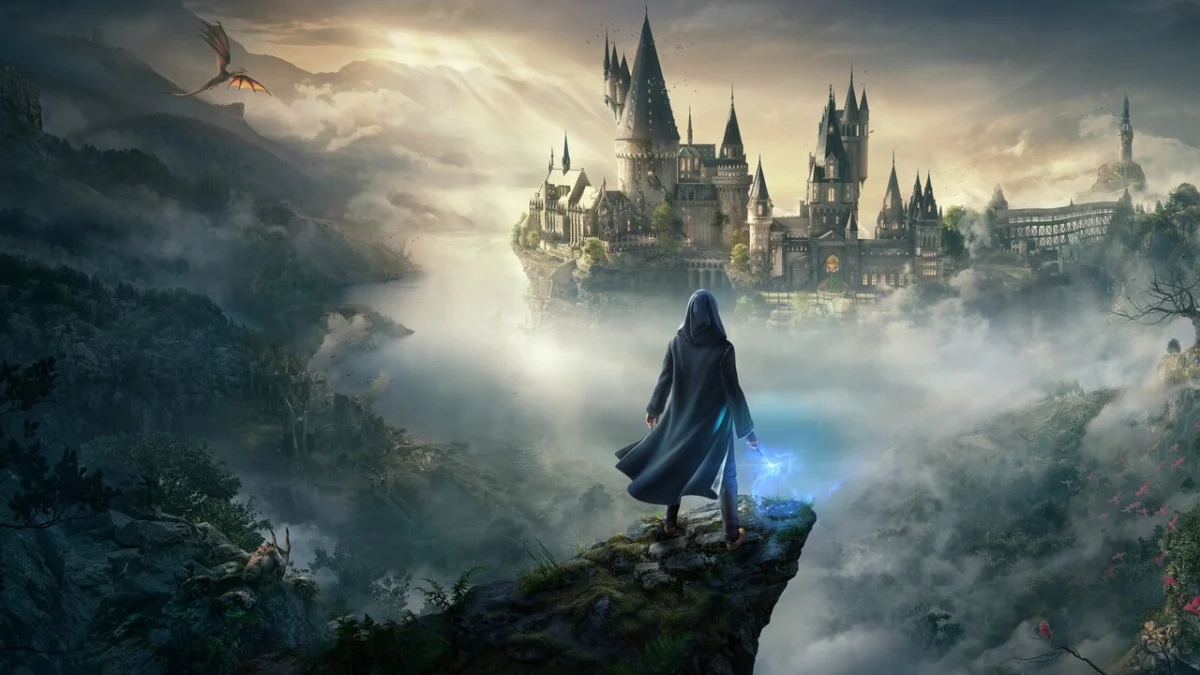
In a significant leap forward for real-time graphics technology, Nvidia has officially unveiled DLSS 5, featuring the revolutionary "3D-Guided Neural Rendering" engine. The debut of this technology arrives via a major update for the critically acclaimed open-world RPG Hogwarts Legacy, scheduled for release on November 5th. This launch marks a departure from earlier, controversial unofficial mods, promising a more refined, authentic visual experience that prioritizes environmental fidelity without compromising the artistic integrity of character models.
The Evolution of Neural Rendering: From Leaks to Official Implementation
The journey to DLSS 5 has been marked by significant community speculation and experimentation. Prior to this official announcement, various modders had attempted to implement early versions of Nvidia’s neural rendering techniques into a wide array of titles. While these early experiments demonstrated the immense potential of AI-driven graphics, they were frequently criticized for their erratic results.
In many of these leaked, unofficial builds, the AI’s influence was far too aggressive. Players reported that while environments looked sharper, the characters suffered from "uncanny valley" effects: faces appeared unnaturally smoothed, features were distorted, and in some instances, characters looked as if they had aged decades overnight. The fundamental artistic style of the games was often lost in translation, leading to a sterile, plastic-like aesthetic that alienated many enthusiasts.
Nvidia’s official implementation of DLSS 5 directly addresses these criticisms. Through a more nuanced integration, the technology now differentiates between the complex geometries of the world and the delicate features of human models. By utilizing a "3D-Guided" approach, the neural network understands the spatial context of a scene, ensuring that light, shadow, and texture enhancements are applied to the world-building elements while leaving the core identity and subtle details of character models intact.
Chronology of the Release and Technical Rollout
The rollout of DLSS 5 is part of a broader, aggressive strategy by Nvidia to cement its dominance in the AI-accelerated gaming market. The timeline for this transition is as follows:
- Early Q4 2024: Rumors and leaks circulate regarding "Neural Rendering" mods for various titles, showcasing high performance but questionable visual fidelity.
- November 5, 2024: The official launch of the Hogwarts Legacy update, bringing full-fledged DLSS 5 support.
- Mid-November 2024: War Thunder is scheduled to receive its DLSS 5 implementation.
- November 23, 2024: The highly anticipated title Where Winds Meet will integrate the technology.
Nvidia has clarified that DLSS 5 is not a "plug-and-play" feature. Unlike earlier iterations of DLSS, which were largely handled at the driver or engine level with minimal developer friction, DLSS 5 requires a collaborative effort. Developers must work closely with Nvidia to tune the neural model, ensuring that the AI’s influence is weighted correctly for each specific game. This ensures that the environmental enhancements—such as improved global illumination, hyper-realistic reflections, and high-fidelity textures—are achieved without the "over-processing" seen in the early mods.
Supporting Data and Performance Metrics: The Power of the RTX 50-Series
The performance figures associated with DLSS 5 are, by any measure, staggering. Using the flagship GeForce RTX 5090, Nvidia has demonstrated Hogwarts Legacy running at 4K resolution at an eye-watering 300 FPS.
However, reaching these numbers requires a comprehensive stack of Nvidia’s latest technologies working in perfect harmony. To achieve this performance, users must enable:
- DLSS 5 (Neural Rendering): The foundational AI enhancement layer.
- Ray Reconstruction: Essential for denoising and cleaning up ray-traced lighting data.
- Raytracing: For physically accurate reflections and shadows.
- NVIDIA Reflex: To minimize system latency and ensure responsiveness.
- 6x Multi-Frame Generation: Utilizing AI to generate six frames for every one rendered frame, creating incredibly fluid motion.
While the raw performance gains are impressive, they highlight the hardware-gated nature of this technology. DLSS 5 is exclusive to the GeForce RTX 50-series of desktop and notebook GPUs. Older RTX cards, including the 40-series and below, are currently unsupported. This creates a clear divide in the market, positioning DLSS 5 as a premium feature for the latest generation of enthusiasts and professional users.

Official Responses and Technical Philosophy
Nvidia’s messaging regarding the "discretion" of DLSS 5 is a direct response to the community feedback regarding the aforementioned mods. In a technical briefing, Nvidia engineers explained that the AI model can now be "steered." By providing the model with 3D guidance data—essentially telling the AI where the geometry ends and the character begins—the developers can force the neural engine to focus its compute power on the world’s textures and light maps.
"The goal," stated a company representative, "is to achieve a level of realism that feels organic rather than synthetic." By keeping the character models largely untouched by the most aggressive AI filters, the game preserves the animators’ original vision while allowing the world around them to be rendered with modern, AI-enhanced clarity.
The company also emphasized that the real-time processing required for DLSS 5 is significantly more complex than previous versions. Because the AI is making decisions on a frame-by-frame basis, the partnership with game studios is crucial. Each implementation must be validated to ensure that the "neural smoothing" does not introduce ghosting or artifacts during high-speed action sequences.
Implications for the Future of Gaming
The arrival of DLSS 5 signals a shift in the gaming industry from "Rendering" to "Generating." As developers increasingly rely on AI to handle the heavy lifting of lighting and texture detail, the traditional bottleneck of raw GPU horsepower is being bypassed by intelligent, predictive modeling.
Hardware Exclusivity and Accessibility
The decision to restrict DLSS 5 to the RTX 50-series and select RTX-Spark PCs is likely to cause some friction within the PC gaming community. While Nvidia is offering an alternative via its cloud-based GeForce NOW Ultimate service, the barrier to entry remains high. For those unwilling or unable to upgrade their hardware, the latest AI-driven visual milestones remain out of reach.
The Developer Workflow
The "steered" nature of DLSS 5 implies a significant increase in workload for game developers. In the past, AI upscaling was a set-and-forget feature. Now, if developers wish to utilize the full potential of 3D-Guided Neural Rendering, they must build their game engines with this integration in mind from the ground up. This may lead to a bifurcation in the industry: games designed with "Nvidia-first" neural rendering, and titles that rely on more traditional or platform-agnostic upscaling techniques.
Visual Authenticity
Perhaps the most important takeaway from this update is the industry’s maturation regarding AI usage. The backlash against the "over-processed" character faces of early mods served as a wake-up call. The industry is moving toward a philosophy where AI is a tool for enhancement, not a replacement for artistic intent. By prioritizing the preservation of character identity while pushing the boundaries of environmental graphics, Nvidia is attempting to set a new standard for "high-fidelity" gaming.
Conclusion
With the release of the Hogwarts Legacy update on November 5th, Nvidia is setting the stage for a new visual standard in PC gaming. While the performance metrics on the RTX 5090 are the headline-grabbers, the real story is the refined, "discreet" application of neural rendering. By balancing raw AI power with the necessity of maintaining artistic integrity, Nvidia is proving that the future of graphics isn’t just about higher frame rates—it’s about how intelligently we can bridge the gap between digital simulation and visual reality. As the technology moves toward titles like War Thunder and Where Winds Meet, the gaming landscape will continue to evolve, provided that players are willing to invest in the hardware required to keep pace with this AI-driven revolution.