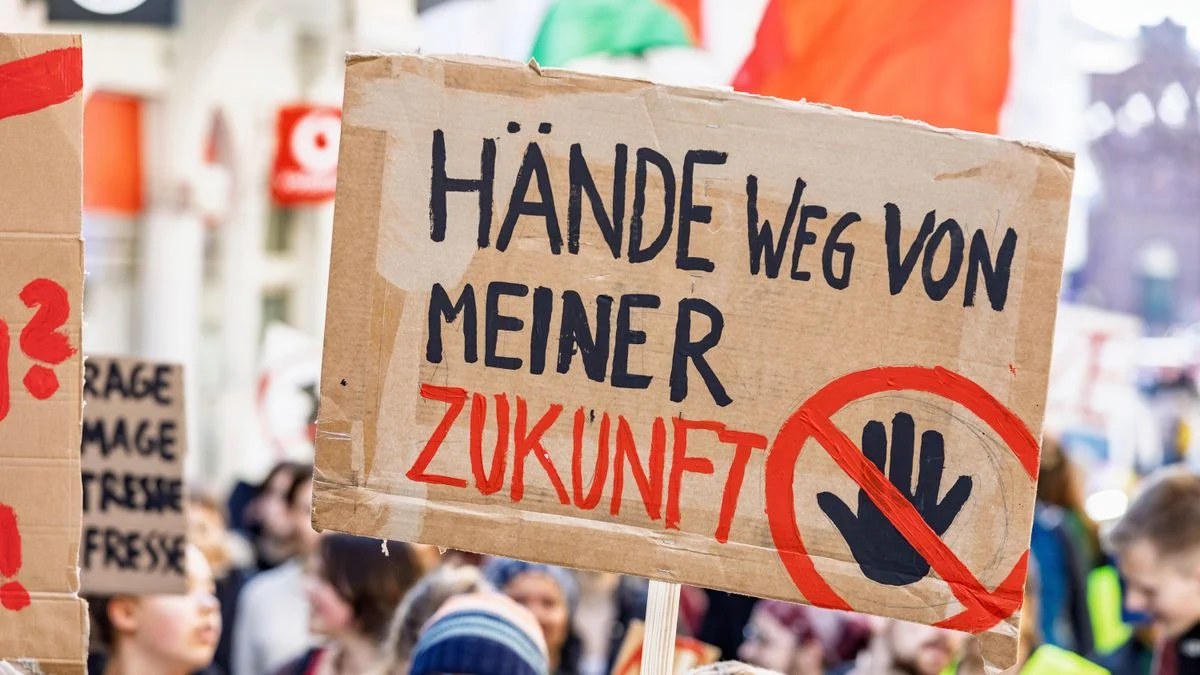
The promise of a peaceful movement for generational equity was shattered on Saturday as widespread demonstrations organized by the "Gen Z regelt" (Gen Z is in charge) initiative descended into anarchy in several German cities. While the daytime protests focused on legitimate grievances regarding education and housing, the post-protest hours saw a wave of looting, arson, and violent clashes with law enforcement, prompting a fierce political debate over the root causes and the appropriate state response.
The Genesis of the Protest: A Call for Change
The weekend began with a display of civic engagement that was initially hailed as a constructive dialogue between the youth and the political establishment. Across Germany, thousands of young people took to the streets to demand systemic reforms. The "Gen Z regelt" initiative, which had gained significant momentum on social media in the months leading up to November, centered its message on three pillars: the democratization of the educational system, the urgent need for affordable housing, and a redistribution of wealth to combat the widening gap between the affluent and the struggling working class.
In cities like Berlin, Hamburg, Cologne, and Frankfurt, the atmosphere was festive and articulate. Demonstrators carried placards reading "My Future, Not Your Profit" and "Education is a Right, Not a Privilege." For several hours, the marches remained orderly. However, as twilight descended, the demographic composition of the streets began to shift. Observers and police officers on the ground noted the arrival of groups that appeared disconnected from the original organizers, signaling a transition from political expression to tactical confrontation.
Chronology of Escalation
The escalation did not happen simultaneously, but followed a pattern that suggests a level of premeditation in specific urban centers.
Frankfurt am Main: The situation in Frankfurt was arguably the most severe. By late afternoon, the police reported the presence of approximately 1,500 individuals who appeared to be specifically mobilized for confrontation rather than participation in the demonstration. As the official protest concluded, these groups, many of whom arrived from outside the city, began targeting local businesses. Police reported incidents of looting at retail outlets and banks, while barricades were erected in the city center.
Cologne: In Cologne, the situation unfolded around the historic cathedral district. According to local law enforcement, the violence was sudden and targeted. The organizers of the Gen Z protest officially ended their rally early due to the presence of "troublemakers" infiltrating the crowd. Following this, the environment turned hostile. Reports indicate that small, mobile cells of individuals—many masked—engaged in hit-and-run tactics against police lines.
Hamburg and Beyond: Similar patterns were observed in Hamburg, where small-scale arson attacks on trash containers and street furniture were used to disrupt traffic and distract police forces. In all three cities, the escalation occurred in the "power vacuum" immediately following the departure of the peaceful student protesters.
Official Responses: A Divided Political Landscape
The events of Saturday have triggered a polarized response from the German political class, reflecting deep-seated disagreements regarding security policy and social integration.
The Federal Interior Ministry’s Stance
Federal Interior Minister Alexander Dobrindt (CSU) adopted a hardline tone, explicitly rejecting any attempt to conflate the peaceful protesters with the perpetrators of the violence.
"We must distinguish clearly," Dobrindt stated in an interview. "The students who were there for a better future are one thing. The left-wing extremist groups and migrant agitators who used the cover of night to plunder our cities are criminals. They will be identified, and they will face the full force of the law." Dobrindt has signaled that he will push for harsher sentencing guidelines for those involved in rioting, framing the incident as a "total breakdown of civil order" that requires a robust state response.
The Defense Minister’s Rebuttal
The response from Defense Minister Boris Pistorius (SPD) highlighted the deepening rift within the governing coalition. Pistorius openly questioned the framing employed by his cabinet colleague.
"What exactly does ‘migrant groups’ mean in this context?" Pistorius asked during a ZDF broadcast. "If we are talking about third-generation citizens who are legally German, where does the rhetoric stop? We have a problem with extremists, regardless of their background. If we fail to differentiate, we risk alienating exactly those young people who are trying to make their voices heard through democratic means."
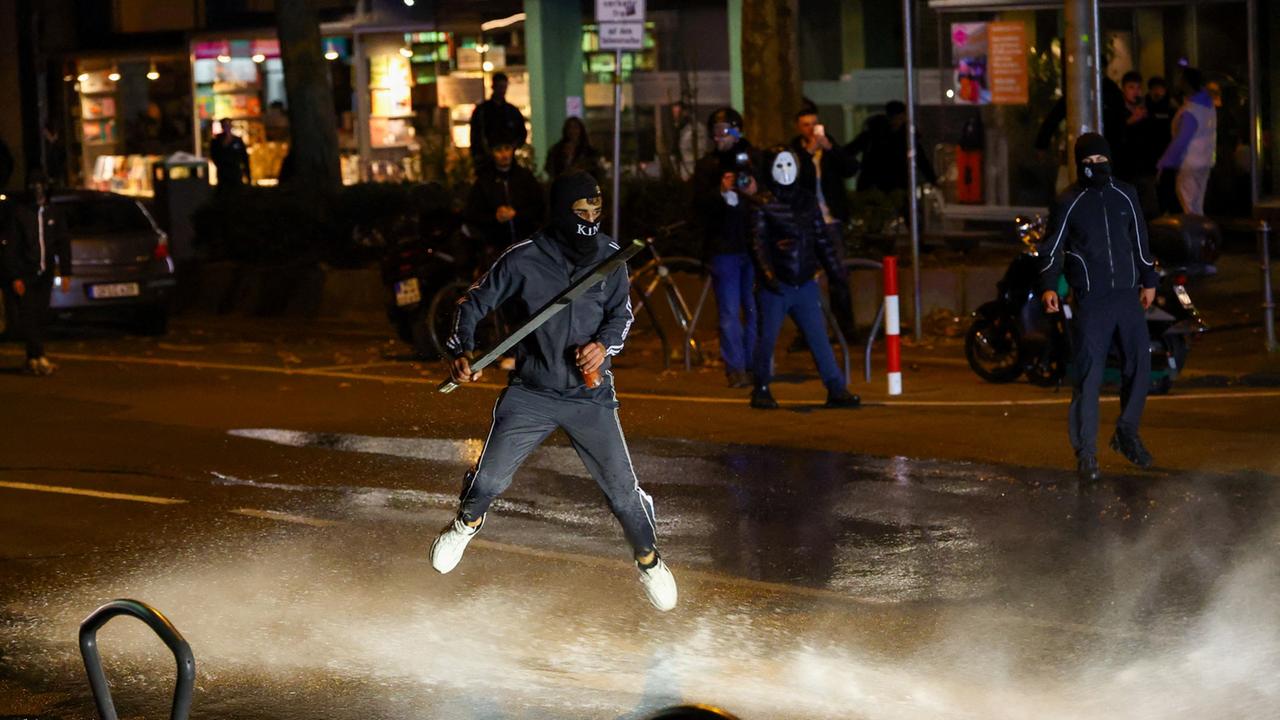
Pistorius emphasized that while he agrees that those who assault police officers must be held accountable, the focus must remain on the act of violence rather than the identity of the perpetrators, warning that inflammatory language could serve as a recruitment tool for further radicalization.
Sociological Context: The Roots of Frustration
Nina Kolleck, a prominent education and protest researcher, argues that focusing solely on the violence risks ignoring the systemic pressure cooker that preceded it. In her view, the riots are a symptom of a society that has lost its promise of social mobility.
"When you have an entire generation that feels the educational system is rigged in favor of the wealthy, and that the housing market is essentially a closed shop for their parents’ generation, you create a sense of hopelessness," Kolleck explained. "The riots are not a political program; they are an eruption of frustration. While the violence is inexcusable, it is happening within a context where the gap between the rich and the poor has widened to a degree we haven’t seen in decades."
Kolleck notes that when young people perceive that the democratic path to change is blocked, individual extremist groups find it much easier to recruit "foot soldiers" for their own agendas of chaos and systemic disruption.
Police Reports and Statistical Data
The administrative data released by the state of Hesse and the North Rhine-Westphalia authorities provides a sobering look at the demographics of the unrest. In Frankfurt alone, police detained 54 individuals. The age range was striking: 13 to 29 years old.
The police assessment in Frankfurt, led by Police President Stefan Müller, noted that a significant portion of the rioters were already known to authorities for previous minor offenses. However, the report explicitly stated that there was no "coherent political motive" found among the arrested individuals. This contradicts some political narratives that attempted to paint the riots as a singular, organized political movement. Instead, the evidence points to a "opportunistic" convergence of different groups—ranging from disaffected youth to organized agitators—who utilized the protest environment as a cover for criminal activity.
Implications for Future Demonstrations
The immediate consequence of Saturday’s events is a massive tightening of security protocols. Hessen’s Interior Minister, Roman Poseck (CDU), has already suggested that future demonstrations, including those planned for late November, might be prohibited entirely if the organizers cannot guarantee the exclusion of known violent actors.
"The events of Saturday have changed the landscape," Poseck said. "We cannot allow our city centers to become testing grounds for urban warfare. If the safety of our citizens and the integrity of our businesses cannot be guaranteed, the state has a duty to stop these gatherings before they start."
This sentiment is being met with alarm by civil rights advocates and the original Gen Z organizers. A spokesperson for the initiative expressed deep regret over the riots, stating: "We are the ones who suffer most. The media and the government are now focusing on the violence, and our demands for affordable housing and fair education are being drowned out by the noise of breaking glass. The extremists have effectively hijacked our cause to further their own agenda of destruction."
Conclusion: A Nation at a Crossroads
The events of the weekend represent a critical juncture for Germany. The country is grappling with the dual challenge of addressing legitimate grievances regarding social inequality and maintaining the rule of law in the face of increasingly sophisticated and violent tactics by extremist groups.
As the political debate continues, the fundamental question remains: Can the democratic system in Germany provide a pathway for the legitimate aspirations of its youth, or will the "Gen Z" movement be permanently overshadowed by the actions of those who view the state not as a partner, but as an enemy to be dismantled? The answer will likely dictate the tenor of German civil discourse for the remainder of the decade.