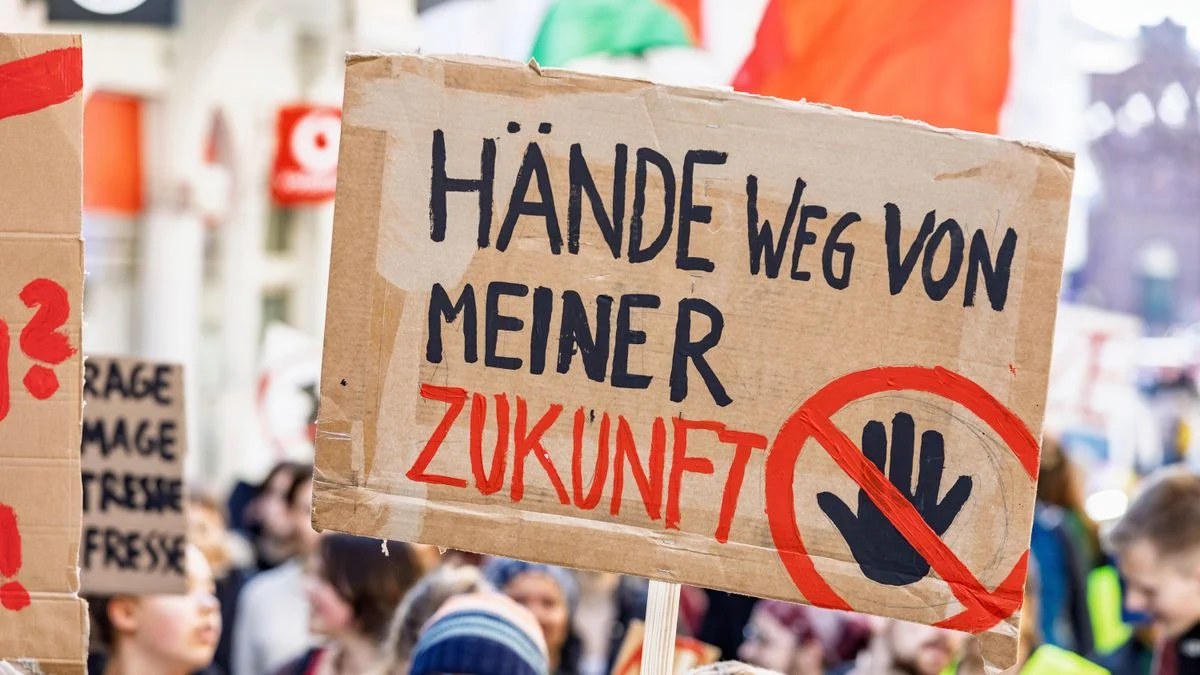
The aftermath of the "Gen Z" demonstrations has sparked a fierce national debate in Germany. As cities grapple with the aftermath of property damage and public disorder, the question arises: Where is the line between the constitutional right to dissent and the state’s obligation to maintain public order?
1. The Core Conflict: Order vs. Expression
Following a weekend of volatility that saw cobblestones flying, storefronts shattered, and reports of looting in downtown Frankfurt, the political climate in Germany has shifted toward a state of heightened tension. The demonstrations, organized under the loose banner of "Gen Z" activism, were intended to highlight intergenerational grievances. Instead, they culminated in a series of violent clashes that have left local authorities scrambling to formulate a response.
Hessian Interior Minister Roman Poseck (CDU) took to the tagesthemen airwaves to signal a potential shift in policy, suggesting that upcoming scheduled demonstrations—specifically those slated for November 20—might be subject to outright bans. The suggestion has ignited a firestorm of constitutional debate, pitting the sanctity of the German Basic Law against the urgent necessity of public safety.
2. Chronology of the Unrest
The unrest did not emerge in a vacuum. The events in Frankfurt were the culmination of a week of mounting social media mobilization.
- Friday, November 1: Initial gatherings began as peaceful assemblies in the city center. By evening, the demographic composition of the crowds began to shift as fringe groups infiltrated the perimeter of the protests.
- Saturday, November 2: Tensions escalated significantly. Police reports indicate that small, mobile groups broke away from the main march, targeting commercial districts. The destruction of storefronts and reports of looting forced law enforcement to deploy water cannons and specialized riot units.
- Sunday, November 3: By early morning, the city was left to assess the financial and social damage. The interior ministry and local police command conducted a comprehensive review of the security failures that allowed the protests to devolve into chaos.
3. The Constitutional Framework: The Right to Demonstrate
To understand the gravity of Minister Poseck’s proposal, one must first look at the bedrock of German democracy: Article 8 of the Basic Law (Grundgesetz).
The right to assemble is not merely a privilege; it is a fundamental pillar of the German state. It guarantees the right to protest without prior registration or government permission. As the Federal Ministry of the Interior emphasizes, this right is the primary vehicle through which citizens engage in the political process.
However, this right is not absolute. While the state cannot prohibit a protest simply because it dislikes the message, it can impose restrictions on "assemblies in the open air." These restrictions are governed by both federal and state-level assembly laws (Versammlungsgesetz).
The Myth of "Permission"
A common misconception is that a demonstration requires a permit. In reality, the requirement to register an assembly 48 hours in advance—as mandated by the Federal Assembly Act—is an organizational tool, not a permission-seeking process. The purpose of registration is to allow the police to ensure the safety of both the participants and the general public, and to facilitate the flow of traffic.
Failure to register does not automatically make a protest illegal. Spontaneous assemblies, which arise in response to immediate events, are protected by the same constitutional safeguards.
4. Who Holds the Power to Ban?
The authority to regulate or ban a demonstration lies with local administrative authorities, typically the office of the Mayor or the municipal administration. When a registration is filed, the local authority must conduct a proportionality test:
- Risk Assessment: Is there an immediate, concrete threat to public safety?
- The "Ultima Ratio" Principle: Can the risk be mitigated through smaller measures (e.g., changing the route, limiting the number of participants, or requiring additional security personnel)?
- The Ban: A complete prohibition is considered the ultima ratio—the final, most extreme option.
In practice, the judiciary acts as a final check. If an authority imposes a ban, organizers can and frequently do challenge the decision in an administrative court. These courts operate on expedited timelines, often issuing rulings within hours to ensure that if a protest is deemed lawful, it can proceed without undue delay.
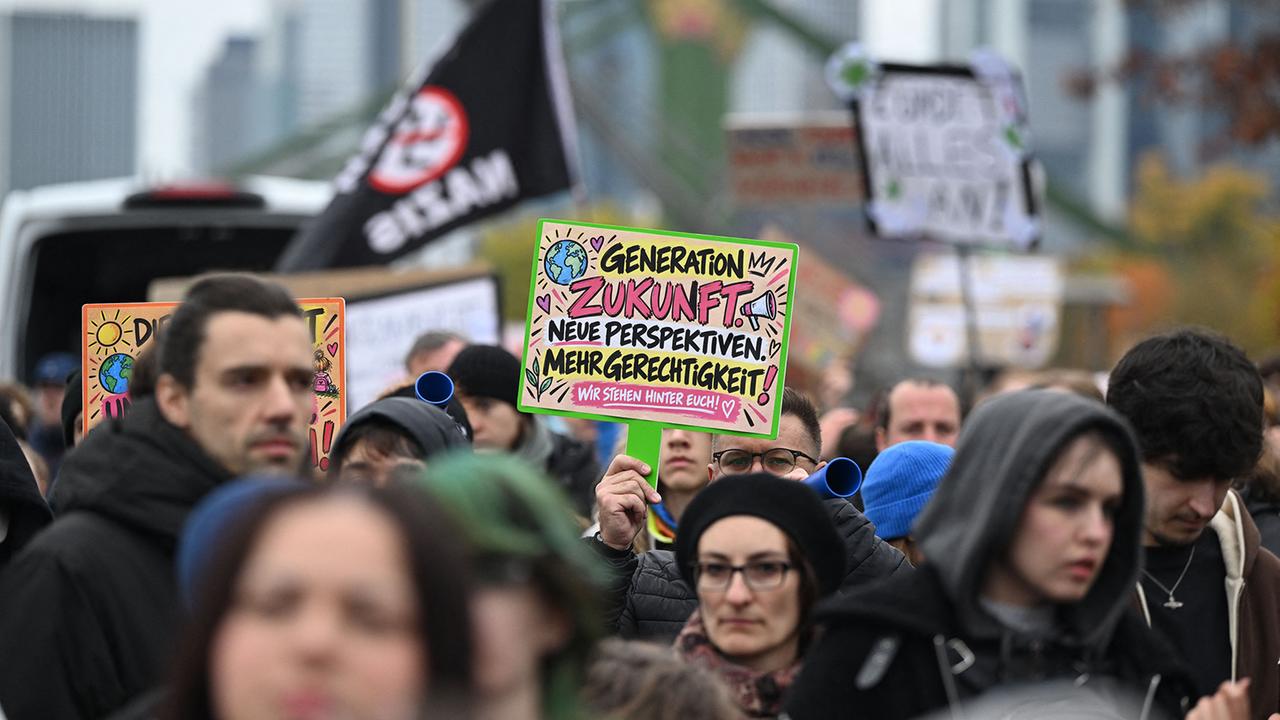
5. Official Responses and the "Prognosis" Dilemma
The central legal hurdle for the Hessian government is the "prognosis" requirement. To justify a ban, the authorities must provide concrete evidence that the specific future assembly will lead to violence. Relying solely on the fact that violence occurred at a previous event is often insufficient in German courts.
"The state cannot engage in collective punishment," says constitutional scholar Dr. Elena Schmidt. "If they want to ban the November 20 protest, they must demonstrate that the specific group of organizers intends to incite violence, or that the group is incapable of maintaining order. A general fear based on last weekend’s riots will likely not stand up to judicial scrutiny."
Minister Poseck’s rhetoric reflects a growing impatience among conservative lawmakers, who argue that the state’s obligation to protect private property and the right of non-participants to move freely in the city is being undermined by a permissive interpretation of Article 8.
6. Implications for Future Protests
The events in Frankfurt serve as a litmus test for the resilience of German civil society. If the government succeeds in banning future "Gen Z" protests, it could set a dangerous precedent, potentially lowering the threshold for the state to curtail dissent in the future.
The "Mildest Means" Requirement
Authorities are now considering "mild" restrictions to avoid a total ban. This could include:
- Stricter Route Controls: Confining the protest to areas with fewer storefronts.
- Mandatory Marshals: Requiring organizers to provide a specific number of peacekeepers to assist police.
- Personal Accountability: Warning organizers that they will be held financially liable for any property damage caused by their participants.
7. The Social and Economic Fallout
Beyond the legal arguments, the economic impact on Frankfurt is significant. Local business associations have expressed outrage, noting that many small retailers are still recovering from the economic strains of the past few years. The fear is that if the city becomes synonymous with violent, unpredictable protests, it will lose its status as a stable commercial hub.
Conversely, supporters of the movement argue that the violence was the work of a small minority and that the "Gen Z" message—focused on climate policy, housing affordability, and economic equity—should not be silenced due to the actions of agitators.
8. Conclusion: A Fragile Balance
As the November 20 date approaches, the atmosphere in Frankfurt remains tense. The state faces a difficult path: if it fails to act, it risks further property damage and public outcry. If it overreaches, it risks a constitutional crisis and a surge in public resentment.
The upcoming days will be defined by negotiations between city officials and protest organizers. If the two sides cannot reach an agreement on the parameters of the assembly, the matter will undoubtedly move to the courts, where the German legal system will once again be tasked with balancing the foundational right to protest with the fundamental duty to maintain order in a free society.
For now, the events of the past weekend serve as a stark reminder: freedom of assembly is not just a right, but a social responsibility that requires constant navigation by both the state and the citizenry.