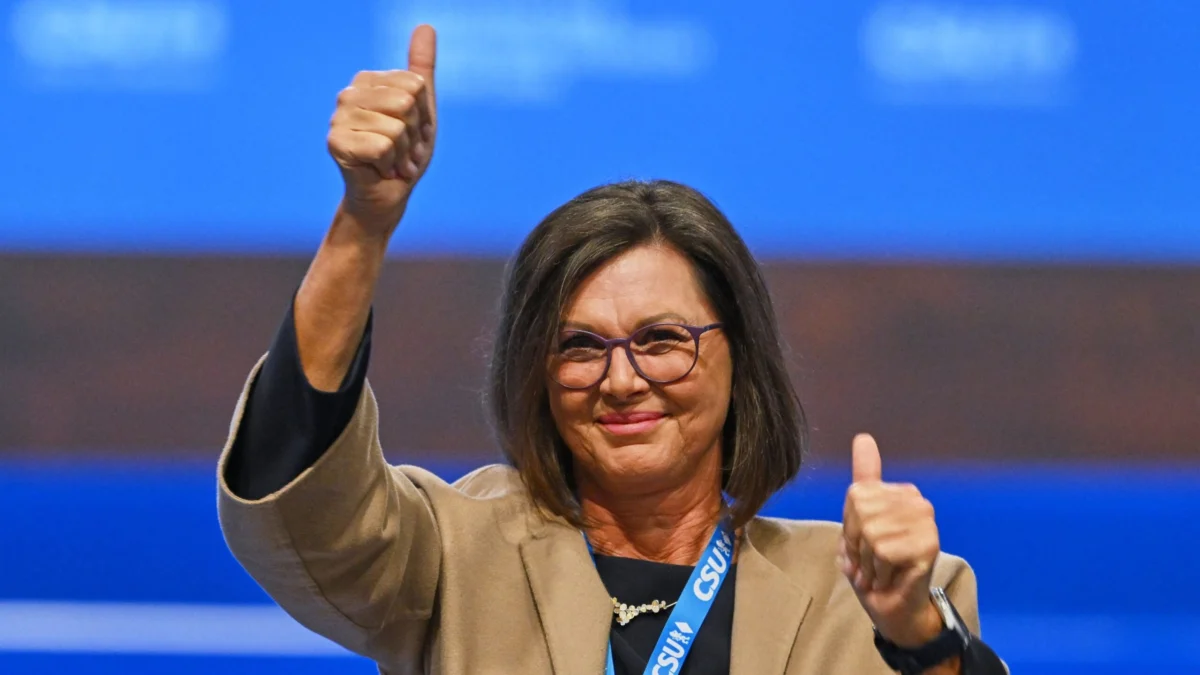
Berlin, Germany – The political landscape in Germany is increasingly buzzing with speculation and endorsements surrounding the potential candidacy of Ilse Aigner, the current President of the Bavarian State Parliament, for the esteemed office of Federal President. Aigner, a seasoned politician from the Christian Social Union (CSU), is steadily accumulating support from across the political spectrum, signaling a growing consensus for a unifying figure to lead the nation.
The calls for Aigner’s nomination are intensifying, with prominent figures from both the Christian Democratic Union (CDU) and even the Social Democratic Party (SPD) openly advocating for her. This cross-party backing underscores a perceived need for a head of state capable of bridging divides in an increasingly polarized political climate.
A Broadening Chorus of Support for Ilse Aigner
The momentum behind Ilse Aigner’s potential bid for the German presidency is palpable, characterized by a series of influential endorsements from various political camps. What began as a suggestion within her own party, the CSU, has quickly blossomed into a wider, bipartisan discussion, highlighting Aigner’s unique appeal as a potential unifying figure for the nation.
Cross-Party Endorsements Highlight Unifying Potential
One of the most significant indicators of Aigner’s broad appeal comes from Brandenburg’s Minister-President Dietmar Woidke (SPD). In a notable departure from traditional party lines, Woidke publicly declared Aigner "the perfect candidate" in an interview with Politico. His endorsement carries particular weight, as it signifies a willingness within the Social Democratic ranks to consider a candidate from the conservative Union bloc for the highest office. Woidke elaborated on his support, stating, "Ilse Aigner brings everything that makes a good Federal President. She knows German politics inside out. She is approachable. She likes people, can listen, and people listen to her." Such praise from a leading SPD politician suggests that Aigner possesses qualities that resonate beyond ideological boundaries, a crucial asset for a head of state whose role is primarily to represent and unite all Germans.
This sentiment of cross-party acceptance is further echoed by Thorsten Frei, the parliamentary group leader for the CDU/CSU in the Bundestag. While refraining from explicitly naming Aigner as the Union’s final choice, Frei confidently predicted that the eventual candidate put forward by the CDU and CSU would garner "broad approval across party lines" and "find acceptance across Germany, beyond the coalition with the SPD." He lauded Aigner’s capabilities, remarking, "That Ilse Aigner is an outstanding personality, she has proven over many decades in Bavarian and German politics." Frei’s comments, though guarded, strongly hint at Aigner being a frontrunner due to her demonstrable ability to command respect and trust from diverse political actors.

CDU Stalwarts Rally Behind Bavarian President
Within the Union itself, support for Aigner is solidifying. Manuel Hagel, the influential state leader of the CDU in Baden-Württemberg, explicitly threw his "full support" behind Aigner as a "common candidate for the office of Federal President." Speaking to the Deutsche Presse-Agentur in Stuttgart, Hagel praised her unique combination of traits: "Her reputation extends far beyond her own ranks. She combines clarity with warmth. Always at eye level, always empathetic." This characterization paints a picture of a leader who is both decisive and compassionate, qualities deemed essential for navigating the complexities of modern German society.
Hagel further underscored the timeliness of Aigner’s potential presidency, noting the increasingly "rougher political climate" in Germany. He articulated a widespread public sentiment that "many people have the feeling that something is slipping." In such an environment, he argued, "Germany needs a voice as head of state that brings people together." This emphasis on unity and stability positions Aigner as a calming presence amidst political turbulence, a role traditionally associated with the Federal President.
Adding to the chorus of support from the CDU are all three East German CDU Minister-Presidents, a significant bloc within the party. Their collective endorsement signals a broad regional appeal for Aigner, demonstrating that her stature transcends geographical and historical divisions within Germany. This is particularly important for a candidate aiming to represent the entire nation.
The Rationale Behind Aigner’s Candidacy
The growing consensus around Ilse Aigner is not merely a matter of political expediency; it is deeply rooted in her extensive political experience, her personal attributes, and the specific needs of Germany’s current political landscape. Proponents argue that her profile perfectly aligns with the demands of the Federal Presidency, particularly at a time when national cohesion is paramount.
A Steady Hand in Turbulent Times
Germany currently faces a confluence of domestic and international challenges. Economically, the country is grappling with inflation, energy transitions, and the imperative to maintain its industrial competitiveness. Socially, there are ongoing debates about immigration, integration, and the widening gap between urban and rural areas. Politically, the rise of populist movements and the fragmentation of the party system contribute to a sense of instability. Internationally, geopolitical shifts, including the war in Ukraine and evolving global alliances, demand a strong and respected voice on the world stage.

In this context, the call for a unifying figure, as articulated by Manuel Hagel, resonates strongly. "Just now, Germany needs a voice as head of state that brings people together," he stressed. The Federal President, while largely ceremonial, serves as the moral compass of the nation, a non-partisan arbiter, and a symbol of national identity. Aigner’s supporters believe her ability to "combine clarity with warmth" and her approachability ("always at eye level, always empathetic") are precisely the qualities needed to restore trust and foster dialogue among a diverse populace. Her calm demeanor and pragmatic approach, honed over decades in various high-profile roles, suggest she could provide the steady hand required to guide the nation through turbulent times, offering reassurance and a sense of continuity.
Experience and Empathy: The Hallmarks of a Potential President
Ilse Aigner’s political career provides a compelling argument for her suitability. Born in Feldkirchen-Westerham, Bavaria, in 1964, she began her political journey early, serving as a member of the Bundestag from 1998 to 2013. During this period, she gained significant federal experience, notably as the Federal Minister of Food, Agriculture and Consumer Protection from 2008 to 2013 under Chancellor Angela Merkel. This cabinet role exposed her to national policy-making and the complexities of federal governance.
Following her tenure in federal politics, Aigner returned to Bavaria, assuming key roles in the state government. From 2013 to 2018, she served as Bavarian Deputy Minister-President and Minister for Economic Affairs, Media, Energy and Technology, demonstrating her capacity to manage a broad portfolio and exert executive leadership at the state level. Since 2018, she has held the prestigious position of President of the Bavarian State Parliament (Landtagspräsidentin). In this role, she presides over parliamentary debates, ensures the proper functioning of the legislative process, and represents the state parliament. This position requires impartiality, a deep understanding of democratic procedures, and the ability to command respect across party lines – all essential attributes for a Federal President.
Woidke’s description of Aigner knowing "German politics inside out" is thus well-founded. Her journey from local politics to federal cabinet minister and then to a senior legislative role at the state level has provided her with an unparalleled understanding of Germany’s political system from multiple vantage points. Her supporters emphasize her ability to "listen and be listened to," highlighting an empathetic leadership style that prioritizes dialogue and understanding. In a political environment often characterized by sharp rhetoric and confrontation, Aigner’s perceived capacity for bridge-building could be invaluable for the nation’s highest office.
The Path to the Bellevue Palace: Germany’s Presidential Election
The election of the Federal President is a unique event in the German political calendar, distinct from general elections. It involves a special body, the Federal Assembly, which is convened solely for this purpose. Understanding this process is crucial to appreciating the current political maneuvers surrounding Ilse Aigner’s potential candidacy.

Understanding the Federal Assembly
The Federal President of Germany is not directly elected by the populace but by the Federal Assembly (Bundesversammlung). This body is perhaps the largest parliamentary assembly in Germany, consisting of all members of the Bundestag (the federal parliament) and an equal number of delegates elected by the state parliaments (Landtage) on the basis of proportional representation. This means that the Federal Assembly comprises roughly 1,400 members, a mix of federal politicians and prominent citizens from various walks of life chosen by the state assemblies.
The Federal Assembly is scheduled to convene on January 30, 2027, in Berlin, to elect the successor to the incumbent Federal President, Frank-Walter Steinmeier. The election process is designed to ensure that the chosen candidate enjoys broad political support, ideally transcending narrow party interests. To be elected in the first or second ballot, a candidate must secure an absolute majority of the votes. If no candidate achieves this after two rounds, a third ballot is held, where a simple majority suffices. The quest for a candidate who can achieve a strong result, ideally in the first ballot, is a key driver for the current cross-party discussions surrounding Aigner. As CSU General Secretary Martin Huber noted, "This support shows the high acceptance for the offer of a candidate who would have good chances for a strong result already in the first ballot. This would also mean a strong result for the democratic centre."
The Incumbent: Frank-Walter Steinmeier’s Legacy
The current Federal President, Frank-Walter Steinmeier (SPD), is serving his second and final term, which began in March 2017. A former Foreign Minister and Vice Chancellor, Steinmeier has largely fulfilled the traditional role of the Federal President as a moral authority, a unifying figure, and a representative of Germany on the international stage. His presidency has been characterized by a calm and measured approach, emphasizing dialogue, social cohesion, and democratic values, especially in times of increasing societal division and global uncertainty.
Steinmeier’s tenure has been marked by significant events, including the COVID-19 pandemic, the war in Ukraine, and various domestic political crises. Through these challenges, he has consistently sought to foster unity and remind Germans of their shared values. His non-partisan approach and ability to connect with people from all walks of life have earned him high approval ratings. The next Federal President will undoubtedly be measured against Steinmeier’s legacy, and the expectation is that they will continue to embody similar qualities of statesmanship, empathy, and national representation. This context further explains why a candidate like Ilse Aigner, known for her ability to unite and her empathetic communication style, is gaining such traction.
Strategic Calculations and Political Dynamics
The increasing support for Ilse Aigner is not merely a testament to her personal qualities but also a reflection of intricate strategic calculations within Germany’s leading political parties, particularly the CDU and CSU. The selection of a Federal President is a significant political act that can send powerful signals about national direction and party unity.

CDU/CSU’s United Front and the Quest for a First-Ballot Victory
For the CDU and CSU, presenting a joint candidate is standard practice and a demonstration of their alliance, often referred to as the Union. The goal is to put forward a candidate who can command sufficient votes within the Federal Assembly to secure victory, ideally in the first ballot. A first-ballot victory is seen as a strong mandate, indicating broad national consensus and avoiding the perception of a divisive or narrowly supported presidency.
CSU General Secretary Martin Huber explicitly highlighted this strategic objective. "This support shows the high acceptance for the offer of a candidate who would have good chances for a strong result already in the first ballot," Huber told the Rheinische Post. He added, "This would also mean a strong result for the democratic centre." This statement reveals a dual aim: to elect a Union candidate and, in doing so, to reinforce the strength and appeal of the political center against extremist fringes. Ilse Aigner, with her moderate conservative stance and history of working across party lines, is perceived as an ideal figure to achieve this. Her selection would represent a powerful symbol of unity and stability emanating from the core of Germany’s political establishment.
Chancellor Merz’s Call for a Female Head of State
A crucial element in the current debate was the recent statement by CDU leader Friedrich Merz. On Monday, he publicly advocated for a woman to become the next Federal President, without explicitly naming Ilse Aigner. Merz’s call for a female head of state is significant for several reasons. Firstly, it signals a progressive stance from the conservative Union, acknowledging the importance of gender representation in the highest office. Germany has never had a female Federal President, and Merz’s statement indicates a strong desire within the Union to change this.
Secondly, while not naming Aigner, Merz’s statement implicitly narrows the field of potential Union candidates, focusing attention on qualified women within their ranks. This likely serves to rally support internally and prepare the ground for a consensual decision. A decision from the CDU Presidium and Executive Board is expected early next week, following which a joint proposal from the CDU and CSU party leaders is anticipated. Merz’s intervention provides a clear direction for these internal discussions and sets the stage for a potentially historic nomination.
Beyond Aigner: Other Notable Female Figures in the Union
While Ilse Aigner appears to be the leading candidate, the Union’s parliamentary group leader Thorsten Frei, while praising Aigner, also underscored that she is not the only qualified woman for the role. He stated that there are "of course also other, excellent women who will undoubtedly master this challenge." This observation highlights the depth of talent within the Union and perhaps serves to manage expectations or to show that the party is not singularly focused.

Frei specifically mentioned several other prominent women:
- Julia Klöckner: A former Federal Minister of Food and Agriculture, and a former Deputy Leader of the CDU. Klöckner is known for her communication skills and has significant political experience at both state and federal levels.
- Karin Prien: The current Minister of Education, Science, and Culture in Schleswig-Holstein, and a member of the CDU federal executive board. Prien is often seen as representing a more liberal wing of the CDU.
- Annegret Kramp-Karrenbauer (AKK): The former leader of the CDU and a former Federal Minister of Defence. AKK has held various high-level positions and possesses extensive executive experience, though her tenure as party leader was brief.
By acknowledging these other capable women, Frei ensures that the discussion remains open and inclusive, even as Aigner’s candidacy gains traction. It also reinforces Merz’s broader call for a female president, irrespective of the final choice. Ultimately, the Union’s goal is to present a candidate who is not only highly qualified but also widely acceptable, capable of uniting the nation and securing a strong mandate from the Federal Assembly.
Implications and Outlook
The emerging consensus around Ilse Aigner for the Federal Presidency carries significant implications for Germany’s political future, signaling a desire for stability, unity, and experienced leadership in challenging times.
The Significance of a Consensual Candidate
The Federal President, as the head of state, stands above day-to-day party politics. While they sign laws and appoint ministers, their primary power lies in their moral authority and their ability to represent the nation both domestically and internationally. A consensual candidate, supported by a broad coalition of parties, significantly enhances this moral authority. If Aigner were to be elected with substantial cross-party backing, it would send a powerful message of national unity and political maturity, both internally and to the international community.
In a climate where political discourse often feels fragmented and confrontational, a president who genuinely enjoys the trust of different political factions can act as a vital bridge-builder. This could help to de-escalate tensions, encourage dialogue, and reinforce democratic institutions. Such a president would be better positioned to appeal to the entire populace, regardless of their political leanings, fostering a sense of shared identity and purpose. The fact that an SPD Minister-President like Dietmar Woidke is openly supporting a CSU politician speaks volumes about the desire for such a unifying figure.

Challenges and Opportunities for the Next President
The next Federal President, slated to take office in 2027, will face a complex array of challenges. Domestically, Germany continues to grapple with integrating diverse populations, addressing economic disparities, and navigating the societal impacts of climate change and digitalization. The political landscape is likely to remain volatile, with ongoing debates about coalition governments, electoral reforms, and the future direction of the country. Internationally, Germany’s role in Europe and the world is evolving amidst geopolitical shifts, security concerns, and global economic competition.
An Ilse Aigner presidency would offer several opportunities. Her extensive experience at both federal and state levels, coupled with her perceived ability to connect with people, could allow her to effectively articulate Germany’s values and interests. Her background as a Landtagspräsidentin has prepared her for a non-partisan role, requiring diplomacy and a deep respect for democratic processes. As a woman, her election would also represent a historic milestone for Germany, symbolizing progress and modernity in leadership. She would have the opportunity to shape the narrative around national identity, promote dialogue across societal divides, and advocate for democratic resilience in an increasingly complex world.
The coming days and weeks will be critical as the CDU and CSU finalize their decision. The widespread and diverse support for Ilse Aigner suggests that she is a compelling choice, embodying the qualities of experience, empathy, and unifying potential that Germany seeks in its next head of state. Her nomination would not only be a significant political event but potentially a defining moment for the nation’s leadership in the years to come.