November 4, 2026, marks another anniversary of the discovery of the National Socialist Underground (NSU). For the families of the victims, the date serves not as a moment of closure, but as a painful reminder of a state that failed to protect them, investigate their losses, and provide the transparency they deserve.
When the NSU’s existence was unveiled in November 2011, it shattered the veneer of German normalcy. The revelation that a neo-Nazi cell had been operating with impunity for over a decade, murdering nine migrants and one police officer, exposed systemic rot within the country’s security apparatus. Yet, years later, the pain remains raw—not only due to the senseless loss of life but because of the vast, echoing silence regarding the networks that enabled the terror.
The Human Cost: A Legacy of Grief
Gamze Kubaşık stands before a stone stele in the heart of Dortmund. It is a memorial to the victims of far-right violence. On its face, ten names are etched in stone—the permanent markers of lives extinguished by racial hatred. The eighth name is Mehmet Kubaşık.
On April 4, 2006, Mehmet was murdered in his own kiosk. For five years, his daughter Gamze lived in a state of purgatory, haunted by the tragedy and the baseless accusations leveled against her family. When the news finally broke on November 4, 2011, the world did not make sense. "I saw images of the two perpetrators, the burned-out caravan, and photos of my father alongside the other victims," Gamze recalls. "I couldn’t bridge the gap. I couldn’t understand how these pieces fit together."
The puzzle she was forced to assemble would eventually reveal a harrowing reality: her father was not the victim of a criminal underworld, as police had suggested, but a victim of a state that refused to acknowledge the threat of domestic far-right terrorism.
Chronology of a Failure
The exposure of the NSU did not come through brilliant detective work, but through a botched bank robbery.
- 1998–2000: The trio—Uwe Böhnhardt, Uwe Mundlos, and Beate Zschäpe—go underground, forming the core of the NSU.
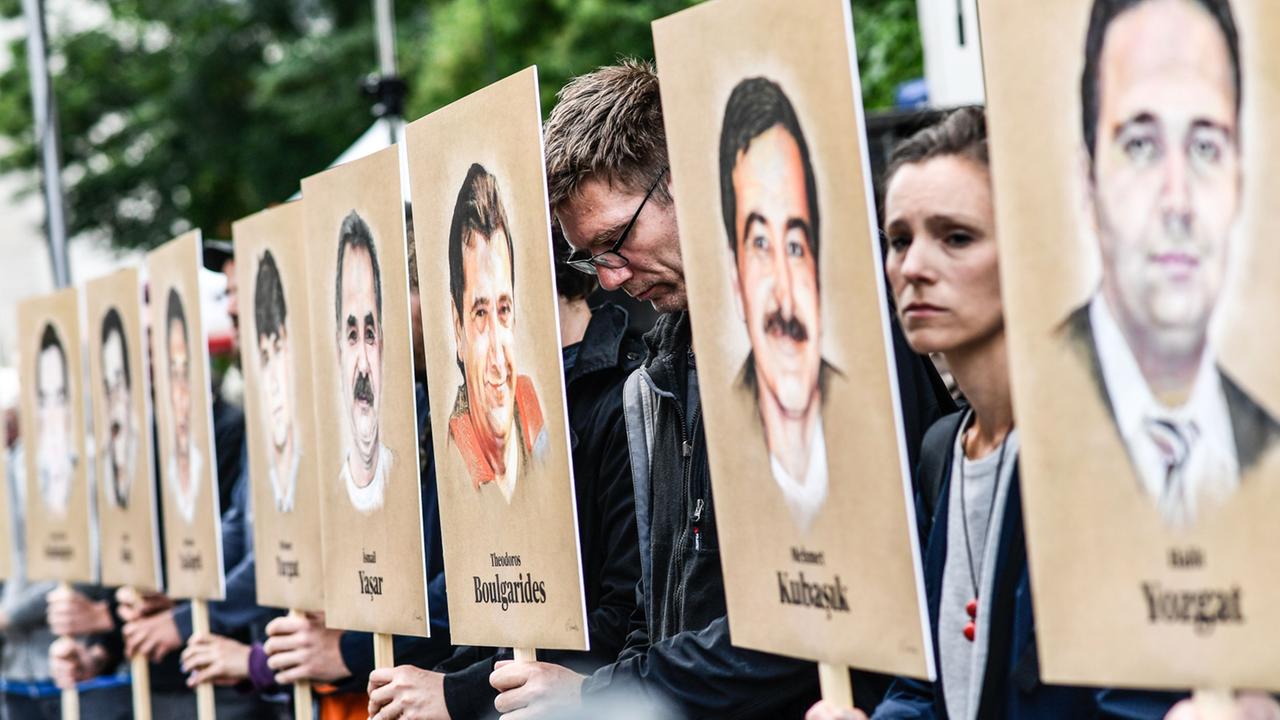
- 2000–2006: A systematic killing spree occurs across Germany. The victims—Enver Şimşek, Abdurrahim Özüdoğru, Süleyman Taşköprü, Habil Kılıç, Mehmet Turgut, İsmail Yaşar, Theodoros Boulgarides, Mehmet Kubaşık, and Halit Yozgat—are executed with the same firearm.
- 2007: Police officer Michèle Kiesewetter is murdered in Heilbronn; the motive remains a subject of intense debate and speculation to this day.
- November 4, 2011: After a bank robbery in Eisenach, Böhnhardt and Mundlos are found dead in a caravan, having taken their own lives. Shortly after, Zschäpe sets fire to their Zwickau apartment and later surrenders. Police discover a "confession video" detailing the murders.
- 2013–2018: The mammoth trial against Beate Zschäpe and four co-defendants takes place in Munich.
- July 2018: The court sentences Zschäpe to life imprisonment.
The Institutional Bias: From Victim to Suspect
Perhaps the most damaging aspect of the NSU scandal was the conduct of the authorities. For years, the families of the victims were subjected to a "second victimization." Instead of investigating the far-right background of the crimes, investigators focused on the victims themselves. They were subjected to humiliating interrogations, with police suggesting that the men were involved in drug trafficking, gambling, or organized crime.
The media, echoing the police’s flawed narrative, famously dubbed the killings the "Döner-Morde" (Doner Murders), a derogatory term that framed the victims as mere objects of criminal gang activity. This institutional bias blinded investigators to the obvious: these were hate crimes.
"For years, the families were left completely alone," says Tanjev Schultz, a journalist who has closely tracked the NSU investigative committees. "They weren’t just ignored; they were actively criminalized."
The Missing Links: The Role of Intelligence
As the dust settled after the 2018 trial, a new frustration emerged: the destruction and "disappearance" of key evidence. Parliamentary investigative committees discovered that intelligence agencies had operated a network of informants (V-Leute) within the far-right scene—some of whom were in direct contact with the NSU members.
When the news of the NSU broke, several intelligence officials began shredding sensitive documents. This created a permanent "black hole" in the historical record. Did the state know more than it admitted? Was the NSU truly a three-person cell, or were they the tip of a much larger, state-tolerated network?
"I have lost faith in our state," says Gamze Kubaşık. Her sentiment is shared by many who believe that the full truth about the collaboration between neo-Nazis and the security apparatus has been deliberately buried to protect the reputations of the intelligence services.
Official Responses and Lingering Doubts
The German government has issued formal apologies, acknowledging the "shameful" failure of the authorities to solve the crimes sooner and their failure to treat the families with dignity. However, for those affected, apologies without full disclosure are insufficient.
The Federal Office for the Protection of the Constitution (BfV) has faced intense scrutiny. Critics argue that the agency’s reliance on informants—who were often active neo-Nazis—created a perverse incentive structure where the state funded the very extremism it was supposed to monitor. This systemic failure remains a stain on the democratic integrity of the German state.
Implications for Modern Germany
The NSU complex is not merely a historical case study; it is a warning. The rise of far-right political movements in Europe has brought renewed urgency to the lessons of the NSU.
- The Need for Institutional Reform: There is a consensus among human rights activists that the police and intelligence services require rigorous oversight and a fundamental shift in how they identify hate crimes.
- The Power of Civil Society: The resilience of the victim families, who turned their grief into a public campaign for truth, has set a new standard for holding the state accountable.
- The Persistence of Racism: The NSU murders proved that racism in Germany is not a fringe phenomenon but a structural reality that can infiltrate the highest levels of law enforcement.
A Call for Accountability
Gamze Kubaşık continues to speak at schools, participate in commemorations, and demand answers. Her fight is not just for her father, but for a society that claims to value the lives of all its citizens equally.
"It is a task that costs me a great deal of strength," she admits. Yet, she persists because the alternative—forgetting—is a betrayal of the dead. The NSU case remains open in the court of public opinion. Until the "leerstellen" (blank spaces) in the files are filled, until the role of the state is fully exposed, and until justice is seen to be done, the ghost of the NSU will continue to haunt the German conscience.
The legacy of the NSU is a reminder that the health of a democracy is measured not by its stated values, but by how it treats the victims of those who seek to destroy those values. For Germany, the journey toward true accountability is far from over; it is a daily, exhausting, and necessary struggle for the truth.