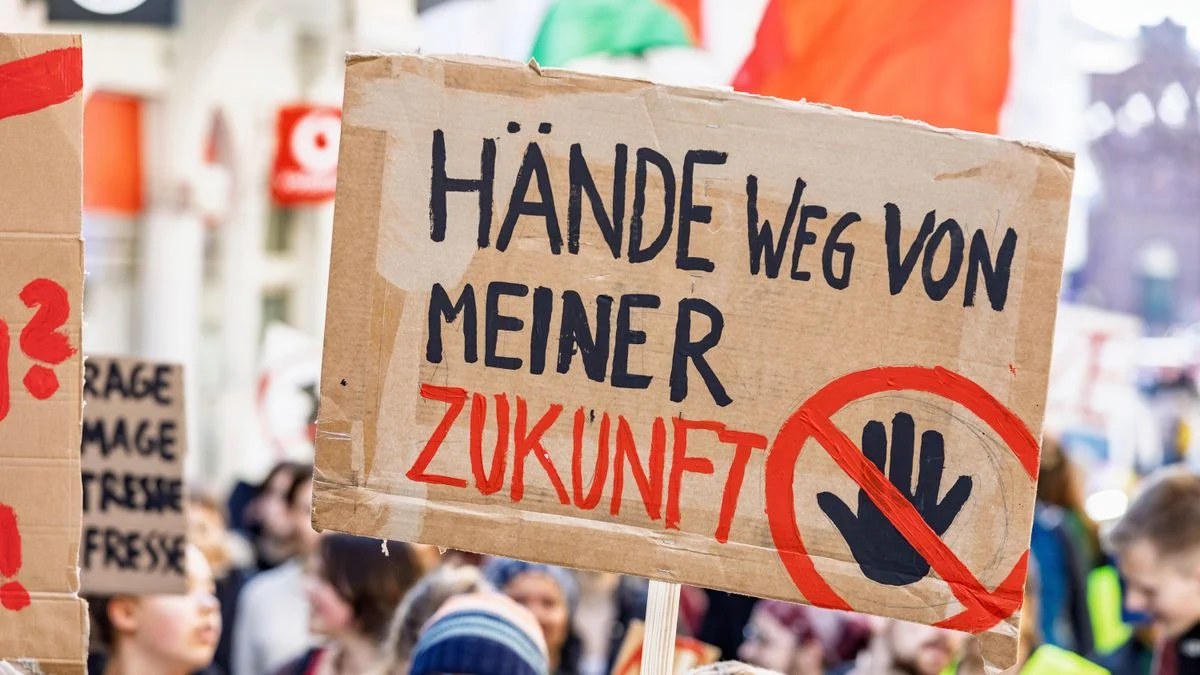
Frankfurt, Cologne, Hamburg: The recent "Gen Z regelt" (Gen Z Rules) demonstrations, which began as a platform for youth to voice concerns regarding their future, have taken a dark turn. Following a weekend of widespread unrest, civil disobedience, and violent clashes, the political discourse in Germany has shifted from the content of the protests to the nature of the perpetrators. As the government struggles to find a unified response, the incident has sparked a fierce debate over integration, the definition of extremist influence, and the marginalization of the younger generation.
The Core Conflict: From Protest to Unrest
The "Gen Z regelt" movement was initially intended to serve as a rallying cry for young people to influence national policy on education, climate change, and economic stability. However, across major German urban centers, including Frankfurt, Cologne, and Hamburg, the demonstrations were hijacked by fringes who turned public squares into scenes of chaos.
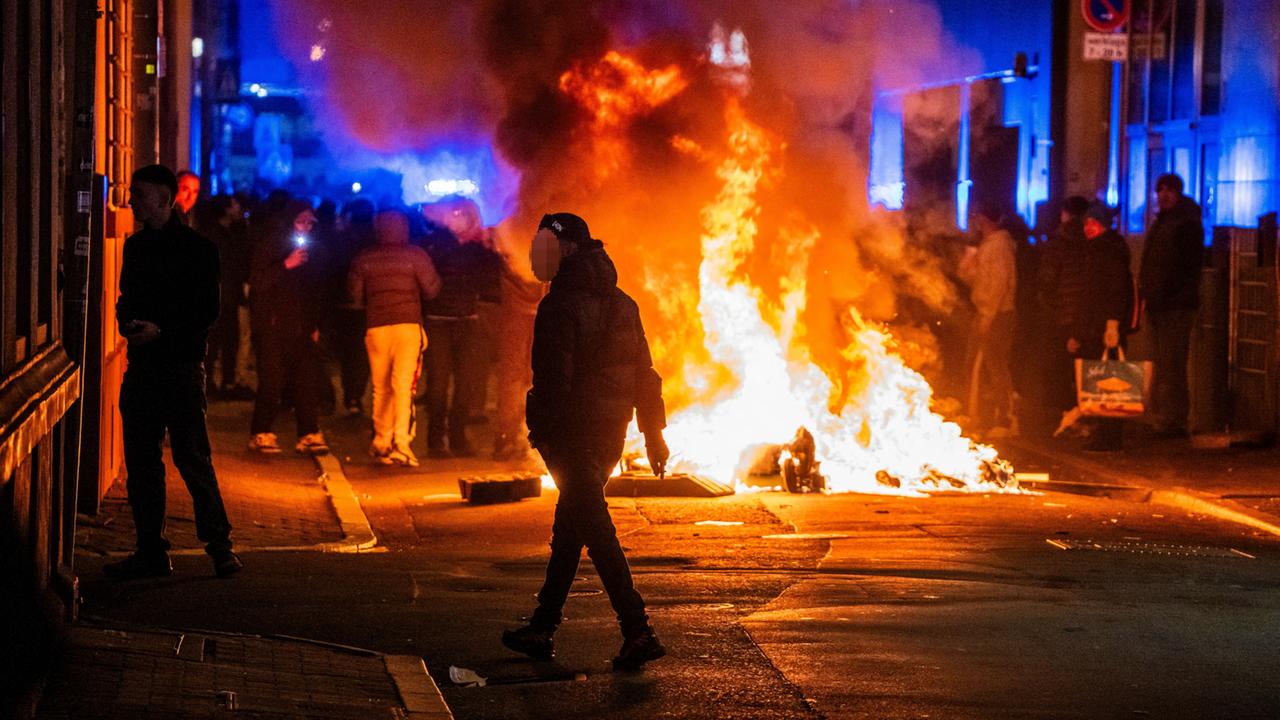
In Frankfurt, the situation devolved into open hostility as police were pelted with objects, and local businesses suffered significant property damage. The images of fires burning in the city center have become the defining visual of a weekend that has left the public and policymakers deeply unsettled. While the majority of participants remained peaceful, the violent minority has monopolized the media narrative, overshadowing the grievances of thousands of young citizens.
Chronology of the Weekend
The unrest began late Friday afternoon and peaked on Saturday evening.
- Friday: Demonstrations were initially orderly. In Berlin and Hamburg, large groups gathered to hear speeches regarding intergenerational equity.
- Saturday Afternoon: As the crowds thinned in Frankfurt, a splinter group emerged. Witnesses described an influx of individuals who did not appear to be part of the original protest march.
- Saturday Night: The situation in Frankfurt reached a breaking point. Interior Minister for Hesse, Roman Poseck, described the progression clearly: first, organized left-wing extremist groups instigated clashes, followed by a surge of "migrant youth" who engaged in what officials have termed "unrestrained violence."
- Sunday: Cleanup operations began, accompanied by a wave of arrests. By Sunday morning, political reactions began to dominate the news cycle, with federal ministers weighing in on the causes and implications of the violence.
Official Responses: A Fragmented Political Landscape
The interpretation of who exactly was responsible for the chaos has become a flashpoint for partisan friction.
The CDU/CSU Perspective: Addressing Integration
Federal Education Minister Karin Prien (CDU) took a blunt approach during an interview with Deutschlandfunk. She categorized the perpetrators into two distinct groups: radicalized leftist agitators and individuals from migrant backgrounds.
"If those responsible originate from migrant milieus, then that must concern us, and we must examine the root causes," Prien stated. She argued that the discussion shouldn’t be about harboring resentment but about acknowledging where integration efforts are failing. Her colleague, CSU leader Alexander Dobrindt, was more confrontational, explicitly labeling the rioters as "violent left-wing groups and migrant troublemakers."
The SPD and Opposition: A Warning Against Generalization
Defense Minister Boris Pistorius (SPD) strongly disagreed with the framing used by his conservative counterparts. Questioning the terminology, Pistorius challenged the focus on "migrant backgrounds."
"What are ‘migrant groups’?" Pistorius asked during an appearance on ZDF. "Are these people living in the third generation in Germany and are German citizens? Where do we stop being specific? I believe this leads in the wrong direction." His comments underscore a growing divide within the ruling coalition regarding how to address social cohesion without alienating large swaths of the population.
Academic and Social Analysis: The Roots of Aggression
Sociologists and political scientists suggest the violence was not an isolated incident, but rather a symptom of deeper, systemic pressures.
Nina Kolleck, a professor of education and protest research at the University of Potsdam, noted that the escalation was, in some ways, predictable. "The situation has sharpened significantly in recent years," Kolleck explained. She emphasized that the lack of institutional channels for youth to feel heard often leads to frustration, which in volatile environments can spill over into physical aggression.
Furthermore, the "Gen Z" demographic is navigating an era of "polycrisis"—rising housing costs, a shifting job market, and the looming threat of climate change. When a movement is perceived as a "fringe" activity or a "nuisance" by the establishment, the internal pressure cooker of the protest group often leads to instability.
The Perspective of the Movement: Luisa Neubauer’s Critique
Climate activist and public figure Luisa Neubauer has been one of the most vocal critics of how the media and the government have handled the aftermath. She argues that the focus on the violence is a strategic deflection.
"I have the impression that for some who aren’t seriously interested in the concerns of young people, this is a kind of ‘free meal,’" Neubauer told the rbb broadcaster. She lamented that the framing of the protests treats young people as "foreign bodies" that the public must fear, rather than stakeholders in their own future.
Neubauer advised the organizers of the "Gen Z regelt" movement to narrow their focus. She noted that while broad, systemic change is necessary, the lack of a singular, focused demand makes it easier for critics to discredit the entire movement based on the actions of a few.
Implications for Future Policy
The events of the weekend have created a political environment where "law and order" rhetoric is competing with calls for deeper social reform.
1. Security and Policing
The Hessian government, led by Minister Roman Poseck, is already reviewing security protocols for future demonstrations. There is an emerging consensus among conservative factions that the state must be more prepared for "hybrid" protests, where peaceful demonstrators are infiltrated by violent actors.
2. The Integration Debate
The rhetoric used by figures like Karin Prien suggests that the government may soon launch a new inquiry into the state of integration in urban centers. This will likely involve funding for youth social work, language programs, and community-building initiatives in neighborhoods that are currently being identified as "hotspots" for radicalization.
3. Generational Disconnect
The most significant long-term implication is the widening gap between the political elite and the younger generation. As CDU politician Karin Prien noted, she fundamentally disagrees with many of the "Gen Z" demands, such as those regarding mandatory social or military service. This fundamental clash in values—between an establishment focused on stability and a youth movement focused on radical systemic change—suggests that the protests were merely a prologue to a longer, more arduous political struggle.
Conclusion: A Turning Point?
The weekend’s unrest in Frankfurt, Cologne, and Hamburg serves as a sobering reminder of the fragility of the social contract. Whether the violence is viewed as a consequence of failed integration, a symptom of radicalization, or a byproduct of legitimate political frustration, the path forward remains contentious.
For the "Gen Z" generation, the challenge is now two-fold: they must distance themselves from the violence that has tarnished their message while simultaneously finding more effective ways to force their agenda into the halls of power. For the government, the challenge is to move past the finger-pointing and address the genuine grievances of a generation that feels increasingly excluded from the society they are expected to inherit. As the debate continues, the streets of Germany remain a barometer for a country in the midst of a profound identity crisis.