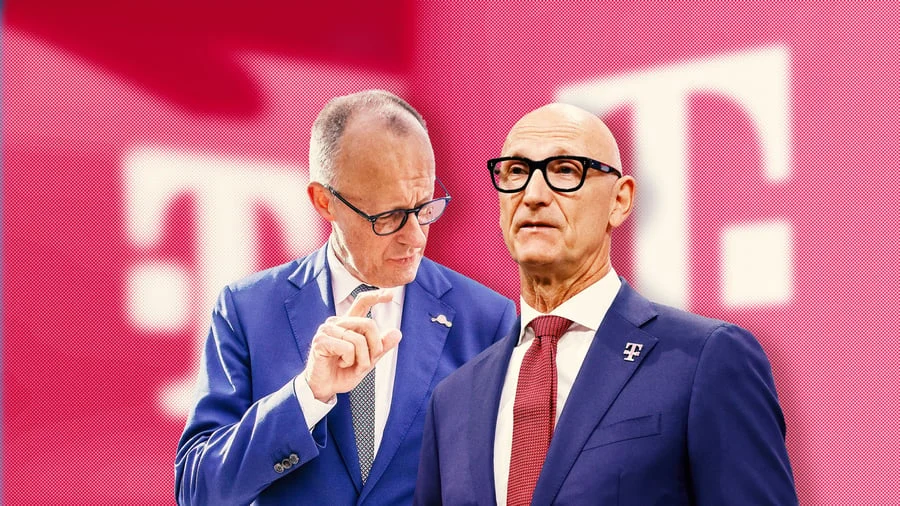
BERLIN/DÜSSELDORF – In the high-stakes world of global telecommunications, few figures command as much attention as Deutsche Telekom CEO Timotheus Höttges. Behind the scenes of the Bonn-based telecommunications giant, a strategy of immense proportions is currently being architected. Höttges is reportedly engaged in intensive efforts to secure the blessing of the newly inaugurated federal government, led by Chancellor Friedrich Merz, for a transformative mega-merger involving the company’s crown jewel: its U.S. subsidiary, T-Mobile US.
Should this deal materialize, it would stand as one of the most significant consolidations of publicly traded companies in modern history. The maneuver is not merely a corporate transaction; it is a complex geopolitical and economic chess game that pits traditional telecom dominance against the disruptive, sky-high ambitions of Silicon Valley’s most influential billionaire, Elon Musk.
The Strategic Imperative: Why Now?
The urgency driving Höttges’ efforts stems from a rapidly shifting landscape. For years, the German telecommunications giant has relied on its American business as the engine of its growth. T-Mobile US contributes roughly two-thirds of the parent company’s total revenue, making it the bedrock of the group’s valuation and financial stability.

However, the threat landscape has changed. Elon Musk, whose influence now spans aerospace, automotive, and artificial intelligence, has set his sights firmly on the telecommunications sector. By leveraging his Starlink satellite constellation, Musk is actively dismantling the traditional barriers to entry in the mobile phone industry. What was once a localized, infrastructure-heavy business model is being challenged by global, satellite-based connectivity that bypasses the need for traditional cell tower deployment.
A New Challenger: The Musk Factor
The pressure on the Deutsche Telekom leadership has intensified following reports that Musk is preparing to further disrupt the industry. According to recent disclosures from the Washington Post, the billionaire is moving toward an acquisition of the mobile division of EchoStar, specifically the "Boost" brand.
For the legacy players, this is a clarion call. If Musk integrates satellite-direct-to-cell capabilities with a established retail mobile brand, he could create a formidable competitor that offers near-universal coverage at a price point that traditional carriers, burdened by high debt and infrastructure maintenance, might struggle to match.
The market’s reaction was immediate. Following the reports, T-Mobile US shares saw a decline of over two percent, signaling investor anxiety regarding the long-term sustainability of the current market structure.
The Political Hurdle: The Role of the Federal Government
Central to Höttges’ strategy is the need for political alignment in Berlin. The German government retains a significant stake in Deutsche Telekom, and consequently, it holds an informal but powerful "veto" or influence over major strategic shifts.
Höttges’ current lobbying efforts are aimed at Chancellor Friedrich Merz and his cabinet. The argument being presented is likely centered on national and European industrial sovereignty. In an era where data dominance and connectivity are synonymous with national security, the argument for a stronger, more resilient, and technologically advanced transatlantic entity is compelling.
However, the political climate in Berlin is delicate. With the transition to the Merz administration, the government is grappling with competing priorities: maintaining Germany’s industrial competitiveness, balancing the budget, and navigating the complexities of transatlantic trade relations. Securing support for a transaction of this magnitude requires proving that such a merger will not only benefit shareholders but also align with the strategic interests of Germany’s digital infrastructure.
Chronology of a Shifting Landscape
- Pre-2024: T-Mobile US solidifies its position as the primary growth engine for Deutsche Telekom, successfully navigating the integration of Sprint and establishing itself as a leader in 5G deployment.
- Early 2025: Elon Musk’s Starlink expands its satellite-to-mobile pilot programs, drawing increased attention from telecom incumbents as a potential existential threat.
- Late 2025: Speculation regarding a major consolidation in the U.S. telecom sector reaches a fever pitch as infrastructure costs rise and competitive pressure from tech-led entrants mounts.
- November 2026: The Washington Post reports on Musk’s intent to acquire the EchoStar/Boost mobile assets, causing an immediate cooling of sentiment toward traditional telecom stocks.
- Current Date: Timotheus Höttges engages in high-level discussions with the federal government to ensure political stability for a potential merger bid.
Supporting Data: The Weight of the U.S. Subsidiary
The financial dependence of Deutsche Telekom on its American counterpart cannot be overstated. With T-Mobile US accounting for approximately 65-70% of group revenue, any threat to the U.S. market share is effectively a threat to the parent company’s solvency and credit rating.
| Metric | Significance to Deutsche Telekom |
|---|---|
| Revenue Contribution | ~66% (T-Mobile US) |
| Growth Potential | Highest in the U.S. 5G market |
| Market Risk | Exposure to Starlink/Satellite disruption |
| Debt Profile | Significant, requiring stable cash flows |
As the company prepares to release its quarterly earnings this Thursday, analysts are looking for signs of how management intends to hedge against these new competitive realities. The numbers will likely confirm that while the company remains profitable, the "moat" around its business model is narrower than it was even two years ago.

Official Responses and Stakeholder Sentiment
While official statements from the Chancellery have been guarded, sources close to the government suggest that the discussions are in a preliminary, exploratory phase. There is an inherent tension between the government’s desire for a "national champion" and its commitment to a competitive market.
Inside the halls of the Bundestag, some policymakers are expressing caution. A merger that further consolidates the market in the U.S. could face rigorous antitrust scrutiny from the Federal Communications Commission (FCC) and the Department of Justice (DOJ). Höttges’ primary task is to convince the German government that his proposed merger structure is not only economically sound but also legally defensible in the United States.
Industry analysts remain divided. Some argue that scaling up is the only defense against the "big tech" encroachment. Others contend that the era of massive mergers in the telecom sector has passed, and that the future lies in software-defined networking and nimble, decentralized operations.

Implications: A Future of Consolidation or Fragmentation?
The implications of Höttges’ push for a mega-merger extend far beyond the balance sheets of Bonn or Bellevue.
1. The Death of the "Pure Play" Telecom
If the merger succeeds, it will signal the end of the traditional telecom carrier model. The new entity would likely be forced to pivot into a hybrid tech-telecom firm, integrating AI-driven network management, satellite connectivity, and cloud services to remain relevant.
2. Geopolitical Shifts
The deal would effectively tie the digital future of Germany even closer to the United States. While this strengthens the transatlantic alliance, it also raises questions about European digital autonomy. Does Germany have enough control over its own critical infrastructure if its largest player is effectively governed by the dynamics of the U.S. mobile market?

3. The Musk Effect on Regulation
Musk’s entry into the market is forcing regulators to rethink their frameworks. If the government approves the Höttges-led merger, it might be interpreted as a defensive reaction to allow "traditional" capital to compete with the sheer velocity of capital commanded by Musk. This could trigger a wave of further consolidation across the globe as other carriers seek similar safety in numbers.
Conclusion: The Road Ahead
As the industry awaits the quarterly results on Thursday, the air of uncertainty remains thick. Timotheus Höttges has proven himself a master of the "long game" in the past, famously navigating the complex regulatory minefields required to merge T-Mobile and Sprint. However, this current challenge is different. It is not just about beating a competitor; it is about anticipating a shift in the very nature of human connectivity.
The decision now rests with the federal government. If they choose to back Höttges, they are betting that a massive, consolidated entity can withstand the disruption of the satellite age. If they balk, they may be forcing the company to rethink its entire business model from the ground up. In either scenario, the era of stable, predictable telecommunications is firmly in the rearview mirror, replaced by an era of high-stakes, high-velocity competition where only the most agile—and perhaps the most politically savvy—will survive.