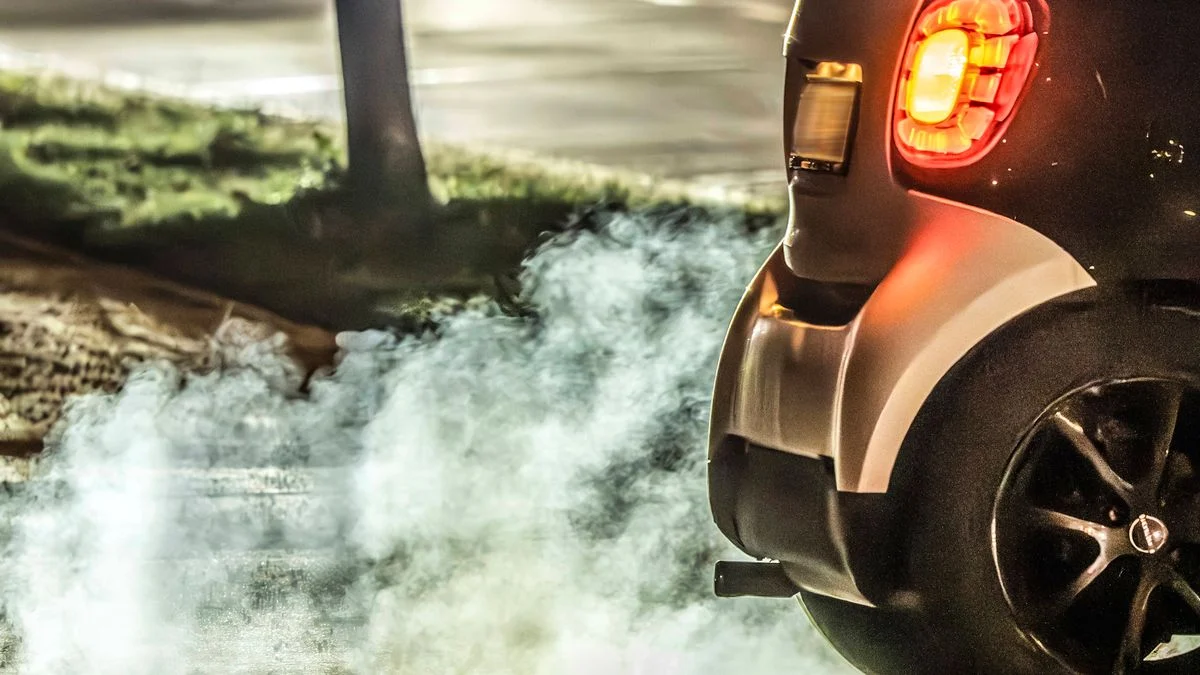
The European Union stands at a pivotal crossroads in its quest for climate neutrality. As the bloc moves toward its ambitious goal of becoming the world’s first climate-neutral continent by 2050, the automotive sector—the bedrock of European industrial might—is undergoing a profound transformation. Recent developments in the European Parliament’s Environment Committee have sparked intense debate over the future of the internal combustion engine, signaling a potential softening of the hard-line stance on total emissions bans.
The Core Proposal: A Strategic Shift in Emissions Targets
At the heart of the current legislative friction is a proposal from the European Parliament’s Environment Committee regarding CO2 emission standards for new passenger cars. While the overarching EU policy trajectory has pointed toward a near-total ban on internal combustion engines (ICE) by 2035, the committee is debating a more nuanced regulatory framework.
The proposed objective is a 95% reduction in CO2 emissions by 2035 compared to 2021 levels. However, the committee has introduced a significant "flexibility" mechanism: manufacturers who incorporate climate-friendly, "green" steel into their production processes would be granted a 7.5-percentage-point leeway. Effectively, this would set the mandated reduction target at 87.5% for those specific manufacturers.
This compromise is designed to incentivize the decarbonization of the supply chain—specifically the energy-intensive steel production industry—while acknowledging the economic reality that total electrification may remain a complex transition. By allowing for this 7.5% margin, the proposal leaves a narrow, albeit contentious, window for manufacturers to continue selling a limited number of internal combustion and hybrid vehicles, provided they meet strict environmental benchmarks elsewhere in their production cycles.
Chronology: A Multi-Year Legislative Marathon
The path to the 2035 target has been marked by rigorous negotiation and intense lobbying. To understand the current state of play, it is essential to trace the legislative timeline:
- 2019: The European Green Deal: The European Commission launched its flagship policy, setting the roadmap for Europe to achieve climate neutrality by 2050.
- 2021: "Fit for 55": The Commission presented a comprehensive package of proposals aimed at reducing net greenhouse gas emissions by at least 55% by 2030. This package included the initial proposal to phase out CO2-emitting cars by 2035.
- Early 2022: Committee Deliberations: The Environment Committee began reconciling the Commission’s proposals with the diverging interests of member states. The recent push for a 7.5% flexibility clause represents the latest evolution of these internal parliamentary negotiations.
- Mid-2022 to Present: Parallel discussions between the 27 EU member states and the European Parliament have intensified. Because no amendment can become law without the dual approval of the Parliament and the Council of the European Union, the current "understanding" between various parliamentary factions is only the beginning of a lengthy trialogue.
Market Dynamics: The Electrification Surge
While policymakers debate the "how" and "when" of the transition, the market is already voting with its wallet. Data from the Kraftfahrt-Bundesamt (KBA) in Germany provides a clear snapshot of a consumer base rapidly pivoting toward battery electric vehicles (BEVs).
In October, Germany—the EU’s largest automotive market—recorded approximately 94,000 new registrations of pure battery-electric vehicles. This represents a staggering 80% increase compared to the same month in the previous year.
Several factors are driving this acceleration:
- Government Incentives: The German federal government’s subsidy programs have significantly lowered the barrier to entry for prospective buyers, effectively narrowing the price gap between premium ICE vehicles and their electric counterparts.
- Energy Economics: The volatility of global oil markets and the persistent rise in fuel prices have fundamentally altered the total cost of ownership (TCO) calculations for private and commercial drivers.
- Charging Infrastructure: Increased investment in public and private charging grids has mitigated "range anxiety," which was once the primary deterrent for potential EV adopters.
Official Responses and Political Friction
The legislative process is not without its critics. The automotive industry, traditionally a powerful lobbying force in Brussels, remains divided. Legacy manufacturers, who have invested billions into research and development for combustion engines, have expressed concerns over the speed of the transition. They argue that a "hard" 2035 deadline risks job losses and economic destabilization in regions where automotive manufacturing is the primary employer.
Conversely, environmental advocacy groups have criticized the proposed 7.5% flexibility clause. Organizations such as Transport & Environment have warned that any loophole—even one tied to green steel—could be exploited by manufacturers to "greenwash" their fleets, effectively delaying the necessary phase-out of fossil-fuel-powered engines and undermining the EU’s climate targets.
Meanwhile, the Council of the European Union remains a diverse landscape of interests. Countries with heavy automotive sectors, such as Germany and Italy, have occasionally pushed for "e-fuels" (synthetic, carbon-neutral fuels) to be considered as a viable pathway for the post-2035 era, arguing that the technology could save the internal combustion engine while remaining climate-neutral.
Implications: A New Era for European Mobility
The implications of these legislative decisions are far-reaching, touching on industrial policy, geopolitics, and environmental justice.
Industrial Transformation
The shift to electric vehicles necessitates a total restructuring of the European supply chain. From battery production (the "gigafactory" boom) to software development and semiconductor procurement, European firms are in a race to reduce dependency on non-EU suppliers, particularly China. The proposed green steel incentive is an attempt to ensure that the "green" transition of the car industry also forces the heavy industrial sector to modernize.
Environmental Impact
The primary driver of this policy is, of course, the environment. Road transport accounts for a significant portion of the EU’s CO2 emissions. By mandating a near-total shift to zero-emission vehicles, the EU aims to decouple economic growth from carbon consumption. However, the success of this strategy depends not just on the cars themselves, but on the decarbonization of the electricity grid that powers them.
Geopolitical Realignment
Energy security has become a paramount concern for the EU. Moving away from oil—a commodity largely imported from volatile regions—toward renewable-powered electricity generation is seen by many in Brussels as a dual victory: it lowers emissions while simultaneously strengthening the bloc’s energy sovereignty.
Conclusion: The Road Ahead
As the European Parliament and the Council move closer to a final decision, the debate over the 2035 deadline serves as a microcosm of the wider challenge facing the EU. It is a balancing act between maintaining industrial competitiveness, protecting the livelihoods of millions of workers, and fulfilling the existential mandate to avert catastrophic climate change.
The proposed 87.5% target with a flexibility window is a testament to the complexity of this task. It acknowledges the need for progress while providing a buffer for an industry that is currently undergoing its most significant change since the invention of the assembly line. Whether this compromise will be sufficient to satisfy the demands of both climate activists and industrial stakeholders remains to be seen. What is clear, however, is that the era of the internal combustion engine is entering its final chapter, and the electric revolution is no longer a future prospect—it is the current reality of the European market.