DÜSSELDORF – The global economic landscape is undergoing a profound structural metamorphosis. According to an exclusive analysis of the world’s 100 most valuable brands by the consultancy Interbrand, a historic pivot has occurred: the entertainment industry has officially surpassed the automotive sector in total brand value. This shift, driven by a combination of artificial intelligence integration and evolving consumer habits, signals a broader move away from traditional industrial strength toward digital, content-driven engagement.
The data reveals a stark polarization in the market. While technology and entertainment giants are riding the wave of the AI revolution, legacy sectors—most notably the automotive industry—are struggling to navigate the complexities of a rapid, capital-intensive transition to electric mobility and software-defined vehicles.
Main Facts: A Reshuffling of Value
The latest Interbrand report highlights that the total value of the top 100 global brands has grown by 8.1 percent, reaching an aggregate value of $3.8 trillion. This growth rate is double that of the previous year, suggesting that even in an era of macroeconomic uncertainty, the most resilient brands are finding ways to capture value through digital transformation.
At the pinnacle of this hierarchy stands Apple, which continues to hold the crown as the world’s most valuable brand. Despite a challenging global market, Apple’s brand value climbed 9 percent to $515 billion, cementing its status as an unparalleled ecosystem.
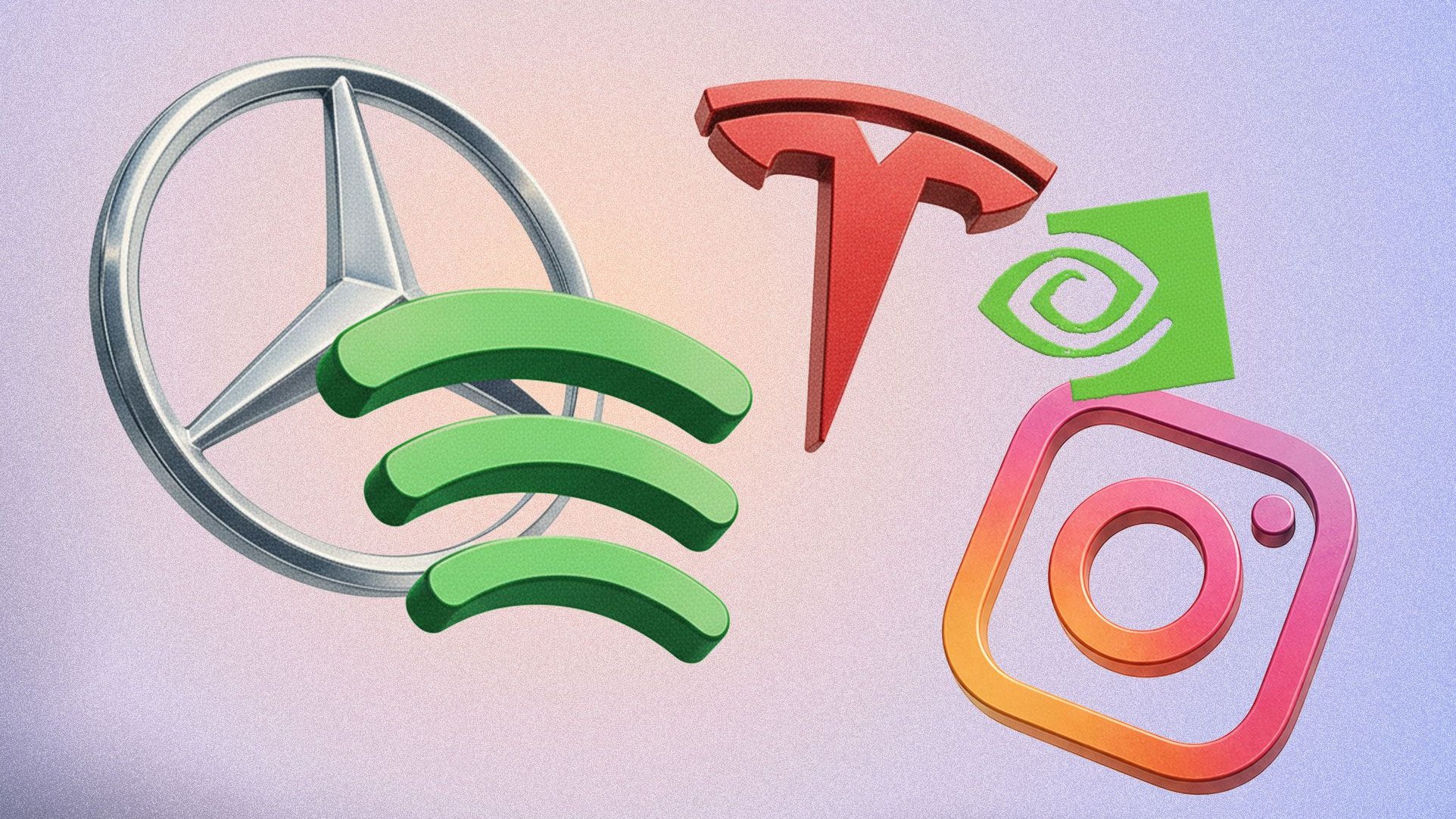
However, the real story lies in the divergent paths of industry sectors. The automotive category has suffered a collective contraction, losing approximately $57 billion in brand value over the last twelve months. Conversely, the entertainment industry has expanded, successfully diversifying its business models to go beyond traditional content delivery.
Chronology of Disruption: How AI Reshaped the Rankings
The current state of the global brand market is not a sudden accident but the culmination of several years of technological acceleration.
The Rise of the AI Superpowers
Since 2025, artificial intelligence has acted as a primary catalyst for growth. Nvidia, the undisputed champion of this transition, has seen its brand value skyrocket for the second consecutive year. After a staggering 116 percent growth in the 2025 assessment, the company maintained its momentum with a further 71 percent increase this year, bringing its total brand value to $74 billion.
The "Challenger" Effect
While legacy players in the automotive and luxury spaces are experiencing stagnation or decline, "challenger brands" are finding success by blending innovation with highly distinct brand promises. For instance, while most established car manufacturers faced double-digit declines, the Chinese automaker BYD bucked the trend, recording a 5 percent increase in brand value. This highlights a growing consumer preference for brands that are seen as agile and inherently future-focused.

Supporting Data: Sector Analysis
The Automotive Crisis
The automotive industry, once the pillar of global industrial might, is currently under intense pressure. The structural shift toward electrification and digital integration is proving to be a double-edged sword: the capital requirements are massive, and the path to profitability remains volatile.
The decline among German automotive giants is particularly notable:
- Volkswagen: -23 percent
- Mercedes-Benz: -19 percent
- Audi: -19 percent
- BMW: -18 percent
- Porsche: -17 percent
Even Toyota, the global leader in volume and traditionally one of the most resilient automotive brands, saw a 20 percent drop in brand value. Interbrand experts point out that the complexity of the current transformation—managing the legacy combustion business while pivoting to EVs—is weighing heavily on brand perception.
Entertainment: Expanding the Scope of Engagement
The entertainment sector’s ascent is rooted in its ability to expand its business models. Modern entertainment is no longer just about linear content or movies; it is about platform dominance and cross-industry penetration.

Netflix, for example, has seen its value rise by 22 percent as it successfully pivoted into live events and sports broadcasting. Similarly, YouTube has established itself as an essential digital utility, covering everything from professional media to user-generated podcasts.
Spotify remains the standout performer in the sector, with a 38 percent surge in brand value. The company has evolved from a simple music streaming service into an all-encompassing audio platform. By integrating podcasts, audiobooks, and AI-driven personalization features, Spotify has embedded itself into the daily routines of millions, making it nearly indispensable.
The Luxury Polarization
The luxury sector is experiencing a significant "bifurcation." Success is no longer guaranteed by heritage alone.
- Hermès: +11 percent, now challenging Louis Vuitton for the top spot in the luxury segment.
- Louis Vuitton: -7 percent
- Prada: -15 percent
- Gucci: -31 percent
The drastic decline of Gucci is attributed to a combination of cooling demand in key luxury markets and a struggle to maintain relevance in a shifting cultural landscape.

Official Perspectives: The View from Interbrand
Nina Oswald, Managing Director for Central and Eastern Europe at Interbrand, emphasizes that the current landscape is defined by "a certain polarization."
"The tech and entertainment sectors are growing rapidly due to the developments around artificial intelligence," Oswald notes. "Other sectors cannot follow the structural change as quickly. The automotive sector, in particular, is under immense pressure."
Oswald offers a critical warning for the tech giants as well: "Technology companies are growing in revenue faster than they are building emotional bonds with their customers. Even in phases of dynamic growth, companies must continue to invest in brand development, or they risk becoming mere utilities that are easily replaced."
Interbrand’s methodology for this valuation is based on three rigorous criteria:

- Financial Performance: The actual economic return to investors.
- Role of the Brand: The influence of the brand on the consumer’s decision-making process.
- Brand Strength: The ability of the brand to command a premium price and ensure future earnings.
Strategic Implications: Why Brand Matters More Than Ever
The data presents a clear lesson for corporate leaders: size and history are no longer safety nets.
The Need for Emotional Resonance
In an era where algorithms determine much of what we see, the brands that win are those that transcend their product. Spotify’s success is not just about the quality of its music library, but about the "unlimited personalization" enabled by AI, which creates an emotional bond that competitors find hard to replicate.
The Innovation-Utility Gap
Companies that rely solely on their traditional strengths while failing to communicate a clear, innovative future are being punished by the market. The decline of the German auto industry is a prime example. While these companies are making massive investments in technology, they are currently failing to translate these technical achievements into a brand value that resonates with modern consumers who prioritize digital-first experiences.
The Shift Toward Ecosystems
The most successful companies today—Apple, Netflix, Spotify—have one thing in common: they are ecosystem builders. They have successfully shifted from providing a single service to providing a comprehensive platform that captures a larger share of the user’s time and attention.

Looking Ahead: The Future of Brand Valuation
As we look toward the remainder of the decade, the divide between those who master AI and those who are mastered by it will only widen. The "Challenger" brands, like BYD in the auto sector, demonstrate that new entrants can gain market share by offering a clearer, more modern value proposition.
For the incumbent giants, the message is clear: the era of relying on brand recognition built over the 20th century is over. To remain relevant in the 2026 and beyond, brands must move faster, invest more deeply in AI-driven customer experiences, and foster a level of emotional loyalty that can withstand the disruption of a rapidly changing global economy.
The rise of the entertainment industry is not just a trend; it is a reflection of a world where attention is the most valuable currency. Brands that understand how to secure that attention—not just through content, but through utility and emotional connection—will define the next generation of global economic leadership.
First published: October 28, 2026, 05:04 AM.