In an era where consumer attention is the most coveted currency, German retail giant Lidl—the four-letter discounter in question—has once again demonstrated that retail is no longer just about the price of goods, but about the art of the narrative. During the frenzy of Paris Fashion Week this past September, the retailer orchestrated a sophisticated, multi-layered marketing stunt that turned a routine flight into a masterclass in modern branding.
At the center of this campaign was a fake flight to Paris, a charismatic "captain," a social media influencer named Riton, and a quirky, butter-themed accessory that has captured the internet’s imagination: the "Neckcroissant."
The Anatomy of the Stunt: Main Facts
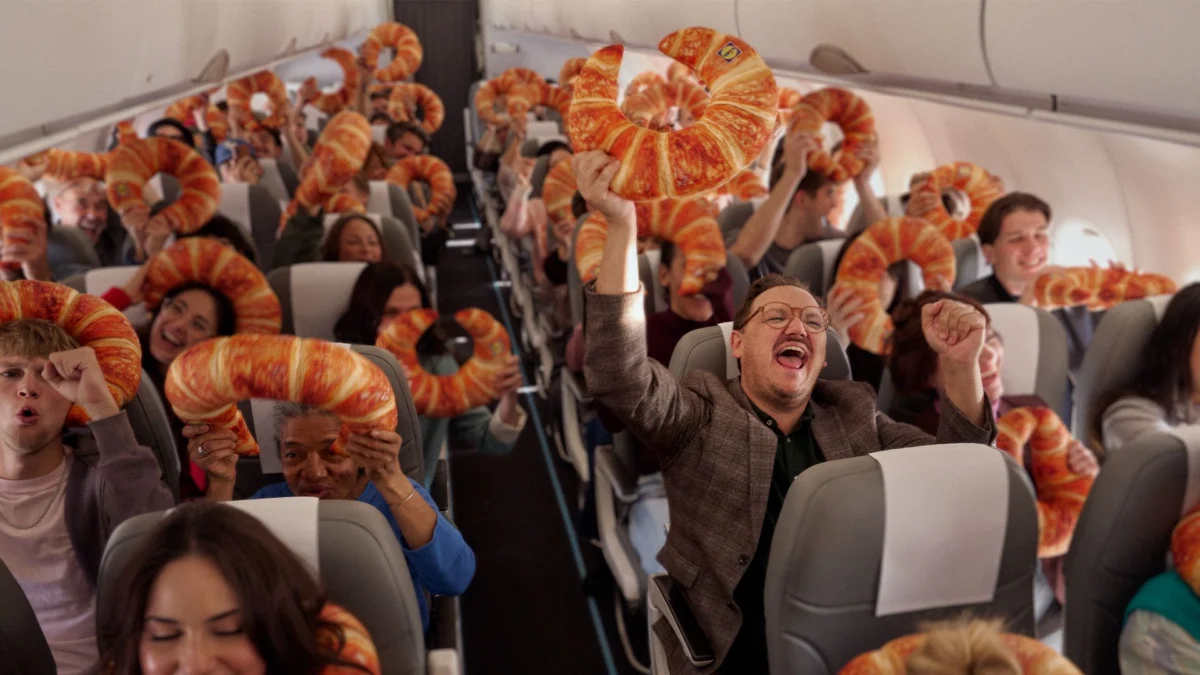
The campaign, which unfolded as part of a broader push to promote the discounter’s bakery line, centered on a simulated flight scenario. Passengers on a flight to the French capital were greeted by a pilot who—in a moment of mock crisis—announced that their flight was being diverted. Instead of the expected irritation or panic, the cabin atmosphere shifted instantly as the influencer Riton began distributing a unique piece of merchandise: a neck pillow shaped exactly like a croissant.

The "Neckcroissant" is, by all accounts, a bizarre fusion of travel utility and culinary fetishism. Visually, it balances between a cozy travel accessory and, as some critics noted, a bizarre, flesh-toned organic growth that could easily double as an unsettling Halloween prop. However, in the ecosystem of social media, such absurdity is the fuel for virality. By transforming the quintessential French pastry into a wearable item, the brand successfully bypassed traditional advertising barriers, inserting itself directly into the lifestyle content of the digital generation.
A Chronological Breakdown of the "Neckcroissant" Campaign
The success of the campaign was not a spontaneous accident but a carefully timed sequence of events that leveraged cultural anticipation.
- Pre-September Phase: The retailer had been teasing the "croissant theme" for months across its various social media channels. By repeatedly associating its brand with high-quality, low-cost French pastries, the company conditioned its audience to view the product as a symbol of both quality and accessibility.
- The Paris Fashion Week Event: Capitalizing on the global media focus on Paris in September, the brand staged the "diversion" incident. The timing was impeccable, aligning with the fashion industry’s tendency toward the avant-garde and the ironic.
- The Influencer Activation: The deployment of Riton was critical. Rather than a sterile corporate message, the distribution of the pillows felt like a "happening." By capturing the genuine reactions of passengers, the brand created user-generated content that felt authentic, rather than scripted.
- The Aftermath: The viral spread of the video on Instagram and TikTok led to a secondary market frenzy. The "Neckcroissant" began appearing on resale platforms, with asking prices escalating to amounts that could theoretically cover the cost of a real train ticket to Paris.
Supporting Data: Why the Discounter’s Strategy Works
Hans Neubert, author of The Social Media Factor and Chairman of the Federal Association for Digital Media, points to this campaign as a definitive "best-practice" case study.

"The discounter uses the croissant theme as a recurring motif," Neubert explains. "What began as a single, isolated gag has evolved into a recognizable brand asset. By maintaining consistency over several months, they have created a psychological anchor for the consumer. When the user sees a croissant now, they don’t just think of a bakery; they think of the brand."
The efficacy of this strategy is rooted in "cultural timing." The retailer understands that modern consumers—particularly the disillusioned Gen Z and Millennial demographics—are weary of traditional, polished advertisements. They respond to "meta-marketing," where the brand acknowledges its own silliness.
Furthermore, the data surrounding such campaigns suggests that engagement rates for "absurdist" marketing often exceed those of high-budget, cinematic commercials by a factor of three. By positioning itself as a participant in the joke, the retailer lowers the defensive walls of the consumer, turning a grocery brand into a lifestyle entity.

Official Responses and Strategic Intent
While the company has remained coy about whether the "Neckcroissant" will ever hit the shelves as a mass-produced item, the history of their marketing suggests a high probability of a retail release.
"They played a similar hand with a ‘Döner-Croissant’ hybrid," notes an industry analyst. "Initially, they teased it as a joke or a limited ‘concept,’ only to eventually introduce it into the chilled shelves once they had gauged the public appetite. The Neckcroissant is likely following the same trajectory. It’s market research disguised as entertainment."
The company’s intent is clear: to democratize luxury. By associating their budget-friendly bakery items with the high-fashion environment of Paris, they are effectively bridging the gap between the discount aisle and the aspirational lifestyle. They are telling the consumer: "You can have the Parisian experience, the humor, and the style, all while maintaining the financial discipline of a discounter."

Broader Implications for the Retail Sector
The "Neckcroissant" phenomenon is indicative of a wider shift in the retail landscape. The traditional "big box" store is increasingly finding itself in competition with the "content creator" model.
1. The Death of Traditional Product Launches
We are entering an era where the "drop" culture—previously reserved for streetwear brands like Supreme—is becoming the norm for everyday retail. By creating scarcity around a simple neck pillow, the brand has forced a conversation that a standard print ad or television spot never could.
2. The Rise of the "Wegelagerer" (Highwayman) Economy
The rise of the secondary market for these items—where resellers attempt to flip a promotional item for a significant profit—is a testament to the success of the scarcity model. While the company may not profit directly from these third-party sales, the "hype" generated by the existence of a resale market keeps the brand in the news cycle, providing "earned media" that money simply cannot buy.

3. Humor as a Barrier to Entry
For legacy retailers, the challenge is tone. Many established brands fear that being "silly" will damage their reputation. However, this campaign proves that for the modern, digital-first consumer, humor is the ultimate currency. It humanizes the corporate entity, making the brand feel like a peer rather than a monolith.
Conclusion: A Shift in the Retail Zeitgeist
As we look toward the future of retail, the lesson from the "Neckcroissant" is that physical goods are increasingly becoming secondary to the story surrounding them. In a world where the "feeling" of a brand is as important as the quality of the product, the ability to orchestrate a moment of collective amusement is perhaps the most valuable skill a marketer can possess.
For the "genuinely annoyed" middle-aged consumer, this may seem like an unnecessary triviality. However, for the brand, it is a triumph of logistics and digital strategy. By turning a flight diversion into a viral event, they have managed to distract us from the tedium of daily life, providing a moment of levity that, in the current global climate, is perhaps more valuable than the pillow itself.

As the fake flight lands and the influencer’s video fades from the top of our social feeds, one thing remains certain: the next time we pass that familiar four-letter discounter, we won’t just see a store. We will see a brand that knows how to make us look, how to make us laugh, and ultimately, how to make us care.
The "Neckcroissant" may be a silly object, but its impact is undeniably serious. It represents a new frontier in retail—one where the shelf is the world, and the marketing budget is replaced by a sense of occasion. Whether or not these items ever arrive in our local stores, the message has been delivered: the future of retail is not just about selling goods; it’s about selling a moment in time.