In the world of motorcycling, few names carry the weight and historical resonance of the "Bonneville." For decades, it has stood as the quintessential British twin, a machine that defined an era of freedom and performance. Now, Triumph is bridging the gap between its illustrious past and the modern entry-level market with the introduction of the new Bonneville T40. While it bears an uncanny resemblance to its big brother, the T120, this latest addition to the Hinckley lineup offers a more accessible entry point, proving that heritage and innovation are not mutually exclusive.
Main Facts: A New Chapter for the Bonneville Lineage
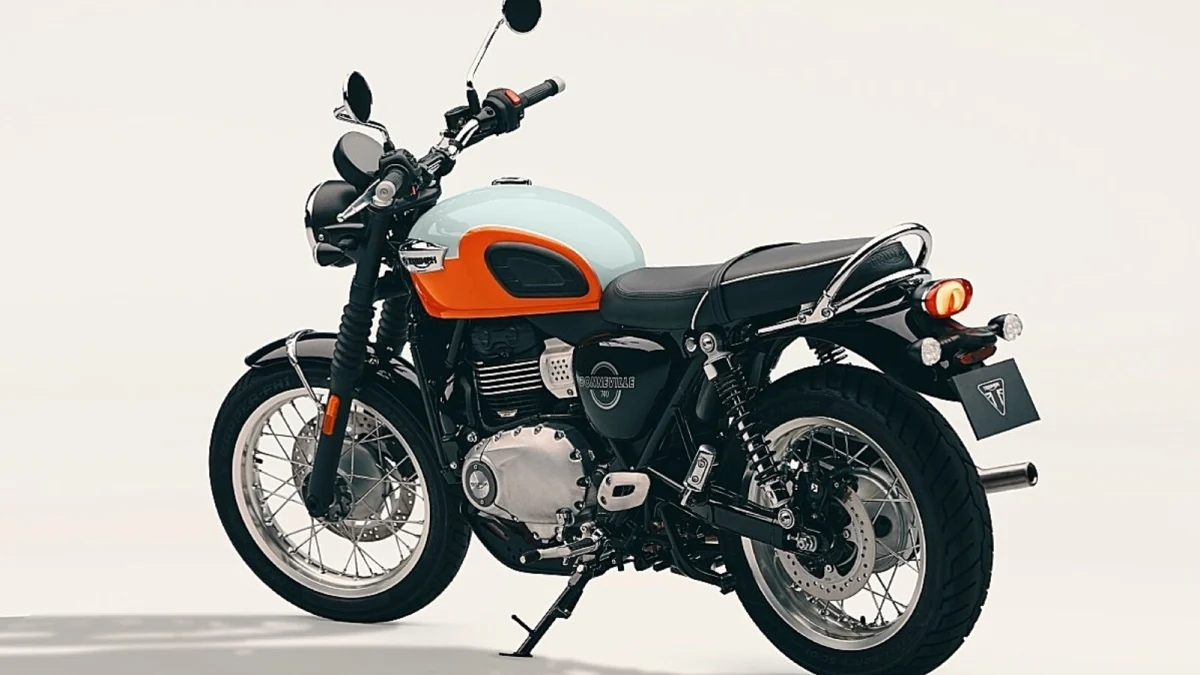
At first glance, the Bonneville T40 is a triumph of design mimicry. Its silhouette, proportions, and iconic detailing pay direct homage to the mid-century classics. However, beneath the polished exterior lies a modern, efficient powerplant. The T40 is driven by a 398cc single-cylinder engine—the same platform that powers Triumph’s other "400-series" machines, including the Speed 400 and the Scrambler 400.
Unlike its siblings, which are tuned for higher-end power, the T40’s engine has been meticulously recalibrated. While the Speed and Scrambler variants push out 40 horsepower at 8,000 rpm, the T40 is tuned to a more manageable 32 horsepower at 7,000 rpm. This decision was not a compromise, but a strategic choice by Triumph’s engineering team in Hinckley to prioritize rideability and character over raw top-end speed. By focusing on a peak torque of 36 Nm at 5,000 rpm, the T40 offers a punchy, accessible power band that makes urban commuting and winding country road excursions effortless, reducing the need for constant gear shifts.
Chronology: From the Salt Flats to the Modern Showroom
The lineage of the Bonneville name is steeped in record-breaking history. The moniker was born in 1956, following a monumental achievement by Johnny Allen. Riding a streamliner motorcycle dubbed the "Texas Cee-gar," powered by a tuned 650cc Triumph engine, Allen clocked a staggering 214.4 mph (approx. 345 km/h) on the Bonneville Salt Flats in Utah.
This spirit of adventure is woven into the DNA of the T40. The bike’s aesthetic draws heavy inspiration from the 1959 Bonneville T120, a machine that became a global icon. Triumph has leaned into this history with the T40’s color schemes, specifically the "Meriden Blue" and "Tangerine Orange" combination, which harkens back to the late 50s. Every model features hand-painted pinstripes applied at the Bajaj facility in India, where the bikes are manufactured, ensuring that each unit retains a touch of artisanal craftsmanship.
As the calendar approaches 2027, the T40 represents the culmination of years of R&D aimed at expanding the brand’s reach. With official prices expected to be announced early in 2027 and bikes arriving in showrooms by the spring of that year, Triumph is positioning the T40 to dominate the sub-500cc heritage segment.

Supporting Data: Engineering and Design Specifications
The T40 is a masterclass in blending "old-school" charm with "new-school" technology. The bike is built around a robust black-painted steel tube frame. To maintain the vintage look, it features a traditional telescopic fork with 130mm of travel, complete with retro-style rubber gaiters. The rear is supported by a steel swingarm with twin shock absorbers, also offering 130mm of travel, staying true to the classic configuration.
Perhaps most impressive is the attention to detail. The cylinder head features polished cooling fins that suggest air-cooling, yet the engine is actually liquid-cooled, ensuring reliability and performance in modern traffic. The wheels are authentic wire-spoked rims—a feature previously reserved for the premium Scrambler 400 XC—fitted with 100/90-18 tires at the front and 150/70 R17 at the rear.
Technical Overview Table
| Feature | Specification |
|---|---|
| Engine | 398cc Liquid-Cooled Single |
| Power | 32 PS @ 7,000 rpm |
| Torque | 36 Nm @ 5,000 rpm |
| Seat Height | 790 mm |
| Weight (Ready to Ride) | 191 kg |
| Front Brake | 310mm disc, ByBre 2-piston caliper |
| Lighting | Full LED with classic round housing |
The "Pea-Shooter" exhaust system, a hallmark of 1950s British motorcycles, is the final touch on the aesthetic profile. However, the rider interface tells a different story. The cockpit features a modern 4-inch round TFT display that hides a suite of advanced technology, including Bluetooth smartphone connectivity, turn-by-turn navigation via the "Triumph Navigation App," and an integrated USB-C charging port.
Official Responses and Strategic Positioning
Triumph has been clear about its intent with the T40: to provide an entry-level experience that does not feel like an entry-level compromise. The inclusion of five riding modes (three fixed and two configurable), cruise control, and cornering-sensitive ABS and traction control is unprecedented for a bike in the 32-horsepower class.
"The T40 is designed for those who appreciate the style of the past but demand the reliability and safety of the present," a spokesperson for Triumph noted during the unveiling. The engineering team emphasized that while the bike is the heaviest in the 400-series lineup at 191 kg, this weight contributes to its stable, planted feel on the road. The ergonomic layout, characterized by a 790mm seat height, allows for a comfortable, upright posture and makes the bike accessible to riders of all sizes.
Implications for the Market
The arrival of the Bonneville T40 carries significant implications for the mid-displacement motorcycle market. By combining the "heritage" aesthetic—a segment that has seen explosive growth in recent years—with the practical, high-tech features of the 400-series platform, Triumph is effectively cornering the market for new riders who are intimidated by larger, heavier machines but unwilling to sacrifice the "cool factor."

Competitive Landscape
The T40 enters a crowded field, competing against offerings from Royal Enfield and various Japanese manufacturers. However, the Triumph badge, combined with the extensive dealer network and the brand’s reputation for premium build quality, gives it a distinct advantage. The choice to utilize the Bajaj manufacturing partnership allows Triumph to keep production costs competitive, with analysts predicting a price point around the 7,000 Euro mark.
The Future of the "400" Family
The T40 solidifies the 400cc platform as a pillar of Triumph’s global strategy. By successfully differentiating the engine characteristics between the Tracker, Scrambler, and the new Bonneville, the company has proven that a single engine architecture can cater to vastly different rider demographics.
Conclusion: A Timeless Experience for a New Generation
The Bonneville T40 is more than just a smaller version of a legendary bike; it is a carefully curated experience. It captures the essence of the 1950s—the era of the original Bonneville—without the maintenance headaches or the temperamental nature of vintage machinery. Whether it is the hand-finished pinstripes on the tank, the tactile response of the classic handlebars, or the confidence-inspiring safety of cornering-sensitive electronics, the T40 manages to be both a trip down memory lane and a leap into the future.
For the aspiring rider, the T40 offers an invitation into the Triumph family that is as welcoming as it is stylish. For the seasoned veteran, it serves as a reminder that motorcycling is not always about the highest horsepower figure on a spec sheet, but about the connection between the rider, the machine, and the road. As we look toward the 2027 launch, one thing is certain: the spirit of the Salt Flats lives on, and it is more accessible than ever before.