By Sports Correspondent
November 4, 2026
The sun-drenched coast of Saly, Senegal, played host to a poignant moment in German youth sports history this week. At the Summer Youth Olympic Games, the unlikely but formidable beach volleyball pairing of Lasse Hüper and Filo Wüst secured a silver medal, capping off a remarkable year that has seen the duo ascend from relative obscurity to the pinnacle of international youth competition.
Following their sensational U18 World Championship title earlier this summer in Den Haag, the pair arrived in Senegal with the weight of expectation on their shoulders. While they ultimately fell 1-2 to Austria’s Paul Hohenauer and Martin Poinstingl in a grueling final, the silver medal serves as a testament to their adaptability and grit. For a duo that spends the vast majority of their professional lives competing with other partners, their chemistry on the sand has been nothing short of extraordinary.
The Path to the Podium: A Chronology of the Dakar Campaign
The tournament in Saly was characterized by high-octane exchanges and the humid, challenging climate of the West African coastline. For Hüper and Wüst, the journey to the final was not merely a series of matches, but a test of endurance.
In the early rounds, the Germans looked comfortable, utilizing their height and technical precision to dismantle opponents with relative ease. The atmosphere at the venue was electric, with the local crowd in Saly frequently adopting the German pair as their own.
The gold medal match against Austria was a tactical chess match that spanned nearly an hour. The first set saw the Austrians, reigning U18 European champions, edge ahead in a tight contest. The second set belonged to the Germans, who found their rhythm at the net, forcing errors and dominating the transition game. However, as the heat intensified in the final set, the physical toll became apparent. The pressure mounted, leading to a series of unforced errors from the German side. Austria capitalized on these lapses, eventually clinching the victory and leaving Hüper and Wüst to settle for a hard-fought silver.
Anatomy of a "Temporary" Partnership
One of the most fascinating narratives surrounding this team is that they are, by design, an artificial pairing. In the structured world of professional beach volleyball, Hüper and Wüst are typically separated by age and circuit requirements. Both have established partners on the domestic circuit, but those partners were ineligible for the U18 World Championships and the Youth Olympic Games due to age-group regulations.
This forced coalition could have been a recipe for disaster; instead, it blossomed into one of the most efficient partnerships in youth sports. Their success is a reflection of the high-level training environments in Berlin and Hamburg, where both athletes have been nurtured under the guidance of Germany’s top developmental coaches.
Official Perspectives: Reflections from the Sand
Despite the disappointment of losing the final, the sentiment among the German camp was one of pride rather than regret.
"We wanted the gold, of course," admitted 17-year-old Filo Wüst, who served as Germany’s flag-bearer during the opening ceremony. "But when you look at the progression of our year—winning the World Championship and now taking silver at the Youth Olympics—you have to be satisfied. I have a lot of respect for the Austrians; they played an incredible match, and they deserve this win."
Lasse Hüper echoed these sentiments, noting the emotional gravity of the moment. "It’s hard to lose a final, that’s just human nature," Hüper said. "But in a few days, when the dust settles, we will look back at this silver medal and realize what we’ve achieved. The crowd support here in Senegal was the highlight for me. To feel that much love from fans in a country thousands of miles from home is something I will never forget."
Sacrifice and Strategy: The Road to Excellence
The success of Hüper and Wüst is not a product of luck; it is the result of profound personal sacrifice. For Lasse Hüper, the transition to the elite level meant leaving his hometown of Kiel to relocate to the bustling training centers of Berlin.
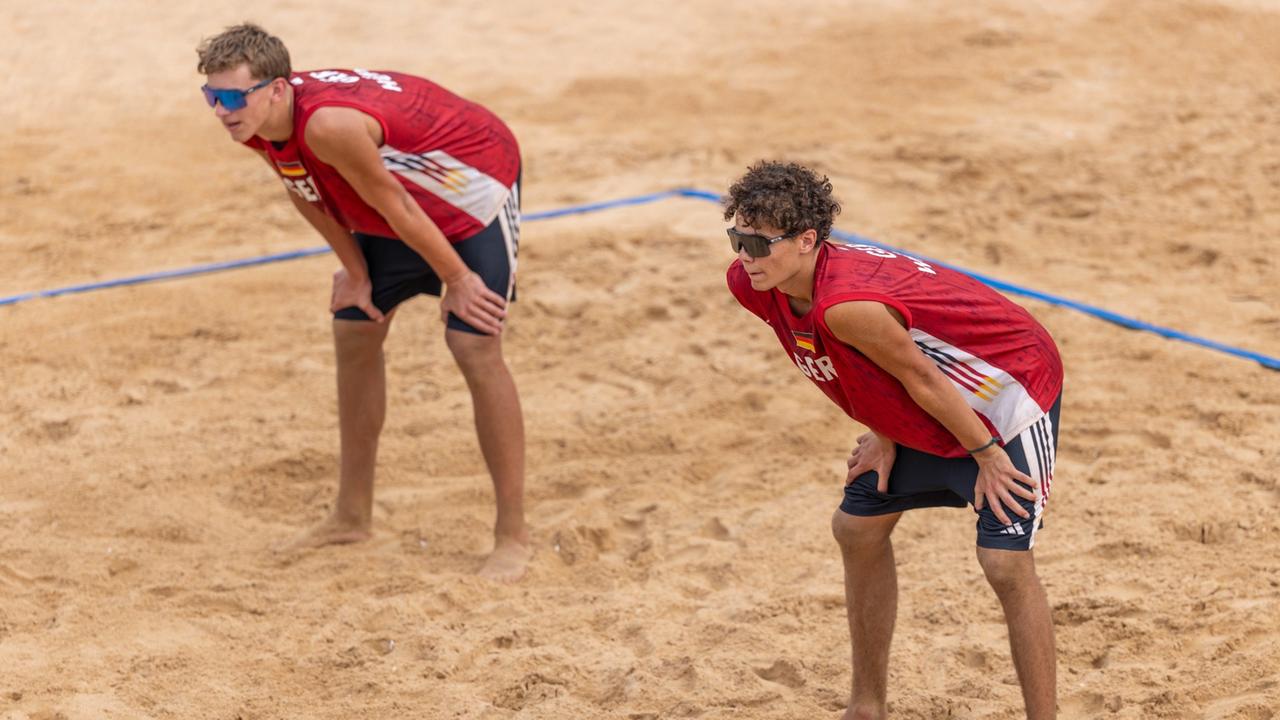
"You give up a lot," Hüper explained during a press conference in Saly. "You lose the daily connection to your old friends, the comfort of your home, and the normalcy of being a typical teenager. I left my family and my entire support system behind to pursue this dream. Looking back, I would make that choice a hundred times over, but it’s a heavy price to pay at seventeen."
Filo Wüst’s journey is different, though equally intense. Hailing from a dynasty of volleyball players—with three older brothers who have all tasted success on the European stage—Wüst is a product of high-performance DNA. His move from Berlin to the Hamburg training center, which caters to senior-level professionals, was a calculated risk by his coaching staff. Under the mentorship of trainer Kersten Holthausen, Wüst has been pushed to accelerate his development, preparing for the physical demands of the adult World Tour.
The presence of their families in Senegal provided a crucial emotional anchor. Seeing his parents and younger sister in the stands was a source of motivation for Hüper, while Wüst’s father was on hand to witness his son’s rise to the podium.
Implications: Building a Future Olympian
The silver medal in Dakar is not the end of a chapter; it is a declaration of intent. For these two athletes, the Youth Olympic Games are merely a springboard.
"Now we have even more hunger," Wüst noted, his eyes scanning the court where he had just played. "We know the level we are capable of, and we know the gaps we need to close. It’s back to the gym, more strength training, and more technical drilling. The next step is clearly to translate this success into the senior circuit, and eventually, the real Olympic Games."
Their trajectory mirrors that of many German volleyball legends who used the youth circuit as a crucible to forge the skills necessary for professional longevity. The investment from the German federation, coupled with the individual dedication shown by both athletes, suggests that Germany will remain a dominant force in beach volleyball for years to come.
Beyond the Court: Wider Context of the Youth Games
While the beach volleyball duo grabbed the headlines, the German delegation in Dakar faced mixed fortunes across other disciplines. Notably, the U15 world champion in table tennis, Koharu Itagaki, saw her campaign come to an end in the quarterfinals.
Itagaki, who had entered the tournament with the modest goal of securing a medal, faced a formidable opponent in Min-Hsin Chen of Taiwan. The match, which lasted less than thirty minutes, highlighted the ruthless efficiency of the international field in Dakar. Itagaki’s early exit serves as a reminder that even for the most promising prodigies, the path to a medal is fraught with unpredictability.
The Bigger Picture: Sustainability and Growth
The Youth Olympic Games continue to serve as a vital metric for international sports development. For Germany, the success of Hüper and Wüst highlights the effectiveness of the current developmental pipeline. By centralizing training in hubs like Hamburg and Berlin, the German federation has created a system that allows young talents to pivot between indoor and beach disciplines while maintaining a high level of physical conditioning.
The implication for future cycles is clear: the focus must remain on the long-term health and psychological resilience of these young athletes. As Hüper and Wüst prepare to return to their respective clubs and partners, the lessons learned in the Senegal heat—both the joy of the win and the pain of the defeat—will be instrumental.
As they depart from Saly, they leave behind a legacy of resilience. Whether or not they reunite for future international tournaments remains to be seen, but the mark they have left on the sport, and on each other, is indelible. The dream of Olympic gold, once a distant abstraction, now feels like a tangible destination. For Lasse Hüper and Filo Wüst, the journey has only just begun.