By Sven Kups, Sport im Osten
Date: November 5, 2026
In a pulsating encounter that showcased the very best of European football, RB Leipzig’s remarkable ten-match home winning streak came to a heartbreaking end on Tuesday night. Despite two spirited comebacks and a performance that often matched the tactical sophistication of their illustrious visitors, Leipzig fell 2-3 to Manchester City. The decisive blow was struck, almost inevitably, by the tournament’s most lethal predator: Erling Haaland.
The Defining Moment: Haaland’s Clinical Edge
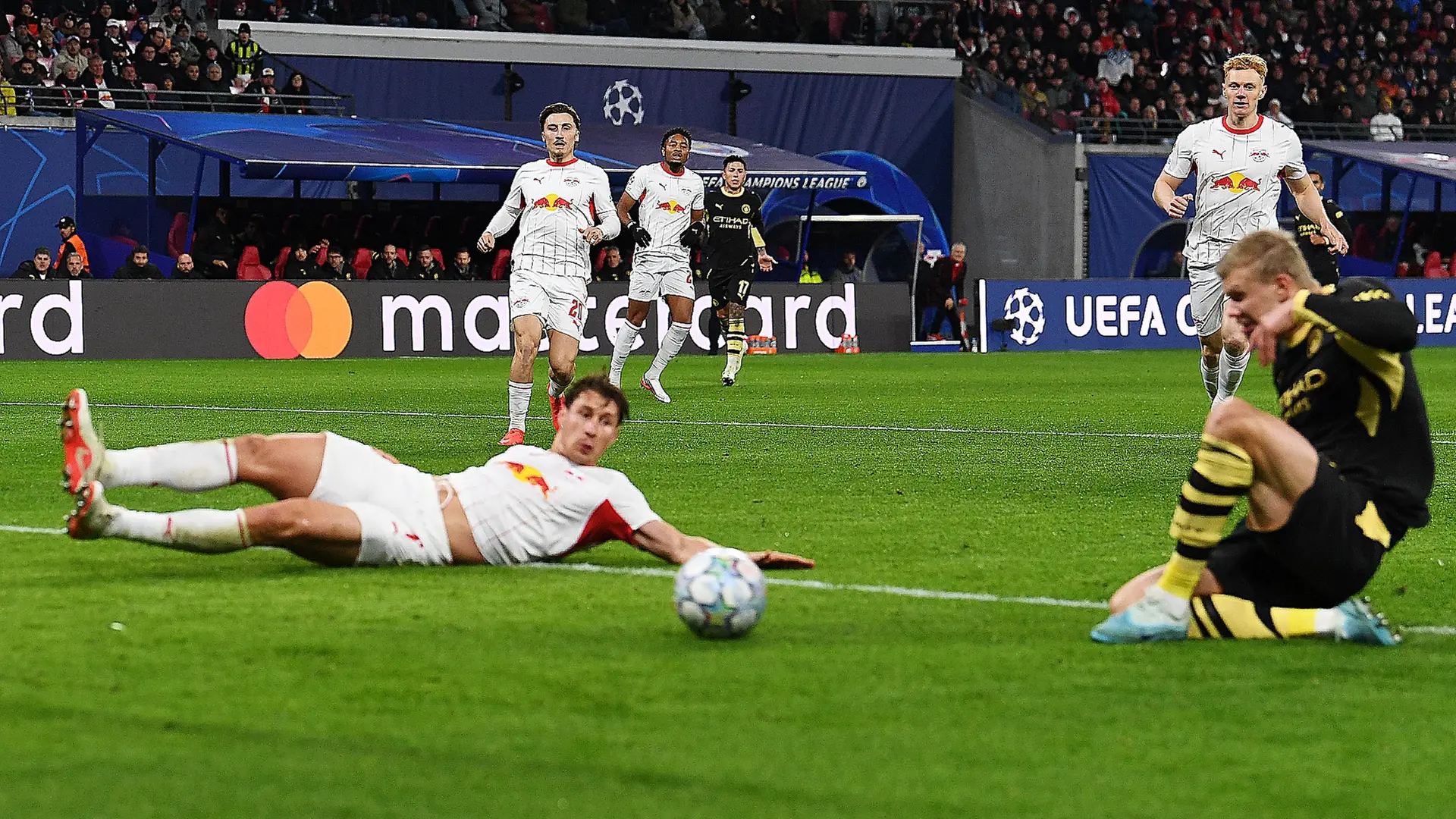
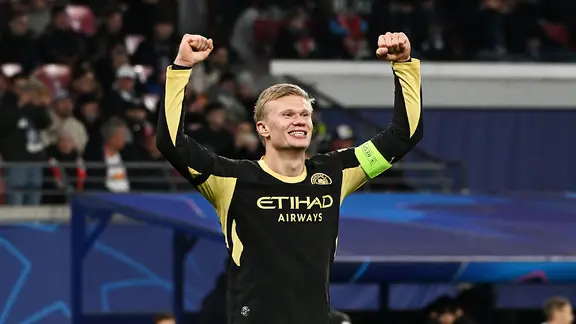
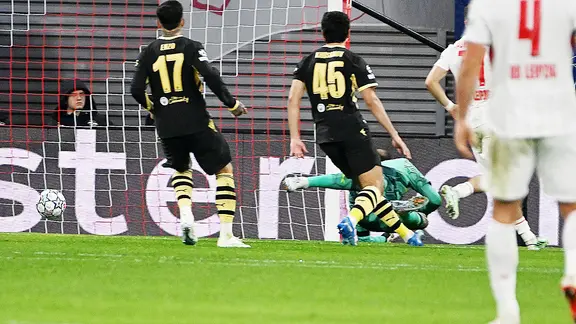
The match remained locked in a tense stalemate of momentum until the 78th minute. As the energy levels began to wane in the Leipzig ranks, Erling Haaland—who had been largely kept under control for the majority of the second half—found the space he required. Connecting with a precise diagonal pass from teammate E. Anderson, the Norwegian striker demonstrated his trademark composure, sliding the ball home to seal the 3-2 victory.
For the German side, it was a cruel conclusion to a night where they had defied the odds. For Haaland, it was a landmark moment: the goal marked his 13th successful strike against RB Leipzig in just nine appearances, reinforcing his status as a recurring nightmare for the Saxony-based club.
Chronology of a High-Stakes Battle
The match began with a tactical intensity that set the tone for the evening. RB Leipzig, fully aware of the threat posed by the English giants, adopted a disciplined, high-pressing defensive structure. In the opening 30 minutes, the hosts appeared to be the more clinical side in terms of creation, if not finishing.
Ridle Baku and Christoph Baumgartner both tested Manchester City goalkeeper Gianluigi Donnarumma early on, with the Italian shot-stopper forced into several crucial saves. However, the game’s first "nackenschlag" (knockout blow) arrived in the 37th minute. Against the run of play, a low cross into the Leipzig box caused a scramble, and in a moment of extreme misfortune, defender Castello Lukeba inadvertently deflected the ball into his own net.
The second half, however, exploded into life. Just four minutes after the restart, Ridle Baku found the breakthrough that the home crowd had been yearning for, firing home from a tight angle to equalize.
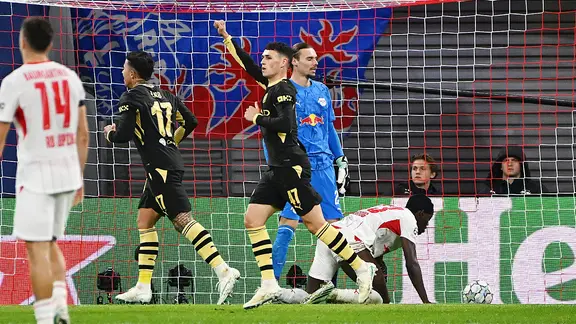
The game then transformed into a frantic exchange of blows. Enzo Fernandez restored City’s lead in the 58th minute with a clinical header, but the resilience of the home side was immediate. Three minutes later, Antonio Nusa—the standout performer for Leipzig—found the back of the net after a perfectly timed assist from the freshly introduced Christopher Nkunku, leveling the score at 2-2.
The final quarter of the match saw both sides visibly tiring, but while Leipzig pushed for a historic win, it was the clinical precision of Manchester City that secured the points. A late, desperate free-kick from David Raum in the 81st minute, which rattled the crossbar, served as a painful reminder of what might have been for the hosts.
Tactical Breakdown and Statistical Context
The statistics of the night reflect a game of narrow margins. While Manchester City dominated possession, Leipzig’s efficiency in transition kept them competitive throughout. The deployment of the squad, featuring a midfield trio of E. Banzuzi, C. Baumgartner, and N. El Aynaoui, proved effective at stifling City’s creative flow for long stretches.
The match also served as a stage for individual brilliance. Antonio Nusa, who has become a focal point of the Leipzig attack, continued his impressive form. Conversely, the introduction of Nkunku in the 57th minute immediately tilted the game in Leipzig’s favor, providing the spark for the second equalizer.
On the defensive end, the absence of a clean sheet for either side underscored the aggressive, attacking nature of the football played by both managers. Leipzig’s decision to rotate in the final stages—bringing on Benjamin Henrichs, Nicolas Seiwald, and Rocco Reitz—was a calculated attempt to maintain intensity, but the fatigue against a squad with the depth of Manchester City eventually proved the difference.
The Weight of Defeat: A Post-Match Perspective
The atmosphere following the final whistle was one of somber reflection. Players from both sides acknowledged the difficulty of the contest. "We had more than a point in us today," remarked one of the Leipzig players in the post-match zone. The sentiment was echoed by fans and pundits alike, who recognized that the result did not entirely reflect the parity displayed on the pitch.
The post-match interviews captured the disappointment of the squad. "I thought: ‘Just hit it,’" one player remarked regarding the late pressure, illustrating the desperation that defined the final minutes. The consensus among the coaching staff was that the team’s tactical discipline was excellent, but the lack of "cleanness" in key defensive moments against elite opposition ultimately decided the outcome.
Looking Ahead: The Champions League Road
The path forward for RB Leipzig is one of immediate regrouping. With the next Champions League fixture scheduled in three weeks, the team has time to analyze their performance and recover from the physical toll of this high-intensity encounter.
The upcoming match against French club RC Lens presents a unique narrative arc. Leipzig will welcome back their former player, Amadou Haidara, who is currently plying his trade in France. Lens, however, arrives in a state of crisis after a devastating 1-9 defeat to Como earlier in the week. This contrast in form—Leipzig’s narrow, honorable defeat against a world-class City side versus Lens’s total collapse—suggests that the upcoming encounter will be a pivotal moment for Leipzig to regain their momentum in the group stages.
Implications for the Campaign
The loss marks more than just an end to a home winning streak; it highlights the razor-thin margin between competing at the highest level and falling short. For Leipzig, the ability to recover from two deficits against a team of Manchester City’s caliber is a testament to the club’s growing maturity.
However, the reality of the Champions League is that resilience alone is rarely sufficient. The team must now look to bridge the gap between "competing well" and "securing results." As the competition moves into its next phase, the lessons learned from the Haaland-led City attack—specifically regarding late-game concentration—will be vital for the coaching staff.
The defeat also underscores the necessity of squad depth. The changes made in the 74th and 80th minutes were intended to shore up the defense and refresh the attack, but the tactical shift by the visitors in the final ten minutes proved superior. As Leipzig looks to navigate the remainder of the league phase, the ability to maintain composure for the full 90 minutes against elite strikers like Haaland will remain their greatest challenge.
Final Thoughts
While the final scoreline will record a defeat, the match itself will be remembered as one of the most exciting European nights at the Red Bull Arena in recent years. It was a contest defined by tactical courage, individual brilliance, and the cold, clinical reality of top-tier football. RB Leipzig proved that they belong in the upper echelons of the Champions League, even if they left the pitch on Tuesday night without the points they arguably deserved.

The club now turns its attention to its domestic and continental obligations, carrying with them the knowledge that they can challenge anyone—provided they can find a way to neutralize the game-changers when the clock ticks into the final minutes.