


Brussels, Belgium – A palpable sense of frustration and urgency permeated the recent gathering of European Union defense ministers in Brussels, as the bloc confronts an increasingly volatile geopolitical landscape. The ongoing war in Ukraine, coupled with the looming specter of reduced U.S. military presence and persistent Russian aggression, has amplified the need for a cohesive and robust European defense strategy. However, despite acknowledging the critical challenges, concrete progress remains elusive, with a stark realization of "gaping holes" in current capabilities and a frustrating lack of unified action.
The discussions, held against the backdrop of the European Parliament’s growing impatience, underscored a significant disconnect between the escalating security threats and the EU’s ability to respond effectively. While significant defense spending increases have been pledged and enacted by member states, the translation of these commitments into tangible, coordinated European defense capabilities is proving to be a formidable hurdle.
The Urgency of the Moment: A Multifaceted Threat Landscape
The confluence of several critical factors has brought European defense to a crossroads. The brutal and ongoing conflict in Ukraine has served as a stark reminder of conventional warfare’s brutal reality on the continent. This, in turn, has triggered anxieties about Russia’s long-term intentions and its potential for further destabilization.
Compounding these concerns is the announced intention of the United States to potentially withdraw a significant number of its troops from Europe. This planned drawdown, if fully realized, would leave a substantial security vacuum, forcing European nations to shoulder a greater burden for their own defense. The absence of intermediate-range missile deployments by the U.S. in Germany further highlights the need for European self-reliance in critical strategic areas.
Furthermore, the state of most European armies is far from optimal, characterized by aging equipment, insufficient readiness, and a general lack of modernization. This internal weakness is exacerbated by a highly fragmented defense industrial base, where national interests often supersede the collective European good, hindering economies of scale and coordinated procurement.
A Call for Action: The European Parliament’s Growing Impatience
The frustration with the status quo is not confined to the defense ministries. Members of the European Parliament have become increasingly vocal in their demands for decisive action. Marie-Agnes Strack-Zimmermann, Chairwoman of the relevant parliamentary committee, did not mince words, expressing dismay at the persistent "national egoisms" hindering progress on such a pressing issue as defense.
"We are observing that it is still not possible to establish, for example, a single market for military transport or military equipment," Strack-Zimmermann stated, highlighting the fundamental inefficiencies plaguing the European defense landscape. She lamented the continued "petty state mentality" of individual nations, declaring, "We have had enough."
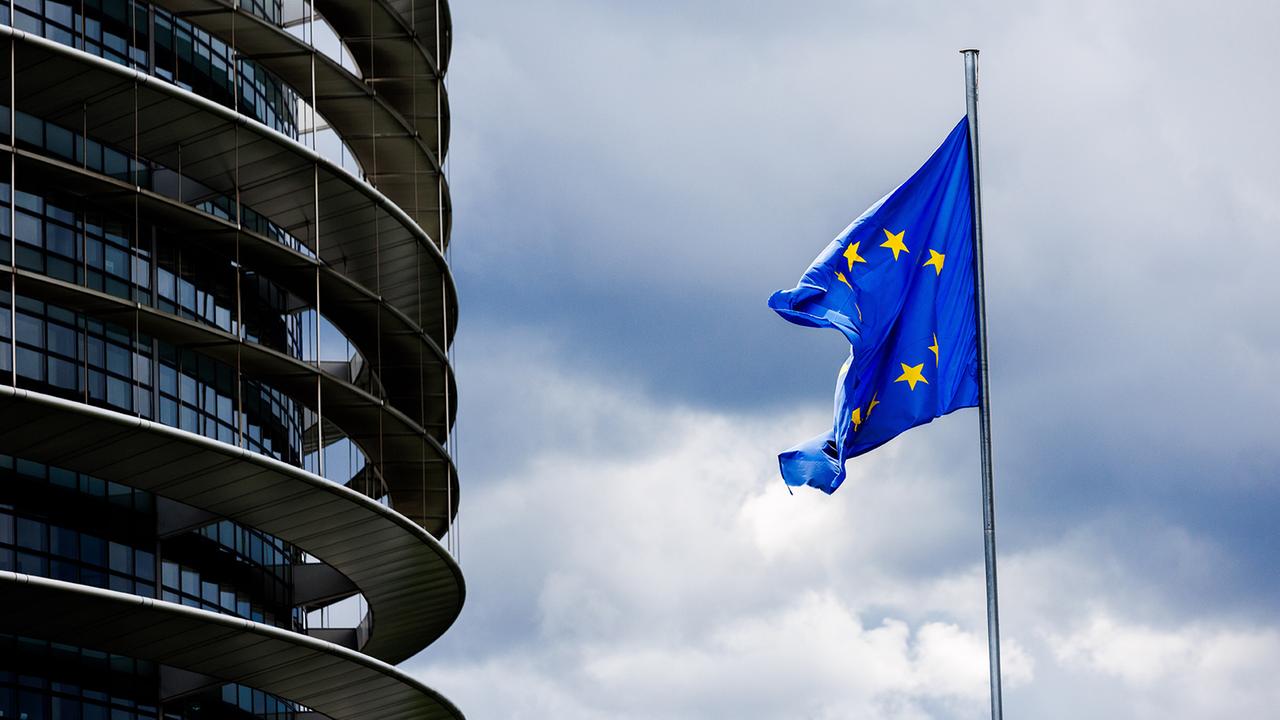
In a significant move to galvanize action, Strack-Zimmermann, alongside 29 other MEPs, has initiated a push for a "European Defense Union." This initiative aims to urgently establish structures that can function independently of the United States. While not seeking to create a parallel structure to NATO, the proponents emphasize the EU’s imperative to be able to compensate for any capabilities withdrawn by its American allies.
Defense Ministers Acknowledge "Gaps" and "Construction Sites"
The defense ministers, meeting just a few hundred meters away from the European Parliament in the Council building, largely echoed the strategic assessment of the parliamentarians. The shared concerns revolve around the war in Ukraine, the Russian threat, the potential U.S. troop withdrawal, the absence of U.S. intermediate-range missile deployments in Germany, the unsatisfactory state of European armies, and the fragmented defense industry.
Over a year ago, EU member states committed to prioritizing collaboration with the defense industry. The potential for cost savings, estimated in the triple-digit billions of euros through coordinated arms procurement, is substantial. However, the practical implementation remains mired in uncertainty, with a lack of clarity on how to navigate the delicate balance between free market principles and centralized planning.
Frustration with the Defense Industry: A Bottleneck to Progress
The EU’s High Representative for Foreign Affairs and Security Policy, Kaja Kallas, expressed her own deep-seated frustration with the defense industry following the ministerial meeting. "We invited the industry today to explain where they see problems," Kallas reported, adding, "but we are producing too little overall." While acknowledging progress in areas like ammunition and air defense systems, she stressed that the demand remains immense.
"And when it comes to cooperation, I am just as frustrated as you here in the room," Kallas conveyed to journalists. The financial resources are, in principle, available. Germany, among other member states, has significantly increased its defense spending. The establishment of a dedicated defense commissioner within the EU Commission was intended to streamline coordination. However, the ambitious goal of mobilizing half a trillion euros, as advocated by Commissioner Andrius Kubilius for accelerating European defense industrial capacity, remains a distant aspiration.
Stalled Progress on Common Defense Initiatives
The European Defence Agency (EDA), tasked with fostering and coordinating defense industrial cooperation, was only peripherally addressed during the council discussions. This marginalization highlights a broader issue: the lack of decisive progress on key initiatives designed to bolster common European defense.
Notably absent from the immediate agenda was a thorough discussion of Article 42.7 of the EU Treaty, which outlines mutual assistance among member states. Several proponents advocate for its development into a military assistance clause, analogous to NATO’s Article 5. While ambassadors have conducted tabletop exercises to simulate potential scenarios for such assistance, concrete policy decisions remain pending.
"We saw and analyzed great gaps during this exercise," Kaja Kallas stated in response to questions at the press conference, "but we did not discuss this topic at the ministerial council." She indicated that this would be addressed in the near future.
Further decisions regarding the potential redeployment of EU-mandated naval assets from securing the Red Sea to the Strait of Hormuz are also subject to extended deliberation. Sources within the Commission suggest that no definitive decisions will be made in the coming weeks.
A Glimmer of Unity: Hungary’s Shifting Stance
Amidst the prevailing inertia, a notable development has emerged from Hungary. With Viktor Orbán no longer in a position to obstruct, there has been a swift acceleration in supporting Ukraine. The first tranche of a €90 billion loan to Kyiv is expected to be disbursed by the end of May, according to sources in Brussels.
Confidence is also high that Hungary will cease blocking funds from the European Peace Facility, a crucial instrument for financing military support to Kyiv. Sebastian Hartmann, representing German Defense Minister Boris Pistorius, emphasized the significance of this shift, stating, "It is important that Europe is now speaking more with one voice."
However, when it comes to advancing comprehensive European defense, considerable patience is still required. As a member of the Dutch delegation remarked to journalists upon leaving the meeting, "You know how it is. In Europe, nobody rushes forward – we wait until everyone slowly, step by step, starts moving together." This sentiment encapsulates the enduring challenge of achieving true strategic autonomy and a unified defense posture for the European Union. The path forward remains arduous, paved with national considerations and the slow, incremental march of consensus-building.







Leave a Reply