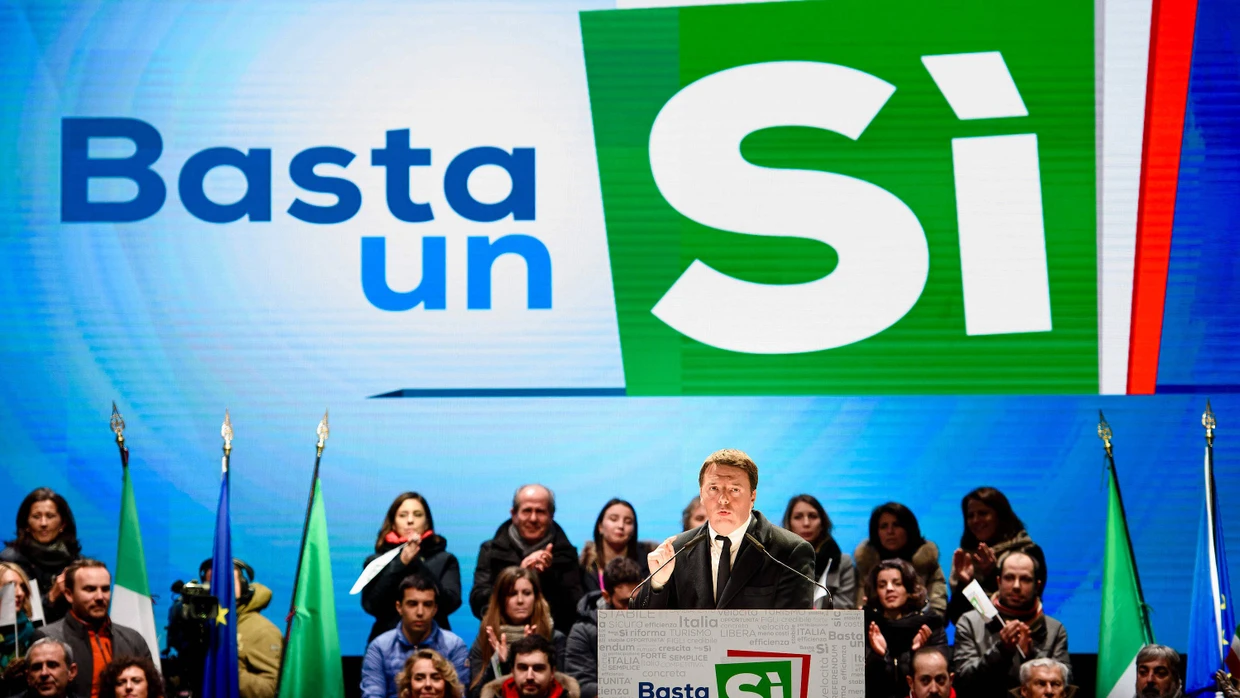
Rome, Italy – December 4, 2016 – Italy stands on the precipice of a significant political shift as millions of citizens head to the polls today to decide the fate of a sweeping constitutional reform proposed by Prime Minister Matteo Renzi. The referendum, which has deeply divided the nation, centers on a package of amendments designed to streamline Italy’s sclerotic legislative process and enhance governmental stability. However, the vote has morphed into a broader referendum on Renzi’s leadership and his vision for the country, with prominent opposition forces rallying behind a "No" vote.
The proposed reforms aim to fundamentally alter the balance of power between Italy’s two parliamentary chambers. Currently, both the Chamber of Deputies and the Senate possess co-equal legislative powers, a system critics argue leads to legislative gridlock and protracted governmental instability. Renzi’s proposals seek to significantly curtail the Senate’s powers, transforming it into a body with a more limited role in legislative oversight and a focus on regional representation. The aim is to expedite lawmaking and create a more decisive government capable of enacting much-needed economic and social reforms.
The Renzi Reform: A Bid for Efficiency and Stability
Prime Minister Matteo Renzi has staked his political future on the success of this referendum, framing it as a crucial step towards modernizing Italy and unshackling it from decades of political inertia. The core of his reform package includes:
- Diminishing the Senate’s Power: The reform would transform the Senate from an elected body with equal legislative powers to a chamber composed of regional representatives and mayors, with significantly reduced legislative authority. This move is intended to prevent the bicameral system from becoming an obstacle to the government’s legislative agenda.
- Streamlining Legislation: By concentrating legislative power in the Chamber of Deputies, the reform aims to speed up the passage of laws, making the government more agile and responsive to the nation’s needs.
- Reducing Bureaucracy: Renzi argues that these changes will cut through red tape and reduce the costs associated with a complex and often inefficient political system.
- Ending "Perfect Bicameralism": The reform directly targets what is known as "perfect bicameralism," where both chambers of parliament have identical powers, often leading to legislative ping-pong and delays.
Renzi has been a vocal proponent of the reforms, often stating that a "Yes" vote would usher in a new era of decisive governance. He has argued that the current system is a relic of the past, hindering Italy’s ability to compete on the global stage and address pressing issues such as youth unemployment and economic stagnation. The Prime Minister’s personal commitment to the outcome has been palpable, famously declaring he would step down if the "No" vote prevailed.

Opposition United Against the Reform
Despite Renzi’s impassioned pleas, the proposed constitutional changes have ignited fierce opposition from a diverse coalition of political forces. Key among the "No" camp are:
- The Five Star Movement (M5S): Led by comedian-turned-politician Beppe Grillo, the M5S, a populist and anti-establishment party, has framed the referendum as an opportunity to reject the political elite and demand a more direct form of democracy. They argue that the reform consolidates power in the hands of the executive and undermines democratic checks and balances.
- The Lega Nord: This right-wing populist party, historically focused on regional autonomy for Northern Italy, sees the reform as a threat to federalism and an overreach of central government power.
- Former Prime Ministers and Established Political Figures: A surprising number of former leaders, including Matteo Renzi’s own predecessor, Enrico Letta, have voiced their opposition, often citing concerns about the potential for an over-mighty executive and the unintended consequences of such a radical overhaul of the constitution.
- Civil Society Groups and Academics: Many constitutional scholars and civil society organizations have raised concerns about the potential for the reform to weaken democratic safeguards and concentrate too much power in the hands of the Prime Minister.
The "No" campaign has successfully tapped into a broader sentiment of dissatisfaction with the political establishment and a desire for change, even if that change means rejecting Renzi’s specific proposals. The narrative has often been framed not as a debate about constitutional mechanics, but as a popular uprising against a ruling class perceived as out of touch.
A Nation Divided: Voices from the Ground
Ahead of the vote, interviews with ordinary Italians revealed a deep division of opinion, reflecting the national debate. Six individuals, speaking to FAZ.NET, offered a glimpse into the complex sentiments driving their decisions:
- Giulia, a 35-year-old teacher from Rome: "I will vote ‘Yes.’ Our country needs to move forward. We have so many problems, and the current system just paralyzes everything. Renzi’s reforms, while not perfect, are a necessary step to make our government more effective. We can’t afford to stay stuck in the past."
- Marco, a 58-year-old factory worker from Milan: "I’m voting ‘No.’ This is too much power for one person. Our constitution is a safeguard. They want to change it to make it easier for them to do what they want, without proper checks. We’ve seen governments come and go; this is not the way to fix things. It feels like a power grab."
- Sofia, a 22-year-old university student from Naples: "It’s complicated. On one hand, I agree that the system is too slow. But I also worry about concentrating so much power. The ‘No’ campaign has made good points about protecting minority rights and ensuring proper debate. I’m leaning towards ‘No’ because I fear the long-term consequences."
- Antonio, a 70-year-old retiree from Florence: "I will vote ‘No.’ I have lived through many changes in Italy, and this feels too rushed, too radical. The Senate has a role, and changing it so drastically without broad consensus is dangerous. We need stability, but not at the expense of our democratic principles."
- Elena, a 45-year-old small business owner from Bologna: "I’m voting ‘Yes.’ My business suffers from all the bureaucracy and uncertainty. If Renzi can make things work faster, then it’s worth a try. We need decisive action, not endless debates. I trust that he has the country’s best interests at heart."
- Luca, a 28-year-old unemployed graduate from Palermo: "I’m voting ‘No.’ The politicians promise change, but nothing ever really changes for us. This reform, they say it will help, but I think it will just make the powerful even more powerful. Maybe if they listened to us more, we would vote ‘Yes,’ but right now, I feel like they are just playing games with our future."
These diverse perspectives highlight the emotional and deeply personal nature of the referendum, extending far beyond the technicalities of constitutional law.
Chronology of a Contentious Vote
The path to this pivotal referendum has been a long and arduous one, marked by intense political maneuvering and public debate:
- Early 2014: Prime Minister Matteo Renzi comes to power and immediately identifies constitutional reform as a key priority for his government, aiming to address Italy’s chronic political instability.
- Mid-2014: The government begins drafting proposals for constitutional reform, focusing on streamlining the legislative process and reducing the powers of the Senate.
- Early 2015: The draft reform bill is presented to Parliament. The legislative process is lengthy and fraught with debate, as the proposals need to pass both chambers of parliament twice without amendment to avoid a referendum.
- Late 2015 – Early 2016: The reform bill undergoes significant debate and amendments in Parliament. Opposition parties, including the Five Star Movement and Lega Nord, vociferously oppose the proposals.
- April 2016: The Senate approves the reform bill for the second time.
- July 2016: The Chamber of Deputies approves the reform bill for the second time. With both chambers having passed the bill twice without changes, the government secures the right to hold a referendum.
- October 2016: The official campaign period begins. Prime Minister Renzi embarks on an extensive tour of Italy, rallying support for the "Yes" vote. Opposition leaders intensify their campaigns for a "No" vote, warning of the dangers of concentrating power.
- November 2016: The final weeks of the campaign see escalating rhetoric from both sides. International media outlets begin to focus on the referendum’s potential implications for the stability of the Eurozone and the future of the European Union.
- December 4, 2016: Voting takes place across Italy.
Supporting Data and Arguments
Proponents of the reform often cite historical data to underscore the need for change. Italy has had a dizzying succession of governments since World War II, with the average lifespan of a government being less than two years. This instability, they argue, has hindered long-term planning and investment, both domestic and foreign. The legislative process is notoriously slow, with bills often taking years to pass due to the co-equal powers of the Chamber of Deputies and the Senate.
Renzi’s government has pointed to the success of other European nations with more streamlined parliamentary systems as evidence that efficiency can be achieved. They argue that a more decisive government would be better equipped to implement structural reforms needed to boost economic growth, create jobs, and reduce Italy’s substantial public debt.
Conversely, opponents highlight the risks associated with weakening parliamentary oversight. They argue that the Senate, despite its flaws, serves as a crucial check on the power of the executive and the Chamber of Deputies. They express concerns that reducing its influence could lead to a more authoritarian style of governance, where the will of the majority can be imposed without adequate deliberation or protection for minority rights. The wording of the referendum itself, which asks voters to approve or reject specific constitutional changes, has also been a point of contention, with some arguing it is too complex for the average voter to fully grasp.
Official Responses and International Reactions
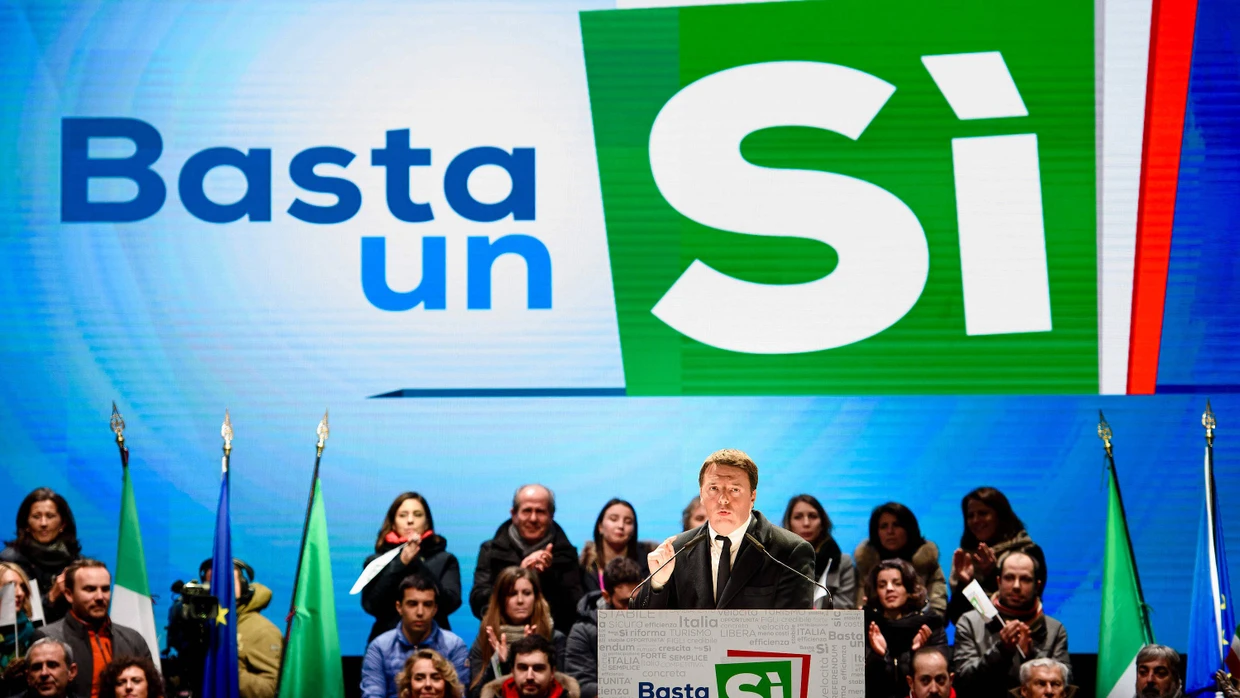
The Italian government, led by Prime Minister Renzi, has been the primary driver of the reform, presenting it as essential for the nation’s progress. Renzi’s personal investment in the outcome has been a defining feature of the campaign, with his pledge to resign if the "No" vote wins adding significant weight to the stakes.
The opposition parties, including the Five Star Movement and Lega Nord, have vehemently criticized the reform, characterizing it as a power grab by the ruling elite. Their campaigns have often focused on broader anti-establishment sentiments, using the referendum as a platform to voice discontent with the status quo.
Internationally, the referendum has garnered significant attention due to its potential implications for Italy’s political stability and its role within the European Union. Financial markets have expressed concern about the potential for political uncertainty following a "No" vote, fearing that it could trigger a crisis of confidence in the Italian economy and potentially lead to a resurgence of populist movements across Europe. The European Central Bank and other international financial institutions have closely monitored the situation, recognizing that a significant political upheaval in Italy could have ripple effects throughout the Eurozone.
Implications of the Vote: A Fork in the Road
The outcome of this referendum will have profound and far-reaching implications for Italy and potentially for Europe:

-
For Italy:
- A "Yes" Vote: Would likely see Prime Minister Renzi’s government strengthened, enabling him to pursue his reform agenda with greater authority. This could lead to a period of increased political stability and a more efficient legislative process, potentially facilitating much-needed economic reforms. However, it could also lead to concerns about an over-concentration of power.
- A "No" Vote: Would almost certainly result in Prime Minister Renzi’s resignation, triggering a period of political uncertainty. This could lead to early elections, a caretaker government, or a coalition formed by opposition parties. It would signal a rejection of Renzi’s leadership and his reformist vision, potentially ushering in a period of political instability and a setback for efforts to modernize the Italian state. It could also embolden populist forces like the Five Star Movement.
-
For Europe:
- A "No" Vote: Could be interpreted as a victory for anti-establishment forces and a sign of growing Euroscepticism, potentially fueling similar movements in other European countries. It could also create economic jitters within the Eurozone, particularly if it leads to a prolonged period of political instability in Italy, the Eurozone’s third-largest economy. The prospect of a populist government coming to power in Italy could further destabilize the European project.
As Italians cast their ballots, they are not just deciding on a set of constitutional amendments; they are choosing the direction of their nation’s political future and, in many ways, influencing the broader trajectory of Europe in a year marked by significant political shifts. The referendum is a stark reminder of the complex challenges facing established democracies and the enduring appeal of populist sentiment in times of economic uncertainty and political disillusionment.