


Belgrade, Serbia – October 26, 2026 – In a seismic political development that has stunned observers and rewritten the Serbian political landscape, the "Student List" coalition has achieved a decisive and unexpected victory in the nation’s parliamentary elections. The opposition movement, which coalesced from widespread public discontent and grassroots activism, has secured an absolute majority, unseating the long-dominant Serbian Progressive Party (SNS) led by incumbent President Aleksandar Vučić.
The preliminary results, announced by the Electoral Commission late on election night, indicate the "Student List" garnered just over 53% of the vote, a commanding lead that grants them the mandate to form a government unilaterally. In stark contrast, Vučić’s SNS secured approximately 39% of the ballots cast. This outcome represents a dramatic repudiation of Vučić’s decade-long rule, a period characterized by accusations of democratic backsliding, suppression of independent media, and pervasive corruption.
President Vučić was notably quick to concede defeat, a move that surprised many who had anticipated a prolonged period of electoral contention. "Everyone expected a long night, possibly days of back-and-forth," commented Florian Bieber, Professor of Southeast European Politics and History at the University of Graz, and a leading expert on the region. "However, the clarity of the result left Vučić with no other option. It became evident that even with all possible means of electoral manipulation, he could no longer alter the outcome," Bieber explained, underscoring the overwhelming mandate delivered to the opposition.
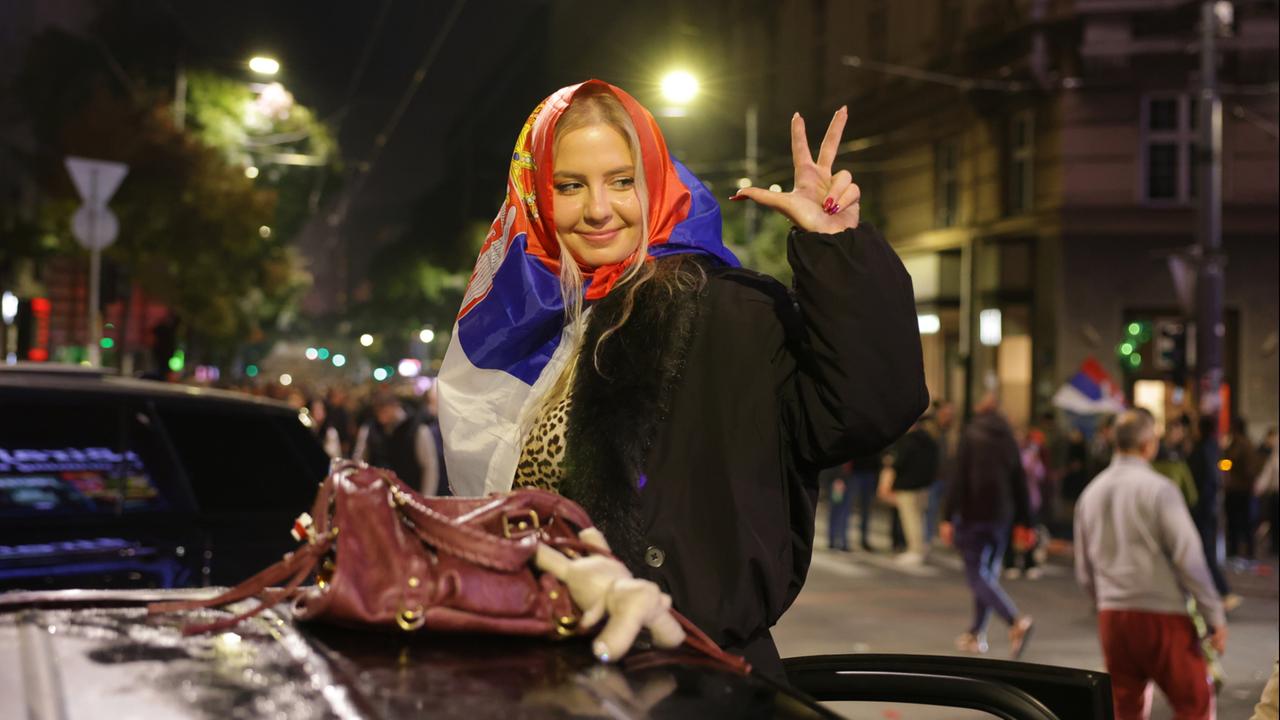
This election marks a watershed moment for Serbia, moving the nation into uncharted political territory. The "Student List," while bearing the name of students, is comprised of a diverse array of experts and activists, purportedly chosen through a democratic, bottom-up process. Their victory signifies a profound desire for change among a significant portion of the Serbian electorate, who have voiced deep-seated concerns about the direction of their country.
The Road to Power: A Movement’s Ascent
The roots of the "Student List" movement can be traced back to the tragic collapse of a railway station canopy in Novi Sad, Serbia’s second-largest city, two years prior. The incident, which claimed the lives of 16 individuals, was widely attributed by critics to corruption and negligence within the Vučić administration. This tragedy ignited a wave of protests, initially led by students, that rapidly broadened to encompass a significant cross-section of Serbian society. These demonstrations evolved into a powerful anti-government movement, fueled by widespread anger over corruption and a perceived erosion of democratic freedoms.
The election campaign itself was marked by intense political polarization. The "Student List" campaigned on a platform of democratic reform, rule of law, anti-corruption measures, and a renewed commitment to human rights and media freedom. They tapped into a deep well of public frustration with the status quo, offering a vision of a more accountable and transparent government. Their grassroots approach, characterized by extensive public engagement and a rejection of traditional political machinery, resonated with voters seeking an alternative to the established political order.
Navigating Uncharted Waters: The Challenges Ahead
Despite the euphoria of victory, the "Student List" faces a formidable array of challenges as they prepare to assume power. The most immediate and pressing question is the identity of the next Prime Minister. Ilija Srdanovic, the nominal leader of the "Student List," is not automatically considered a contender for the premiership. The selection of the Prime Minister and the allocation of ministerial portfolios are expected to be decided in the coming days, a process that could reveal internal dynamics and potential power struggles within the coalition.
Professor Bieber highlights the inherent risks associated with governing a broad-based protest movement. "It was clever until Sunday evening. Now, of course, it’s different. They must now engage with the public directly. They must also be more transparent," he stated. Bieber emphasized that while a broad movement can effectively mobilize to overthrow a government, the transition to effective governance is an entirely different undertaking.
A significant hurdle lies in the entrenched power structures that Vučić and his allies have cultivated over years of rule. "The judiciary, the prosecution, all institutions are under the control of Vučić’s people," Bieber warned. Critics have long accused Vučić of systematically undermining Serbia’s democratic institutions, silencing dissent, and exerting control over independent media outlets. The "Student List" will need to navigate this deeply embedded network of influence to enact meaningful reforms.
A Heterogeneous Coalition: The Test of Unity
Peter Techet, a political scientist at the Institute for the Danube Region and Southeast Europe, echoes the sentiment that Serbia has entered a period of political experimentation. He cautions that the inherent heterogeneity of the "Student List" coalition, encompassing a diverse range of individuals and voter demographics, presents a significant challenge to maintaining unity. "Given the heterogeneity of the students, the deputies, and the electorate, it will be difficult to keep the camp together, especially since they are truly grassroots democratic," Techet observed. He anticipates that the future roles of students in government and the potential emergence of new parties from the movement will be crucial to watch.
Techet also predicts that Vučić’s SNS will prove to be a "difficult opposition." He points to the party’s deep-seated connections within society, the economy, and even the "criminal underworld" as factors that will enable them to exert influence and potentially obstruct the new government’s agenda.
Reforming the State: The Agenda for Change
The incoming government is expected to prioritize the dismantling of the old authoritarian elite. This will likely involve significant personnel changes within state institutions, the initiation of criminal proceedings against individuals involved in past abuses, and the restoration of media freedom, which has been severely curtailed under the previous administration.
Relations with the European Union: A New Dynamic
Serbia has been an EU candidate country for nearly 15 years, but the accession process has largely stagnated under Vučić’s leadership. Politologist Techet suggests that the new Serbian government will not necessarily be a "convenient partner for Brussels." A substantial portion of their electorate remains skeptical of the European Union, posing a potential challenge to the country’s EU integration trajectory.
Marta Kos, the EU Commissioner for Enlargement, has reiterated the Union’s commitment to Serbia’s membership aspirations. She expressed optimism that the election outcome presents "an opportunity for greater unity and social cohesion in the country" and emphasized the responsibility of the future government to "work towards a strategic alignment with the EU."
European Commission President Ursula von der Leyen has pledged the EU’s support for Serbia’s reform efforts, particularly in the areas of rule of law, media freedom, anti-corruption, and the strengthening of democratic institutions. She affirmed the EU’s readiness to "work together to advance Serbia’s future in the European Union."
International Reactions: Cautious Optimism
The international community has reacted to the election results with a mixture of surprise and cautious optimism. German Chancellor Friedrich Merz acknowledged the success of the "Student List," stating in a declaration on X (formerly Twitter) that their call for rule of law, anti-corruption measures, and fundamental freedoms had resonated with the people. He also reaffirmed Germany’s continued support for Serbia’s European path.
Government spokesperson Sebastian Hille summarized the prevailing sentiment, noting that "the expectations for the student list, both domestically and internationally, are now immense."
The coming months will be critical in determining whether the "Student List" can translate its electoral triumph into tangible reforms and a more democratic, just, and prosperous Serbia. The challenges are significant, but the mandate for change is undeniable. The nation stands at a pivotal juncture, with the eyes of Europe and the world watching closely to see how this historic power shift unfolds.








