Belgrade, Serbia – October 25, 2026 – Serbia stands at a pivotal moment, with presidential hopeful Aleksander Vučić facing a formidable challenge that could end his 14-year grip on power. Today’s elections, ostensibly a parliamentary vote, have become the focal point of a burgeoning protest movement, spearheaded by students and fueled by widespread discontent over corruption and authoritarian tendencies. Vučić, a figure deeply entwined with Serbia’s tumultuous past, is now confronted by a new generation demanding a fundamental shift in the nation’s trajectory.
For over a decade, Vučić has cultivated an image of a strong leader, navigating complex geopolitical waters and promising prosperity. His political machine, the Serbian Progressive Party (SNS), has become deeply entrenched in the fabric of Serbian society, controlling key institutions and wielding significant influence over the media. Yet, beneath the veneer of stability, a growing undercurrent of frustration has been building, exacerbated by a series of scandals and a perceived erosion of democratic norms.
The current wave of protests, which gained significant momentum following a tragic accident in Novi Sad, has coalesced around an independent student-led list challenging the established political order. This movement represents a potent force, articulating the aspirations of a populace weary of corruption and yearning for genuine reform. The outcome of this election is not merely a contest of political parties; it is a referendum on the future direction of Serbia, pitting a seasoned, often controversial, leader against a nascent, idealistic opposition.
The Architect of Modern Serbian Politics: A Glimpse at Aleksander Vučić
Aleksandar Vučić is a figure who commands attention, both domestically and internationally. His political journey is a complex tapestry woven with threads of nationalism, pragmatism, and an undeniable talent for political maneuvering. He has been instrumental in shaping contemporary Serbia, transitioning from a hardline nationalist to a leader who courts European integration, albeit with a distinctly Serbian flavor.
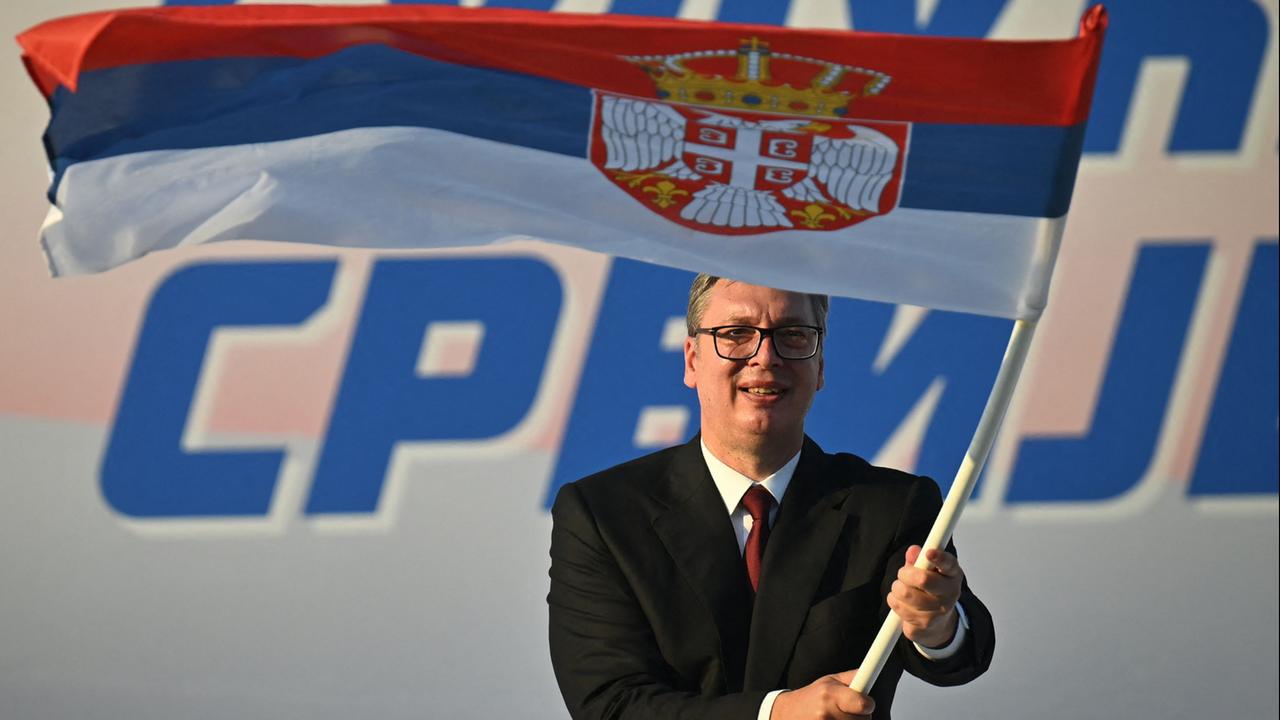
Vučić’s public persona is meticulously crafted. His campaign rallies are carefully orchestrated events, designed to showcase his connection with the "common people." Videos circulating in the Serbian media, often dominated by outlets with close ties to the government, depict him in bucolic settings, engaging with citizens, sharing meals, and petting animals. These carefully curated images aim to project an image of accessibility and authenticity. However, critics often point to the controlled nature of these appearances, highlighting the absence of spontaneous interaction and the presence of tight security, suggesting a deliberate attempt to manage public perception.
During his electoral campaigns, Vučić has frequently employed aggressive rhetoric, particularly when addressing the student movement. He has sought to discredit their efforts, labeling them as misguided and influenced by foreign interests. "These students tell you they make their decisions in a plenum. Nonsense! We will soon reveal who funded their social media campaigns," he has been quoted as saying. He further asserts that they aim to "destroy traditional Serbian society." This narrative is amplified by pro-government media, which often disseminate conspiracy theories, portraying the student movement as a foreign-backed attempt at regime change, drawing parallels to color revolutions in other Eastern European nations.
A Descent into Power: Vučić’s Nationalist Roots
Understanding Aleksander Vučić’s political ascent necessitates a deep dive into his formative years and early political associations. His public career began in the tumultuous era of the Bosnian War, where he served as a reporter for Bosnian Serb wartime propaganda, often found near positions shelling Sarajevo. This period marked his initial foray into the ultranationalist circles of Serbia, joining the Serbian Radical Party (SRS).
Florian Bieber, Director of the Centre for East European Studies at the University of Graz, notes that Vučić "comes from a scene that advocated the Greater Serbian position, formed paramilitary groups, and unequivocally supported the Bosnian Serb leadership during the wars of the 1990s." This political environment, characterized by extreme nationalism and a disregard for international law, profoundly shaped Vučić’s early political ideology.
His political mentor was Vojislav Šešelj, the leader of the SRS, a prominent ultranationalist figure who actively recruited fighters for the wars in Croatia and Bosnia. Šešelj himself was later convicted in The Hague for war crimes, including incitement to deportation, violent expulsion, and inhumane acts. The SRS, under Šešelj’s leadership, formed a coalition with Slobodan Milošević’s Socialist Party of Serbia (SPS) in 1998. Milošević, the architect of the Balkan wars, was then in power. During this period, Vučić served as the Minister of Information in Milošević’s government, a role he held during the Kosovo War.
The Era of Information Control and Repression
As Minister of Information, Vučić gained notoriety for his aggressive stance against critical journalists and media outlets. Bieber recalls the prevailing atmosphere: "There was a very repressive climate, spurred and fueled by Vučić. All critical media that still existed were threatened if they reported negatively on the war. There were verbal attacks on opposition media, which led to the murder of the independent journalist Slavko Ćuruvija." This period is often cited as a stark illustration of Vučić’s willingness to employ state power to suppress dissent and control the narrative.
Milošević’s regime was eventually toppled by mass protests in October 2000. Vučić and the SRS moved into opposition. While Šešelj remained the formal party leader, Vučić served as the General Secretary, with Tomislav Nikolić as Vice President. Despite their efforts, the ultranationalist SRS failed to regain significant political power in the post-Milošević era.
A Strategic Pivot: The Birth of the Serbian Progressive Party
A significant turning point in Vučić’s political trajectory came in 2008. Nikolić and Vučić orchestrated a split from Šešelj, forming the so-called Serbian Progressive Party (SNS). Crucially, the SNS adopted a pro-European stance, a stark departure from their ultranationalist roots. Bieber explains this strategic shift: "Vučić realized that being anti-European, inciting against Europe, and simultaneously talking about Greater Serbia would not win him a majority. This supposed purification of the nationalists caused great euphoria in the West."
This rebranding proved remarkably effective. The SNS gained power in 2012, with Nikolić becoming President of Serbia from 2012 to 2017. However, Vučić’s ambition did not stop there. Through shrewd political maneuvering, he sidelined Nikolić and consolidated his own power, transforming the SNS into a formidable political machine that permeated every level of Serbian society.
The sheer scale of the SNS’s membership is staggering. Today, one in every nine Serbs is a member of the SNS, a stark contrast to the participation rates in established Western European democracies. For context, only about one in a hundred Germans is a member of the ruling CDU, CSU, or SPD. This extensive membership base is often attributed to the party’s ability to secure employment in the public sector, creating a powerful patronage network.
Vučić’s control extends beyond the party apparatus. He is widely accused of wielding influence over the judiciary, the police, and the entire civil service. Furthermore, numerous reports and allegations suggest that Vučić’s faction commands its own "squads" or paramilitary groups used to intimidate critics and silence opposition voices.
Navigating a Complex Geopolitical Landscape
On the international stage, Vučić has pursued a complex and often contradictory foreign policy. Serbia maintains a declared aspiration for European Union membership, yet progress in the accession process has been minimal. Simultaneously, Vučić cultivates close ties with Russian President Vladimir Putin, maintains a working relationship with former US President Donald Trump, and has forged strategic partnerships with the People’s Republic of China, particularly in areas of infrastructure and defense. This multi-pronged approach allows him to leverage various international relationships to his advantage, often playing different global powers against each other.
Corruption and Tragedy: The Spark for Mass Protests
Transparency International has consistently ranked Serbia as one of the most corrupt countries in Europe, placing it third behind Russia and Belarus. This endemic corruption reached a tragic climax on November 1, 2024. The collapse of a newly renovated railway overpass in Novi Sad, Serbia’s second-largest city, resulted in the deaths of 16 people. This devastating incident, widely attributed to shoddy construction and a lack of oversight, became the catalyst for the largest wave of protests Serbia has witnessed in years.
The tragedy ignited a firestorm of public anger, crystallizing the widespread discontent with the government’s handling of public funds and its perceived disregard for public safety. The protests have been characterized by their broad appeal, drawing in diverse segments of society, united by a shared frustration with the status quo.
The Election as the Climax of a Protest Wave
Today’s elections represent the culmination of this potent protest movement. Vučić, having resigned as President as his second and final term was nearing its end, is now seeking to return to the position of Prime Minister, a role he held from 2014 to 2017. This strategic maneuver, analysts suggest, is an attempt to circumvent constitutional term limits and maintain his grip on power through a different office.
The independent student-led list stands as his most significant challenger, presenting a unified front against Vučić’s established political order. The campaign has been intensely fought, with the student movement articulating a vision for a more transparent, democratic, and just Serbia.
The most respected political analysts in the region predict a fiercely contested election. The outcome is far from certain, with many predicting a close race between Vučić and the student movement. The results will not only determine the leadership of Serbia but will also signal whether the country will continue on its current path or embrace a radical departure towards a new political era. The eyes of Europe, and indeed the world, are watching as Serbia confronts this critical juncture.