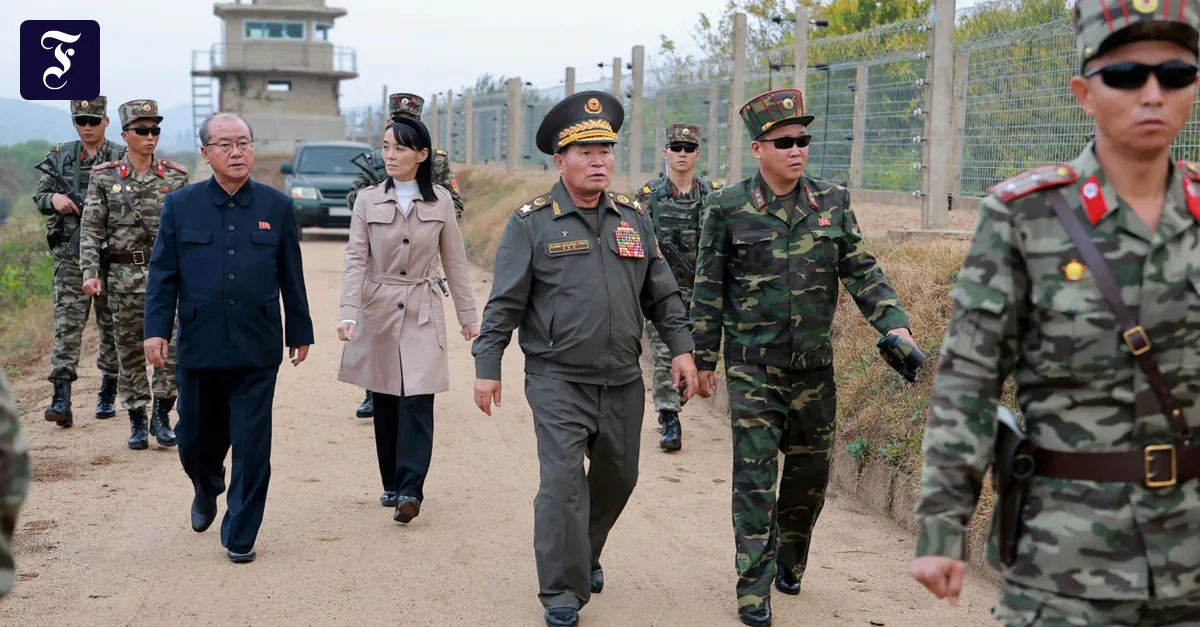
Seoul, South Korea – In a stark illustration of escalating tensions on the Korean Peninsula, South Korean military assessments indicate that North Korea has significantly intensified its border fortification efforts, deploying an estimated 960,000 landmines since the beginning of 2024 alone. This alarming figure, reported by the official South Korean news agency Yonhap and corroborated by several lawmakers in the National Assembly, suggests a dramatic acceleration in Pyongyang’s defensive posture.
The entirety of the Demilitarized Zone (DMZ), a heavily fortified buffer zone separating the two Koreas, is now believed to be littered with approximately two million landmines, a grim legacy of decades of conflict and a tangible symbol of the unresolved Korean War. Astonishingly, half of these deadly devices have been laid within the last two years, highlighting the recent surge in North Korea’s aggressive military preparations. The DMZ, a roughly four-kilometer-wide strip of land that has divided the peninsula since the armistice ending the Korean War in 1953, has become an increasingly perilous landscape.
A Fortress Erected: North Korea’s Aggressive Border Reinforcement
Since the spring of 2024, North Korea, under the iron fist of leader Kim Jong-un, has been engaged in a comprehensive and aggressive fortification of its border with the South. This strategic overhaul extends far beyond the mere deployment of landmines. Historical road and rail connections, once potential conduits for dialogue and exchange, have been deliberately destroyed by order of Kim Jong-un. Alongside the vast minefields, Pyongyang has erected formidable physical barriers, including additional barbed wire fences, further solidifying its isolation and intent to sever any lingering ties with its southern counterpart.
This intensified construction has not been without consequence. The heightened state of alert and the presence of newly laid ordnance have demonstrably increased the risk of accidental incidents. On September 21st, three South Korean soldiers sustained severe injuries, some life-threatening, from the explosion of a North Korean landmine. Despite the clear evidence, North Korea’s leadership has vehemently denied any responsibility for the incident, further deepening the chasm of mistrust and escalating diplomatic friction.
A Strategic Pivot: Abandoning Reunification as a State Goal
The root cause of this drastic shift in North Korea’s border policy appears to be a fundamental reorientation of its long-held national objective: the reunification of the Korean Peninsula. For decades, since the establishment of the Democratic People’s Republic of Korea (DPRK) in 1948, the government in Pyongyang had officially pursued the goal of a unified Korea. However, this foundational tenet of North Korean statecraft has been systematically dismantled under Kim Jong-un’s leadership.
The initial departure from this objective was signaled at the end of 2023 when Kim Jong-un publicly declared South Korea to be the "main enemy" of the North. This declaration marked a significant departure from decades of rhetoric, which, despite the animosity, often framed the South as a brethren nation to be eventually brought into the fold. The rhetoric has now hardened, with Pyongyang actively working to erase any semblance of a shared destiny. Most recently, North Korea has officially removed all references to reunification with South Korea from its constitution, a symbolic and legally binding act that underscores the finality of this strategic pivot.
The Unresolved Legacy of the Korean War
The Korean Peninsula remains technically at war, divided into a communist North and a democratic South. The Korean War, a brutal and devastating conflict that raged from 1950 to 1953, concluded not with a peace treaty, but with an armistice agreement. This fragile ceasefire has maintained a tense standoff for over seven decades, with both nations technically remaining belligerents. The ongoing militarization of the border and the hardening of political stances serve as a stark reminder of this unresolved historical conflict and the persistent threat of renewed hostilities.
Historical Context and Escalating Tensions
The recent actions by North Korea are not occurring in a vacuum. They are part of a broader pattern of provocative behavior and a strategic recalibration of its foreign policy and national identity.
Pre-2024: A Long History of Demilitarized Zone Tension
The DMZ has always been a heavily militarized zone, characterized by minefields, guard posts, and frequent skirmishes. However, the scale and speed of the current mine-laying operation are unprecedented. Historically, minefields were established by both sides to deter infiltration and as a consequence of the active conflict. Over time, many of these older minefields became neglected and hazardous, with South Korea also undertaking demining efforts in certain areas. The new deployments by North Korea, however, represent a proactive and aggressive expansion of these deadly zones.
Late 2023: The "Main Enemy" Declaration
Kim Jong-un’s pronouncement in late 2023 was a watershed moment. It signaled a decisive shift away from any notion of reconciliation or eventual unification. This rhetoric was not merely symbolic; it was accompanied by a tangible increase in hostile rhetoric and a suspension of inter-Korean communication channels that had previously served as vital, albeit often strained, lines of dialogue. The shift reflected a growing internal conviction within the North Korean leadership that the South, with its democratic ideals and economic prosperity, posed a fundamental ideological threat that could not be integrated but must be actively countered.
Early 2024 Onwards: The Great Wall of Mines
The period from early 2024 has witnessed a dramatic acceleration of the fortification efforts. The deliberate destruction of transportation infrastructure, such as roads and railways, is a clear indication of a strategy aimed at physically severing any remaining links and preventing potential movement of people or goods across the border. This is a reversal of past policies where limited economic cooperation and exchanges were sometimes pursued. The placement of extensive minefields and the erection of new barriers serve as a potent deterrent to any form of interaction, reinforcing the perception of South Korea as an external adversary.
The September Incident: A Case in Point
The incident on September 21st, where three South Korean soldiers were injured by a landmine, underscores the immediate and tangible dangers posed by North Korea’s actions. The denial of responsibility by Pyongyang, despite the proximity and likely origin of the mine, highlights the regime’s willingness to deflect blame and maintain a narrative of victimhood or external provocation, even when its own actions are the clear cause of harm. This incident also raises serious questions about the efficacy of existing demining efforts and the constant threat posed by the unknown locations of newly laid mines.
Supporting Data and Expert Analysis
While precise figures from North Korea are notoriously difficult to verify, South Korean intelligence and military assessments are considered the most reliable indicators of Pyongyang’s activities. The estimate of 960,000 landmines deployed since the start of 2024, bringing the total to around two million, is based on various intelligence sources, including satellite imagery, reconnaissance, and defector testimonies.
Nature of the Mines: The types of mines being deployed are likely a mix of anti-personnel and anti-tank mines, designed to deter both individual infiltration and potential armored incursions. The sheer volume suggests a strategy of creating extensive, overlapping minefields designed to make any crossing prohibitively dangerous and time-consuming.
Technological Capabilities: North Korea’s capacity to produce and deploy such a large number of landmines suggests a significant investment in its domestic defense industry. While often portrayed as technologically backward, Pyongyang has demonstrated a consistent ability to develop and mass-produce military hardware.
Geographic Focus: The primary focus of these deployments is the DMZ itself, but also extends to areas along the northern side of the border where North Korean forces are stationed. This creates a layered defense system designed to channel any potential incursions into highly controlled and lethal kill zones.
Comparison to Other Minefields: The estimated total of two million landmines places the Korean Peninsula among the most heavily mined regions in the world. For comparison, areas like Afghanistan and parts of the former Yugoslavia have also suffered from extensive landmine contamination, but the concentrated nature and recent acceleration of North Korea’s efforts are particularly concerning.
Official Responses and International Reactions
South Korea’s Stance: The South Korean government has unequivocally condemned North Korea’s actions, labeling them as a grave threat to regional security and a violation of international norms. Seoul has called for an immediate halt to the mine-laying and has demanded accountability for the September incident. The Ministry of National Defense has stated that it is continuously monitoring North Korean activities and is prepared to respond to any provocations.
United States Position: The United States, a key ally of South Korea, has expressed deep concern over the escalating tensions. U.S. officials have reiterated their commitment to the defense of South Korea and have urged North Korea to refrain from actions that destabilize the region. Discussions are ongoing between Seoul and Washington regarding joint defense strategies and potential diplomatic measures.
International Community: While the international community has largely focused on North Korea’s nuclear and missile programs, the current border militarization is drawing increased attention. Organizations such as the United Nations have previously called for demining efforts and the adherence to international treaties banning the use of landmines. However, North Korea is not a signatory to the Ottawa Treaty, which bans antipersonnel landmines, leaving it outside of international legal constraints on this issue. The current surge in mine deployment is likely to further isolate North Korea diplomatically and could lead to renewed calls for sanctions or other punitive measures.
Implications for Regional Stability and Future Prospects
The ramifications of North Korea’s intensified border fortification are far-reaching and deeply concerning for the future of the Korean Peninsula and Northeast Asia.
Increased Risk of Accidental Conflict: The sheer density of newly laid mines significantly raises the probability of accidental detonations, which could trigger a dangerous cycle of escalation. The September incident serves as a chilling preview of this potential.
Erosion of Inter-Korean Relations: The deliberate severing of ties and the hardening of hostile rhetoric signify a profound and potentially irreversible deterioration of inter-Korean relations. The prospect of dialogue, cooperation, or eventual peaceful reunification now appears more distant than ever.
Humanitarian Concerns: The long-term consequences of extensive minefields include persistent humanitarian dangers for civilians and military personnel alike, as well as significant obstacles to future development and economic activity should relations ever improve.
Strategic Reorientation of North Korea: Kim Jong-un’s abandonment of reunification as a state objective suggests a fundamental shift in North Korea’s strategic calculus. The focus appears to be on consolidating internal control, enhancing military deterrence, and solidifying its status as a separate and distinct entity from South Korea, rather than seeking eventual integration. This could lead to a more entrenched and confrontational relationship with the South, with implications for regional security architectures.
Economic and Social Impact: For South Korea, the heightened threat requires sustained investment in defense and border security. The psychological impact on its citizens, living in close proximity to a heavily militarized and increasingly hostile border, is also a significant factor.
In conclusion, North Korea’s unprecedented deployment of landmines and its aggressive border fortification represent a critical escalation of tensions on the Korean Peninsula. This strategic pivot away from reunification, coupled with a hardening of rhetoric and a demonstrable increase in military preparedness, signals a new and potentially more dangerous chapter in the ongoing division of Korea. The international community faces the challenge of navigating this complex geopolitical landscape, seeking to de-escalate tensions and prevent a further descent into conflict, while acknowledging the deeply entrenched nature of North Korea’s current trajectory.