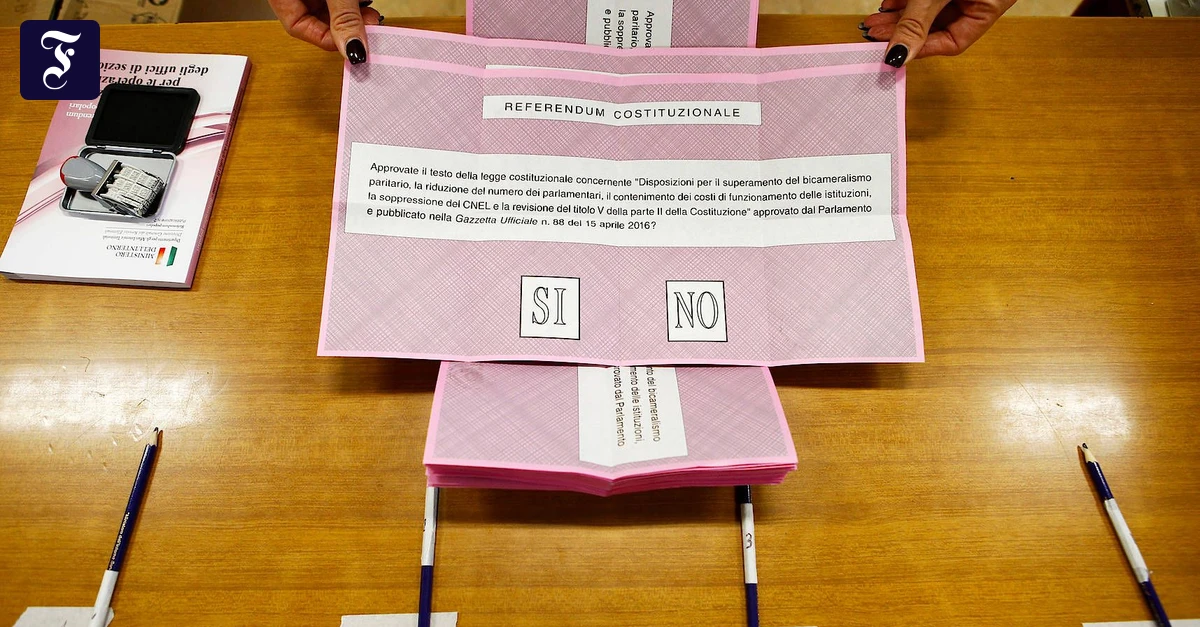
Rome, Italy – December 5, 2016 – A national referendum on constitutional reform in Italy, intended to usher in a period of significant political and administrative change, has been overshadowed by widespread allegations of irregularities concerning the pens provided in polling booths. Citizens across the country have taken to social media platforms to voice their alarm, claiming that the pens supplied for marking ballots were easily erasable, raising serious questions about the integrity of the voting process and the potential for widespread vote tampering.
The controversy, which began to surface as polling stations opened on Sunday, December 4th, quickly gained traction, with dozens of reports emerging from various regions of Italy. Voters, deeply concerned by the potential for their ballots to be altered after they were cast, lodged complaints with election officials and, in some instances, with law enforcement agencies. The news agency Ansa has been instrumental in documenting these complaints, highlighting the growing unease among the electorate.
The Core Allegations: Erasable Ink and Undermined Confidence
The central issue revolves around the type of writing instrument provided to voters within the privacy of the polling booths. Numerous citizens reported that the pens used for marking their ballots contained ink that could be easily erased. This discovery immediately triggered fears that votes could be manipulated, either by election officials or by individuals with malicious intent, after the ballots had been officially cast and collected. The very essence of a secret ballot, a cornerstone of democratic elections, appeared to be compromised.
The implications of such a situation are profound. An election where the marks on ballots are not permanent and indelible can lead to a complete erosion of public trust. Voters, having diligently exercised their civic duty, could be left with the gnawing suspicion that their choices were not accurately reflected in the final tally. This distrust can have far-reaching consequences, potentially leading to widespread disillusionment with democratic institutions and a decline in voter participation in future elections.
Chronology of the Controversy: From Social Media Outcry to Official Complaints
The timeline of the erasable pen controversy can be traced through a series of escalating events:
- Early Sunday Morning (December 4th): As voting commenced across Italy for the constitutional reform referendum, the first reports of questionable pens began to appear on social media. Initially, these were isolated incidents, shared by individuals expressing mild surprise or concern.
- Mid-Morning: The number of similar reports increased significantly, originating from different cities and towns. Social media platforms became a hub for voters to share their experiences, often accompanied by photographic evidence or descriptive accounts of their discoveries. Hashtags related to the referendum and voting integrity started to trend.
- Late Morning/Early Afternoon: The issue gained wider media attention, with news outlets, including Ansa, beginning to report on the growing number of complaints. Election officials in some polling stations reportedly received verbal grievances from concerned voters.
- Afternoon: The situation intensified as more voters took decisive action. Several individuals, driven by their apprehension, formally complained to the heads of their respective polling stations. The gravity of the situation prompted some to seek recourse through legal channels.
- Late Afternoon/Evening: Reports emerged of citizens filing official complaints with local police departments. The involvement of law enforcement underscored the seriousness with which some voters regarded the potential for electoral fraud. Prominent figures, such as actor Giorgio Gobbi, publicly confirmed their actions, further amplifying the controversy.
A Test Case: Giorgio Gobbi’s Experience
One of the most widely reported instances of a voter taking direct action was that of Italian actor Giorgio Gobbi. Gobbi, casting his vote in Rome, reportedly took an eraser with him into the polling booth as a precautionary measure. According to his statement to Ansa, he was able to successfully erase the mark he had made on his ballot, confirming his suspicions about the erasable nature of the ink. Gobbi’s decision to not only complain but also to report the matter to the police sent a strong signal about the level of concern among some citizens and the perceived threat to the democratic process. His actions served as a catalyst, potentially encouraging others to voice their concerns and take similar steps.
Supporting Data and Witness Accounts
While definitive statistical data on the exact number of affected polling stations or the extent of potential manipulation is difficult to ascertain in the immediate aftermath of the vote, the sheer volume of anecdotal evidence shared across social media and reported by news agencies paints a compelling picture of a widespread problem.
- Social Media Saturation: Platforms like Twitter and Facebook were inundated with posts from Italian citizens detailing their experiences. Phrases like "penne cancellabili" (erasable pens) and "frode elettorale" (electoral fraud) became common. Many users shared images of their marked ballots and expressed their dismay.
- Geographic Spread: Reports were not confined to a single region or city. Complaints emerged from various parts of Italy, suggesting that the issue was not an isolated incident but potentially a systemic problem with the supply of voting materials.
- Multiple Complaints to Officials: Ansa reported that "dozens of citizens" complained to the heads of polling stations. This indicates a significant number of individuals felt compelled to raise their concerns directly with those responsible for overseeing the election process.
- Police Reports: The filing of official police reports by individuals like Giorgio Gobbi signifies a formal acknowledgment of the potential for criminal activity related to vote tampering. While the number of these reports is not yet quantified, their existence points to a level of distrust that has moved beyond mere speculation.
Official Responses and Initial Investigations
In the wake of the escalating controversy, various official bodies and political figures began to issue statements and initiate inquiries.
- Ministry of the Interior: As the primary body responsible for overseeing elections, the Ministry of the Interior was under immense pressure to address the allegations. Initial statements from the ministry acknowledged the reports and indicated that they were investigating the matter. They emphasized their commitment to ensuring the transparency and fairness of the electoral process. However, specific details about the nature of the pens or the extent of any potential issues were not immediately forthcoming.
- Electoral Commissions: Local and regional electoral commissions were tasked with responding to immediate complaints from polling station officials and voters. Their responses would have varied depending on the specific allegations and the available evidence at each polling station.
- Political Parties: Opposition parties, particularly those who had campaigned against the constitutional reform, were quick to seize on the controversy. They called for a thorough investigation and, in some cases, suggested that the referendum results could be compromised. Pro-government parties, while acknowledging the concerns, often urged for calm and emphasized that investigations would reveal the facts.
- Judicial Authorities: The involvement of the police in taking official reports indicated that judicial authorities would likely be involved in any formal investigation into potential electoral fraud. The extent of their involvement would depend on the evidence gathered and the seriousness of the allegations.
It is crucial to note that at the time of these initial responses, the focus was on gathering information and assessing the scope of the problem. Definitive conclusions about whether the pens were intentionally provided to facilitate fraud or if it was a case of negligence in procurement were not yet available. However, the official acknowledgment of the reports and the initiation of investigations provided a degree of reassurance to a concerned public.
Implications and Future Considerations
The erasable pen controversy, regardless of its ultimate resolution, carries significant implications for Italian democracy and the future of electoral processes.
- Erosion of Public Trust: The most immediate and potentially damaging implication is the erosion of public trust in electoral integrity. Even if no widespread fraud is proven, the mere existence of such allegations can sow seeds of doubt, making it harder for citizens to have faith in the democratic system. This can have a ripple effect, leading to increased political apathy and cynicism.
- Scrutiny of Electoral Procedures: The incident will undoubtedly lead to a thorough review of electoral procedures, procurement processes for voting materials, and oversight mechanisms. Questions will be raised about how such a seemingly basic oversight – the provision of indelible pens – could occur.
- Impact on Referendum Outcome: While the referendum itself was ultimately defeated, the controversy surrounding the pens could potentially influence how the results are perceived. Even if the outcome was not directly affected, the perception of an unfair process can undermine the legitimacy of the mandate.
- Strengthening of Democratic Safeguards: In the long term, this controversy could serve as a catalyst for strengthening democratic safeguards. This might involve implementing stricter regulations on voting materials, enhancing transparency in the electoral process, and establishing more robust mechanisms for addressing electoral irregularities.
- Call for Greater Accountability: The incident highlights the need for greater accountability from electoral authorities and government bodies responsible for the smooth conduct of elections. Citizens have a right to expect that their votes are cast and counted in a fair and transparent manner, free from any possibility of manipulation.
The controversy surrounding the erasable pens in the Italian referendum serves as a stark reminder of the fragility of democratic processes and the paramount importance of maintaining public confidence. As investigations continue and the full picture emerges, the focus will remain on ensuring that such an incident does not recur and that the foundations of Italian democracy are strengthened. The voices of the citizens who raised these concerns must be heard, and their trust in the electoral system must be unequivocally restored.